

Tech & Gadgets
Best Budget Mechanical Keyboards: The 3 Worth Buying and 1 Popular Pick to Skip
We compared reviewer consensus on budget mechanical keyboards - plus the popular 'gaming' board that isn't really mechanical.
The short version
The Keychron V5 Max is the pick: its gasket mount and thick damping make it feel and sound good untouched, and tri-mode wireless follows you between devices. The wired Keychron C2 Pro wins when your board never leaves one desk and you want maximum typing substance per dollar. Skip the Razer Ornata V3, a mecha-membrane hybrid rather than a true mechanical board, with no hot-swap. The Akko 3098B suits buyers who prize its dense build over QMK firmware. Best for tinkerers who want a quiet, quality board without a modding project.
Our picks at a glance
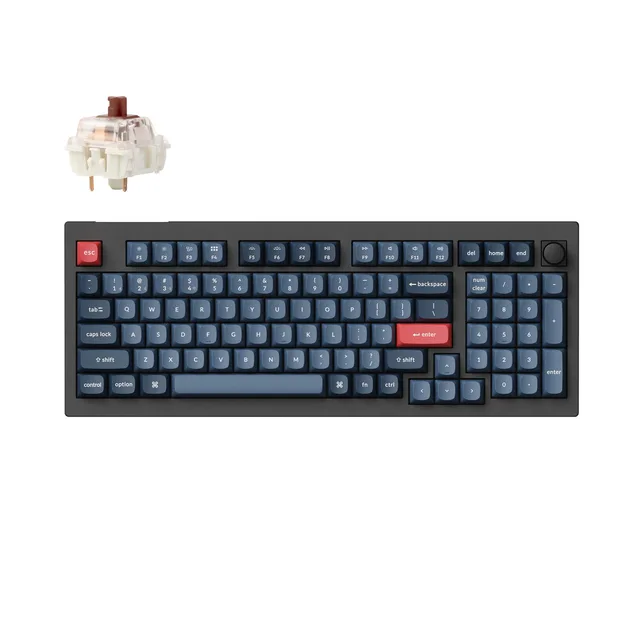
- Keychron V5 Max - Buy. A standout budget pick - a gasket-mounted, wireless, hot-swap board with features usually found on far pricier customs.
- Keychron C2 Pro - Buy. The value champion - a full-size, hot-swap, PBT-keycap board at a budget price.
- Akko 3098B - It depends. Reviewers called the typing experience 'world-class' - a tank-like 96% tri-mode board, if you can live with its quirks.
- Razer Ornata V3 - Skip. Popular and heavily marketed, but it's a mecha-membrane hybrid - not a true mechanical keyboard.
The verdict in 30 seconds
What mattered most
- Layout
- Switch type
- Connectivity
- Hot-swappable
- Keycaps
- Price tier
You no longer have to spend premium money to get gasket-mounted, hot-swappable, PBT-keycap keyboards that reviewers rave about - the budget and mid-range tiers now cover most of what enthusiasts actually want. We pulled the consensus from expert reviews across full-size and 96% boards. We also flag one hugely popular pick that testers agree most buyers should skip because it isn't a true mechanical keyboard.
A standout budget pick - a gasket-mounted, wireless, hot-swap board with features usually found on far pricier customs.
Best for: Anyone who wants a near-custom typing experience and wireless flexibility without crossing into premium pricing.
- Gasket mount plus sound-dampening foam gives a soft, quiet typing feel that suppresses the usual click-clack
- Fully hot-swappable (3- and 5-pin MX) and QMK/VIA programmable via Keychron Launcher
- Double-shot PBT keycaps resist shine and won't fade; 2.4GHz + Bluetooth 5.1 tri-mode wireless
- Tall key profile and no palm rest in the box - not ideal for every desk
- 96% layout takes adjustment if you're used to a full number row of function keys
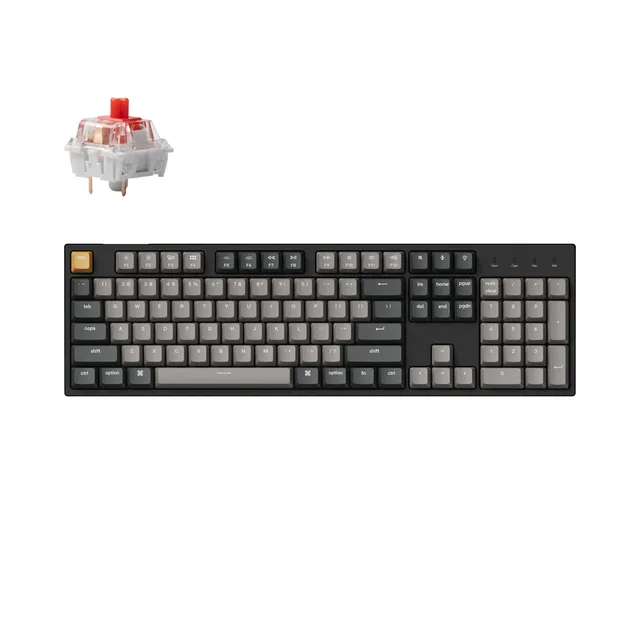
The value champion - a full-size, hot-swap, PBT-keycap board at a budget price.
Best for: Budget buyers who want a no-nonsense full-size mechanical board and don't need wireless.
- Full 100% layout with number pad at a cheap price, frequently on sale
- Double-shot PBT keycaps and the same QMK/VIA remapping, macros and lighting control as Keychron's pricier boards
- Solid, non-pingy sound and three adjustable typing angles
- Wired-only, no wireless and no volume knob
- Stock double-shot PBT caps are not shine-through, so the RGB only glows around the keys, and hot-swap sockets come only on the hot-swappable version
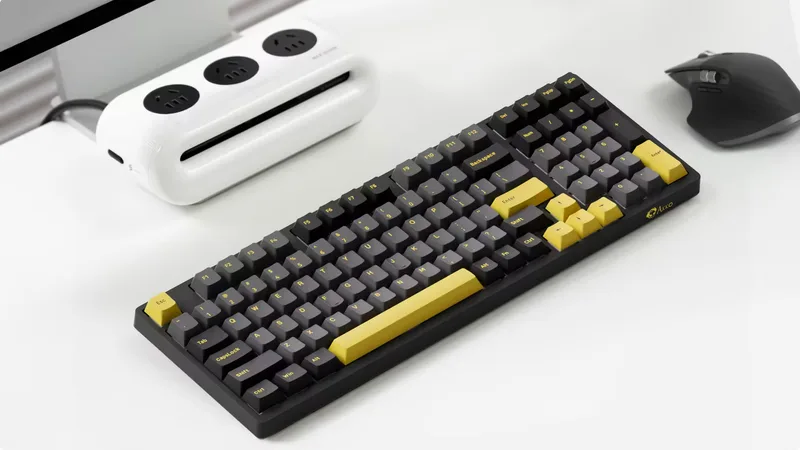
Reviewers called the typing experience 'world-class' - a tank-like 96% tri-mode board, if you can live with its quirks.
Best for: Typists who prize build quality and a heavy, planted feel and will skip the bundled software.
- Excellent build quality and typing feel with plate dampening foam and good stock Akko switches (current units ship V3 Cream Yellow Pro linear or Cream Blue Pro tactile)
- Tri-mode connectivity (Bluetooth 5.0, 2.4GHz, USB-C), hot-swappable, PBT keycaps and a 3000mAh battery
- Owners report the bundled software being flagged by antivirus
- Compact layout drops some keys (Home/End/PrtScr) and larger keys can rattle; shallow RGB customization
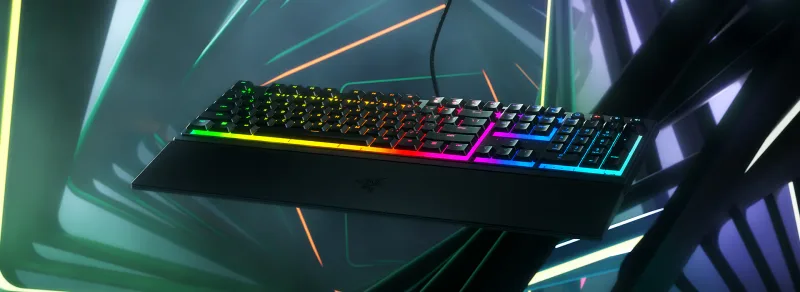
Popular and heavily marketed, but it's a mecha-membrane hybrid - not a true mechanical keyboard.
Best for: Almost no one shopping this list - if you specifically want a soft membrane feel with RGB, otherwise buy a real mechanical board.
- Comfortable for long casual sessions thanks to the included wrist rest and soft, clicky feel
- Full Razer Chroma RGB and clean build for the price
- Uses mecha-membrane switches, not real mechanical switches - reviewers note keypresses don't feel instantaneous and latency lags for competitive games
- Membrane-based longevity concerns and non-PBT UV-coated keycaps; for the same money you can get a genuine hot-swap mechanical board
| Criteria | Keychron V5 Max Top pick | C2 Pro | 3098B | Ornata V3 |
|---|---|---|---|---|
| Verdict | Buy it | Buy it | It depends | Skip it |
| Best for | Anyone who wants a near-custom typing experience and wireless flexibility without crossing into premium pricing. | Budget buyers who want a no-nonsense full-size mechanical board and don't need wireless. | Typists who prize build quality and a heavy, planted feel and will skip the bundled software. | Almost no one shopping this list - if you specifically want a soft membrane feel with RGB, otherwise buy a real mechanical board. |
| Price tier | $$ · mid-range | $ · budget | $$ · mid-range | $$ · mid-range |
| Layout | 96% compact | Full-size (100%) | 96% (98-key) | Full-size (100%) |
| Switch type | True mechanical (Gateron Jupiter) | True mechanical (Keychron K Pro) | True mechanical (Akko) | Mecha-membrane hybrid - not true mechanical |
| Connectivity | 2.4GHz + Bluetooth + wired | Wired only | 2.4GHz + Bluetooth + wired | Wired only |
| Hot-swappable | Yes (3- and 5-pin) | Yes (hot-swappable version only) | Yes (5-pin) | No |
| Keycaps | Double-shot PBT (OSA profile) | Double-shot PBT (OEM profile) | Double-shot or dye-sub PBT, by colorway | UV-coated ABS |
| Price tier | $$ · mid-range | $ · budget | $$ · mid-range | $$ · mid-range |
Which one is right for you?
- Anyone who wants a near-custom typing experience and wireless flexibility without crossing into premium pricing. Buy it Keychron V5 Max
- Budget buyers who want a no-nonsense full-size mechanical board and don't need wireless. Buy it Keychron C2 Pro
- Typists who prize build quality and a heavy, planted feel and will skip the bundled software. It depends Akko 3098B
- Almost no one shopping this list - if you specifically want a soft membrane feel with RGB, otherwise buy a real mechanical board. Skip it Razer Ornata V3
How we judged the field
At this tier the question is not mechanical or not, but how much keyboard you get before the extras become gimmicks. We weighted typing feel, build rigidity, switch hot-swapping, firmware you actually control, and straightforward connectivity over RGB spectacle and inflated polling-rate marketing. We read across independent testing and owner reports and synthesize those findings rather than lab-testing units ourselves. That approach rewards boards that sound and feel good untouched, not ones that need a modding project to justify the box. Our pick is the Keychron V5 Max for its tuned-out-of-the-box acoustics and wireless flexibility; the wired Keychron C2 Pro is the runner-up for anyone who never unplugs.
Keychron V5 Max
Buy itThe V5 Max is a 96% hot-swappable board with QMK/VIA firmware and tri-mode connectivity (2.4GHz, Bluetooth 5.1, USB-C). Its gasket-mounted PC plate and stacked sound-dampening foam are the reason it lands here: the typing feel has give rather than a harsh bottom-out, and the acoustics read as deep and muted instead of hollow and pingy straight from the box. The 2.4GHz link runs a 1000Hz polling rate, so wireless does not feel sluggish for everyday work or casual gaming. QMK/VIA means remapping, macros, and layers live on the board, not behind a cloud login. A 4000mAh battery is rated for up to 190 hours. What we liked less is the footprint and heft: the 96% layout with a numpad is wide on a desk, and the ABS plastic case flexes more than Keychron’s aluminum Q-series, so it feels less planted. Keychron has since added a V5 8K and V5 Ultra 8K above it, and the V5 Max itself has been drifting in and out of backorder. The Gateron switches are decent, but the feel you get is somewhat a matter of luck. Right buyer: someone who wants a quiet, well-damped board that works wireless and rewards tinkering without demanding it. Wrong buyer: a compact-desk minimalist or a competitive gamer chasing wired-only latency.
Keychron C2 Pro
Buy itThe C2 Pro is a wired, full-size board that spends its budget on the parts you touch rather than a radio. Two features carry it: south-facing RGB LEDs, which clear the keycap wall so backlight is not blocked when you swap in non-shine-through PBT or Cherry-profile caps, and a double-shot PBT keycap set whose legends will not wear smooth or go greasy. The hot-swappable version takes 3- and 5-pin switches, but Keychron also sells non-hot-swap versions of the C2 Pro, so check the listing; all run QMK/VIA, and three feet positions (4.8, 8.5, 10.7 degrees) let you dial the typing angle. It comes in a retro two-tone colorway or a plain dark one, with white or RGB backlight depending on version. What we liked more is the plant-on-the-desk stability of a heavy full-size wired board and the same deep firmware control as pricier Keychrons. What we liked less is the obvious: no wireless at all, and the case damping is a step below the V5 Max, so the sound is a touch clackier and less resolved. Right buyer: a desktop user who never needs Bluetooth and wants maximum typing substance per dollar. Wrong buyer: anyone who moves between a laptop and tablet or wants a clean, cable-free desk.
Akko 3098B
It dependsThe 3098B is a 96% tri-mode board (Bluetooth 5.0, 2.4GHz, USB-C) built like a brick, with plate noise-dampening foam and PBT caps (double-shot on most colorways, dye-sub on some). Its appeal is real: the dense case and damping give it a satisfying, muted thock, and the stock Akko switches, V3 Cream Yellow Pro linear or Cream Blue Pro tactile on current units, are smoother than the price suggests. The 5-pin hot-swap sockets sit on a south-facing PCB, and a 3000mAh battery feeds the wireless modes. Where it gets conditional is control and layout. It runs Akko’s own software rather than QMK/VIA, so remapping is shallower and less portable, and the 96% layout drops or relocates dedicated keys some users expect, since its Home/End/PrtScr arrangement trips people up. RGB customization is also thinner than the lighting hardware implies. It depends on your priorities: buy it if you want a heavy, good-sounding wireless board in a specific colorway and you will not miss QMK. Skip it if firmware freedom or a conventional key cluster matters, in which case the V5 Max covers the same brief with fewer compromises.
Razer Ornata V3
Skip itThe Ornata V3 is tempting for obvious reasons: a recognizable brand, 10-zone Chroma RGB, a magnetic wrist rest, dedicated media keys, and a low 27mm profile that undercuts many entry mechanicals. The catch is what sits under the caps. These are mecha-membrane switches, a rubber-dome design with a click bar bolted on, not true mechanical switches, so you get a livelier bump than a plain membrane but a mushier, less consistent bottom-out than any hot-swappable board here. There is no hot-swap and no switch choice, so what you buy is what you keep, and customization runs through Razer Synapse software rather than on-board firmware. The dome sheet is also a long-term wear item mechanical stems avoid. The one buyer it suits: someone who specifically wants a low-profile, cushioned, quiet-ish clicky feel with a wrist rest and does not care about mechanical switches, hot-swapping, or open firmware. Everyone cross-shopping this list for a real mechanical board should pass.
Sources
Specs in this review come from these pages.
Keychron V5 Max vs Keychron C2 Pro: which should you buy?
Same firmware brains, different bodies. The V5 Max wins on feel and freedom: its gasket mount and thicker damping make it quieter and deeper out of the box, and tri-mode wireless lets it move between a work laptop, a personal machine, and a tablet without a cable. That flexibility and acoustic polish are what earn it the pick. The C2 Pro answers a narrower question well: if your keyboard lives on one desk and never travels, the wired-only design removes a radio you were not going to use and puts the savings into a stable, full-size chassis with south-facing RGB and durable PBT caps. Choose the V5 Max if you value quiet typing and wireless; choose the C2 Pro if you want the most typing substance for the money and treat Bluetooth as clutter. Neither is a downgrade so much as a different bet on how you actually work.
What to look for
Get the Keychron V5 Max if you want the best all-round feel here, care about a quiet, well-damped sound, and use more than one device; its tri-mode wireless and gasket mount make it the safe default. Get the Keychron C2 Pro instead if your board never leaves one desk and you would rather spend the wireless premium on a heavier, more planted full-size wired build with south-facing RGB. Consider the Akko 3098B if a specific dense-and-thocky aesthetic and colorway matter more to you than QMK firmware and a conventional key layout, and you are comfortable with Akko’s lighter software. Whatever you pick, prioritize hot-swap sockets and PBT keycaps: sockets let you change the feel later without soldering, and PBT resists the shine and legend-fade that make budget boards look old fast. Be skeptical of specs that photograph well, such as zone-count RGB and headline polling rates, over the mount, plate, and damping that decide how a board actually feels and sounds.
Our final take
The Keychron V5 Max is the board most people here should buy: it feels and sounds good untouched, works wireless across devices, and stays open to tinkering without requiring it. The Keychron C2 Pro is the smarter pick if you want maximum typing quality on a single wired desk. The Akko 3098B rewards a narrower buyer who prizes its dense build and look over firmware freedom. The Razer Ornata V3, despite the brand and the wrist rest, is a membrane hybrid, not a mechanical board, and belongs on a different shopping list.
Questions, answered
Are these real mechanical keyboards?
The Keychron V5 Max, C2 Pro, and Akko 3098B use genuine mechanical switches with hot-swap sockets, so you can change the feel without soldering. The Razer Ornata V3 is mecha-membrane, a rubber-dome hybrid, not a true mechanical board despite its clicky feedback.
Do I need the wireless one?
Only if you switch between devices or want a clean desk. The V5 Max and Akko 3098B offer Bluetooth and 2.4GHz; the wired C2 Pro drops the radio to spend more on the chassis. For a fixed single-computer setup, wired costs less and never needs charging.
What is QMK/VIA and does it matter?
QMK/VIA is open firmware that stores remaps, macros, and layers on the keyboard itself, no cloud login required. The Keychron boards support it; the Akko uses lighter proprietary software. It matters if you plan to customize keys or move the board between computers.
Will cheap keycaps wear out fast?
The keycaps here are double-shot PBT, which resists the greasy shine and faded legends that plague cheaper ABS caps. That durability is a genuine reason to favor these boards over flashier options, and it is one area where budget mechanicals now match pricier models.
Deciding between the top two? See our head-to-head: Keychron V5 Max vs Keychron C2 Pro.
More Tech & Gadgets reviews
 The Best Budget Tablets: Four Compared, One to Skip
  The Best Cable Modems: 5 Compared (and One to Skip)
  The Best Network Cable Testers: 4 Compared (and One to Skip)
  The Best Camera Straps: 4 Compared (and One to Skip)
  The Best Camera Tripods: 4 Compared (and One to Skip)
  The Best Video Capture Cards: 4 Compared (and One to Skip)