

Tech & Gadgets
The Best Outdoor Security Cameras: Wide Coverage Without the Monthly Trap
We compared four outdoor security cameras on coverage, night vision and the subscription fine print. The winners record locally with no fee; one is a hard skip.
The short version
For most people the Reolink Argus 4 Pro is the camera to buy: a true 4K, 180-degree view, full-color night vision, and local storage with no subscription. The eufy SoloCam S340 is the pick if you want a pan-tilt lens that follows and zooms, also fee-free. The Google Nest Cam (battery) suits Google Home users who have a sheltered spot and accept a paid plan for real history. Skip the Arlo Pro 5S 2K unless you are content paying a monthly fee forever just to record.
Our picks at a glance
- Reolink Argus 4 Pro - Buy. The widest and sharpest no-subscription camera, provided you feed it enough storage and signal.
- eufy SoloCam S340 - Buy. A dual-lens pan-tilt watcher that follows and zooms, with onboard storage and no fees.
- Google Nest Cam (battery) - It depends. Strong free basics and a clean app, held back by weak weatherproofing and a walled garden.
- Arlo Pro 5S 2K - Skip. Capable hardware undercut by a subscription you must keep paying just to record anything.
The verdict in 30 seconds
What mattered most
- Resolution & field of view
- Night vision
- Storage & subscription
- Power
- Weather rating
- Smart detection cost
An outdoor camera is only as good as the footage you can actually keep and the face you can actually make out at 2 a.m. We synthesized independent expert testing and long-term owner reports on four currently sold 2026 models, weighing coverage, night vision and the true cost of storage. Three earn a recommendation; one is included as a warning about where the real money goes.
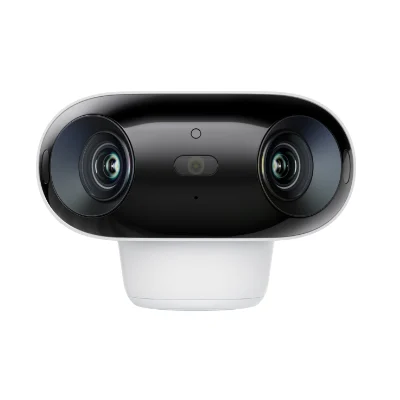
The widest and sharpest no-subscription camera, provided you feed it enough storage and signal.
Best for: People who want the widest, sharpest coverage from a single unit and refuse to pay a subscription.
- Twin 4mm lenses produce a true 4K, 180-degree panorama with no blind-spot seam down the middle
- ColorX F1.0 sensor holds full color at night without a spotlight, and person/vehicle/animal detection plus microSD-to-512GB or Home Hub storage carry no monthly fee
- Panoramic 4K clips are large, so a high-capacity card or the separate Home Hub is close to mandatory for a useful history
- Even with dual-band Wi-Fi 6, the twin-lens stream leans on a strong signal and the 5000mAh battery drains faster in busy, always-triggering spots
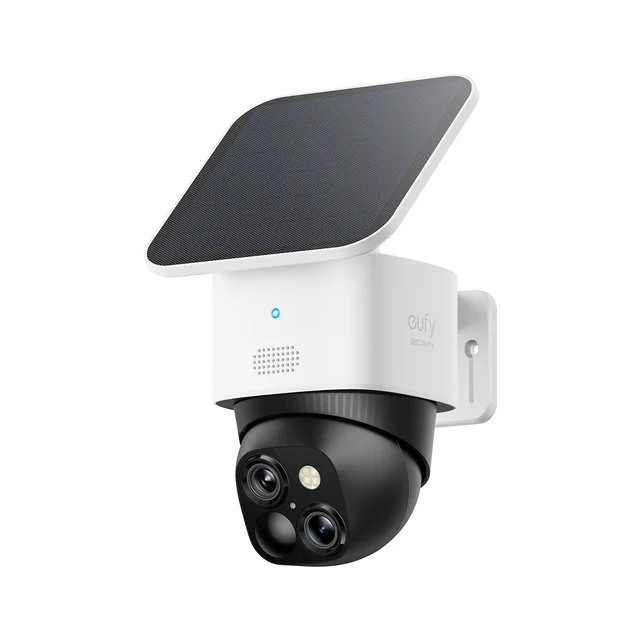
A dual-lens pan-tilt watcher that follows and zooms, with onboard storage and no fees.
Best for: Driveways and yards where you want to actively pan, follow and zoom on activity rather than just cover a fixed frame.
- Pairs a 3K wide-angle lens with a 2K telephoto and full 360-degree pan plus 70-degree tilt, so it tracks a subject and zooms in up to 8x
- Ships with 8GB of built-in local storage and on-device human/vehicle detection at no subscription cost, and the bundled solar panel keeps it self-charging
- Only 8GB of onboard storage without adding a HomeBase, so long or high-traffic histories overwrite quickly
- The pan-tilt motor and telephoto framing can lag behind fast movement, sometimes catching the tail end of an event rather than the start
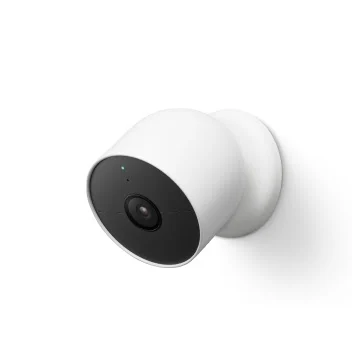
Strong free basics and a clean app, held back by weak weatherproofing and a walled garden.
Best for: Existing Google Home households that want reliable free basics under a sheltered overhang.
- On-device person, animal, vehicle and package alerts work for free, alongside three hours of rolling event history at no cost
- 1080p HDR handles harsh backlight and bright-sky doorways well, and it integrates tightly with Google Home, Assistant and Nest displays
- An IP54 rating means it is only splash-resistant, so it really needs a covered eave or porch rather than fully exposed mounting
- History beyond three hours, familiar-face alerts and 24/7 recording all require a paid Google Home Premium plan, inside a fairly closed ecosystem
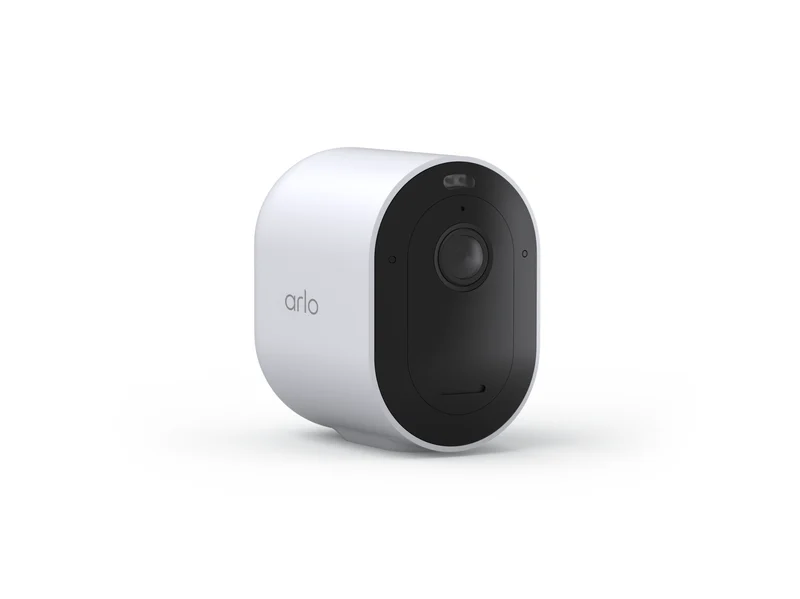
Capable hardware undercut by a subscription you must keep paying just to record anything.
Best for: Only buyers already committed to Arlo's ecosystem and willing to pay its monthly fee indefinitely.
- Sharp 2K HDR sensor with a genuine color spotlight and dual-band Wi-Fi for fast, clear live views
- Long four-to-six-month real-world battery life and an IP65 body that shrugs off rain and dust
- Cloud recording, activity zones and person/vehicle detection are locked behind the Arlo Secure plan, whose price has been raised repeatedly
- With no paid plan the camera does little more than live-stream and send bare 'motion detected' pings, and there is no built-in local storage to fall back on
| Criteria | Reolink Argus 4 Pro Top pick | eufy SoloCam S340 | Google Nest Cam (battery) | Arlo Pro 5S 2K |
|---|---|---|---|---|
| Verdict | Buy it | Buy it | It depends | Skip it |
| Best for | People who want the widest, sharpest coverage from a single unit and refuse to pay a subscription. | Driveways and yards where you want to actively pan, follow and zoom on activity rather than just cover a fixed frame. | Existing Google Home households that want reliable free basics under a sheltered overhang. | Only buyers already committed to Arlo's ecosystem and willing to pay its monthly fee indefinitely. |
| Price tier | $$$ · premium | $$ · mid-range | $$$ · premium | $$$ · premium |
| Resolution & field of view | 4K, dual-lens 180° panorama | 3K wide + 2K telephoto, 360° pan / 70° tilt | 1080p HDR, single lens | 2K HDR, 160° |
| Night vision | Full-color ColorX, F1.0, no spotlight needed | Color + IR, F1.6, spotlight | Infrared only, no spotlight | Infrared + color spotlight |
| Storage & subscription | microSD to 512GB or Home Hub, no fee | 8GB built-in, no fee | 3 hrs cloud free; more needs paid plan | Cloud only; recording needs paid plan |
| Power | 5000mAh battery + solar, Wi-Fi 6 | Battery + bundled solar, self-charging | Rechargeable battery, no solar | Rechargeable battery, optional solar |
| Weather rating | IP66 | IP67-class | IP54 (needs cover) | IP65 |
| Smart detection cost | Person/vehicle/animal, free | Human/vehicle on-device, free | Person/package/animal, free basics | Person/vehicle/package, subscription-gated |
Which one is right for you?
- People who want the widest, sharpest coverage from a single unit and refuse to pay a subscription. Buy it Reolink Argus 4 Pro
- Driveways and yards where you want to actively pan, follow and zoom on activity rather than just cover a fixed frame. Buy it eufy SoloCam S340
- Existing Google Home households that want reliable free basics under a sheltered overhang. It depends Google Nest Cam (battery)
- Only buyers already committed to Arlo's ecosystem and willing to pay its monthly fee indefinitely. Skip it Arlo Pro 5S 2K
How we judged the field
Real Buyer Experiences does not run a camera lab. Instead we read across independent expert testing and long-term owner reports, then weigh the patterns that keep recurring: how a camera actually sees in the dark, how honest its no-fee claim is once you want to keep footage, and how it holds up after a few wet months on a wall. For outdoor security, three things separate a keeper from a returns-pile regret. Coverage has to be wide enough that you are not buying three cameras to watch one driveway. Night vision has to resolve a face or a plate, not just a pale, moving blob. And the storage model has to be something you can live with, because the quiet cost of a cheap camera is often a recurring bill you did not plan for.
We looked only at currently sold 2026 models, leaned toward wireless battery designs that a normal person can actually install, and deliberately kept one camera in the group as a cautionary example of how subscriptions can hollow out good hardware. Every judgment below rests on named, checkable features rather than marketing language, and we say plainly where each camera frustrated the people who live with it.
Reolink Argus 4 Pro
Buy itThis is our overall pick. The headline is a genuine 4K, 180-degree panorama produced by two 4mm lenses whose images are stitched without the blind-spot seam that ruins many wide cameras. In practice that means one unit can cover a corner of a house that would otherwise need two. The other standout is night vision: the ColorX F1.0 sensor keeps full, natural color in low light without firing a spotlight, so a person’s jacket or a car’s paint stays identifiable rather than washing out to infrared grey. Detection for people, vehicles and animals is on board and free, and footage lands on a microSD card up to 512GB or the optional Home Hub, with no monthly charge.
What owners liked most is exactly that combination of reach and zero ongoing cost. What they liked less is the housekeeping. Panoramic 4K files are heavy, so a large card or the hub is effectively required, and the twin-lens stream is demanding: a weak signal shows, and the battery empties faster in a spot that triggers constantly. Wi-Fi 6 and a solar panel take most of the sting out, but this is a camera that rewards a little planning.
eufy SoloCam S340
Buy itThe SoloCam S340 takes a different route to good coverage. Rather than a fixed ultra-wide view, it uses two cameras, a 3K wide-angle and a 2K telephoto, on a motorized head that pans a full 360 degrees and tilts 70, then zooms in up to 8x to follow a subject. For a driveway or a long side yard, that active tracking can be more useful than a static panorama. It stores clips on 8GB of built-in memory, runs human and vehicle detection on the device itself, and charges from a bundled solar panel, all without a subscription.
Owners praised the self-sufficiency: mount it, point the panel at the sky, and it largely looks after itself. The reservations are practical. Eight gigabytes fills up on a busy street unless you add a HomeBase, and the pan-tilt motor plus telephoto framing can be a beat slow, occasionally catching the end of an event instead of the beginning. For most homes those are acceptable trade-offs for a fee-free camera that can genuinely chase movement.
Google Nest Cam (battery)
It dependsThe Nest Cam is the polished option, and the one with the clearest asterisk. Its free tier is unusually generous for a big-brand camera: on-device alerts for people, animals, vehicles and packages, plus three hours of rolling event history at no cost. The 1080p HDR image copes well with backlit doorways, and the app and Google Home integration are the tidiest here. If you already live in Google’s ecosystem, it slots in without friction.
The reasons it is a conditional pick are twofold. First, the IP54 rating makes it only splash-resistant, so it genuinely wants a covered eave or porch rather than a fully exposed wall; owners in open, weather-beaten spots report the most disappointment. Second, anything past three hours of history, along with familiar-face alerts and continuous recording, requires a paid plan, and the whole thing lives in a fairly closed ecosystem with limited third-party support. Buy it for a sheltered spot in a Google home; look elsewhere for an exposed, storage-hungry install.
Arlo Pro 5S 2K
Skip itThe Arlo is here as the honest warning. On paper it is likable: a crisp 2K HDR sensor, a real color spotlight, dual-band Wi-Fi for fast live views, four-to-six-month battery life and a rugged IP65 body. The problem is what happens when you try to use it. Cloud recording, activity zones and person or vehicle detection are all locked behind the Arlo Secure plan, and that plan’s price has been raised more than once. Without paying, the camera essentially live-streams and sends bare motion pings, and there is no built-in local storage to fall back on.
That structure means the sticker is only the entry fee, and the camera becomes far less useful the moment you stop paying. Owners who did the math often felt the recurring cost outweighed the hardware advantage. Unless you are already committed to Arlo and comfortable with an open-ended subscription, the value simply is not there.
Reolink Argus 4 Pro vs eufy SoloCam S340: which should you buy?
Both win on the thing that matters most, keeping your footage without a monthly bill, so the choice comes down to how you want to see. The Reolink Argus 4 Pro is the better camera for wide, fixed coverage: its 180-degree 4K view captures a whole scene at once, and its color night vision is a step ahead. Choose it if you want maximum detail across a broad area and can supply the storage and signal it asks for.
The eufy SoloCam S340 is the better camera for active watching. Its pan-tilt head and telephoto lens let it follow and zoom on a person or vehicle, which suits a driveway or a long approach where you care about one moving subject more than the whole frame. It is also the gentler installation, running happily on its own solar panel. If you would rather the camera chase the action than hold a static panorama, the eufy is the more satisfying daily companion.
What to look for
Start with storage, because it is the decision that follows you for years. If you never want a subscription, favor a camera with local recording and free detection, and budget for a large card or a hub up front. Next, match the field of view to the space: a fixed wide-angle for corners and open areas, a pan-tilt for a single path you want to track. Then be honest about mounting. A fully exposed wall needs a higher weather rating, while a covered porch opens up more options. Finally, weigh the ecosystem: a camera that plugs into speakers and displays you already own is more pleasant to use, but tighter integration usually means less freedom to mix brands later.
Our final take
The Reolink Argus 4 Pro is the camera we would put on most homes: the widest, sharpest view here, the strongest night vision, and an ownership cost that stays at zero after purchase. The eufy SoloCam S340 is the close runner-up and the better buy for anyone who wants an active, zooming pan-tilt lens. The Google Nest Cam (battery) earns its place for Google-home owners with a sheltered spot who accept a paid plan for deeper history. And the Arlo Pro 5S 2K is the one to walk past, not because the hardware is bad, but because you never really stop paying for it.
Questions, answered
Do these outdoor cameras need a monthly subscription?
It varies, and that is the whole point. The Reolink Argus 4 Pro and eufy SoloCam S340 record to local storage with all detection free. Nest gives three hours of history free but paywalls more. Arlo records almost nothing without a paid plan.
Which camera has the best night vision?
The Reolink Argus 4 Pro leads here. Its ColorX F1.0 sensor keeps genuine full color in low light without switching to a spotlight or grainy infrared, so faces and clothing colors stay identifiable. The eufy and Arlo rely more on a spotlight to add color.
Are wireless battery cameras reliable enough for security?
Yes, with realistic expectations. Battery models here last months per charge, and solar options on the Reolink and eufy can keep them topped up. The trade-off is dependence on Wi-Fi strength and slightly delayed wake-from-idle recording versus a wired camera.
Is local storage safer than cloud?
Local storage keeps footage on a card in your hand, out of reach of cloud breaches, third-party data requests and lapsed subscriptions. The downside is that a stolen camera can take its card with it, so pair it with high mounting or off-device backup.
Why is the Arlo Pro 5S 2K a skip?
The hardware is fine, but Arlo gates cloud recording, activity zones and smart detection behind a plan whose price keeps rising. Without paying, the camera only live-streams and sends vague alerts, and it offers no local storage as a fallback.
Deciding between the top two? See our head-to-head: Reolink Argus 4 Pro vs eufy SoloCam S340.
More Tech & Gadgets reviews
 The Best Ethernet Patch Panels: 4 Compared (and One to Skip)
  The Best PC Cases: 4 Compared (and One to Skip)
  The Best Photo and Film Scanners: 4 Compared (and One to Skip)
  The Best Pixel Art Displays: 4 Compared (and One to Skip)
  The Best Portable Monitors of 2026: Honest Picks for Travel and Work
  The Power Banks Worth Buying (and the 'Mega-mAh' One to Skip)