

Tools & DIY
The Best Miter Saws: 4 Compared (and One to Skip)
Four miter saws compared on a crosscut capacity that the category quotes in three incompatible units, and on what blade diameter does and does not buy.
The short version
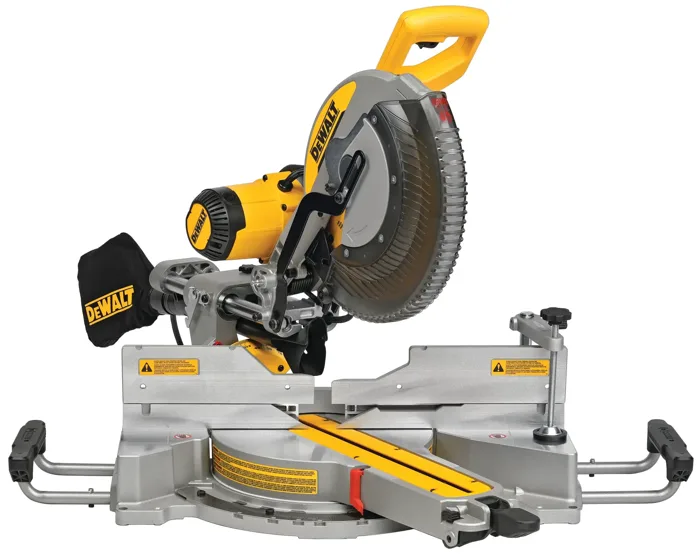
Buy the DEWALT DWS780. It is a 12 inch double-bevel slider quoting 2x14 at 90 degrees and 2x10 at 45, which is the largest capacity here on any reading of the units, from a 15 amp motor at 3,800 RPM, with an XPS shadow cut line. Buy the Makita LS1019L if you would rather have a number you can check: it is a 10 inch slider and Makita publishes the capacity as an actual measurement, 2-13/16 by 12 inches at 90 degrees and 2-13/16 by 8-1/2 at 45, which is the only figure in this comparison you can hold a tape against. Its dual bevel and compact rail design also fit against a wall in a way the DEWALT does not. The DEWALT DWS715 is the it-depends, a 12 inch saw with no slide and a single bevel, quoting 2x8 and 2x6, which is a lot of saw for the money if you never cut wide boards and never bevel left. Skip the CRAFTSMAN CMCS714M1 for anything structural: a 7-1/4 inch cordless slider cutting 8 inches at 90 and 5-1/2 at 45 will not cross-cut a 2x10, let alone the 2x12 the two bigger sliders manage. Best for: anyone about to buy a 12 inch saw on the assumption that the bigger blade cuts wider boards.
Our picks at a glance
- DEWALT DWS780 12 in. Double-Bevel Sliding Compound Miter Saw - Buy. The largest crosscut capacity in this comparison, with a double bevel that stops you flipping every second cut.
- Makita LS1019L 10 in. Dual-Bevel Sliding Compound Miter Saw with Laser - Buy. The only saw here that publishes its capacity as a measurement you can check with a tape, on a rail design that sits against a wall.
- DEWALT DWS715 12 in. Single-Bevel Compound Miter Saw - It depends. A 12 inch blade with no slide, which buys depth and costs width, at a price the sliders cannot match.
- CRAFTSMAN CMCS714M1 V20 7-1/4 in. Cordless Sliding Miter Saw Kit - Skip. A slider whose 8 inch crosscut will not reach across a 2x10, which is the board most people buy a miter saw for.
The verdict in 30 seconds
What mattered most
- Blade diameter
- Sliding
- Capacity at 90 degrees
- Capacity at 45 degrees
- Unit the capacity is quoted in
- Bevel
Ask four miter saw makers how wide a board their saw will cross-cut and you get three different kinds of answer. DEWALT quotes nominal lumber, as in cuts a 2x14. Makita quotes an actual measurement, 2-13/16 inches by 12 inches. CRAFTSMAN quotes a bare width, an 8 inch crosscut. None of those can be compared against another without converting, and the nominal figures flatter, because a 2x14 is not fourteen inches wide. Underneath the units problem is a second confusion: blade diameter and crosscut width are separate specifications. The blade sets how deep the saw can cut. The slide, if there is one, sets how wide. A 12 inch saw with no slide and a 10 inch saw with one are not competing on the number people think they are.
The largest crosscut capacity in this comparison, with a double bevel that stops you flipping every second cut.
Best for: Anyone cutting wide stock or long moulding who has the bench depth for the rails and wants the largest capacity available.
- Quotes 2x14 at 90 degrees and 2x10 at 45, the largest capacity here however you convert the units.
- Double bevel, so the head tilts both ways and long skirting and crown do not have to be flipped end to end.
- A 15 amp motor at 3,800 RPM no-load speed, plus DEWALT's XPS crosscut positioning system, which marks the cut line with the blade's shadow and needs no adjustment.
- Twelve inch blade gives the depth for 4x material as well as the width for wide boards.
- Capacity is quoted as nominal lumber sizes, so 2x14 has to be converted before it can be compared with a measured figure.
- Sliding rails project behind the saw, so it needs clearance from a wall that the Makita's rail design does not.
- At a stated 56 lb it is heavy and awkward to move between sites, and only slightly lighter than the 10 inch Makita.
- Twelve inch blades cost noticeably more than 10 inch ones and there are fewer of them.
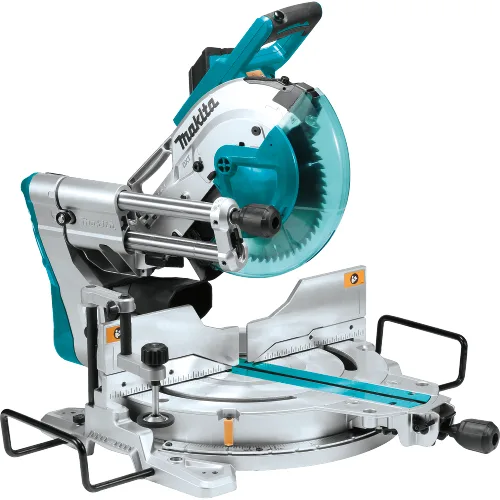
The only saw here that publishes its capacity as a measurement you can check with a tape, on a rail design that sits against a wall.
Best for: Shops where the saw lives against a wall and where a checkable capacity figure is worth more than the last inch of width.
- Makita publishes capacity as an actual measurement: 2-13/16 in. by 12 in. at 90 degrees and 2-13/16 by 8-1/2 at 45.
- A compact rail design that does not need clearance behind the saw, which matters in a small shop or against a wall.
- Dual bevel, so the head tilts both directions without flipping the workpiece.
- Ten inch blades are cheaper and more widely stocked than 12 inch, and Makita states the 5/8 in. arbor plainly.
- A 10 inch blade gives 2-13/16 in. of depth, which is less than a 12 inch saw and short of some 4x material.
- At 57.9 lb it is heavy for a 10 inch saw, heavier than the 12 inch DEWALT slider.
- 3,200 RPM is the lowest no-load speed here.
- The most expensive saw in this comparison by a clear margin.
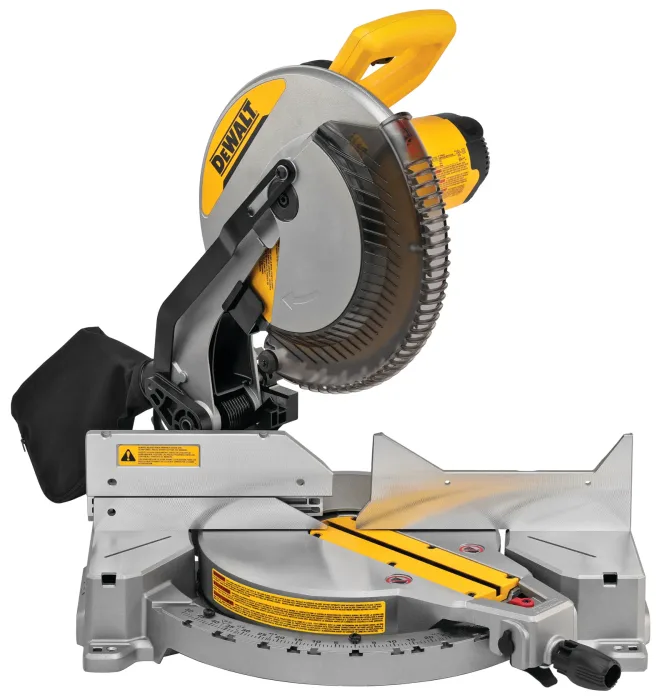
A 12 inch blade with no slide, which buys depth and costs width, at a price the sliders cannot match.
Best for: Framing and trim work in standard stock where depth matters more than width and the budget is doing real work.
- Quotes 2x8 at 90 degrees and 2x6 at 45, enough for studs and narrow trim without a slide.
- A 12 inch blade gives the depth to cut 4x material that a 10 inch saw cannot reach.
- No rails means no clearance needed behind the saw and one fewer mechanism to knock out of alignment.
- Cheaper than either slider here.
- No slide, so crosscut width is fixed by the blade's arc and cannot be extended.
- Single bevel, so the head tilts one way only and long moulding has to be flipped end to end.
- Capacity is again quoted as nominal lumber rather than a measurement.
- The 2x6 figure at 45 degrees is the limiting one, and it rules out wide bevelled cuts.
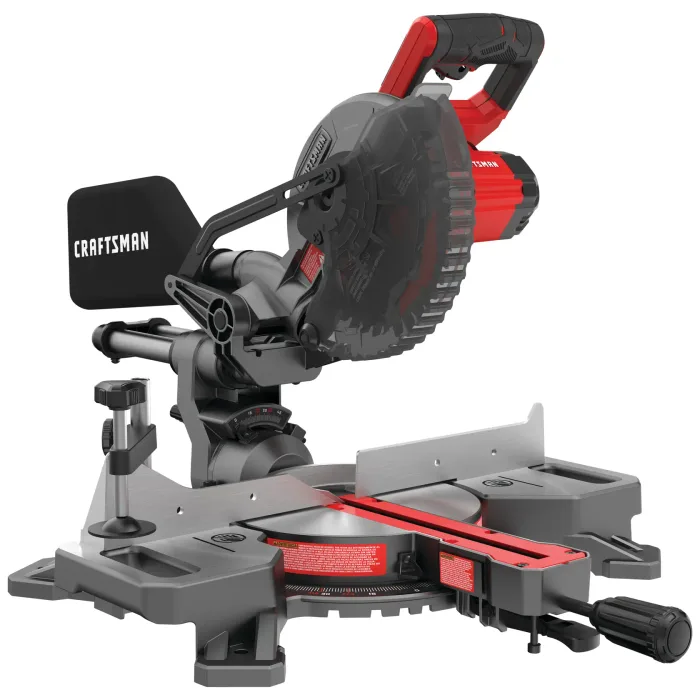
A slider whose 8 inch crosscut will not reach across a 2x10, which is the board most people buy a miter saw for.
Best for: Trim, moulding and small stock on site where portability is the point and nothing structural gets cut.
- Genuinely portable and cordless, which is a real advantage for trim work away from power.
- 3,800 RPM matches the DEWALT slider on no-load speed.
- Quotes 3-5/8 in. nested crown and 3-1/2 in. baseboard vertically, which covers most domestic moulding.
- Sliding action on a small saw, which recovers some of the width a 7-1/4 in. blade would otherwise lose.
- An 8 in. crosscut at 90 degrees and 5-1/2 at 45, so it cannot cross-cut a 2x10 and is well short of the 2x12 the two bigger sliders manage.
- A 7-1/4 in. blade limits depth as well as width, so 4x material is out of reach.
- Single bevel, so moulding has to be flipped.
- Capacity is quoted as a bare width with no depth figure, a third unit again.
| Criteria | DWS780 12 in. Double-Bevel Sliding Compound Miter Saw Top pick | LS1019L 10 in. Dual-Bevel Sliding Compound Miter Saw with Laser | DWS715 12 in. Single-Bevel Compound Miter Saw | CMCS714M1 V20 7-1/4 in. Cordless Sliding Miter Saw Kit |
|---|---|---|---|---|
| Verdict | Buy it | Buy it | It depends | Skip it |
| Best for | Anyone cutting wide stock or long moulding who has the bench depth for the rails and wants the largest capacity available. | Shops where the saw lives against a wall and where a checkable capacity figure is worth more than the last inch of width. | Framing and trim work in standard stock where depth matters more than width and the budget is doing real work. | Trim, moulding and small stock on site where portability is the point and nothing structural gets cut. |
| Price tier | $$$ · premium | $$$$ · flagship | $$ · mid-range | $$ · mid-range |
| Blade diameter | 12 in. | 10 in. | 12 in. | 7-1/4 in. |
| Sliding | Yes | Yes | No | Yes |
| Capacity at 90 degrees | 2x14 nominal | 2-13/16 in. x 12 in. measured | 2x8 nominal | 8 in. crosscut |
| Capacity at 45 degrees | 2x10 nominal | 2-13/16 in. x 8-1/2 in. measured | 2x6 nominal | 5-1/2 in. crosscut |
| Unit the capacity is quoted in | Nominal lumber | Actual measurement | Nominal lumber | Bare width |
| Bevel | Double | Dual | Single | Single |
| No-load speed | 3,800 RPM | 3,200 RPM | 4,000 RPM | 3,800 RPM |
Which one is right for you?
- Anyone cutting wide stock or long moulding who has the bench depth for the rails and wants the largest capacity available. Buy it DEWALT DWS780 12 in. Double-Bevel Sliding Compound Miter Saw
- Shops where the saw lives against a wall and where a checkable capacity figure is worth more than the last inch of width. Buy it Makita LS1019L 10 in. Dual-Bevel Sliding Compound Miter Saw with Laser
- Framing and trim work in standard stock where depth matters more than width and the budget is doing real work. It depends DEWALT DWS715 12 in. Single-Bevel Compound Miter Saw
- Trim, moulding and small stock on site where portability is the point and nothing structural gets cut. Skip it CRAFTSMAN CMCS714M1 V20 7-1/4 in. Cordless Sliding Miter Saw Kit
How we judged the field
Capacity first, and converting everything into the same units before comparing anything, because the category does not. DEWALT publishes nominal lumber sizes, Makita publishes an actual measurement in inches, and CRAFTSMAN publishes a crosscut width with no depth attached. Three units for one specification, and the nominal ones read larger than they measure. After that we separated the two things capacity is made of: blade diameter, which decides depth and therefore whether 4x material is reachable, and the slide, which decides width. Then bevel, single or double, which is worth nothing on framing and saves real mistakes on long moulding. Then the practical constraints, chiefly whether the rails need clearance behind the saw, which decides where it can live.
DEWALT DWS780 12 in. Double-Bevel Sliding Compound Miter Saw
Buy itThe DEWALT DWS780 is the pick because it has the most capacity here on any reading of the units and pairs it with the feature that saves errors. Quoting 2x14 at 90 degrees and 2x10 at 45, it clears wider stock than anything else in this comparison even after converting nominal lumber to real dimensions, and the 12 inch blade gives depth for 4x material that a 10 inch saw cannot reach. The double bevel is the part that matters day to day: the head tilts both ways, so opposite ends of a long piece of skirting can be cut without flipping and re-marking the workpiece, which is where trim mistakes come from. A 15 amp motor runs at 3,800 RPM, and the XPS system lights the blade so its shadow marks the cut line on the work, with no laser to calibrate. The DWS780 replaces the older DWS779 in DEWALT’s line with the same quoted capacity, a 60 degree right and 50 degree left miter range and tall sliding fences that hold 7-1/2 inch crown nested. Two things to plan for. The rails project behind the saw, so it needs bench depth or wall clearance that the Makita does not. And 12 inch blades cost more and come in fewer varieties than 10 inch, which is a running cost rather than a purchase one.
Makita LS1019L 10 in. Dual-Bevel Sliding Compound Miter Saw with Laser
Buy itThe Makita LS1019L is the second buy, and the reason is partly the saw and partly the disclosure. It is the only tool in this comparison that publishes its capacity as a measurement rather than a lumber size: 2-13/16 inches by 12 inches at 90 degrees and 2-13/16 by 8-1/2 at 45. You can hold a tape against those numbers, which you cannot do with a 2x14. The compact rail design is the other argument, because it does not need clearance behind the saw, and in a small shop that decides whether the saw fits at all. It is dual bevel, and 10 inch blades are cheaper and more widely stocked than 12 inch. The costs are real: the 10 inch blade gives 2-13/16 inches of depth, short of the 12 inch saws for 4x material; 3,200 RPM is the slowest no-load speed here; at 57.9 pounds it is heavy for its size, and outweighs the 12 inch DEWALT slider; and it is by some distance the most expensive saw in the group.
DEWALT DWS715 12 in. Single-Bevel Compound Miter Saw
It dependsThe DEWALT DWS715 is the it-depends, and it is a lot of saw for anyone who does not need width. It puts a 12 inch blade on a fixed head, which buys the depth to cut 4x material while giving up the ability to pull through a wide board, and it quotes 2x8 at 90 degrees and 2x6 at 45. For studs and narrow trim that is enough. Removing the rails also removes a mechanism that can drift out of square and the clearance they demand behind the saw, and it takes a good deal off the price. What you accept is a hard ceiling on width that no technique gets around, and a single bevel, so the head tilts one way and long moulding has to be flipped end to end. The 2x6 figure at 45 degrees is the binding constraint, and if you regularly bevel wide boards it rules the saw out.
CRAFTSMAN CMCS714M1 V20 7-1/4 in. Cordless Sliding Miter Saw Kit
Skip itThe CRAFTSMAN CMCS714M1 is the skip for structural work, and the numbers are unambiguous once converted. An 8 inch crosscut at 90 degrees and 5-1/2 at 45 means it will not cross the width of a 2x10, which measures about 9-1/4 inches, let alone the 2x12 the two bigger sliders manage. The 7-1/4 inch blade limits depth as well, so 4x material is out of reach entirely. It also quotes capacity as a bare width with no depth figure attached, which is the third unit in a four-saw comparison. What it genuinely offers is portability: it is cordless, it slides, which recovers some of the width a small blade would otherwise lose, and it quotes 3-5/8 inches of nested crown and 3-1/2 inches of baseboard vertically, which covers most domestic moulding. As a trim saw carried to site it is a reasonable tool. As a general-purpose miter saw it is too small for the boards people buy these for.
Sources
Specs in this review come from these pages.
- Makita USA, LS1019L 10 in. dual-bevel sliding compound miter saw specifications (makitatools.com)
- DEWALT DWS780 12 in. double-bevel sliding compound miter saw (dewalt.com)
- DEWALT DWS715 12 in. single-bevel compound miter saw (dewalt.com)
- CRAFTSMAN CMCS714M1 V20 7-1/4 in. cordless sliding miter saw kit (craftsman.com)
- Miter saw blade size and what capacity it actually buys (toolguyd.com)
DEWALT DWS780 12 in. Double-Bevel Sliding Compound Miter Saw vs Makita LS1019L 10 in. Dual-Bevel Sliding Compound Miter Saw with Laser: which should you buy?
The two DEWALTs isolate the slide, since both carry 12 inch blades and differ mainly in whether the head travels. The DWS780 quotes 2x14 at 90 degrees and the DWS715 quotes 2x8, and that gap is the entire contribution of the rails, because the blade diameter and therefore the depth is identical between them. The slider also gets a double bevel where the fixed saw gets a single, so it saves flipping on long moulding. Against that, the fixed saw costs substantially less, needs no clearance behind it, and has one fewer mechanism to fall out of alignment. Put plainly: the rails buy you several nominal lumber sizes of width and a second bevel direction. If you cut wide boards or a lot of trim, that is worth the money. If you cut studs, it is not.
What to look for
- What unit the capacity is quoted in: nominal lumber, an actual measurement or a bare width, and convert everything to one of them before comparing.
- Whether the saw slides: the slide decides crosscut width, and no amount of blade diameter substitutes for it.
- Blade diameter as a depth spec: 12 inch reaches 4x material, 10 inch does not, and that is what the bigger blade actually buys.
- Single or double bevel: irrelevant on framing, and on long moulding it is the difference between cutting both ends and flipping the workpiece to re-mark it.
- Rail clearance behind the saw: sliders normally need it, and a design that does not decides whether the saw fits against a wall.
- A separate nested crown figure: the vertical capacity that decides whether crown can be cut the simple way rather than with compound angles.
Our final take
The capacity figure is the whole decision and the category quotes it three different ways, two of which flatter. Convert them all to real inches, then separate what the blade buys from what the slide buys, and the ranking that results looks nothing like the one implied by blade diameter on the box.
Questions, answered
Does a 12 inch blade cut wider boards than a 10 inch one?
Not on its own. Blade diameter sets how deep the saw can cut, which is why a 12 inch saw reaches 4x material that a 10 inch saw cannot. Crosscut width is set by the slide: a saw with rails pulls the head forward through the board, and one without is limited to the arc the blade sweeps. That is why a 10 inch slider and a 12 inch non-slider are not really competing on the same specification, and why buying the bigger blade for width is the common mistake in this category.
Why can I not compare the capacity figures directly?
Because the makers use three different units. DEWALT quotes nominal lumber sizes, so 2x14 means a board sold as a 2x14, which actually measures about 1-1/2 by 13-1/4 inches. Makita quotes the real measurement, 2-13/16 by 12 inches. CRAFTSMAN quotes a bare crosscut width of 8 inches with no depth at all. To compare them you have to convert the nominal figures to actual dimensions and find the missing depth for the third, which almost nobody does at the point of purchase.
Is a double bevel worth the extra money?
It depends entirely on how much long moulding you cut. A single bevel tilts one way, so cutting opposite ends of a piece of skirting means flipping the workpiece end to end and re-marking, which is where mistakes happen on long lengths. A double or dual bevel tilts both ways, so the piece stays put. For framing and general crosscutting it is close to irrelevant; for trim carpentry it saves errors rather than time.
What is nested crown capacity and why is it quoted separately?
Crown moulding can be cut either lying flat, using compound angles, or nested against the fence at its installed angle. Nested cutting is simpler and less error-prone but needs vertical space between the table and the blade, which is why makers quote a separate nested crown figure. The CRAFTSMAN here quotes 3-5/8 inches nested, which covers most domestic crown even though its flat crosscut capacity is the smallest in the group.
Do I need a slider at all?
Only if you cut boards wider than the blade's arc will reach, which in practice means anything above about a 2x8 on a 12 inch saw. Sliders add rails, cost, weight and a mechanism that can drift out of square, and they need clearance behind the saw unless the maker has designed around it as Makita has. If your work is studs, trim and skirting, a non-sliding 12 inch saw is more saw for the money.
Deciding between the top two? See our head-to-head: DEWALT DWS780 12 in. Double-Bevel Sliding Compound Miter Saw vs Makita LS1019L 10 in. Dual-Bevel Sliding Compound Miter Saw with Laser.
More Tools & DIY reviews
 The Best Moisture Meters: 4 Compared (and One to Skip)
  The Best Digital Multimeters: 4 Compared (and One to Skip)
  The Best Non-Contact Voltage Testers: 4 Compared (and One to Skip)
  The Best Oscillating Multi-Tools: 4 Compared (and One to Skip)
  The Best Outlet Testers: 4 Compared (and One to Skip)
  The Best Pipe Wrenches: 4 Compared (and One to Skip)