

Tools & DIY
The Best Helping Hands: 4 Compared (and One to Skip)
We compared third hand tools and PCB holders on the specifications their makers actually publish: base or unit weight, jaw opening, what the jaws are lined with, how the joints lock, and whether any static claim comes with a number.
The short version
The Omnifixo OF-M4.4 is the pick, because it is the only tool here that specifies the whole grip path: a spring loaded parallel jaw with a 14 mm opening lined in heat resistant silicone, sitting on a carbon steel ball in a brass bushing over an N52 magnet. The QuadHands Deluxe Magnetic WorkBench is the value pick and the honest version of the classic design, publishing an 8.5 by 11 inch powder coated steel base at over 6.4 pounds, five arms in 16, 12 and 8 inch lengths, and silicone clamp covers in the box. The Hakko C1390C Omnivise is the answer if your work is bare boards rather than wires, since it publishes 1.2 kg per unit, a 0 to 20 mm jaw and five fixed heights, and its jaws are padded with rubber Hakko calls static dissipative. Skip the Aven 17012 Third Hand with Tweezers, whose listing sells a heavy base and then publishes a total weight of one pound, with nothing said about the clamp faces, reach or heat. No tool in this category publishes a surface resistance figure, so treat every ESD safe marking here as a description rather than a measurement. If you mostly hold boards, a vise beats a third hand, and it is worth owning both. Best for: anyone soldering small assemblies who wants the tool to stay put and leave no bite marks.
Our picks at a glance
- Omnifixo OF-M4.4 Makers Third Hand - Buy. Four independently magnetised clips with parallel silicone lined jaws and a ball joint the maker specifically claims does not kick back when you tighten it.
- QuadHands Deluxe Magnetic WorkBench - Buy. The classic gooseneck idea with the numbers published: an 8.5 by 11 inch steel base at over 6.4 pounds, five arms in three lengths, and silicone clamp covers in the box.
- Hakko C1390C Omnivise PCB Holder - It depends. A 1.2 kg block that clamps one edge of a board and holds it dead level, with rubber padded jaws Hakko describes as static dissipative.
- Aven 17012 Third Hand with Tweezers - Skip. The listing sells it on a heavy base that prevents movement, then publishes a total weight of one pound and nothing else at all.
The verdict in 30 seconds
What mattered most
- Type
- Published weight
- Reach mechanism
- Jaw or clip face
- Static claim
- Heat statement
A helping hands tool has exactly two jobs: hold the work where you put it, and do not damage the work while it does. Almost every complaint about this category comes back to one of those two, and both are predictable from a spec sheet. Weight tells you whether an arm at full stretch tips the base. The jaw lining tells you whether a clamp leaves a mark on a board edge. So we sorted the field by what the makers publish rather than by how the photos look, and the split was stark: the modern tools list masses, openings and materials, and the traditional ones mostly say the base is heavy and leave it there.
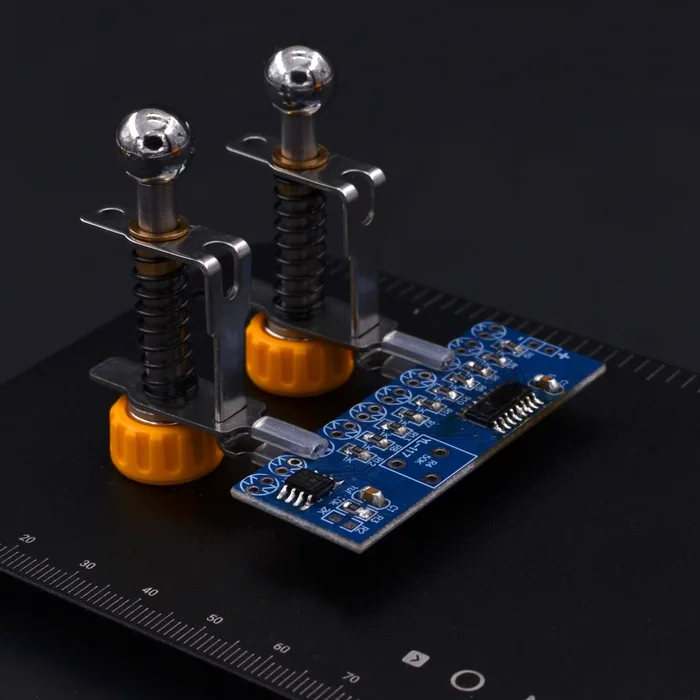
Four independently magnetised clips with parallel silicone lined jaws and a ball joint the maker specifically claims does not kick back when you tighten it.
Best for: Fine board, wire and connector work where you want the clip to grip flat and stay exactly where it was set.
- Each clip is a spring loaded parallel jaw with a 14 mm opening lined in heat resistant silicone, so it lands flat on a board edge rather than biting two points into it.
- Omnifixo details the joint hardware on its own product drawing: a carbon steel ball in a brass bushing over an N52 magnet, sold on a no kickback claim rather than on flexibility.
- The magnetic foot doubles as an electrical contact, with a published internal resistance of about 5 ohm on the base plate's etched ring and a fit for FASTON 250 6.3 x 0.8 mm terminals, so ground or power can be fed to the held board.
- No weight is published for the 90 x 160 mm base plate, which is the number that would tell you how it behaves with a stiff cable pulling sideways on one clip.
- The 14 mm jaw opening is small, so this is a tool for boards, wires and connectors rather than for anything chunky.
- The maker warns against heating the feet or magnets, for example in a reflow oven, since the ABS melts and the magnets demagnetise.
- No surface resistance figure is published, so the conductive path is a deliberate ground connection rather than a documented static dissipative construction.
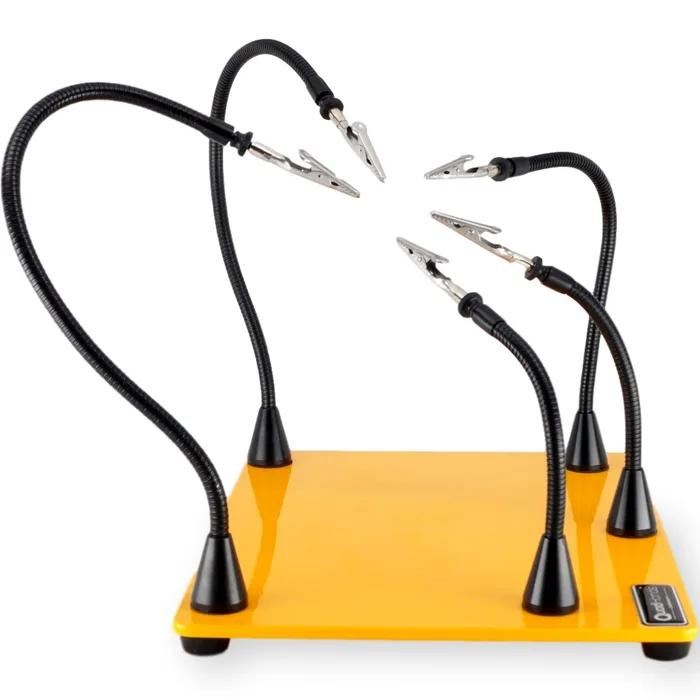
The classic gooseneck idea with the numbers published: an 8.5 by 11 inch steel base at over 6.4 pounds, five arms in three lengths, and silicone clamp covers in the box.
Best for: A bench where the work changes shape weekly and you need several arms of different reach available at once.
- QuadHands says exactly what the base is: powder coated steel, 8.5 by 11 inches, over 6.4 pounds, standing on four rubber feet.
- The stainless steel clamps rotate 360 degrees and lock with a knurled thumb nut, and the listing states that silicone covers are included for delicate electronics.
- Five arms come in 16, 12 and 8 inch lengths, each with an N52 rare earth magnet in its foot, so an arm can be moved anywhere on the base or lifted onto any steel surface for field work.
- Heat resistance is asserted for the all metal arms but no temperature figure appears anywhere on the listing.
- A 16 inch gooseneck loaded at full stretch is still a cantilever on a 6.4 pound plate, so heavy work wants to sit near the base rather than out at the tip.
- Nothing about static control is claimed, so this is a holder rather than part of an ESD workstation.
- Direct stock moves around, and this model has been showing as sold out on the maker's own store, so buying it can mean going through a retailer.
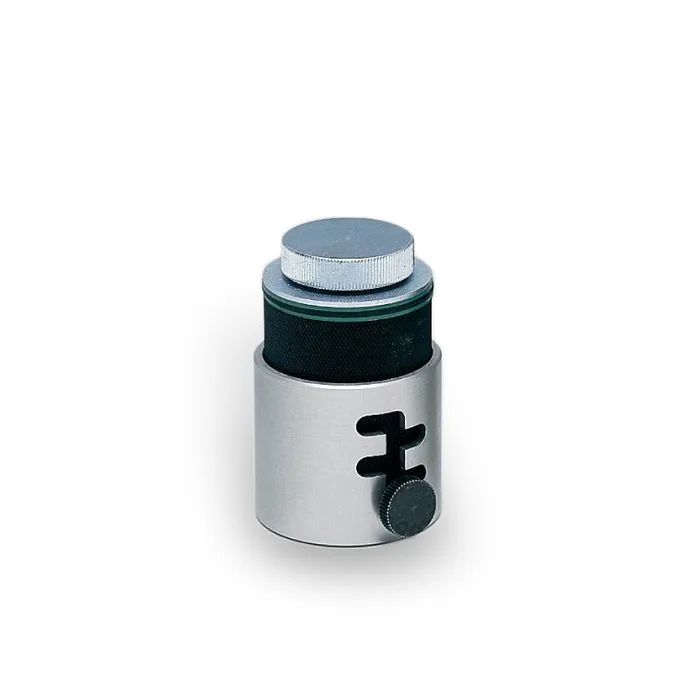
A 1.2 kg block that clamps one edge of a board and holds it dead level, with rubber padded jaws Hakko describes as static dissipative.
Best for: Rework and repair on bare boards, especially with hot air, where the board has to sit flat and stay flat.
- Hakko publishes the numbers that matter: 57 mm diameter by 88 mm, 1.2 kg, five height settings from 72.5 to 97.5 mm, and a jaw opening adjustable from 0 to 20 mm.
- The jaws are padded to prevent damage to the board, and Hakko's listing describes that padding as static dissipative rubber intended to drain charge away.
- The manual is straight about scale, telling you to use one Omnivise for a small board and two or more for larger assemblies.
- It holds a board and nothing else, so a wire, a connector or a component held in mid air needs a second tool.
- The ESD safe statement in the manual carries no resistance figure and names no test method, so the claim cannot be checked.
- Larger boards mean buying a second unit, by Hakko's own instruction, which changes the maths.
- Height adjusts in five fixed steps rather than continuously, so you get close to the working height you want rather than exactly it.
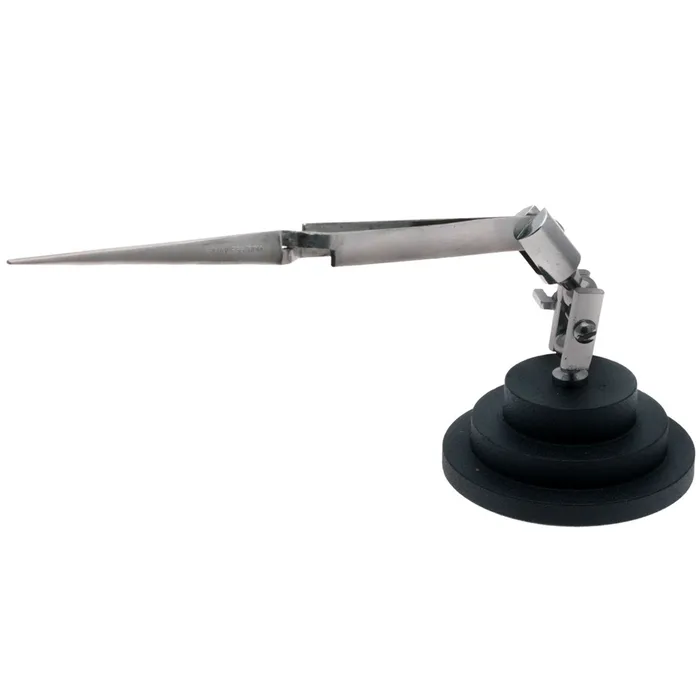
The listing sells it on a heavy base that prevents movement, then publishes a total weight of one pound and nothing else at all.
Best for: Almost nobody choosing on published evidence, though the tweezer tips suit jewellery and model work where nothing is static sensitive.
- Stainless steel construction with multi position swivel clamps that hold a piece at an angle, which is the core job of a third hand.
- Sold through professional tool distributors rather than only through marketplaces, so buying and returning it is straightforward.
- Tweezer tips reach into a narrower space than an alligator clip can manage.
- The description claims a heavy base that prevents movement, while the specification tab lists a total product weight of 1 lb, the lowest published figure in this group.
- Nothing is published about the clamp faces and no cover, sleeve or pad is listed, so the metal tips meet the work bare.
- Aven marks other items on its own site as ESD safe and does not mark this one, and no resistance figure is given either way.
- No dimensions, no reach figure and no heat statement are published, so there is no specification to check before you buy.
| Criteria | OF-M4.4 Makers Third Hand Top pick | Deluxe Magnetic WorkBench | C1390C Omnivise PCB Holder | 17012 Third Hand with Tweezers |
|---|---|---|---|---|
| Verdict | Buy it | Buy it | It depends | Skip it |
| Best for | Fine board, wire and connector work where you want the clip to grip flat and stay exactly where it was set. | A bench where the work changes shape weekly and you need several arms of different reach available at once. | Rework and repair on bare boards, especially with hot air, where the board has to sit flat and stay flat. | Almost nobody choosing on published evidence, though the tweezer tips suit jewellery and model work where nothing is static sensitive. |
| Price tier | $$$ · premium | $$ · mid-range | $$ · mid-range | $ · budget |
| Type | Four magnetic clips on a steel base plate | Five gooseneck arms on a magnetic steel base | Single edge clamping board holder | Two swivel clamps with tweezer tips on a base |
| Published weight | None published; base plate 90 x 160 mm | Base over 6.4 lb | 1.2 kg per unit | 1 lb total |
| Reach mechanism | Ball joint, carbon steel ball in brass bushing | Flexible goosenecks in 16, 12 and 8 in | None, fixed post with five height steps | Short swivel clamps, no reach figure published |
| Jaw or clip face | Parallel jaws, 14 mm opening, heat resistant silicone | Stainless alligator clamps with removable silicone covers | Padded jaws, described as static dissipative rubber | Bare stainless, no cover listed |
| Static claim | Magnetic foot as ground path, about 5 ohm internal resistance | None published | Stated ESD safe, no resistance figure | None published |
| Heat statement | Heat resistant silicone jaws; do not heat the feet or magnets | All metal heat resistant arms, no figure | None published | None published |
| Holding a bare board flat | Yes, using two or more clips | Yes, by the edges on two clamps | Yes, two units for larger boards | Two clamps only, so the board sits at an angle |
| In the box | 4 clips, 4 magnetic feet, 90 x 160 mm base plate, field box | 5 arms, 8.5 x 11 in steel base, silicone covers | One Omnivise | Base, two swivel clamps, tweezers |
Which one is right for you?
- Fine board, wire and connector work where you want the clip to grip flat and stay exactly where it was set. Buy it Omnifixo OF-M4.4 Makers Third Hand
- A bench where the work changes shape weekly and you need several arms of different reach available at once. Buy it QuadHands Deluxe Magnetic WorkBench
- Rework and repair on bare boards, especially with hot air, where the board has to sit flat and stay flat. It depends Hakko C1390C Omnivise PCB Holder
- Almost nobody choosing on published evidence, though the tweezer tips suit jewellery and model work where nothing is static sensitive. Skip it Aven 17012 Third Hand with Tweezers
How we judged the field
Five things decide whether one of these tools is any good, and four of them are printable numbers. First, mass against reach: a long arm is a lever, and the base has to out weigh what the arm is carrying, so a published weight next to a published arm length is the single most useful pair in the category. Second, what touches the work: a bare sprung metal clip concentrates its whole force on two edges, so the jaw lining, the cover or the pad is the difference between holding a board and marking one. Third, how the joint locks: friction goosenecks creep, ball joints shift as you tighten them unless the design fights it, and segmented arms slip at every pivot. Fourth, heat: an iron tip touches the tool sooner or later, and only some makers will tell you what happens then. Fifth, static, where the honest question is not whether the box says ESD safe but whether anyone attaches a number to it.
The field splits cleanly into two shapes. On one side are third hand tools that hold things in mid air, from unbranded cast base units with two clips through to modular magnetic systems. On the other are board holders and vises that grip a board’s edges and nothing else. We took two from each side. Omnifixo and QuadHands are the two third hand designs here that publish enough to argue with, and they take opposite approaches to the drift problem. The Hakko Omnivise stands in for the vise answer, because it publishes its weight and its jaw travel and states plainly when you need two of them. The Aven 17012 is the branded, professionally distributed version of the classic design, and it is here because its own listing shows what happens when a maker sells a feel rather than a specification.
Omnifixo OF-M4.4 Makers Third Hand
Buy itThe Omnifixo OF-M4.4 is the only tool here that documents the whole path from the bench to the board. Each of the four clips is a spring loaded parallel jaw with a 14 mm opening lined in heat resistant silicone, so it closes flat instead of pinching two lines into a board edge, and the maker’s own exploded drawing names the rest: a stainless clip body, a carbon steel ball riding in a brass bushing, and an N52 magnet in the foot. The claim it makes for that joint is a no kickback claim, meaning the clip does not shift as you tighten it, which is the specific complaint that ruins cheap ball joints. It goes further than anyone else on static too, publishing an internal resistance of about 5 ohm through the magnetic foot on the base plate’s etched ring, so you can feed ground or power to whatever is clamped. The gaps are real: no base plate weight is published, and the manual warns against heating the feet or magnets because the ABS melts and the magnets demagnetise. For fine work it is the most convincing thing here.
QuadHands Deluxe Magnetic WorkBench
Buy itThe QuadHands Deluxe Magnetic WorkBench is the gooseneck helping hand done properly, and the reason to trust it is that the listing reads like a spec sheet instead of a mood board. The base is powder coated steel, 8.5 by 11 inches, over 6.4 pounds, on four rubber feet. Five arms come in 16, 12 and 8 inch lengths, each with an N52 rare earth magnet in its foot, so you can slide an arm to any spot on the plate or take one off and stick it to a chassis in the field. The clamps are stainless steel, rotate a full turn and lock with a knurled thumb nut, and QuadHands states that silicone covers are included for delicate electronics, which is the part most competitors leave out. What it does not do is put a number on heat resistance, and a 16 inch gooseneck at full extension is still a lever on a plate that weighs six and a half pounds, so the heavy stuff wants to sit close in. Best if you want reach and reconfigurability rather than absolute stiffness.
Hakko C1390C Omnivise PCB Holder
It dependsThe Hakko C1390C Omnivise is not a third hand at all, and that is the point. It is a 57 mm by 88 mm block weighing 1.2 kg that clamps one edge of a board, holds it level, and gives you 360 degrees of clear access around it. Hakko publishes five height settings from 72.5 mm to 97.5 mm and a jaw that opens from 0 to 20 mm, and the manual tells you straight that one unit suits a small board while larger assemblies want two or more. The jaws are padded, and Hakko’s own listing calls that padding static dissipative rubber meant to protect the board surface and drain charge away, which is more than most makers say even if no ohms figure backs it. The trade off is total: it will hold a board beautifully and it will not hold a wire, a connector or a part in mid air at all. Buy it if your work is board rework, and expect to buy a second one and something with arms as well.
Aven 17012 Third Hand with Tweezers
Skip itThe Aven 17012 Third Hand with Tweezers is the branded version of the design most people picture when they hear helping hands, and it is a useful case study in what to look for. Aven’s own description leads with a heavy base that prevents movement and multi position swivel clamps, and it is made of stainless steel. Then the specification tab lists one number: a total weight of 1 lb. Nothing else is published. No base dimensions, no arm reach, no jaw opening, no heat statement, and no mention of a cover, sleeve or pad on the tweezer tips, which means bare metal meeting whatever you clamp. Aven marks other products on the same site as ESD safe and does not mark this one, so the omission looks deliberate rather than accidental. It is not a bad object, and the tweezer tips genuinely reach places a clip cannot, but as a soldering tool it asks you to take the important claim on trust while the one figure it does publish quietly contradicts it. It is for jewellery and model work, not electronics.
Sources
Specs in this review come from these pages.
- QuadHands, Deluxe Magnetic WorkBench product page (quadhands.com)
- Omnifixo, user manual and product information (omnifixo.com)
- Hakko, C1390C Omnivise PCB Holder and instruction manual (hakkousa.com)
- PanaVise Products, PV Jr. Model 201 spec sheet (panavise.com)
- Aven Tools, Third Hand with Tweezers product page (aventools.com)
- EOS/ESD Association, basic ESD control procedures and materials (esda.org)
Omnifixo OF-M4.4 Makers Third Hand vs QuadHands Deluxe Magnetic WorkBench: which should you buy?
The Omnifixo and the QuadHands solve the same problem from opposite ends. Omnifixo makes four independent units, each anchored by its own magnet, each with a locking ball joint and a parallel silicone lined jaw. That gives you stiffness and a grip that will not mark a board, and it lets you spread the clips across a plate, a steel bench or a chassis. What you give up is reach: a clip sits low and close, so anything you want to hold has to come to the plate rather than the other way around. QuadHands makes one heavy plate and five long flexible arms. That gives you reach in every direction and instant repositioning, and the price of that freedom is that a gooseneck holds by friction and will creep if you keep pushing on it.
Choose on the shape of your work rather than on the price. If you solder small boards, wires and connectors on a fixed bench and hate re-aiming a clip that has drifted, take the Omnifixo, and take it especially if you would use the grounded feed through the base. If you work on bigger, more awkward things where the useful arm position is eight inches up and off to one side, take the QuadHands, and use the silicone covers that come with it rather than leaving them in the bag. If you keep coming back to the same complaint, that a bare board will not sit still, neither is really the answer and you should read the Omnivise entry again.
What to look for
- Weight next to reach: a published base mass is only meaningful alongside the arm length it has to counterbalance, so look for both numbers on the same page and be suspicious when only one appears.
- What touches the work: find out whether the clip face is bare metal, silicone lined, sleeved or padded, and whether the protection is in the box or sold separately.
- How the joint locks: friction goosenecks creep under sustained load, locking ball joints are stiffer but can shift as you tighten them, and a maker who addresses that shift directly is telling you they know about it.
- A temperature, not an adjective: heat resistant means nothing on its own, and the makers who take it seriously print a figure, as PanaVise does for its Model 201 jaws.
- Numbers behind the static claim: an ESD safe marking with no resistance value and no named test method is a description, so get your actual static control from a mat and strap that publish figures.
- A bundled magnifier is not a specification: where a listing leads with a lens and an LED and never states a weight, a jaw opening or a material, the accessories are standing in for the engineering.
Our final take
This is a category where the spec sheet does most of the reviewing for you. The Omnifixo OF-M4.4 wins because it publishes the jaw opening, the jaw lining, the joint hardware and even a resistance for the ground path, and because it makes a claim about drift instead of hoping you will not notice. The QuadHands Deluxe is the better buy if you need reach, and it is the rare gooseneck tool that states its base mass and puts clip covers in the box. If your work is bare boards, buy the Hakko Omnivise and accept that you will want two. And treat the Aven 17012 as the pattern to watch for: a heavy base in the copy, one pound on the spec tab, and silence everywhere else.
Questions, answered
Do the cheap cast base helping hands really mark a board?
The mechanism is simple enough to reason about, and the makers themselves point at it. An alligator clip is two hardened metal edges pulled together by a spring, so all the force lands on two lines rather than across a face. That is why the tools that take board damage seriously do something about the face: QuadHands ships removable silicone covers for its stainless clamps, Omnifixo lines its parallel jaws with heat resistant silicone, and Hakko pads the Omnivise jaws with rubber. The tools that publish nothing about the clip face are the ones to be careful with. If you already own bare clips, sleeving them with silicone tubing gets you most of the way there.
Is base weight actually the number that matters?
It is the number that decides whether the tool tips, and it is the one most listings avoid. A gooseneck arm is a cantilever, so a long arm carrying a stiff cable puts a real moment on the base, and the base has to out weigh it. Look at what the field publishes: QuadHands states over 6.4 pounds for an 8.5 by 11 inch steel base with 16 inch arms, and Hakko states 1.2 kg for a single Omnivise block that has no arm at all. Aven describes a heavy base and lists a total weight of one pound. Where a maker publishes the mass alongside the arm length, you can do the arithmetic yourself. Where it does not, you are trusting a photograph.
Which arm mechanism actually holds position?
There are three approaches and they fail differently. A flexible gooseneck holds by friction along its whole length, which is forgiving and easy to reposition, but it creeps under a sustained sideways pull and it slowly loosens with age. A locking ball joint holds by clamping a ball, which is far stiffer once tight, and the honest complaint about ball joints is that the position shifts as you tighten the clamp. That is exactly the failure Omnifixo names, since it sells its joint on a no kickback claim. A plain segmented arm with a friction pivot is the weakest of the three because each pivot is a separate thing to slip. If drift is your main annoyance, buy the locking joint.
Does any helping hands tool have a real ESD rating?
None of the tools reviewed here publishes a surface resistance figure. Hakko states in the Omnivise manual that the tool is ESD safe and describes the jaw pads on its listing as static dissipative rubber, but no ohms value and no test method appear. Omnifixo takes a different and more checkable route by publishing an internal resistance of about 5 ohm through the magnetic foot, which is a deliberate ground connection rather than a dissipative surface. Neither is the same as a measured worksurface figure. Treat the holder as a mechanical tool, and get your static control from a grounded mat and a wrist strap that do publish numbers.
Should I buy a third hand or a PCB vise?
If your work is mostly bare boards, the vise wins and it is not close. A vise grips two edges, holds the board level and stays level while you push on it, which is what through hole soldering and hot air rework both need. A third hand holds things in mid air, which is what you need for wires, connectors and joining two parts that are not a board. They solve different problems, and plenty of benches end up with both. PanaVise, for instance, publishes jaw heat tolerances for its Model 201, which is the kind of figure no gooseneck maker prints.
Deciding between the top two? See our head-to-head: Omnifixo OF-M4.4 Makers Third Hand vs QuadHands Deluxe Magnetic WorkBench.
More Tools & DIY reviews
 The Best Hex Key Sets: 4 Compared (and One to Skip)
  The Best Hole Saws: 4 Compared (and One to Skip)
  The Best Impact Drivers: 4 Compared (and One to Skip)
  The Best Impact Wrenches: 4 Compared (and One to Skip)
  The Best Infrared Thermometers: 4 Compared (and One to Skip)
  The Best Insulated Hand Tools: 4 Compared (and One to Skip)