

Tools & DIY
The Best Impact Drivers: 4 Compared (and One to Skip)
Four impact drivers compared on a torque figure that no standard governs, what each maker does and does not say about how it was measured, and the specs that are actually comparable.
The short version
Buy the DEWALT DCF850B. At a published 1,825 in-lb of max torque it sits between the Milwaukee and the Makita on the headline number, but it does it in a head under 4 inches front to back, which is the specification that decides whether you can drive a screw between joists at all. Three speed settings and a 3 year limited warranty with 1 year free service round it out. Buy the Milwaukee 2953-20 if raw output is the point: 2,000 in-lb is the most here, with a 3,900 RPM top speed, in a 4.47 inch head. The Makita XDT20Z is the it-depends, quoting 1,590 in-lb but adding assist modes that ease a fastener in before ramping up, which is the difference between a clean drive and a stripped head on soft material. Skip the CRAFTSMAN CMCF813B unless the price is doing the deciding: 1,500 in-lb and 2,800 RPM put it behind all three on paper, and its published specification is the thinnest of the group. Best for: anyone about to buy on a torque number, who should know that number has no standard behind it.
Our picks at a glance
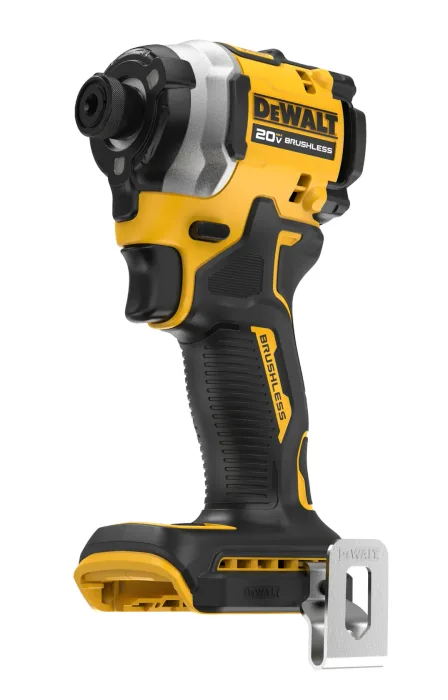
- DEWALT DCF850B ATOMIC 20V MAX 1/4 in. 3-Speed Brushless Impact Driver - Buy. Nearly the torque of the biggest tool here in a head under four inches, which is the spec that decides whether the driver fits the job at all.
- Milwaukee 2953-20 M18 FUEL 1/4 in. Hex Impact Driver - Buy. The highest published torque here at 2,000 in-lb, in a head you pay for in inches.
- Makita XDT20Z 18V LXT Brushless Quick-Shift Mode 4-Speed Impact Driver - It depends. A mid-pack headline torque, paired with assist modes that are the actual answer to stripped screws and walked bits.
- CRAFTSMAN CMCF813B V20 BRUSHLESS RP 1/4 in. Impact Driver - Skip. Behind all three on every published figure, with the thinnest specification sheet of the group.
The verdict in 30 seconds
What mattered most
- Published max torque
- Torque type stated
- Impacts per minute
- Speed range
- Head length
- Speed settings
Impact drivers are sold on a single number, and that number is not regulated by anything. There is no industry standard governing how impact torque is measured, so set time, fastener size, and the test rig are all left to the manufacturer. Worse, the headline figure is usually breakaway torque, the force needed to loosen a seized fastener, rather than fastening torque, which is what you use the tool for. Real fastening output is usually well below the advertised number. None of the four product pages here names a standard or says which kind of torque it is quoting. So the comparison runs on the specs that are defined: speed, impact rate, head length, and what the warranty says.
Nearly the torque of the biggest tool here in a head under four inches, which is the spec that decides whether the driver fits the job at all.
Best for: Anyone working in tight bays, cabinets or between joists, where head length decides the job before torque does.
- DEWALT publishes a head length of less than 4 in. front to back, the shortest here, which is what gets the tool between studs and inside cabinets.
- 1,825 in-lb of published max torque, within striking distance of the Milwaukee's 2,000 in a much smaller tool.
- Three speed settings, so the tool can be dialled down for small fasteners rather than driven flat out.
- 3 year limited warranty with 1 year free service and a 90 day satisfaction guarantee.
- DEWALT describes the figure only as MAX torque and does not say whether it is fastening or breakaway, nor name any measurement standard.
- Impacts per minute are not published on the product page, so one of the two figures that determines driving speed is missing.
- Weight is not published there either, which makes an all-in comparison against the others awkward.
- Sold as a bare tool, so batteries and charger are a separate cost if you are not already on the platform.
The highest published torque here at 2,000 in-lb, in a head you pay for in inches.
Best for: Heavy fastening and removal work where output and impact rate matter more than getting into tight spaces.
- 2,000 in-lb of published torque, the most in this comparison.
- A 4-Mode Drive Control with a top speed of 3,900 RPM, giving control at the low end rather than an on-or-off trigger.
- Milwaukee publishes head length at 4.47 in. and weight at 2.2 lb, so the size trade is stated rather than left for you to discover.
- At 4.47 in. it is nearly half an inch longer than the DEWALT, which is decisive in a stud bay.
- The product page does not say whether the 2,000 in-lb figure is fastening or breakaway torque, and the headline figure in this category is usually the larger breakaway number.
- No measurement standard is named, because none exists for this category.
- Impacts per minute are not published on the product page, and there is no RPM range per mode.
- Premium pricing, and the M18 platform is a costly one to buy into.
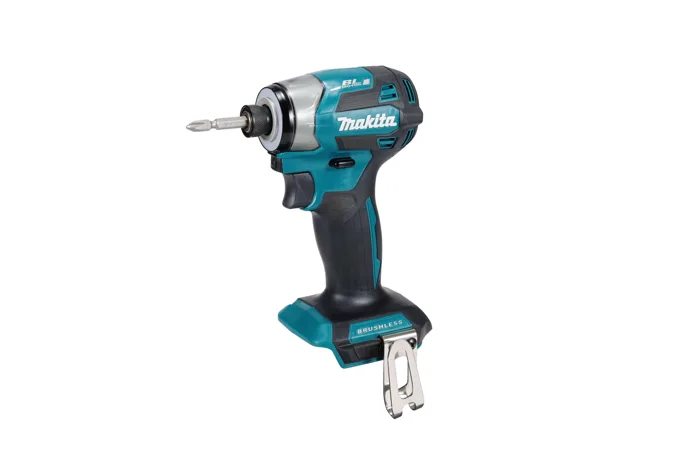
A mid-pack headline torque, paired with assist modes that are the actual answer to stripped screws and walked bits.
Best for: Finish and cabinet work on soft or thin material, where controlling the start of the drive matters more than peak output.
- Four speed settings including assist modes that start a fastener slowly before ramping up, which prevents the bit walking and the head stripping.
- 3,800 impacts per minute at the top setting, a figure the DEWALT and Milwaukee pages do not publish at all.
- A wide 1,100 to 3,600 RPM range, giving fine control on delicate material.
- Makita publishes the full speed and impact figures for every mode rather than only the headline maximum.
- 1,590 in-lb of max torque is about 20 percent behind the Milwaukee.
- At about 4.5 in. it is the longest head in the group, so it is the worst choice for confined work.
- The assist modes take learning, and the tool is less intuitive than a three-speed driver out of the box.
- No measurement standard is named for the torque figure, in common with the rest.
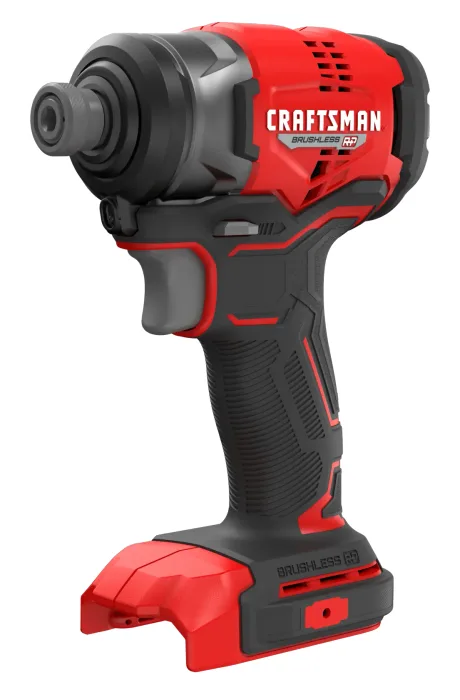
Behind all three on every published figure, with the thinnest specification sheet of the group.
Best for: Occasional assembly and deck work where the tool is bought on price and the numbers are not being compared.
- Brushless motor at a budget price tier, which was a premium feature not long ago.
- 1,500 in-lb of max torque is ample for deck screws, framing and general assembly.
- The V20 platform is inexpensive to buy into if you own no cordless tools at all.
- 1,500 in-lb is the lowest published torque here, behind even the Makita.
- 2,800 RPM maximum, several hundred short of the DEWALT and around a thousand behind the Milwaukee.
- 3,500 impacts per minute at maximum, the lowest impact rate published in this group.
- No head length published either, which is the specification that most often decides whether an impact driver can do the job.
| Criteria | DCF850B ATOMIC 20V MAX 1/4 in. 3-Speed Brushless Impact Driver Top pick | 2953-20 M18 FUEL 1/4 in. Hex Impact Driver | XDT20Z 18V LXT Brushless Quick-Shift Mode 4-Speed Impact Driver | CMCF813B V20 BRUSHLESS RP 1/4 in. Impact Driver |
|---|---|---|---|---|
| Verdict | Buy it | Buy it | It depends | Skip it |
| Best for | Anyone working in tight bays, cabinets or between joists, where head length decides the job before torque does. | Heavy fastening and removal work where output and impact rate matter more than getting into tight spaces. | Finish and cabinet work on soft or thin material, where controlling the start of the drive matters more than peak output. | Occasional assembly and deck work where the tool is bought on price and the numbers are not being compared. |
| Price tier | $$ · mid-range | $$$ · premium | $$$ · premium | $ · budget |
| Published max torque | 1,825 in-lb | 2,000 in-lb | 1,590 in-lb | 1,500 in-lb |
| Torque type stated | MAX only, unspecified | Not stated | Max, unspecified | Max, unspecified |
| Impacts per minute | Not published | Not published | 3,800 IPM | 3,500 IPM |
| Speed range | Up to 3,250 RPM | Up to 3,900 RPM | 1,100 to 3,600 RPM | Up to 2,800 RPM |
| Head length | Under 4 in. | 4.47 in. | About 4.5 in. | Not published |
| Speed settings | 3 | 4-Mode Drive Control | 4, including assist | Variable trigger |
| Measurement standard named | No | No | No | No |
Which one is right for you?
- Anyone working in tight bays, cabinets or between joists, where head length decides the job before torque does. Buy it DEWALT DCF850B ATOMIC 20V MAX 1/4 in. 3-Speed Brushless Impact Driver
- Heavy fastening and removal work where output and impact rate matter more than getting into tight spaces. Buy it Milwaukee 2953-20 M18 FUEL 1/4 in. Hex Impact Driver
- Finish and cabinet work on soft or thin material, where controlling the start of the drive matters more than peak output. It depends Makita XDT20Z 18V LXT Brushless Quick-Shift Mode 4-Speed Impact Driver
- Occasional assembly and deck work where the tool is bought on price and the numbers are not being compared. Skip it CRAFTSMAN CMCF813B V20 BRUSHLESS RP 1/4 in. Impact Driver
How we judged the field
We started by discounting the number everyone buys on. Impact torque has no governing standard, so the figures on these four boxes were produced by four different in-house methods, and the headline is commonly breakaway torque, which describes loosening rather than driving. That leaves the specifications that are actually defined and comparable. Head length, front to back, decides whether the tool reaches the fastener, and it is unambiguous. Impacts per minute and the RPM range together decide how fast a long fastener actually goes in, which torque alone does not. Speed settings decide whether you can dial the tool down for soft material instead of stripping it. And the warranty is the only durability figure any of them commits to in writing.
DEWALT DCF850B ATOMIC 20V MAX 1/4 in. 3-Speed Brushless Impact Driver
Buy itThe DEWALT DCF850B is the pick because it wins the comparable specification without conceding much of the incomparable one. DEWALT publishes head length as less than 4 inches front to back, the shortest here, and that figure decides more real jobs than torque does: a driver that will not fit between two joists cannot apply any of its output. It pairs that with 1,825 in-lb of published max torque, within about 9 percent of the biggest tool in this group, and 3,250 RPM across three speed settings so it can be dialled back for small fasteners. The DEWALT warranty is 3 years limited with 1 year free service and a 90 day satisfaction guarantee. The gaps are in disclosure rather than performance: DEWALT calls the figure MAX torque without saying whether it is fastening or breakaway, names no measurement standard, and publishes neither impacts per minute nor weight on the product page, so two of the four numbers you would want for a like-for-like comparison are simply absent.
Milwaukee 2953-20 M18 FUEL 1/4 in. Hex Impact Driver
Buy itThe Milwaukee 2953-20 is the second buy and the right answer whenever head length is not the constraint. It publishes the highest output here at 2,000 in-lb, a 4-Mode Drive Control with a 3,900 RPM top speed, and no published impacts per minute. Milwaukee is also the most forthcoming of the four on physical specifications, publishing head length at 4.47 inches and weight at 2.2 pounds, so you can see exactly what the extra output costs you in size. The catch is that the product page does not say whether the 2,000 figure is fastening or breakaway torque, and headline figures in this category are usually the larger breakaway number. At nearly half an inch longer than the DEWALT, it is the wrong tool for confined work.
Makita XDT20Z 18V LXT Brushless Quick-Shift Mode 4-Speed Impact Driver
It dependsThe Makita XDT20Z is the it-depends, and the case for it has nothing to do with the headline. At 1,590 in-lb it publishes a max torque about 20 percent behind the Milwaukee, and at roughly 4.5 inches it is the longest head here. What it has instead is four speed settings including assist modes, which start a fastener slowly and ramp up once it has bitten. That directly addresses the two failures that actually ruin work: the bit walking off the screw head at the start, and a fastener stripping or burying itself in soft material. Makita also publishes the speed and impact figures for each mode rather than only the flattering maximum. Makita lists the XDT20Z as the replacement for the discontinued XDT19Z, with the same published torque, speed and impact figures, plus Extreme Protection Technology for dust and water resistance and a stated 3.3 lb with battery. If your work is cabinets, trim and thin stock, the control is worth more than the missing 400 in-lb. If it is decking and framing, it is not.
CRAFTSMAN CMCF813B V20 BRUSHLESS RP 1/4 in. Impact Driver
Skip itThe CRAFTSMAN CMCF813B is the skip on numbers rather than on quality. It is a brushless tool at a budget price, which was a premium feature not long ago, and 1,500 in-lb is genuinely enough for deck screws, framing and flat-pack assembly. But it publishes the lowest torque here, a 2,800 RPM maximum that is several hundred short of the DEWALT and around a thousand behind the Milwaukee, and then stops: 3,500 impacts per minute is the lowest rate published here, and there is no head length, which is the single most decisive physical specification in the category. Buying it means accepting the least information as well as the lowest figures. For someone who owns no cordless tools and wants the cheapest brushless entry, that is a defensible trade. For anyone comparing specifications, there is nothing here to compare with.
Sources
Specs in this review come from these pages.
- DEWALT, DCF850B ATOMIC 20V MAX 3-Speed Impact Driver product specifications (dewalt.com)
- Milwaukee Tool, M18 FUEL 1/4 in. Hex Impact Driver 2953-20 (milwaukeetool.com)
- Makita USA, XDT20Z 18V LXT Brushless Quick-Shift Mode 4-Speed Impact Driver (makitatools.com)
- CRAFTSMAN, V20 BRUSHLESS RP Cordless 1/4 in. Impact Driver CMCF813B (craftsman.com)
- How much torque an impact driver needs, on the absence of a measurement standard (protoolreviews.com)
- Inconsistencies in torque measurement across manufacturers (vehicleservicepros.com)
DEWALT DCF850B ATOMIC 20V MAX 1/4 in. 3-Speed Brushless Impact Driver vs Milwaukee 2953-20 M18 FUEL 1/4 in. Hex Impact Driver: which should you buy?
The DEWALT against the Milwaukee is the choice most buyers actually face, and it comes down to inches against inch-pounds. Milwaukee gives you 2,000 in-lb and a 4.47 inch head. DEWALT gives you 1,825 in-lb and a head under 4 inches. Neither page publishes an impact rate. That is roughly a 9 percent torque deficit for close to half an inch of length, and the half inch is the specification that decides whether the tool reaches the fastener between two joists. There is a further wrinkle: neither page says whether its torque is fastening or breakaway, so the two headline torques may not be measuring the same thing. Given that neither maker names a standard, buy on the dimension that is unambiguous, and let the torque figures break ties rather than decide the purchase.
What to look for
- Head length, front to back: the one specification here that is unambiguous and that decides whether the tool physically reaches the fastener. Its absence from a listing is telling.
- Whether the torque figure is named as fastening or breakaway: breakaway describes loosening and is the larger number, and real driving output is usually well below the advertised figure.
- Impacts per minute alongside RPM: together these determine how fast a long fastener actually goes in. Torque alone does not.
- A usable low speed or assist mode: the defence against cammed-out bits and screws buried in soft material, and worth more on trim work than peak output.
- The warranty term: with no performance standard to hold anyone to, the warranty is the only durability commitment in writing.
- Platform cost, not tool cost: a bare tool is cheap and the battery ecosystem is not, so the real price is whichever platform you are joining.
Our final take
This is a category where the number on the box was produced by a method the maker chose, describes an operation you may not be performing, and cannot be compared across brands with any confidence. Treat torque as a rough tier, then buy on head length, impact rate and whether the tool has a mode gentle enough for the material you actually work with.
Questions, answered
Is there any standard for how impact driver torque is measured?
No. There is no industry standard regulating torque measurement and testing for impact tools, which means set time, fastener size, the rig and the air or battery conditions are all chosen by the manufacturer. Two drivers quoting the same number may have been tested in ways that are not comparable, and none of the four here names a method. This is why the torque figure should be used as a rough tier indicator rather than as a specification you can hold anyone to.
What is the difference between fastening and breakaway torque?
Breakaway or nut-busting torque is the force needed to loosen a fastener that is already tight, and it is the larger, more flattering number. Fastening torque is what the tool applies while driving a fastener in. Manufacturers frequently headline breakaway figures, and real fastening output is usually well below the advertised figure. Milwaukee's page does not say which kind its 2,000 in-lb is, so treat it with that caution.
Why does head length matter more than people expect?
Because it decides whether the tool physically reaches the fastener. A driver that will not fit between two joists or inside a cabinet carcass cannot use any of its torque. DEWALT publishes under 4 inches front to back for the DCF850B and Milwaukee publishes 4.47 inches for the 2953-20; that half inch is the difference between reaching a fixing and going to find a right-angle attachment. It is also one of the few figures in this category that is unambiguous and directly comparable.
Do I need an impact driver if I already own a drill?
For driving fasteners, yes, and the reason is your wrist. An impact driver delivers rotational hammer blows, so the reaction force goes into the tool rather than into your arm, which is why it drives long screws without the drill trying to twist out of your hand. It is worse than a drill for making holes, because the impacting is unhelpful there, and it takes hex shank bits only rather than round shanks.
Are more speed settings actually useful?
The low ones are. A single-speed impact driver is either off or driving at full rate, which strips soft material and cams bits out. Assist modes, like those on the Makita, start the fastener slowly and ramp up once it bites, and a low setting keeps you from burying a screw in plasterboard. Whether four modes beat three is largely preference; whether any dialled-down mode beats none is not.
Deciding between the top two? See our head-to-head: DEWALT DCF850B ATOMIC 20V MAX 1/4 in. 3-Speed Brushless Impact Driver vs Milwaukee 2953-20 M18 FUEL 1/4 in. Hex Impact Driver.
More Tools & DIY reviews
 The Best Impact Wrenches: 4 Compared (and One to Skip)
  The Best Infrared Thermometers: 4 Compared (and One to Skip)
  The Best Insulated Hand Tools: 4 Compared (and One to Skip)
  The Best Jigsaws: 4 Compared (and One to Skip)
  The Best Work Knee Pads: 4 Compared (and One to Skip)
  The Best Laser Levels: 4 Compared (and One to Skip)