

Tools & DIY
The Best Heat Guns: 4 Compared (and One to Skip)
Four heat guns compared on what their makers put in writing: where the temperature figure is measured, whether the top of the range is available at every fan speed, and which manuals publish an overheat behaviour or a duty cycle at all.
The short version
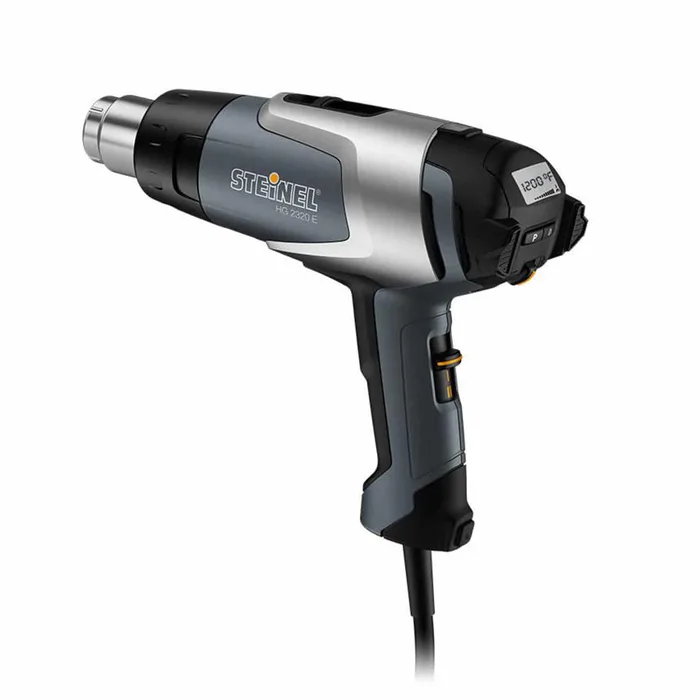
Buy the Steinel HG 2320 Eco. Its instruction manual states that the actual temperature is measured at the nozzle outlet and shown on the display, it sets in 10 degree F steps across 120 to 1200 F, its data sheet names the heating element as ceramic and publishes a 1000 hour motor life, and its airflow carries a stated plus or minus 0.5 cfm. The DEWALT D26960 is the value pick and the only one of the four whose manual publishes a duty cycle, at no more than 60 minutes on in any 2 hour period, plus an overload behaviour where the element cuts out while the motor keeps blowing cold air. The Milwaukee M18 2688-20 suits anyone working away from an outlet, but its manual publishes a single temperature figure of 875 F and a single airflow of 6 cfm, with no way to set either. Skip the Wagner FURNO 300: two fixed settings of 750 F and 1100 F, described in Wagner's own specification as approximate, with no published airflow, no published overheat protection and a low setting still far hotter than shrink tubing or vinyl wants. Read the manual before the box, because the manual is where the duty cycle and the overheat behaviour live. Best for: anyone stripping paint, shrinking tubing, wrapping vinyl, thawing pipes or bending plastic who wants the number on the display to mean something.
Our picks at a glance
- Steinel HG 2320 Eco Professional Heat Gun - Buy. The one whose manual states that the number on the display is the actual temperature measured at the nozzle outlet, not just the setting you asked for.
- DEWALT D26960 LCD Heat Gun - Buy. The only one of the four that tells you how long you are allowed to run it and what it does when the element gets too hot.
- Milwaukee M18 Compact Heat Gun 2688-20 - It depends. A cordless heat gun with one temperature, one airflow and a trigger, which is either exactly enough or nowhere near it.
- Wagner FURNO 300 Heat Gun - Skip. Two fixed settings that Wagner's own specification calls approximate, with the low one still hot enough to ruin most of the jobs people buy a cheap heat gun for.
The verdict in 30 seconds
What mattered most
- Published temperature
- How you set it
- Where the maker says it is measured
- Stated tolerance
- Published airflow
- Overheat behaviour in the manual
A heat gun spec sheet is mostly one number, and that number is doing less work than it looks. Every maker here publishes a temperature or a range, but only one of the four states where in the airstream it is measured, and none of them publishes a tolerance on the setting. The gap matters because the same tool can shrink a piece of tubing or lift a pad off a circuit board depending on how far away you hold it, and no maker publishes a distance-versus-temperature figure to guide you. So we read the manuals instead of the marketing, and judged these four on the things a buyer can actually check before paying.
The one whose manual states that the number on the display is the actual temperature measured at the nozzle outlet, not just the setting you asked for.
Best for: Anyone whose work has an actual temperature target, such as shrink sleeving, plastic welding or heat sensitive materials, where you need the display to reflect what is leaving the nozzle.
- Steinel's instruction manual states the actual temperature is measured at the nozzle outlet and shown on the display, so the readout is feedback rather than a request.
- Sets continuously from 120 F to 1200 F in 10 degree F steps, with four programmable temperature and airflow presets and a lock function.
- The data sheet names the parts most makers leave unstated: ceramic heating element, brush motor, 1000 hour motor life, replaceable 6 ft rubber cord.
- No tolerance is published on the temperature setting, only on airflow at plus or minus 0.5 cfm.
- The manual describes the thermal cut-out as completely shutting the tool down when overloaded, so a fault stops the job rather than throttling it.
- No duty cycle appears anywhere in the documentation, so how long you can run it flat out is not stated.
- Steinel's catalogue photo for this item still carries the earlier HG 2320 E housing label, which makes the two easy to confuse when shopping.
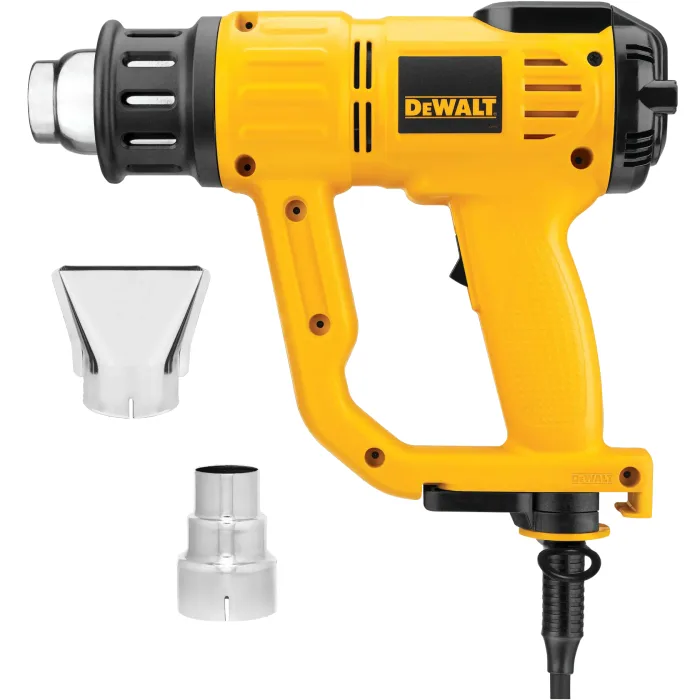
The only one of the four that tells you how long you are allowed to run it and what it does when the element gets too hot.
Best for: Someone running a heat gun for long stretches on paint, flooring or shrink work who wants a maker's own limit on continuous use rather than guessing.
- The manual publishes a duty cycle: do not exceed 60 minutes on in a 2 hour period, which no other manual here states at all.
- Overload protection is described rather than just named: the element switches off, the motor keeps running cold air, and the element comes back on by itself in a few seconds.
- Sets in 50 degree F steps on the LCD across 150 F to 1100 F and remembers the last setting per airflow stage.
- The top of the range is tied to the fan: 150 to 750 F on the 8.8 cfm setting, 150 to 1100 F only on the 17.7 cfm setting.
- No tolerance on the temperature setting and no statement of where in the airstream the figure is measured.
- The 50 degree F step is five times coarser than the Steinel's, which matters on heat sensitive plastics.
- The manual asks for at least 30 minutes of cooling before the tool is moved or stored.
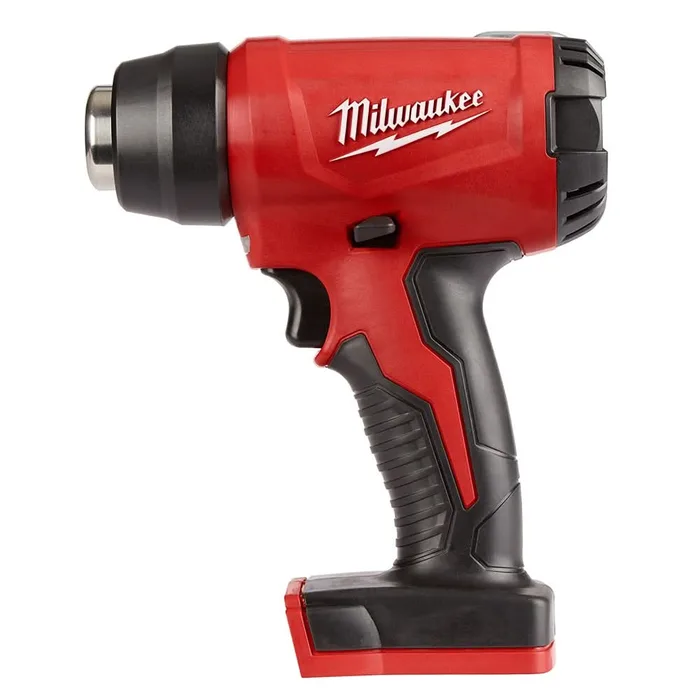
A cordless heat gun with one temperature, one airflow and a trigger, which is either exactly enough or nowhere near it.
Best for: An electrician, plumber or installer already carrying M18 batteries who mostly does heat shrink and thawing work away from an outlet and accepts one fixed setting.
- Runs off the M18 battery platform, so it works up a ladder, in a crawlspace or in a trench with no cord to manage.
- Milwaukee states it reaches operational temperature in less than 7 seconds and is 6.4 inches long, which is genuinely small for a heat gun.
- Simple lock-off trigger and an integrated ladder hook, with a nose guard around the nozzle.
- The operator's manual publishes one temperature figure, 875 F, and one airflow figure, 6 cfm, with no way to adjust either.
- 875 F is far above what heat shrink tubing or vinyl wants, so distance and dwell time are your only controls.
- The manual describes no overheat behaviour and publishes no duty cycle.
- Sold as a bare tool, so a battery and charger are a separate purchase if you are not already on the platform.
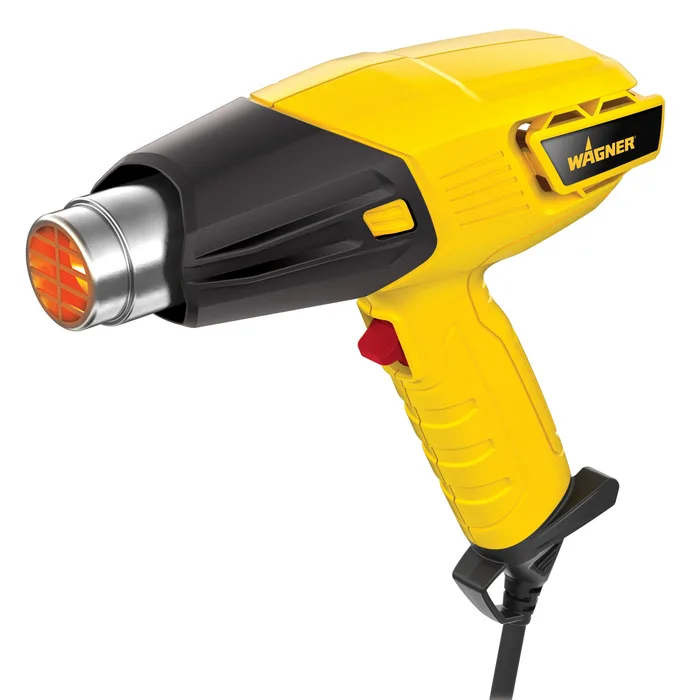
Two fixed settings that Wagner's own specification calls approximate, with the low one still hot enough to ruin most of the jobs people buy a cheap heat gun for.
Best for: Someone who only ever needs to soften adhesive or thaw a pipe, and who has already decided that no setting between 750 F and 1100 F will ever matter to them.
- Light at 1.46 pounds, with an integrated stand, side bars to keep the nozzle off the work surface and a hanging loop.
- Wagner publishes the wattage for both settings, at 1200 W on high and 550 W on low, which is more than several rivals state.
- The owner's manual carries a full lead paint section and tells you plainly not to use a heat tool on lead based paint.
- Only two settings, 750 F and 1100 F, and Wagner's own specification page lists them as approximately 1100 F on high and approximately 750 F on low.
- 750 F is still well above the range shrink tubing, vinyl wrap and most craft work want, so the low setting does not solve the problem it looks like it solves.
- No airflow figure is published in cfm or litres per minute, so you cannot compare its heat delivery to anything else here.
- The manual describes no overheat protection and no cool down mode, and warns that the element will burn out if the blower does not start.
| Criteria | HG 2320 Eco Professional Heat Gun Top pick | D26960 LCD Heat Gun | M18 Compact Heat Gun 2688-20 | FURNO 300 Heat Gun |
|---|---|---|---|---|
| Verdict | Buy it | Buy it | It depends | Skip it |
| Best for | Anyone whose work has an actual temperature target, such as shrink sleeving, plastic welding or heat sensitive materials, where you need the display to reflect what is leaving the nozzle. | Someone running a heat gun for long stretches on paint, flooring or shrink work who wants a maker's own limit on continuous use rather than guessing. | An electrician, plumber or installer already carrying M18 batteries who mostly does heat shrink and thawing work away from an outlet and accepts one fixed setting. | Someone who only ever needs to soften adhesive or thaw a pipe, and who has already decided that no setting between 750 F and 1100 F will ever matter to them. |
| Price tier | $$$ · premium | $$ · mid-range | $$ · mid-range | $ · budget |
| Published temperature | 120 to 1200 F | 150 to 1100 F | 875 F, one figure | 750 F and 1100 F, approximate |
| How you set it | Continuous, 10 F steps, LCD | 50 F steps, LCD | No adjustment, trigger only | Slide switch, two positions |
| Where the maker says it is measured | At the nozzle outlet, shown live | Not stated | Not stated | Not stated |
| Stated tolerance | Airflow plus or minus 0.5 cfm | None published | None published | Heat output called approximate |
| Published airflow | 4 to 13 cfm, continuously variable | 8.8 cfm low, 17.7 cfm high | 6 cfm | Not published |
| Overheat behaviour in the manual | Thermal cut-out shuts the tool down | Element off, motor keeps blowing, auto restart | Not described | Not described |
| Published duty cycle | None | 60 minutes on per 2 hours | None | None |
| Heating element named | Ceramic | Not published | Not published | Not published |
Which one is right for you?
- Anyone whose work has an actual temperature target, such as shrink sleeving, plastic welding or heat sensitive materials, where you need the display to reflect what is leaving the nozzle. Buy it Steinel HG 2320 Eco Professional Heat Gun
- Someone running a heat gun for long stretches on paint, flooring or shrink work who wants a maker's own limit on continuous use rather than guessing. Buy it DEWALT D26960 LCD Heat Gun
- An electrician, plumber or installer already carrying M18 batteries who mostly does heat shrink and thawing work away from an outlet and accepts one fixed setting. It depends Milwaukee M18 Compact Heat Gun 2688-20
- Someone who only ever needs to soften adhesive or thaw a pipe, and who has already decided that no setting between 750 F and 1100 F will ever matter to them. Skip it Wagner FURNO 300 Heat Gun
How we judged the field
Five things separate heat guns, and only one of them is the headline number. First, whether the maker says where the temperature figure is taken, because a nozzle outlet reading and a reading six inches downstream are wildly different claims. Second, whether the control is a closed loop that measures and corrects, or a dial that sets a power level and hopes. Third, whether the top of the temperature range is available at every fan speed, since several of these guns quietly cap the low airflow setting hundreds of degrees below their advertised maximum. Fourth, what the manual says happens when the tool overheats, because heat guns are the rare power tool where the failure mode is the element cooking itself. Fifth, whether there is a published duty cycle, which is the number that tells you if the tool was designed for a job or for a chore.
The field splits cleanly along those lines. At the top, Steinel builds its whole pitch around metering the airstream and says so in the manual, which is why it is here. In the middle sit the general purpose corded guns from the big tool brands, where the LCD sets a target in coarse steps and the airflow stage silently constrains it; DEWALT represents that group and is unusual for publishing a duty cycle at all. Cordless is its own category with its own physics, and Milwaukee’s compact M18 is the honest version of it, publishing one temperature and one airflow rather than pretending to variability. At the bottom are the two setting guns, where Wagner’s FURNO 300 is the most widely sold example, and where the specification sheet itself uses the word approximately. We chose one from each band so the trade offs are visible rather than averaged away.
Steinel HG 2320 Eco Professional Heat Gun
Buy itThe Steinel HG 2320 Eco earns its place on one sentence in Steinel’s instruction manual: the actual temperature is measured at the nozzle outlet and indicated on the display. That single line is the difference between a readout and a request, and none of the other three makers here says anything equivalent. Around it sits a genuinely detailed specification. The range runs 120 F to 1200 F in 10 degree F steps, airflow is continuously variable from 4 to 13 cfm with a stated plus or minus 0.5 cfm, and the data sheet names the heating element as ceramic, the motor as a brush motor, and the motor life as 1000 hours. Four programmable presets and a lock function stop a knocked toggle from ruining a job. The e-mode shuts the element down after a user set interval of anywhere from 0 to 1990 seconds. What you do not get is a tolerance on the temperature setting or a published duty cycle, and the thermal cut-out shuts the tool down completely rather than throttling. For anyone whose work has a real number attached, this is the one to buy.
DEWALT D26960 LCD Heat Gun
Buy itThe DEWALT D26960 is the sensible corded gun, and it is the only one of these four whose manual answers the question everyone forgets to ask. It says plainly not to exceed 60 minutes on in a 2 hour period, and it describes what its overload protection does rather than just naming it: the element switches off, the motor keeps running and blowing cold air, and the element comes back on by itself within a few seconds. That is a better failure mode than a hard cut-out for anyone working through a long stripping job. The LCD sets in 50 degree F steps from 150 F to 1100 F and remembers the last setting for each airflow stage. The catch is in the same manual. The 8.8 cfm low airflow stage caps at 750 F; the full 1100 F is only available on the 17.7 cfm stage. If you wanted maximum heat with minimum blast, this tool will not give it to you. It also asks for 30 minutes of cooling before storage. For most people, it is enough gun.
Milwaukee M18 Compact Heat Gun 2688-20
It dependsThe Milwaukee M18 2688-20 is the clearest case in this group of a tool that is either perfect or useless with nothing in between. The operator’s manual publishes exactly two performance figures: temperature 875 F and airflow 6 cfm. There is no dial, no LCD, no fan stage, just a lock-off trigger. Milwaukee’s own product page claims operational temperature in under 7 seconds and a length of 6.4 inches, and it is genuinely pocketable by heat gun standards, with a ladder hook and a nose guard. Off an M18 battery it goes wherever you go. The problem is that 875 F is a lot of heat for the tasks a cordless gun is actually used for. Heat shrink tubing and vinyl want a fraction of that, so your only controls are distance and how long you dwell, and the manual duly tells you to experiment with scrap. No overheat behaviour is described and no duty cycle is published. Buy it if you already own M18 batteries and your heat gun work is short, repetitive and far from an outlet.
Wagner FURNO 300 Heat Gun
Skip itThe Wagner FURNO 300 is the gun most people reach for first, and its own paperwork is the reason to reach past it. The specification page lists heat output as approximately 1100 F on high and approximately 750 F on low, delivered by a two position slide switch. That word approximately is Wagner’s, not ours, and it is the only characterisation of accuracy anywhere in the document. No airflow figure is published in any unit, so you cannot compare its heat delivery against the 6 to 17.7 cfm figures the others state. No overheat protection is described and no cool down mode exists, and the manual warns that the heating element will burn out if the blower does not start. The deeper problem is the low setting. At 750 F it is still far hotter than shrink tubing, vinyl wrap, decals or craft plastics want, so the second setting does not buy you the control it appears to. It is light at 1.46 pounds and it will thaw a pipe. For anything where the temperature matters, spend once more.
Sources
Specs in this review come from these pages.
- Steinel HG 2320 Eco product data sheet (steineltools.net)
- Steinel instruction manual, HG 2320 and HL 1620 to 2020 series (steineltools.net)
- DEWALT D26950 and D26960 instruction manual (assets.dewalt.com)
- Milwaukee 2688-20 M18 Compact Heat Gun operator's manual (documents.milwaukeetool.com)
- Wagner FURNO 300 owner's manual (wagnerspraytech.com)
- OSHA 29 CFR 1926.62, Lead in construction (osha.gov)
Steinel HG 2320 Eco Professional Heat Gun vs DEWALT D26960 LCD Heat Gun: which should you buy?
The Steinel and the DEWALT solve the same problem from opposite ends. Steinel spends its money on knowing the temperature: the manual says the display shows the actual temperature at the nozzle outlet, the steps are 10 degrees F rather than 50, the airflow is continuously variable across 4 to 13 cfm with a published tolerance, and the data sheet goes as far as naming the element material and the motor life. DEWALT spends its money on surviving the job: a stated duty cycle of 60 minutes on in any 2 hour period, an overload behaviour that keeps the fan running so the element cools instead of cooking, and a kickstand for hands free work. Neither publishes a tolerance on the temperature setting, and neither publishes a distance versus temperature figure, because nobody does.
Choose on what your work is sensitive to. If the material has a number, and going 60 degrees over it means a scorched wrap, a slumped part or a lifted pad, take the Steinel; the fine steps and the nozzle outlet reading are the whole point, and the ESD variant of the same body is worth a look if you are working at a bench alongside a solder fume extractor and a set of helping hands. If the work is paint, flooring adhesive, frozen pipes or shrink sleeving in volume, and what you actually need is a tool that will run for an hour without complaint, take the DEWALT and note the one thing that will bite you: on the low airflow stage it stops at 750 F, and the full 1100 F only exists on high fan.
What to look for
- Where the number is measured: ask whether the maker states the temperature is taken at the nozzle outlet, because a figure with no measurement point is a design target rather than a reading.
- Whether the display shows actual or set: a gun that shows the temperature it is currently producing is telling you something; a gun that shows only the value you dialled in is telling you what you already knew.
- Setting granularity: 10 degree F steps and 50 degree F steps are five times apart in precision, and on heat sensitive plastic that gap decides the job.
- Whether the range is tied to the fan: several guns publish a headline maximum that is only reachable on the highest airflow stage, so check the low stage cap before you assume you have full range.
- A published duty cycle: most manuals say nothing, so a maker that prints a limit like 60 minutes on per 2 hours is giving you real information about what the tool was built for.
- What the manual says about overheating: a thermal cut-out that shuts the whole tool down and an overload circuit that drops the element while the fan keeps running are different experiences on a long job.
Our final take
Buy the Steinel HG 2320 Eco if the temperature matters, because of these four it is the one that tells you where its number comes from and shows what the nozzle is actually doing. Buy the DEWALT D26960 if the duration matters, because it is the one that publishes how long you may run it and what happens when it gets too hot. The Milwaukee is a good answer to a narrow question: one temperature, one airflow, no cord. The Wagner is the one to walk past, with two settings its own maker calls approximate, no published airflow, and a low setting still hot enough to wreck delicate work. Whichever you pick, treat every published figure as a nozzle figure and prove the rest on scrap.
Questions, answered
Can I use a heat gun to strip lead paint?
The EPA's renovation, repair and painting rule at 40 CFR 745.85(a)(3) says operating a heat gun on painted surfaces above 1,100 degrees Fahrenheit is prohibited, and it prohibits open flame burning or torching outright. Separately, OSHA's lead in construction standard at 29 CFR 1926.62 lists heat gun applications among the tasks where, until an exposure assessment is done, the employer must treat the worker as exposed above the permissible limit. The tool makers go further than the rule does. DEWALT, Steinel, Milwaukee and Wagner all print some version of the same warning in their manuals, that lead based paint should be removed only by a professional and not with a heat gun. So the regulation sets a ceiling of 1,100 F for painted surfaces generally, and every maker here separately tells you not to point their tool at lead paint at all.
Does the number on the dial mean the air actually hits my work at that temperature?
No, and Steinel is the maker that says so most plainly. On its HL 1920 E the manual states that the numbers 1 to 9 on the thumbwheel serve as a guide only, then publishes a table showing the same setting delivers different temperatures depending on which airflow stage you are in. Setting 4 gives roughly 518 F on one fan stage and roughly 500 F on the next, and setting 8 gives roughly 1040 F against roughly 985 F. That table is headed temperature approx. None of the four makers here publishes a tolerance on the temperature setting. The Steinel HG 2320 Eco is the one that closes the loop, because its manual says the display shows the actual temperature measured at the nozzle outlet rather than the value you dialled in.
How far from the work should I hold it?
Nobody publishes a curve, which is the honest answer. DEWALT tells you to experiment to find the optimum distance and offers 1 to 2 inches as a starting point for paint stripping. Wagner says to keep the gun at least 2 inches from the substrate and lists distance among the variables that affect the result. Milwaukee says the proper amount of heat depends on the distance between nozzle and workpiece and the length of time heat is applied, and tells you to experiment with scrap. Steinel says the distance depends on the material and the method and to try the settings on a test piece first. All four are saying the same thing in different words: the published temperature is a nozzle figure, what reaches your work is not, and the only way to find the difference is a scrap piece.
Is variable temperature worth paying for over a two setting gun?
It depends entirely on what you heat. Two settings are fine for softening adhesive or thawing a pipe, where the target is a wide band and overshoot costs you nothing. They fail on heat shrink tubing, vinyl wrap, decals and anything with a plastic in it, because the useful window is narrow and the cheap gun's low setting is often still hundreds of degrees above it. The Wagner FURNO 300's low setting is 750 F. Look also at whether the top of the range is available at every fan speed. The DEWALT D26960 reaches 1100 F only on its 17.7 cfm setting, and caps at 750 F on the 8.8 cfm setting, which is a real constraint if you wanted high heat on a low blast.
Cordless or corded?
A heat gun is a resistive heater, so it is one of the least battery friendly tools there is, and the specs show it. The corded guns here run at 1500 to 1600 watts and reach 1100 to 1200 F. The Milwaukee M18 model publishes one temperature, 875 F, and one airflow, 6 cfm, against the Steinel's 4 to 13 cfm. Milwaukee's own figure for runtime is over 40 connections on a single XC5.0 battery, which tells you it is designed around short bursts. Buy cordless if you are already on a battery platform and your work is heat shrink and thawing in places where a cord is a nuisance. Buy corded if you are stripping, wrapping or welding plastic for more than a few minutes at a time.
Deciding between the top two? See our head-to-head: Steinel HG 2320 Eco Professional Heat Gun vs DEWALT D26960 LCD Heat Gun.
More Tools & DIY reviews
 The Best Helping Hands: 4 Compared (and One to Skip)
  The Best Hex Key Sets: 4 Compared (and One to Skip)
  The Best Hole Saws: 4 Compared (and One to Skip)
  The Best Impact Drivers: 4 Compared (and One to Skip)
  The Best Impact Wrenches: 4 Compared (and One to Skip)
  The Best Infrared Thermometers: 4 Compared (and One to Skip)