

Home Gym
The Best Foam Rollers: Textured, Vibrating, and Soft Compared
Foam rollers compared: the textured TriggerPoint GRID, a vibrating Therabody, a soft OPTP for beginners, and one aggressive roller most people should skip.
The short version
For most people the TriggerPoint GRID 1.0 is the roller to buy: its textured GRID surface reaches knots without bruising, and its hollow core keeps its shape. If you want vibration and have the budget, the Therabody Wave Roller is a reasonable step up, though it is heavy and needs charging. Beginners and sensitive users are better served by the soft, smooth OPTP PRO-Roller. Skip the aggressive RumbleRoller unless you are experienced and specifically chasing punishing deep-tissue pressure.
Our picks at a glance
- TriggerPoint GRID 1.0 - Buy. The textured all-rounder most experts reach for first, firm enough to work yet forgiving enough for beginners.
- Therabody Wave Roller - It depends. A vibrating roller that lets you use less pressure for the same release, if you accept the weight and price.
- OPTP PRO-Roller Soft - Buy. A smooth, gentle roller that suits first-timers, Pilates, and sensitive muscles better than aggressive picks.
- RumbleRoller Original - Skip. An aggressive knobbed roller built for a narrow group of experienced users, not the average buyer.
The verdict in 30 seconds
What mattered most
- Surface & texture
- Firmness
- Vibration
- Weight & portability
- Durability
- Best user
A foam roller is a low-tech tool with a surprisingly wide quality range, and the marketing rarely tells you which one suits your body. We synthesized independent physios, trainers, and long-term owners to sort a textured all-rounder, a vibrating model, and a soft beginner roller from a firm favorite that most people do not need. The right pick depends more on your pressure tolerance and goals than on any spec sheet.
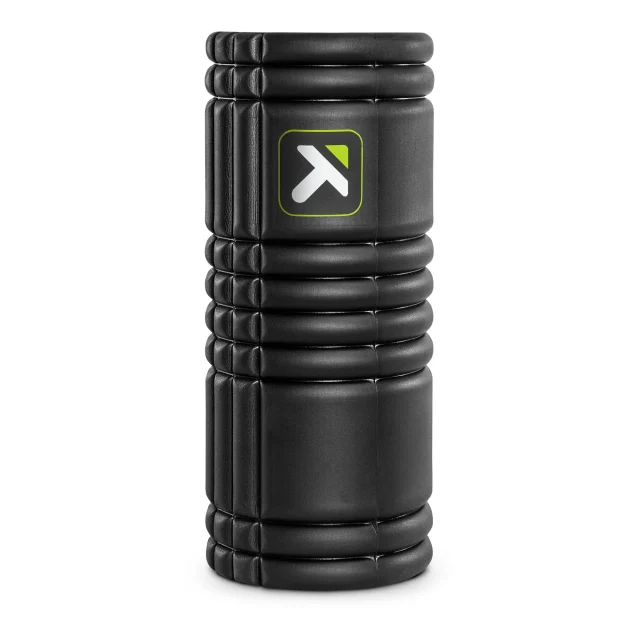
The textured all-rounder most experts reach for first, firm enough to work yet forgiving enough for beginners.
Best for: Most people who want one durable, do-everything roller the whole household can share.
- GRID surface of flat zones, ridges and dense nodules reaches knots without the bruising of harder rollers
- Hollow core holds its shape under a heavy adult (rated to 300 lb) where soft solid-foam rollers can flatten
- At 13 inches it is short for rolling both sides of the upper back in one pass
- Texture can feel too mild for experienced users with very dense tissue
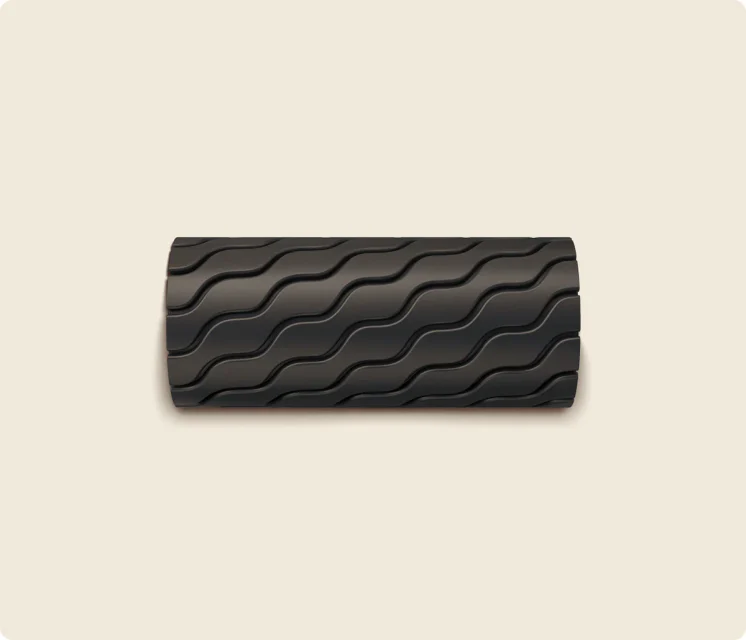
A vibrating roller that lets you use less pressure for the same release, if you accept the weight and price.
Best for: Recovery-focused users who genuinely want vibration and will pay a premium for it.
- Five vibration intensities let you back off physical pressure while still reaching tension
- Wave-channel high-density EVA grips skin and adds traction during longer sessions
- Heavy at roughly 3.3 pounds and needs recharging, unlike a passive roller
- Guided routines and Bluetooth control live in the Therabody app
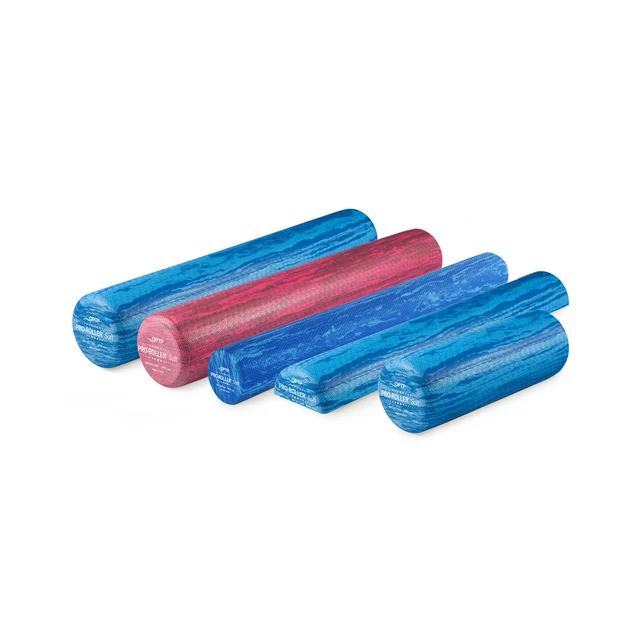
A smooth, gentle roller that suits first-timers, Pilates, and sensitive muscles better than aggressive picks.
Best for: Beginners, older users, and anyone whose muscles find textured rollers painful.
- Soft foam is comfortable enough for beginners and balance or core work
- Available in a long size that supports the full spine for stretches
- Too soft for dense muscle or experienced users, and it compresses over hard use
- Smooth surface spreads pressure out rather than targeting a specific knot
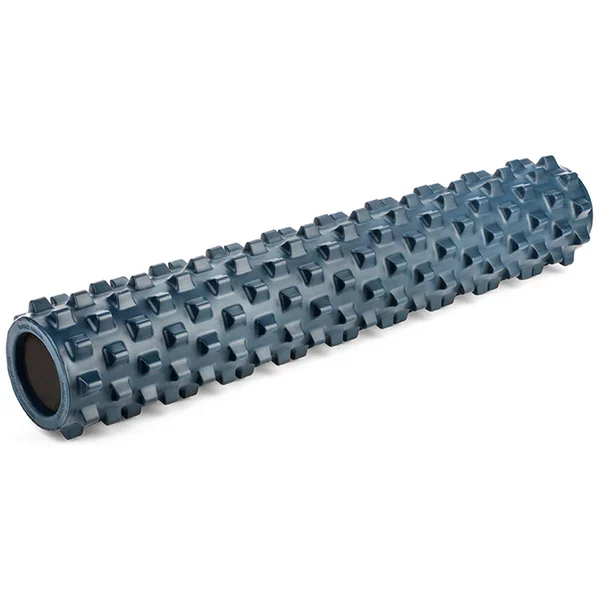
An aggressive knobbed roller built for a narrow group of experienced users, not the average buyer.
Best for: Experienced users with dense tissue who specifically want punishing deep-tissue pressure.
- Firm but flexible bumps move soft tissue more than a flat surface for hard trigger-point work
- Resilient high-density EVA holds its shape, and the bumps flex around bone rather than over it
- The intensity bruises novices and makes pressure hard to modulate
- For an average user it offers no real advantage over a gentler textured roller
| Criteria | TriggerPoint GRID 1.0 Top pick | Therabody Wave Roller | OPTP PRO-Roller Soft | RumbleRoller Original |
|---|---|---|---|---|
| Verdict | Buy it | It depends | Buy it | Skip it |
| Best for | Most people who want one durable, do-everything roller the whole household can share. | Recovery-focused users who genuinely want vibration and will pay a premium for it. | Beginners, older users, and anyone whose muscles find textured rollers painful. | Experienced users with dense tissue who specifically want punishing deep-tissue pressure. |
| Price tier | $$ · mid-range | $$$$ · flagship | $$ · mid-range | $$$ · premium |
| Surface & texture | Three-zone textured EVA | Wave-channel high-density EVA | Smooth soft foam | Aggressive raised knobs |
| Firmness | Medium-firm | Firm | Soft | Firm |
| Vibration | None | 5 levels, Bluetooth app | None | None |
| Weight & portability | Light, easy to pack | Heavy (~3.3 lb), needs charging | Light | Moderate |
| Durability | Excellent (hollow core) | Very good | Good, softens over time | Excellent (dense) |
| Best user | Most people | Vibration seekers | Beginners & sensitive users | Experienced only |
Which one is right for you?
- Most people who want one durable, do-everything roller the whole household can share. Buy it TriggerPoint GRID 1.0
- Beginners, older users, and anyone whose muscles find textured rollers painful. Buy it OPTP PRO-Roller Soft
- Recovery-focused users who genuinely want vibration and will pay a premium for it. It depends Therabody Wave Roller
- Experienced users with dense tissue who specifically want punishing deep-tissue pressure. Skip it RumbleRoller Original
How we judged the field
RBE does not lab-test. We read independent physios, trainers, and long-term owners, then weigh where they agree and where they split. For foam rollers that meant looking past the marketing to a few practical questions: does the surface deliver useful pressure without bruising, does the core hold its shape under bodyweight, and is the format one you will actually keep using. We deliberately compared different categories, a textured all-rounder, a vibrating model, a soft beginner roller, and an aggressive knobbed roller, because the right pick depends more on your tolerance and goals than on any spec sheet. Prices here are described as tiers rather than figures.
TriggerPoint GRID 1.0
Buy itThe GRID 1.0 is the roller most experts reach for first, and after weighing years of owner reports it is easy to see why. Its surface is an EVA pattern with three zones: flat spans that mimic a palm, tubular ridges like fingers, and firmer nodules like fingertips. Those sit around a hollow core, which is the quiet strength here. That core holds its cylinder shape under a heavy adult (TriggerPoint rates it to 300 lb), where cheaper solid-foam rollers can slowly flatten and go dead. At 13 inches it covers a calf or quad cleanly and stores without fuss.
What owners like more is the balance of the texture: firm enough to reach a knot, forgiving enough that first-timers do not end up bruised and put off. What they like less is that same 13-inch length, which is short for rolling both sides of the upper back in a single pass, and a texture that experienced users with dense tissue may eventually find too mild. Those are minor limits on an otherwise dependable tool. For most households, it is the sensible default and the one hardest to regret.
Therabody Wave Roller
It dependsThe Wave Roller is the pick for people who specifically want vibration. It offers five intensity levels and a high-density EVA surface molded into wave channels that grip the skin and add traction during longer sessions. A charge lasts around 180 minutes, and Bluetooth connects it to guided routines in the companion app.
What testers and owners like more is that the vibration lets you ease off physical pressure while still reaching tension, which helps sensitive users and post-workout recovery. What they like less is the practical cost of that feature. It weighs roughly 3.3 pounds, so it is less pleasant to travel with than a passive roller, and it needs recharging. Guided routines and Bluetooth control live in the app, which matters less if you just want to grab a tool and roll. It is a capable device, but the benefit over a good passive roller is a matter of comfort, not necessity, and the price reflects the electronics rather than better core rolling.
OPTP PRO-Roller Soft
Buy itThe PRO-Roller Soft solves a different problem: rollers that hurt too much to use. Its soft foam has a smooth surface that eases beginners in, and it comes in several sizes, including a long version that supports the full spine for stretches and balance work. Physical therapists and Pilates instructors lean on this style for good reason.
What owners like more is the comfort. It is gentle enough for first-timers, older users, and anyone whose muscles flinch at textured rollers, while still giving a broad, relaxing massage. What they like less is the flip side of that softness: it is not firm enough for dense muscle or experienced users, it compresses under heavy repeated use, and the smooth surface spreads pressure out rather than targeting a specific knot. If you already tolerate a textured roller, this will feel underpowered. If you do not, it is the roller that keeps you rolling.
RumbleRoller Original
Skip itThe RumbleRoller earns its reputation, but for a narrow audience. Firm but flexible bumps move soft tissue more than a flat surface can, and the resilient high-density EVA is built to flex around bone rather than over it. For an experienced user with dense tissue chasing hard trigger-point release, that is a real tool.
For most buyers, though, it is the one to pass on. The intensity bruises novices, and the aggressive bumps make pressure difficult to modulate, so it is easy to overdo. More to the point, for an average user it offers no meaningful advantage over a gentler textured roller like the GRID, which does the everyday job without the punishment. Buying up to this level of aggression before you need it usually means a roller that gathers dust. That is why it lands as a skip rather than a recommendation, despite being a well-made product for the few who suit it.
TriggerPoint GRID 1.0 vs Therabody Wave Roller: which should you buy?
This is the choice most shoppers actually face: the dependable passive roller or the vibrating upgrade. The GRID 1.0 wins on simplicity, weight, price, and the fact that it is always ready. There is no battery, no app, and nothing to fail, and its textured surface handles the common jobs well. The Wave Roller earns its place only if vibration genuinely helps you, either because your muscles are sensitive to direct pressure or because you value the guided routines. Be honest about that, because you are paying a premium for electronics, carrying more weight, and remembering to charge it. If you are unsure, start with the GRID and add vibration later if you find you miss it. Few people who buy the GRID first end up wishing they had spent more.
What to look for
Match the roller to your experience and goals rather than the longest feature list. If you are new or find rolling painful, begin soft and smooth so tight tissue can adapt. If you want one roller for general recovery and mobility, a medium-firm textured model covers the most ground. Reserve extra-firm knobbed rollers for experienced users who specifically want deep, intense work and can control the pressure. Consider size too: a 13-inch roller travels and stores easily, while a long roller supports the spine for stretches. Weigh durability, since a rigid or hollow core outlasts cheap solid foam that flattens. Treat vibration as a comfort feature worth paying for only if you will use it.
Our final take
The TriggerPoint GRID 1.0 is the roller to buy for most people, balancing useful firmness, comfort, and durability without asking you to think about batteries. Choose the Therabody Wave Roller only if you truly want vibration and accept the weight and premium price. Beginners and sensitive users should start with the soft, smooth OPTP PRO-Roller, which keeps rolling tolerable rather than intimidating. And unless you are experienced and chasing punishing deep-tissue pressure, skip the RumbleRoller: it is well made, but it is more roller than most bodies need.
Questions, answered
Are vibrating foam rollers worth the extra money?
Only for some buyers. Vibration lets you apply less physical pressure to reach the same tension, which suits sensitive or recovery-focused users. But a passive textured roller does the core job for a fraction of the cost, so the upgrade is a comfort choice, not a necessity.
Textured or smooth: which foam roller should I start with?
Start smooth if you are new or find rolling painful, since a soft roller spreads pressure and eases you in. Move to a textured roller like the GRID once you want more targeted work. Textured surfaces reach knots better but can feel intense at first.
How firm should a beginner's foam roller be?
Beginners should start soft to medium, not extra-firm. A soft roller such as the OPTP PRO-Roller lets tight tissue adapt without bruising. Very firm knobbed rollers make pressure hard to control and often cause more flinching than release, which discourages regular use.
How long should I foam roll each muscle?
Most trainers suggest spending roughly 30 to 60 seconds per muscle group, pausing on tender spots and breathing rather than gritting through sharp pain. Total sessions of five to ten minutes are typical. Rolling longer rarely adds benefit and can leave areas sore.
Can foam rolling replace stretching?
No. Rolling and stretching do different jobs: rolling eases muscle tension and can improve short-term range of motion, while stretching lengthens tissue over time. They work best together, with rolling often used before activity and stretching after. Neither substitutes for strength work.
Deciding between the top two? See our head-to-head: TriggerPoint GRID 1.0 vs Therabody Wave Roller.
More Home Gym reviews
 The Best Gym Chalk: 4 Compared (and One to Skip)
  The Best Home Gym Flooring: 4 Compared (and One to Skip)
  The Best Jump Ropes: 4 Compared (and One to Skip)
  The Best Knee Sleeves: 4 Compared (and One to Skip)
  The Best Lifting Belts: 4 Compared (and One to Skip)
  The Best Lifting Straps: 4 Compared (and One to Skip)