

Health & Wellness
The Best Indoor Air Quality Monitors: What's Worth Buying in 2026
We weigh four indoor air quality monitors on what they measure, sensor accuracy, battery life, and data tools, plus one honest pick worth skipping this year.
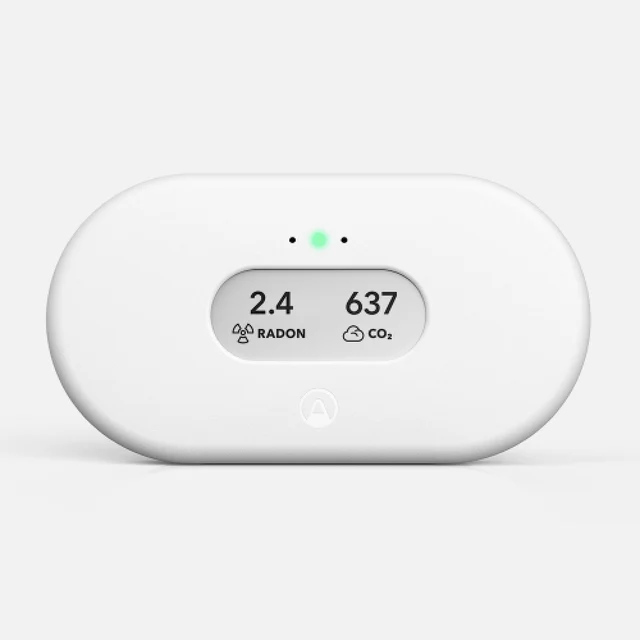
The short version
For a single device that captures the fullest picture of your indoor air, the Airthings View Plus leads because it adds credible radon tracking to CO2, particulates and VOCs, though you pay for the breadth. If ventilation is your real worry, the Aranet4 Home has the most trustworthy CO2 sensor and a battery that lasts years. The IQAir AirVisual Pro suits particulate-heavy regions. Skip the Temtop M100: it shows plenty of numbers, but too few you can rely on.
Our picks at a glance
- Airthings View Plus - Buy. The rare consumer monitor that tracks radon alongside CO2, particulates and VOCs in one device.
- Aranet4 Home - Buy. A lab-grade CO2 sensor and a multi-year battery, but it measures little beyond ventilation.
- IQAir AirVisual Pro - It depends. Among the most accurate consumer particulate readings, tied to a wall outlet and a fiddly setup.
- Temtop M100 - Skip. A screen full of numbers at a low price, but the readings are indicative rather than trustworthy.
The verdict in 30 seconds
What mattered most
- What it measures
- CO2 sensor
- Particulate (PM2.5)
- Radon
- Power and battery
- Data and app
Indoor air quality monitors promise to reveal what you are breathing, but they vary widely in what they measure and how far you can trust the numbers. We synthesized independent expert testing and long-term owner reports to separate the genuinely useful monitors from the ones that just display a lot of digits. Below are three worth considering for different needs, and one we would leave on the shelf.
The rare consumer monitor that tracks radon alongside CO2, particulates and VOCs in one device.
Best for: Homes in radon-prone areas or basements that want one device for the whole picture.
- Seven sensors in one unit, including credible radon tracking with 7-, 30- and 365-day averages
- Low-power e-ink display and a cloud app that builds long-term history in the background
- Slows its sampling intervals on battery power unless plugged in
- Pulling raw data out for your own analysis is clumsier than it should be, and it is the priciest option here
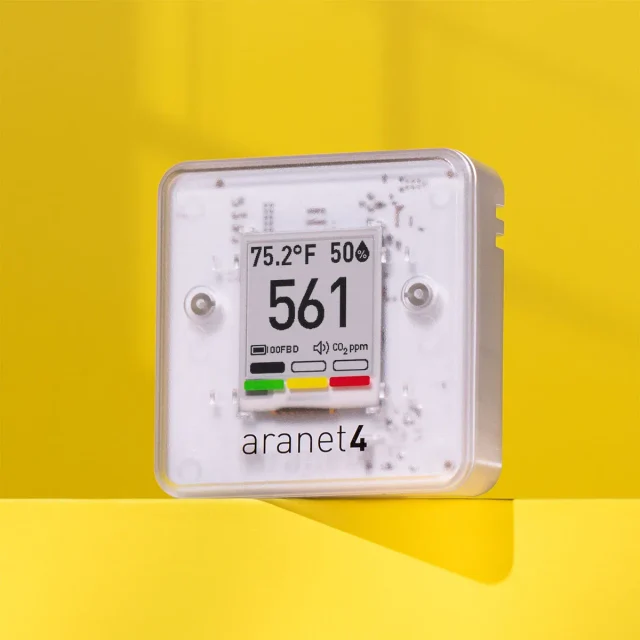
A lab-grade CO2 sensor and a multi-year battery, but it measures little beyond ventilation.
Best for: Bedrooms, classrooms and offices where stale-air CO2 is the main concern.
- NDIR CO2 sensor of the type used in professional equipment, with strong accuracy for a consumer device
- Runs for years on two AA batteries and works fully offline, storing history locally
- Reports only CO2, temperature and humidity, with no particulate, VOC or radon sensor
- You need the phone app to see anything beyond the current reading and its recent trend
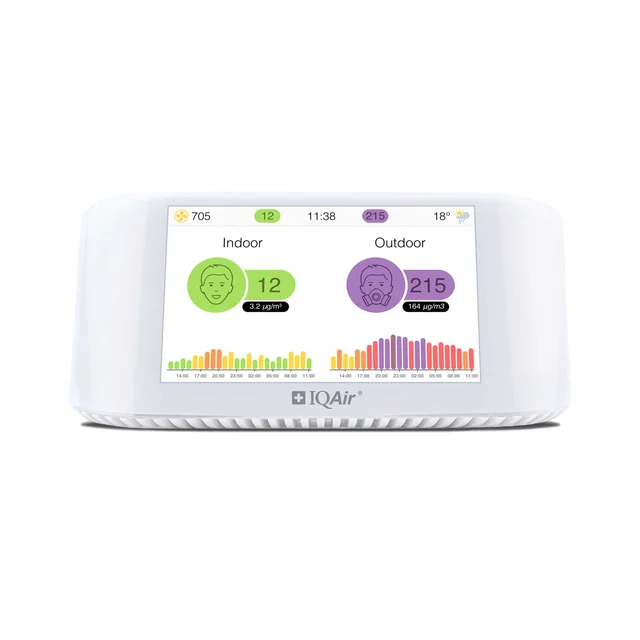
Among the most accurate consumer particulate readings, tied to a wall outlet and a fiddly setup.
Best for: Wildfire-smoke and pollution-prone regions that prioritize particulate accuracy.
- Laser PM2.5 sensor among the most accurate consumer options, shown next to local outdoor air quality
- Bright color touchscreen with trends and a short forecast, backed by detailed app history
- No battery-only mode, so it must stay plugged in and becomes a fixture rather than portable
- Setup and pairing can be tedious, and it skips radon and VOCs
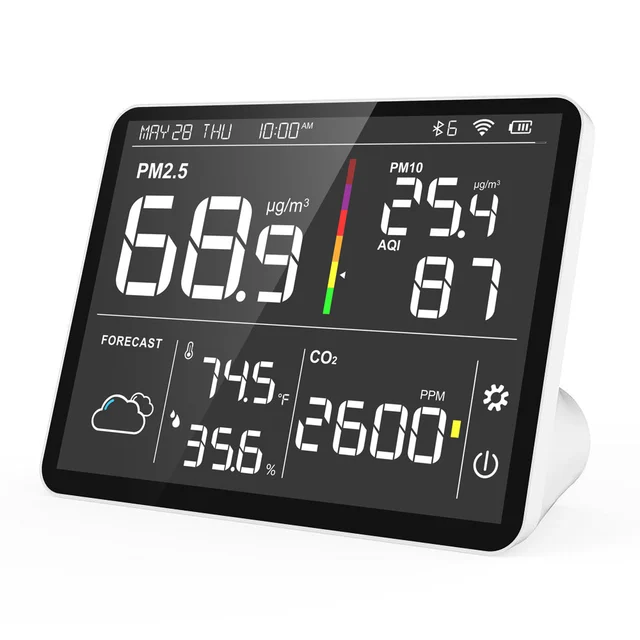
A screen full of numbers at a low price, but the readings are indicative rather than trustworthy.
Best for: Casual curiosity only; not for health decisions you plan to act on.
- Large, bright display shows CO2, PM2.5, PM10 and an air quality index together without an app
- Low cost of entry for a quick sense of whether a room is stuffy or dusty
- Sensors are trend-level, and a derived index plus a weather-style forecast add precision the hardware does not support
- No radon or true VOC measurement, with uncertain long-term CO2 calibration
| Criteria | Airthings View Plus Top pick | Aranet4 Home | IQAir AirVisual Pro | Temtop M100 |
|---|---|---|---|---|
| Verdict | Buy it | Buy it | It depends | Skip it |
| Best for | Homes in radon-prone areas or basements that want one device for the whole picture. | Bedrooms, classrooms and offices where stale-air CO2 is the main concern. | Wildfire-smoke and pollution-prone regions that prioritize particulate accuracy. | Casual curiosity only; not for health decisions you plan to act on. |
| Price tier | $$$ · premium | $$ · mid-range | $$$ · premium | $ · budget |
| What it measures | Radon, PM2.5/PM1, CO2, VOCs, humidity, temp, pressure | CO2, temperature, humidity | PM2.5, CO2, temp, humidity, plus outdoor AQI | CO2, PM2.5, PM10, temp, humidity, AQI |
| CO2 sensor | NDIR | NDIR, reference-grade accuracy | NDIR | Basic NDIR, trend-level |
| Particulate (PM2.5) | Laser optical | None | Laser optical, top-tier accuracy | Optical, basic |
| Radon | Yes, passive alpha sensor | No | No | No |
| Power and battery | 6x AA, up to about 2 years, e-ink | 2x AA, up to about 7 years, e-ink | Mains only, no battery mode | Mains or USB, always-on screen |
| Data and app | Cloud app, up to 365-day history | Bluetooth app, offline history | App plus on-screen graphs and outdoor data | WiFi app, basic logging |
Which one is right for you?
- Homes in radon-prone areas or basements that want one device for the whole picture. Buy it Airthings View Plus
- Bedrooms, classrooms and offices where stale-air CO2 is the main concern. Buy it Aranet4 Home
- Wildfire-smoke and pollution-prone regions that prioritize particulate accuracy. It depends IQAir AirVisual Pro
- Casual curiosity only; not for health decisions you plan to act on. Skip it Temtop M100
How we judged the field
We do not run our own laboratory tests. Instead, we read across independent expert reviews and long-term owner reports, then look for the points where they agree and, more tellingly, where they diverge. A monitor that impresses in a quick bench test but frustrates owners after a year of daily use does not earn a recommendation here.
Four questions shaped this comparison. What does the device actually measure, and are those the pollutants that matter in a home? How trustworthy are its sensors, particularly for CO2 and fine particulates? How practical is it to live with, in terms of power, battery life and display? And how useful is the data once it leaves the screen, through an app, history or export? We weighted honest, durable accuracy over long feature lists, because a monitor that reports numbers you cannot rely on is worse than no monitor at all.
Airthings View Plus
Buy itThe View Plus is the most complete single device in this group. It combines seven sensors, tracking radon, PM2.5 and PM1 particulates, CO2, VOCs, humidity, temperature and air pressure, and it is the rare consumer monitor that measures radon credibly, reporting 7-day, 30-day and 365-day rolling averages. The CO2 reading comes from an NDIR sensor, and the particulate count from a laser-based optical sensor. A low-power e-ink display shows current status at a glance, and the companion app builds a long history in the background.
What we liked more: the radon channel. It is the one pollutant here you cannot detect yourself, it concentrates in basements and ground floors, and no other monitor in this roundup tracks it. Getting radon, CO2 and particulates from one unit is genuinely convenient.
What we liked less: the device slows its sampling intervals when running on batteries unless it is plugged in, so the fullest data comes at the cost of a cable, and pulling raw numbers out for your own analysis is clumsier than it should be. It is also the most expensive option here, which only pays off if you use the radon data.
Aranet4 Home
Buy itThe Aranet4 does one job and does it to a standard the others cannot match. Its NDIR CO2 sensor is the type used in professional equipment, and its accuracy is strong for a consumer device. Two AA batteries drive it for years thanks to the efficient sensor and e-ink screen, and it works entirely offline, storing history locally and syncing to a phone app over Bluetooth only when you choose. A traffic-light color band makes the reading legible from across a room.
What we liked more: the combination of reference-grade CO2 accuracy, multi-year battery life and portability. You can move it between rooms, take it to an office or classroom, and never think about charging it.
What we liked less: the narrow scope. It reports CO2, temperature and humidity, and nothing else. There is no particulate, VOC or radon sensor, so it cannot warn you about smoke, dust or chemicals. You also need the app to see anything beyond the current number and its recent trend.
IQAir AirVisual Pro
It dependsThe AirVisual Pro is built around particulates. Its laser sensor is among the most accurate consumer options for PM2.5, and it pairs your indoor reading with local outdoor air quality so you can decide whether to open a window or keep it shut. A bright color touchscreen shows current values, trends and a short forecast, and the app keeps a detailed history. It also measures CO2, temperature and humidity.
What we liked more: particulate accuracy and context. During wildfire season or in a polluted city, seeing trustworthy indoor PM2.5 next to the outdoor figure is the clearest guidance any monitor here offers.
What we liked less: it has to stay plugged in, with no battery-only mode, so it is a fixture rather than something you carry around. Setup and pairing can be tedious enough that some owners need help to finish, and it skips radon and VOCs.
Temtop M100
Skip itThe M100 looks generous on paper. A large, bright color screen shows CO2, PM2.5, PM10, a combined air quality index, temperature, humidity and even a weather-style forecast, all for a low price. For a quick, casual sense of whether a room feels stuffy or dusty, it does respond.
What we liked more: the amount of information on one glanceable display, and the low cost of entry. Seeing CO2 and particulates together without an app has some appeal.
What we liked less: the readings are indicative rather than reliable. The sensors are trend-level, the derived index and forecast add a veneer of precision the hardware does not support, and there is no radon or true VOC measurement. The always-on glossy screen and uncertain long-term CO2 calibration make it hard to trust for anything you would act on. As a decorative gauge it is fine; as a health tool it is not, which is why we would skip it.
Airthings View Plus vs Aranet4 Home: which should you buy?
These two win for opposite reasons. The View Plus is the breadth choice: if you want one device to watch radon, particulates, CO2 and VOCs together, and especially if you live somewhere radon is a known risk, it is the easiest recommendation despite its price and its preference for a power cable.
The Aranet4 is the depth choice. If your real concern is ventilation, whether a bedroom goes stale overnight or a home office fills with CO2 by mid-afternoon, its sensor is more trustworthy than any all-in-one, and its battery life removes any friction. What it will not do is tell you about smoke or dust. Put simply: buy the View Plus for a full picture, and buy the Aranet4 for the most reliable read on the one metric most homes get wrong.
What to look for
Start with the pollutant you most need to see. If it is radon, only a monitor that measures it will do, and that narrows the field immediately. If it is stuffiness and focus, prioritize CO2 accuracy from an NDIR sensor. If it is smoke, dust or nearby pollution, weight particulate accuracy and outdoor context.
Then think about how you will live with the device. A battery-and-e-ink unit can move between rooms and disappear into the background, while a mains-powered touchscreen stays put but shows richer detail. Decide whether you want an ongoing history and app, or just a number on a screen. Finally, be honest about the budget-tier temptation: a cheaper monitor that you cannot trust will not change your behavior, and a monitor that does not change behavior is money spent on reassurance rather than air.
Our final take
For the widest, most reliable view of your indoor air in a single device, the Airthings View Plus is the pick, provided you value the radon tracking that justifies its cost. If ventilation is your main concern, the Aranet4 Home delivers the most trustworthy CO2 reading and a battery you can forget about. The IQAir AirVisual Pro is the specialist for particulate-heavy environments where accuracy matters more than portability. And the Temtop M100, for all its numbers, is the one to leave behind.
Questions, answered
Do I really need a monitor that measures radon?
Only if your home is prone to it. Radon collects in basements and ground floors in certain geological zones, and it is the one pollutant here you cannot smell or see. If you live in a flagged area, choose a monitor that tracks it directly.
Is CO2 or particulate matter more important to track?
Both matter, for different reasons. CO2 signals poor ventilation and correlates with stuffiness and reduced focus, while PM2.5 reflects smoke, dust and combustion particles that reach your lungs. If you can track only one, pick the problem your home actually has.
Are budget air quality monitors accurate?
Treat their numbers as directional. Inexpensive units show useful trends, such as whether a room is getting stuffier, but their sensors drift and rarely match reference readings. For decisions about health or ventilation, a monitor with a proper NDIR CO2 sensor is worth the step up.
Do these monitors clean the air?
No. A monitor only measures pollutants; it does not remove them. Pair it with ventilation, source control or an air purifier to actually lower the readings. The value of a monitor is telling you when and where to act, not doing the cleaning.
Deciding between the top two? See our head-to-head: Airthings View Plus vs Aranet4 Home.
More Health & Wellness reviews
 The Best Blood Glucose Meters: 4 Compared (and One to Skip)
  The Best Home Blood Pressure Monitors of 2026
  The Best Blue-Light Glasses for Screen Use: 4 Compared (and One to Skip)
  The Best Carbon Monoxide Detectors: 4 Compared (and One to Skip)
  The Best Cold Plunge Tubs: 4 Compared (and One to Skip)
  The Best Combustible Gas Detectors: 4 Compared (and One to Skip)