

Health & Wellness
The Best Home Blood Pressure Monitors of 2026
We weighed four validated home blood pressure monitors on the metric that matters most, accuracy, and named a clear pick, a value runner-up, and one to skip.
The short version
If you want one reliable number with minimal effort, the Omron Platinum (BP5465) is our pick: it averages three readings automatically, is clinically validated, and flags possible AFib. The A&D Medical UA-651BLE is the value runner-up, hitting the same validated accuracy with fewer extras. The Withings BPM Connect suits people who want automatic Wi-Fi syncing, though owner reports of high readings make it conditional. Skip wrist monitors like the Omron 7 Series for routine tracking; upper-arm cuffs remain more reliable.
Our picks at a glance
- Omron Platinum (BP5465) - Buy. Automatic three-reading averaging and validated accuracy make this the number you can trust with the least effort.
- A&D Medical UA-651BLE - Buy. A no-frills, twice-validated upper-arm monitor that nails the fundamental and skips the extras.
- Withings BPM Connect - It depends. An all-in-one arm monitor that logs itself over Wi-Fi, held back by uneven real-world accuracy reports.
- Omron 7 Series Wireless Wrist (BP6350) - Skip. A comfortable, portable wrist unit undercut by the accuracy limits inherent to the wrist form factor.
The verdict in 30 seconds
What mattered most
- Clinical validation
- Cuff and placement
- Reading averaging
- Irregular-heartbeat / AFib
- Connectivity and sync
- On-device memory
High blood pressure is managed on numbers, so the monitor you trust at home has to be accurate before it is anything else. We read across independent expert testing and years of owner feedback to separate clinically validated upper-arm monitors from the merely popular. Below are three we would recommend for different needs, one conditional pick, and a wrist monitor we would skip.
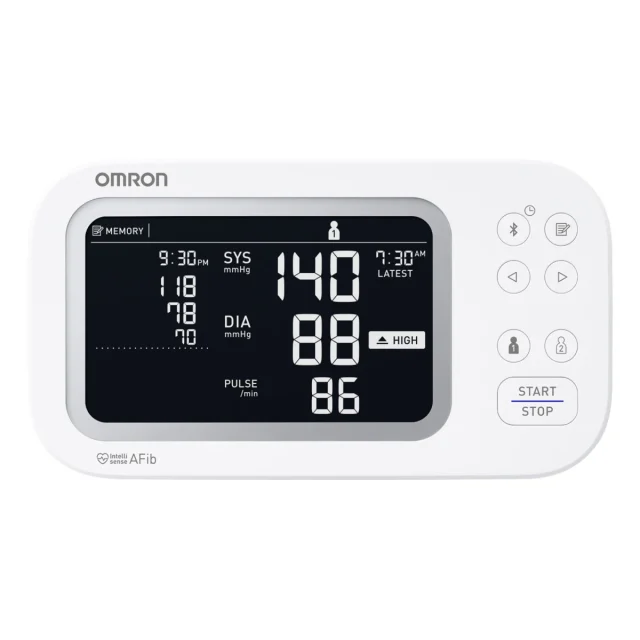
Automatic three-reading averaging and validated accuracy make this the number you can trust with the least effort.
Best for: Daily trackers and couples who want the most trustworthy reading with minimal effort.
- TruRead averages three consecutive readings automatically
- IntelliSense AFib and irregular-heartbeat detection, with 200-reading, two-user memory
- Large desktop footprint
- Bluetooth app pairing occasionally needs a retry
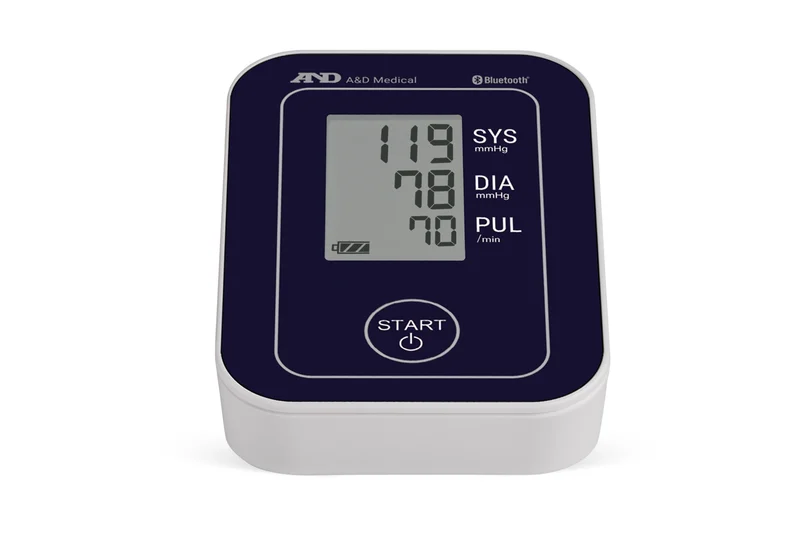
A no-frills, twice-validated upper-arm monitor that nails the fundamental and skips the extras.
Best for: Value-focused buyers who want validated accuracy without paying for features they will not use.
- Validated in more than one published clinical study
- Wide-range cuff and one-button operation with an irregular-heartbeat alert
- No on-device reading averaging
- Minimal on-unit memory, so history lives in the app
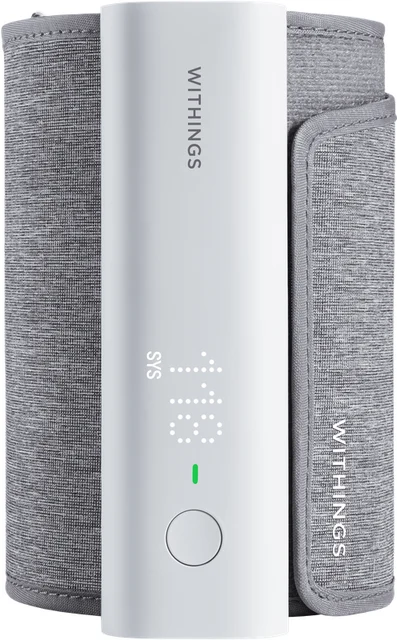
An all-in-one arm monitor that logs itself over Wi-Fi, held back by uneven real-world accuracy reports.
Best for: Gadget-comfortable users who value automatic syncing over a large on-device readout.
- Wi-Fi and Bluetooth auto-sync to Health Mate, Apple Health, and Google Fit
- Rechargeable battery and color-coded LED display in a travel-friendly design
- Recurring owner reports of readings running high versus clinic measurements
- Small display and heavy app dependence
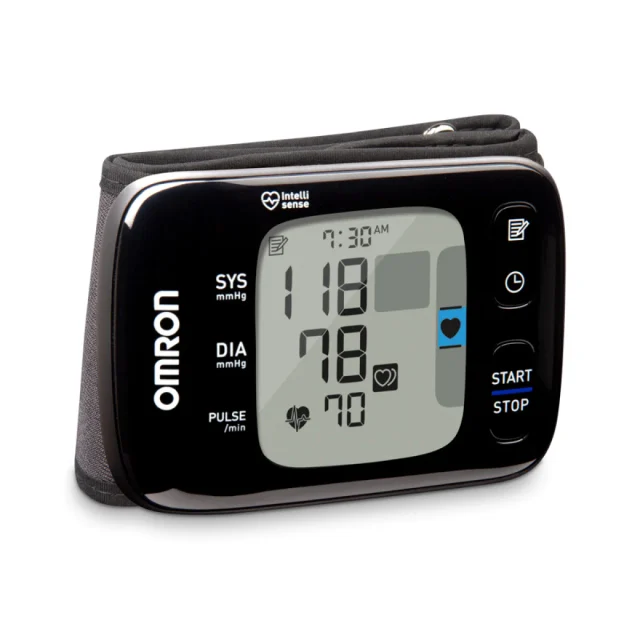
A comfortable, portable wrist unit undercut by the accuracy limits inherent to the wrist form factor.
Best for: Travelers or people who genuinely cannot use an upper-arm cuff.
- Compact and travel-friendly with a heart-position indicator
- Irregular-heartbeat detection and app sync
- Wrist placement is position-sensitive and less reliable for routine tracking
- Readings vary more than an upper-arm cuff in everyday use
| Criteria | Omron Platinum (BP5465) Top pick | A&D Medical UA-651BLE | Withings BPM Connect | Omron 7 Series Wireless Wrist (BP6350) |
|---|---|---|---|---|
| Verdict | Buy it | Buy it | It depends | Skip it |
| Best for | Daily trackers and couples who want the most trustworthy reading with minimal effort. | Value-focused buyers who want validated accuracy without paying for features they will not use. | Gadget-comfortable users who value automatic syncing over a large on-device readout. | Travelers or people who genuinely cannot use an upper-arm cuff. |
| Price tier | $$$ · premium | $$ · mid-range | $$$ · premium | $$ · mid-range |
| Clinical validation | Validated (ANSI/AAMI/ISO 81060-2) | Validated (ESH, multiple studies) | Validated | Validated, but wrist caveat applies |
| Cuff and placement | Upper arm, fits 9–17 in | Upper arm, wide-range 8.6–16.5 in | Upper arm, one-piece | Wrist |
| Reading averaging | Yes - TruRead, 3 readings | No - single reading | Auto-combines same-session readings | No - single reading |
| Irregular-heartbeat / AFib | AFib + irregular-beat detection | Irregular-beat alert | Irregular-beat alert | Irregular-beat detection |
| Connectivity and sync | Bluetooth to app | Bluetooth to app | Wi-Fi + Bluetooth auto-sync | Bluetooth to app |
| On-device memory | 200 readings, 2 users | Single reading; app stores history | App-based history, multi-user | 100 readings, 2 users |
Which one is right for you?
- Daily trackers and couples who want the most trustworthy reading with minimal effort. Buy it Omron Platinum (BP5465)
- Value-focused buyers who want validated accuracy without paying for features they will not use. Buy it A&D Medical UA-651BLE
- Gadget-comfortable users who value automatic syncing over a large on-device readout. It depends Withings BPM Connect
- Travelers or people who genuinely cannot use an upper-arm cuff. Skip it Omron 7 Series Wireless Wrist (BP6350)
How we judged the field
Real Buyer Experiences does not run a clinical lab. Our job is to read widely across independent expert evaluations and long-run owner reports, then weigh them against the one thing that decides whether a home blood pressure monitor earns its place: measured accuracy. A device that drifts even eight to ten points from a clinic cuff is not a bargain at any tier, because you will make decisions from the wrong number.
So we started with clinical validation. Independent hypertension groups keep lists of monitors that have cleared recognized protocols such as AAMI, ESH, or ISO 81060-2, and the share of products that pass is small next to everything on offer. We only shortlisted validated devices, then sorted them on cuff comfort, reading-averaging behavior, irregular-heartbeat detection, app quality, and how closely owners say the readings track their doctor’s measurements. We also held our recommended picks to upper-arm cuffs, since the evidence that wrist units track less reliably in daily use is consistent. Four monitors made the cut, including one most people should pass over.
Omron Platinum (BP5465)
Buy itThis is the monitor we would put in most homes. Its TruRead function takes three consecutive readings and reports the average, which quietly solves the biggest source of home-tracking error: acting on a single noisy measurement. The wide backlit display shows your current and previous reading side by side, and the IntelliSense AFib feature flags possible atrial fibrillation patterns across a set of readings, a useful prompt to raise with a clinician. It holds 200 readings across two users, so a couple can share one unit.
What owners and reviewers consistently like more is that averaging is automatic rather than a manual chore, which makes the daily number more trustworthy. What they like less is the footprint and the price position: it is a large desktop unit, and Bluetooth pairing to the companion app occasionally needs a retry. For accuracy-first buyers, those are minor trade-offs.
A&D Medical UA-651BLE
Buy itIf the Platinum is more monitor than you want, this is the value counterweight. It has cleared validation in more than one published study, and its appeal is restraint: one button starts a reading, the wide-range cuff fits a broad span of arm sizes comfortably, and an irregular-heartbeat indicator appears when the device detects an uneven pulse. Readings display within seconds and sync to the app over Bluetooth.
What people like more is the honesty of the design: it does one job, does it accurately, and does not bury it under menus. What they like less is that it is bare-bones. There is no on-device averaging, on-unit memory is minimal so your history lives in the app, and the plastic housing feels utilitarian. None of that changes the reading on the screen, which is the point.
Withings BPM Connect
It dependsThe BPM Connect is the pick for people who want the log to keep itself. It is an all-in-one arm unit with Wi-Fi and Bluetooth, so a reading uploads to the Health Mate app, and onward to Apple Health or Google Fit, without touching your phone. A rechargeable battery lasts weeks, the LED tube display gives a color-coded result, and the slim cuff-and-monitor package travels well.
What owners like more is genuinely hands-off syncing, which raises the odds you actually keep a record. What they like less is more consequential: a recurring thread of owner reports describes readings that run high compared with office measurements, and the small display and app dependence frustrate people who just want numbers on a screen. It is validated and well built, but the accuracy variance in real-world reports keeps it a conditional recommendation rather than a default.
Omron 7 Series Wireless Wrist (BP6350)
Skip itThis is a competent wrist monitor, and it is the one we would still steer most people away from. It is compact, comfortable, and includes a heart-position indicator that lights up when your wrist sits at heart level, plus irregular-heartbeat detection. For frequent travelers or those who find arm cuffs painful, the appeal is real.
The problem is structural, not brand-specific. A wrist reads the radial artery, which sits shallower and is more sensitive to position and vasoconstriction than the upper arm, so small posture errors move the number. That is why major heart organizations still direct routine home tracking to upper-arm cuffs. What people like more is portability and comfort; what they like less, once they compare against an arm cuff, is inconsistency between readings. Buy it only if an arm cuff is genuinely not an option.
Omron Platinum (BP5465) vs A&D Medical UA-651BLE: which should you buy?
These two cover most buyers, so the choice is really about how much you want the device to do for you. The Platinum earns its higher tier through automatic three-reading averaging, dual-user memory, and AFib pattern detection, features that matter if you track daily, share the unit, or have a reason to watch for irregular rhythm. The UA-651BLE matches it on the fundamental that counts, validated accuracy, while stripping away the extras and the cost that come with them.
Pick the Platinum if you want the most trustworthy single number with the least effort and will use the averaging and memory. Pick the A&D if you want a validated reading, a comfortable wide-range cuff, and nothing to fiddle with. Neither is a mistake; they simply sit at different points on the effort-and-features curve.
What to look for
Start with validation and stop pretending other features rank near it. Confirm the exact model appears on a recognized validated-device list, because a validated line can include non-validated variants. Then measure your arm and match it to the cuff range, since a cuff that is too small reads high and one that is too loose reads low. Favor upper-arm over wrist for routine use. If you track daily, averaging across multiple readings is worth paying for; if you share the device, check per-user memory. Treat app and connectivity as convenience, not accuracy, and remember that any home reading is a data point to bring to a clinician, not a diagnosis.
Our final take
For most homes, the Omron Platinum (BP5465) is the pick, because automatic averaging and validated accuracy make its daily number the one you can trust with the least fuss. The A&D Medical UA-651BLE is the value runner-up, delivering the same validated fundamentals with fewer extras. Choose the Withings BPM Connect only if hands-off syncing outweighs its real-world accuracy variance, and skip the wrist monitor unless an arm cuff is truly off the table.
Questions, answered
Are wrist blood pressure monitors accurate?
Some are validated, but for routine home tracking upper-arm cuffs are more reliable. The wrist's radial artery sits shallower and is highly sensitive to position, so small posture changes skew readings. Major heart organizations recommend arm cuffs unless an arm measurement is genuinely not possible.
What does clinical validation mean, and why does it matter?
Validation means the exact model passed a recognized accuracy protocol such as AAMI, ESH, or ISO 81060-2 against a reference standard. It matters because most monitors sold are never validated. Check that your specific model number appears on an independent validated-device list, not just the product line.
Why do my home readings differ from my doctor's?
Some difference is normal. Home numbers are often lower because you are relaxed, while clinic visits can raise pressure. Larger gaps usually trace to cuff size, arm position, talking, or a full bladder. Take readings seated, arm supported at heart level, and share the log with your clinician.
Does reading averaging really improve accuracy?
Yes, meaningfully. A single measurement can be thrown off by movement, timing, or nerves. Devices that automatically take three readings and report the average smooth out that noise, giving a number closer to your true resting pressure. It is the feature we would prioritize right after validation itself.
Deciding between the top two? See our head-to-head: Omron Platinum (BP5465) vs A&D Medical UA-651BLE.
More Health & Wellness reviews
 The Best Blue-Light Glasses for Screen Use: 4 Compared (and One to Skip)
  The Best Carbon Monoxide Detectors: 4 Compared (and One to Skip)
  The Best Cold Plunge Tubs: 4 Compared (and One to Skip)
  The Best Combustible Gas Detectors: 4 Compared (and One to Skip)
  The Best Pneumatic Compression Boots: 4 Compared (and One to Skip)
  The Best Compression Socks: 4 Compared (and One to Skip)