Explained
Yoga Mats, Explained
After reading, you will understand what actually makes a yoga mat grip, last, and feel right underfoot, and how to see past marketing on a spec sheet.
In this guide
A yoga mat looks like a simple slab of foam or rubber, but the differences between them decide whether your hands and feet stay planted or skate out from under you. The biggest trap for first-time buyers is confusing softness with quality: the plushest, cheapest mats are usually the ones that turn slick the moment you sweat. This guide explains the terms and trade-offs so you can judge grip, material, and thickness on their merits.
The 30-second version
- Grip beats cushioning. A mat that slides when your palms get damp is a safety problem, so prioritize a surface that holds sweat over one that simply feels soft.
- The material is the mat. Polyurethane, natural rubber, PVC, and NBR foam behave completely differently on grip, upkeep, smell, and lifespan, so the surface type tells you most of what you need to know.
- Around four to five millimeters suits most people. It balances joint padding against the stability you need for balancing poses, while very thick mats trade away that stability.
- Some good mats feel bad on day one. Dense, long-lasting mats can be slippery until broken in, so out-of-the-box feel is a poor predictor of long-term quality.
- Cheap foam is a false economy for real yoga. It compresses, dents, and tears within months, which is exactly why it costs so little.
The products this guide is about
Our verdict on each, with the full reasoning on the companion review.
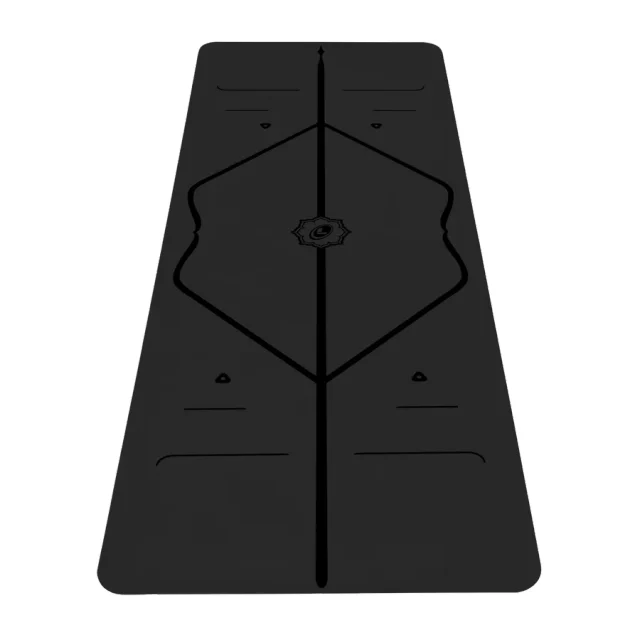
- Buy Liforme Classic Yoga Mat The strongest sweaty-practice grip here, with etched alignment guides, at a premium price. Amazon
- Buy Manduka PRO Yoga Mat A dense, near-indestructible mat with a lifetime guarantee that you have to break in first. Amazon
- It depends JadeYoga Jade Harmony Yoga Mat Grippy open-cell natural rubber at a fairer price, with the upkeep and lifespan trade-offs that come with it. Amazon
- Skip Gaiam Essentials Thick Yoga Mat Plush and cheap, but the foam gets slippery when you sweat and compresses within months. Amazon
What actually matters
- Grip when sweaty is the single most important trait, because traction is what keeps you safe and stable in standing and flowing poses; a mat that only grips when bone-dry is not enough.
- Surface material determines almost everything downstream, from how the mat grips to how you clean it, whether it smells, and how many years it survives.
- Cushioning and thickness protect knees, wrists, and elbows, but too much padding makes the mat feel wobbly and unstable when you balance.
- Durability decides whether the mat is a one-season purchase or a decade-long companion, and it correlates strongly with density and material quality.
- Weight and portability matter if you carry the mat to a studio, since the most durable mats are often the heaviest.
- Maintenance and allergies are easy to overlook: some grippy natural materials need regular cleaning and contain latex, which rules them out for sensitive users.
- Break-in behavior is worth knowing in advance, because a few excellent mats need weeks of use before their grip fully develops.
The specs, in plain English
Green flags vs red flags
Green flags
- The surface is described as gripping better or holding when damp or sweaty, rather than only when dry.
- The material is clearly stated, such as polyurethane top, natural rubber, or dense PVC, instead of a vague 'eco foam'.
- Thickness sits around four to five millimeters for a general-purpose mat.
- The maker backs durability with a meaningful guarantee, which signals confidence the mat will last.
- Owner reports consistently mention years of service without the surface flaking, thinning, or peeling.
Red flags
- Marketing leads with softness, plushness, or extra-thick cushioning but says little or nothing about grip.
- The surface is unnamed foam, which usually means cheap NBR that grows slippery when you sweat.
- Reviews repeatedly note the mat denting, compressing, tearing, or flaking within months.
- There is no mention of how the mat behaves when wet, which often hides poor sweaty-practice grip.
- A latex sensitivity is not addressed on a natural rubber mat, which can be a health issue for some buyers.
Who's who: the brands
- Liforme - Known for grippy polyurethane-topped mats with etched alignment guides, aimed at sweaty and hot-yoga practice.
- Manduka - Known for ultra-dense, near-indestructible mats and long guarantees, favored by committed practitioners who want longevity.
- JadeYoga - Known for open-cell natural rubber mats with strong immediate grip and an eco focus, including tree planting per mat sold.
- Gaiam - Known for affordable, cushioned foam mats that are widely available and suited to occasional stretching rather than grip-heavy flows.
How to read a listing without getting fooled
Start at the material line, because it predicts nearly everything else. A polyurethane top or open-cell natural rubber usually means grip that holds when you sweat, while an unnamed 'foam' or generic NBR usually means the opposite, no matter how cushioned it sounds. Treat words like plush, extra-thick, and ultra-soft as comfort claims, not grip claims; the two are not the same, and heavy cushioning can actually cost you stability. Look for an honest thickness figure and aim for roughly four to five millimeters for general use. Check whether the listing mentions wet or sweaty performance at all, and be suspicious when it does not. Finally, weigh a guarantee and the pattern in owner reports more heavily than any single glossy product photo.
How much should you spend?
Spend where it affects grip and lifespan, and save where it does not. The cheapest foam mats look like a bargain but often need replacing within a season once the surface goes slick and the padding caves in, so they can cost more over time than one good mat. The value sweet spot sits with a well-made natural rubber or quality synthetic mat that grips reliably and lasts several years. Paying up to the premium tier is worth it if you practice hot or fast styles where sweaty grip is non-negotiable, or if you want a mat engineered to last a decade with a strong guarantee. It is not worth it if you only stretch occasionally or use the mat as padding under other floor work, where a mid-tier option is plenty.
Questions, answered
What is the most important thing to look for in a yoga mat?
Grip when you sweat. Cushioning, weight, and looks all matter less than whether your hands and feet stay planted once your palms get slick. Favor a moisture-absorbing polyurethane top or open-cell natural rubber over closed-cell foam if you sweat or practice hot styles.
How thick should my yoga mat be?
Around four to five millimeters suits most people, balancing joint padding with the stability you need for balancing poses. Thicker mats around six millimeters cushion knees more but can feel wobbly. If your joints ache, a folded blanket under a firmer mat is more stable than relying on soft foam.
Are natural rubber mats better than PVC or foam?
Each has trade-offs. Natural rubber grips well and is renewable but smells at first, needs cleaning, and contains latex. Dense PVC lasts longer and wipes clean easily. Cheap NBR foam grips the least and wears fastest. Choose based on your grip needs, upkeep tolerance, and any latex sensitivity.
Why is my new mat slippery, and will that change?
Dense, closed-cell mats are designed to repel moisture, which also makes them slick when new. Many need a break-in period of regular use before the surface develops reliable traction, and some makers, Manduka included, advise against salt scrubs and suggest a towel for sweaty sessions. If a mat stays slippery long after break-in, it may simply be the wrong material for sweaty practice.
How long should a good yoga mat last?
A dense, high-quality mat can last a decade, and some are sold with a lifetime guarantee. Natural rubber mats typically run a few years before the surface wears. Budget foam mats often compress or tear within months of frequent use, which is a large part of why they cost so little.
Or jump to the head-to-head: Liforme Classic Yoga Mat vs Manduka PRO Yoga Mat.