Explained
Adjustable Dumbbells, Explained
After reading this you will know which adjustment mechanism fits how you train, what weight range to buy for, and how to tell a durable set from a fragile one.
In this guide
One pair of adjustable dumbbells can stand in for an entire rack, which is why they are so appealing for a home gym. The catch is that the clever mechanism that swaps the weight is also the part most likely to fail, feel awkward, or limit how heavy you can go. Most first-time buyers fixate on the headline weight number and overlook the two things that actually decide satisfaction: how the set feels in the hand and how the adjustment holds up over months of real use.
The 30-second version
- The mechanism is the whole product. Dial, selector-pin, and plate-loaded designs trade speed against durability, and choosing the wrong one for your training is the most common regret.
- Buy for the strength you will have, not the strength you have today. Beginners outgrow a low ceiling within months, so a higher top-end or an expandable system usually saves a second purchase.
- Feel matters more than the spec sheet suggests. A round, balanced dumbbell disappears into the movement, while a boxy shell can catch your wrist and never quite feels natural.
- Nothing here likes being dropped. Plate-loaded sets tolerate rough handling best; dial systems are the most sensitive, so match the build to how carefully you train.
- A real warranty signals real confidence. Longer coverage tends to track with sturdier construction, and it is your protection against the mechanism jamming.
The products this guide is about
Our verdict on each, with the full reasoning on the companion review.
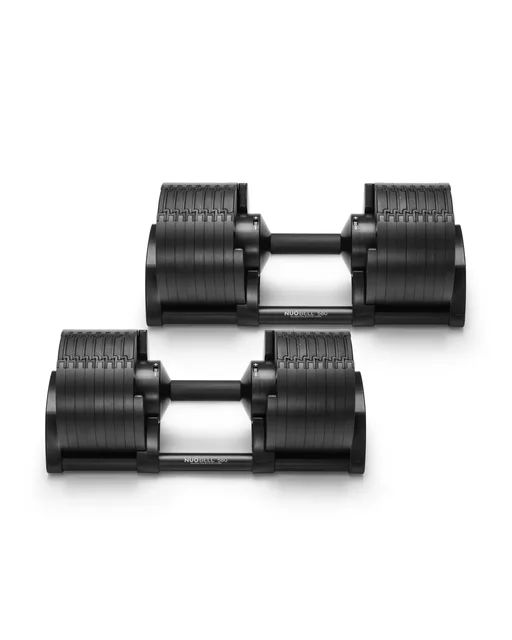
- Buy NÜOBELL 580 The closest an adjustable gets to a real dumbbell: fast, compact, and worth the premium. Amazon
- Buy PowerBlock Elite USA All-steel, endlessly expandable, and the best value if you can live with the blocky shape. Amazon
- It depends Ironmaster Quick-Lock Adjustable Dumbbells Bombproof all-metal build with a lifetime warranty, if you can tolerate slow weight changes.
- Skip Bowflex SelectTech 552 The original dial dumbbell, grounded by a 3.8-million-unit recall. Buy the redesign, not this. Amazon
What actually matters
- Adjustment mechanism - how you change the weight (a twist dial, a selector pin, or manually loading plates) sets the speed, the reliability, and how much can break.
- Weight range and ceiling - the top-end weight determines how long the set stays useful as you get stronger; a ceiling that is too low forces a second purchase.
- Increment size - small steps let you progress gradually, which matters most for lighter lifts and for beginners who add weight often.
- Hand-feel and shape - a round profile and a knurled handle behave like a fixed dumbbell, while a wide or boxy body can feel clumsy on certain movements.
- Build quality and drop tolerance - steel and plate-loaded designs shrug off abuse, whereas plastic shells crack and dials jam if handled roughly.
- Footprint and storage - the space you save is real, but designs differ, so check the size of the set plus its stand or cradle.
- Warranty and support - length of coverage and the ease of getting replacement parts are your safety net for the one component most likely to fail.
The specs, in plain English
Green flags vs red flags
Green flags
- A metal handle with genuine knurling and a round or near-round plate profile that feels like a fixed dumbbell
- A weight ceiling that comfortably exceeds where you are today, or a system that expands with kits
- Mostly steel construction with few moving parts and a plate stack that locks with no rattle
- A multi-year or lifetime warranty and readily available replacement parts
- Consistent long-term owner reports of the mechanism surviving daily use without jamming
Red flags
- A low top-end weight that a beginner will outgrow within a few months
- Heavy plastic shells that owners report cracking or plates that fail to seat if handled roughly
- Any history of a safety recall for plates dislodging mid-lift on that exact model
- A short warranty or no clear way to source replacement parts
- A bulky, elongated body that limits close-in movements or catches the wrist
- Marketing that leans entirely on the 'replaces sixteen pairs' claim while saying nothing about feel or durability
Who's who: the brands
- NÜOBELL - Known for a round dial-adjust design that gets closest to real fixed-dumbbell feel, at a premium price.
- PowerBlock - Makes compact, blocky selector-pin stacks praised for durability and expandable weight ranges.
- Ironmaster - Plate-loaded all-steel dumbbells built to be nearly indestructible, backed by long warranties, but slow to adjust.
- Bowflex - Popularized the fast dial dumbbell; the original SelectTech 552 was recalled, so look to the reinforced redesign.
How to read a listing without getting fooled
Start by confirming whether every weight figure is per hand or per pair, because listings mix the two and it changes the comparison entirely. Next, find the adjustment mechanism and match it to how you train: a dial or pin for fast circuits and drop sets, plate-loaded if you change weight rarely and want durability above all. Treat the top-end weight as the number that determines how long the set stays useful, and check the increment size so you can actually progress in sensible steps. Read the construction line for how much is metal versus plastic, since that predicts both feel and lifespan, and take a wide, elongated body as a hint that close-in movements may feel awkward. Finally, weigh the warranty as a proxy for the maker's own confidence in the part most likely to fail, and lean on long-term owner reports rather than the headline 'replaces a whole rack' claim, which tells you nothing about balance or reliability.
How much should you spend?
Spend according to how often you will train and how rough you are on equipment, not on the biggest weight number. The value sweet spot sits with sturdy selector-pin or expandable systems that give durable steel construction and a ceiling you will not outgrow without paying for the fastest, most refined dial feel. Paying up for a premium round dial set is genuinely worth it for frequent lifters who value a natural grip and instant changes and will treat the mechanism gently. Paying more for a plate-loaded set buys near-indestructibility rather than speed, which only makes sense if you train heavy and change weight infrequently. The cheapest name-brand options tend to cut corners on the ceiling and on plastic construction, so a bargain that you outgrow in months or that cracks is the false economy to avoid. Whatever tier you choose, factor a real warranty into the value, because the adjustment mechanism is where these sets fail.
Questions, answered
Are adjustable dumbbells as good as fixed ones?
For home training, the best ones come remarkably close. A round, well-balanced set with a knurled steel handle feels almost like a fixed dumbbell, while boxy designs feel less natural at heavier loads. The trade-off is that the adjustment mechanism can jam or wear, whereas a fixed dumbbell has nothing to break. For most home lifters the space savings far outweigh the small compromise in feel.
What weight range should a beginner buy?
Buy for the strength you will build, not where you start. Beginners strengthen quickly and often hit a low ceiling on rows and presses within months, forcing a second purchase. A higher top-end or a system you can expand with kits is usually the better long-term value. The main exception is if you only ever plan to do light, high-repetition toning.
Which mechanism is most reliable?
Plate-loaded designs are the most reliable because they have almost nothing to break; you simply lock steel plates onto a handle. Selector-pin systems are a good middle ground, generally sturdier than dials. Dial systems are the fastest and most convenient but the most sensitive to being dropped. Match the mechanism to how you train and how carefully you handle your equipment.
Can I drop adjustable dumbbells?
Generally no, and this is the single biggest cause of failure. Dial and pin mechanisms can jam or misalign if dropped, and plastic shells can crack. Plate-loaded all-steel sets tolerate rough handling best, but even those are not meant to be slammed down. If your training involves setting weights down hard, prioritize a metal, drop-tolerant design and lower your expectations elsewhere.
How much space do they actually save?
A great deal. A single pair replaces roughly fifteen fixed pairs plus a rack, freeing significant floor space. Blocky selector-pin designs are usually the most compact, while round dial sets take slightly more room but still fit on a small stand. Remember to account for the cradle or base, which adds to the total footprint but still beats a full rack easily.
Should I worry about recalls?
Check the specific model before buying. At least one popular dial dumbbell was recalled after plates dislodged mid-lift, and the fix was a reinforced redesign rather than the original. A recall history on the exact model you are considering is a clear warning sign; confirm you are buying the corrected version, and favor makers with strong warranties and a track record of standing behind the product.
Or jump to the head-to-head: NÜOBELL 580 vs PowerBlock Elite USA.