Explained
Boxing Gloves, Explained
After reading, you'll understand how glove weight, padding, wrist closure and intended use affect protection, and how to pick the right pair.
In this guide
First-time buyers often pick gloves by color or brand and assume any pair works for everything. In practice, glove weight in ounces, the type of glove and the wrist closure decide how well your hands and wrists are protected. Makers also vary a lot in how much they tell you, from named foam layers to a single vague line. Knowing the terms makes it much easier to compare pairs.
The 30-second version
- Ounces measure padding weight, so heavier gloves are not for bigger hands but for more protection.
- Bag gloves are not sparring gloves, and many gyms set minimum weights for sparring.
- The wrist closure matters on a heavy bag, because a wrist that bends on impact is easy to strain.
- Vague padding descriptions are a warning, since good makers name their foam layers or gel linings.
- Hand wraps change the fit, so try gloves on with wraps before you decide.
The products this guide is about
Our verdict on each, with the full reasoning on the companion review.
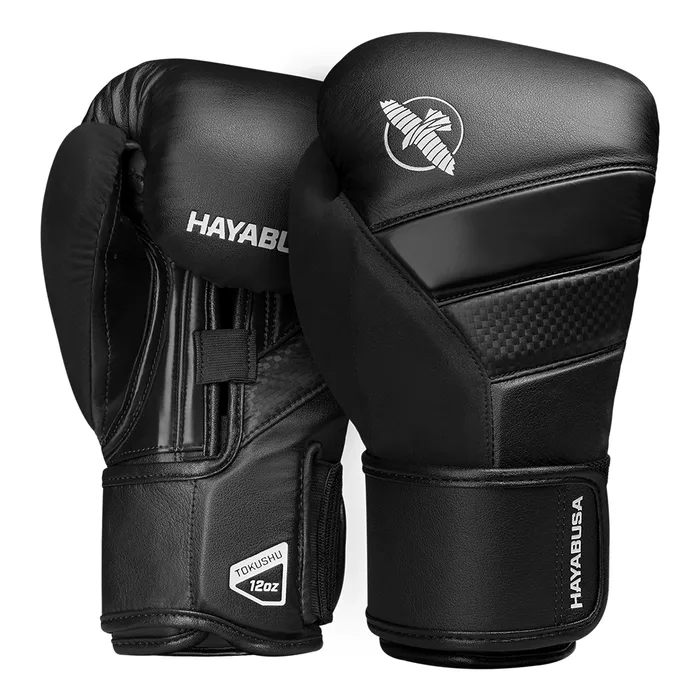
- Buy Hayabusa T3 Boxing Gloves A premium hook-and-loop glove with splinted wrist support and sizes from 10 to 18 oz, and the best all-round pick for bag work and sparring.
- Buy RDX F15 Noir Boxing Gloves A budget hook-and-loop training glove with clearly listed EVA padding, a ventilated palm and sizes from 10 to 16 oz, and the value pick.
- It depends TITLE Boxing TITLE Gel World Bag Gloves An all-leather bag glove with a gel lining and a D-ring wrist wrap that is comfortable on a heavy bag, but it is built for bag work, not sparring.
- Skip Everlast Prostyle 2 Boxing Gloves A familiar beginner glove, but Everlast tells you almost nothing about how it is built, and the size range leaves gaps at both ends.
What actually matters
- Glove weight - Measured in ounces, it mostly reflects how much padding is in the glove. Heavier gloves protect you and your partner more, and makers like Hayabusa recommend heavier sizes for sparring.
- Glove type - Bag gloves, training gloves and sparring gloves are built for different jobs. Buying the wrong type is the most common mistake beginners make.
- Wrist closure - Hook-and-loop straps are easy to use alone, while lace-ups usually need help. Double straps and D-ring wraps let you cinch the cuff tighter.
- Wrist support - Some premium gloves add internal splinting to keep the wrist straight on impact. It is most useful on a heavy bag, where wrists take the most strain.
- Padding - Foams such as EVA and multi-layer constructions, sometimes with gel, absorb impact. Look for makers that say what the padding is rather than just how many layers.
- Outer material - Leather and engineered synthetic outers both appear on good gloves. What matters most is that the maker names it so you know what you are buying.
- Lining and ventilation - Mesh or perforated palms and antimicrobial linings help gloves dry faster. That matters because sweat is what makes gloves smell and break down.
The specs, in plain English
Green flags vs red flags
Green flags
- Named padding materials or layer construction
- A wide ounce range, including heavier sparring sizes
- A double strap, D-ring wrap or splinted wrist
- A ventilated palm and a treated or moisture-wicking lining
- Clear use guidance, such as which sizes suit bags and which suit sparring
Red flags
- A build description that names no outer material
- Padding described only as a number of layers
- Gaps in the size range at your body weight
- Bag gloves marketed for all-round use including sparring
- No guarantee or warranty information at all
Who's who: the brands
- Hayabusa - A combat sports brand known for premium gloves with engineered wrist support such as Dual-X and Fusion Splinting.
- RDX - A large combat sports maker known for affordable gloves and bags with named padding and mould designs.
- TITLE Boxing - A US boxing equipment brand known for its GEL line of leather gloves and its gym equipment.
- Everlast - One of the oldest boxing brands, known for widely available beginner gloves and heavy bags.
How to read a listing without getting fooled
Start with the intended use: is it a bag glove, a training glove or a sparring glove? Then check the size range against your body weight and whether you will spar, using the maker's own size guidance. Look for named padding, such as EVA, multi-layer foam or gel, rather than a vague line about layers. Read the closure details, noting whether it is a single strap, a double strap, a D-ring wrap or laces, and whether there is any wrist splinting. Finally, check the outer material, palm ventilation, lining and any guarantee, and treat missing fields as a reason to compare a better-documented glove.
How much should you spend?
Budget gloves cover home bag and pad work well when the maker documents the padding and closure, but quality varies widely in this tier. Mid-range gloves usually add better linings, stronger closures and more size options. Premium gloves earn their price through engineered wrist support, wider size ranges for sparring and more durable outers, which matters most if you train most days or spar regularly.
Questions, answered
How long do boxing gloves last?
It depends on how often and how hard you train and how well you dry them. Padding gradually compresses with use, and you will feel more impact through the knuckles as it does. Airing gloves after every session slows down lining and padding breakdown. Replace them when the padding feels thin or the closure no longer holds firmly.
Are leather gloves better than synthetic ones?
Not automatically. Leather outers, like the TITLE Gel World's, are traditional and durable, while engineered synthetics such as Hayabusa's Vylar are used on premium gloves too. The padding, closure and fit matter more to protection than the outer. What you should avoid is a glove whose maker does not say what the outer is at all.
Should kids use adult gloves?
Children usually need lighter gloves sized for their weight. RDX recommends its 10 oz F15 Noir for users up to 14 years old, and Everlast's chart puts users up to 100 lb in 8 to 12 oz. Too heavy a glove tires small arms and wrists quickly. Check the maker's size guide against the child's weight before buying.
Do I need different gloves for the heavy bag and for pads?
Not necessarily. Many training gloves, like the Hayabusa T3 and the RDX F15 Noir, are designed for both bags and pads. A dedicated bag glove such as the TITLE Gel World adds cushioning for long bag sessions. If you also spar, you will likely want a heavier pair kept just for sparring.
Or jump to the head-to-head: Hayabusa T3 Boxing Gloves vs RDX F15 Noir Boxing Gloves.