Explained
Home Gym Flooring, Explained
After reading, you'll understand the main flooring formats, what thickness and density mean, and which option suits your space.
In this guide
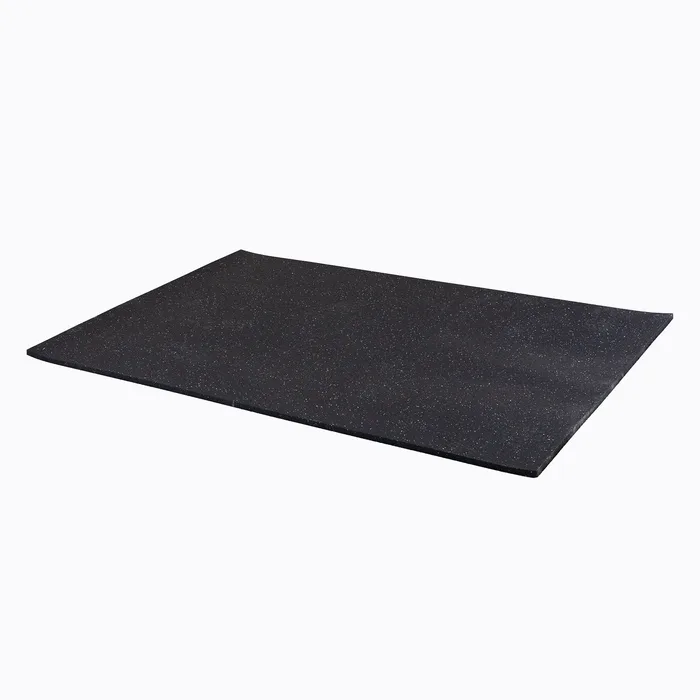
Gym flooring listings all show black squares on a garage floor, which hides big differences in material and thickness. First-time buyers often choose foam because it is light and cheap, then discover it dents under a rack. Rubber comes in mats, rolls and tiles with very different installation demands. A few terms make the choice clear.
The 30-second version
- Rubber is for lifting, while foam is for floor work and play areas.
- Thickness protects the floor, so match it to the heaviest thing you drop.
- Fewer seams are better, since edges are where floors lift and trip you.
- Heavy mats are stable but hard to move, and tiles trade seams for easy installation.
- New rubber can smell, so air it out before closing up the room.
The products this guide is about
Our verdict on each, with the full reasoning on the companion review.
- Buy REP Fitness 4'x6' Floor Mats (3/4 in) Heavy 3/4 inch urethane-bound rubber mats that stay flat under racks and take dropped weights.
- Buy Rubber-Cal Elephant Bark Rubber Flooring Roll (3/8 in) A recycled rubber roll sold by the foot that covers a whole room with few seams.
- It depends REP Fitness Interlocking Floor Tiles (1 in) 1 inch interlocking rubber tiles that one person can lay, lift and rearrange without glue.
- Skip ProsourceFit Exercise Puzzle Mat (3/4 in) A popular EVA foam puzzle mat that is comfortable for floor work but too soft for a lifting gym.
What actually matters
- Material - Dense rubber supports racks and weights. EVA foam is soft and better suited to floor exercises.
- Thickness - Thicker flooring protects the floor from drops. A 3/4 inch mat is a common baseline for lifting.
- Density and hardness - Denser, harder rubber keeps equipment stable. Softer surfaces let feet and rack feet sink.
- Format - Mats, rolls and tiles cover the same floor with different seams and handling. Choose based on room size and permanence.
- Installation - Some mats weigh close to 90 lbs. Tiles and foam can be laid by one person.
- Odor - Recycled rubber can smell when new. Urethane-bound rubber tends to smell less.
- Moisture - Rubber that does not absorb moisture suits garages and basements.
The specs, in plain English
Green flags vs red flags
Green flags
- A stated thickness and material
- Urethane-bound or dense rubber for lifting areas
- Clear guidance on dropping weights
- Low-odor claims with airing-out advice
- Large pieces or rolls for permanent rooms
Red flags
- Foam mats marketed for heavy lifting
- No stated thickness or material
- Very thin rubber sold for Olympic lifting
- No mention of tolerance or seams
- Photos that hide what the tiles are made of
Who's who: the brands
- REP Fitness - Home gym maker selling heavy rubber mats, interlocking tiles and flooring rolls.
- Rubber-Cal - Rubber flooring specialist known for Elephant Bark recycled rubber rolls in custom lengths.
- ProsourceFit - Sells EVA foam exercise puzzle mats in several thicknesses and patterns.
- Rogue Fitness - Sells gym flooring alongside racks and barbells for home and commercial gyms.
How to read a listing without getting fooled
Look first for the material and thickness, then the format and piece size. Check the weight per piece so you know whether you can install it alone, and look for a stated tolerance, which tells you whether small gaps are normal. If a listing shows racks and barbells on a foam mat, check the material before you believe the photo. For rolls, see whether the maker recommends tape or glue.
How much should you spend?
Foam puzzle mats are the budget tier and cover large areas cheaply. Rubber rolls and heavy mats sit in the mid-range and give the best value for a lifting gym. Interlocking rubber tiles tend to cost more per square foot, which buys you easy installation and portability. Budget for the lifting area first; the rest of the room can use cheaper flooring.
Questions, answered
Can I put rubber flooring over carpet?
It can work for light training, but carpet underneath makes the floor less stable. For a rack and heavy lifting, a hard subfloor is better. Some people put a layer of plywood over carpet before adding rubber.
How do I cut rubber flooring?
A very sharp utility knife and a straight edge work for most rolls and mats. Score it several times rather than cutting in one pass. Changing blades often makes cleaner cuts.
Do I need a lifting platform?
Not for most home gyms. Dense 3/4 inch rubber handles bumper plate drops and general lifting. A platform makes sense if you regularly drop heavy barbells, especially with iron plates.
How do I clean rubber gym floors?
Sweep or vacuum, then mop with mild soap and water. Avoid harsh solvents that can dry rubber out. Check the maker's care guidance for specific products.
Or jump to the head-to-head: REP Fitness 4'x6' Floor Mats (3/4 in) vs Rubber-Cal Elephant Bark Rubber Flooring Roll (3/8 in).