Explained
Lifting Straps, Explained
After reading, you'll understand which strap design fits the lifts you actually do, and what to check before buying.
In this guide
Lifting straps all look like a loop of fabric, which is why most people buy the cheapest pair and never think about it again. The designs behind that loop behave very differently, though, and one of them deliberately makes it hard to let go of the bar. Knowing which is which is the difference between a tool that quietly adds reps to your back work and one that sits unused because wrapping it is annoying.
The 30-second version
- There are three designs, not one, and lasso, figure eight and grip pad are chosen for different lifts.
- Figure eights lock you on, which is the point on maximal deadlifts and a hazard everywhere else.
- Length decides your wraps, so 18 to 20 inches is the normal range and a missing figure is a missing spec.
- Padding matters for high reps, because an unpadded strap digs into the back of the wrist under shrugs.
- Straps assist grip, they do not replace it, so work up unstrapped and save them for the sets that grip would end early.
The products this guide is about
Our verdict on each, with the full reasoning on the companion review.
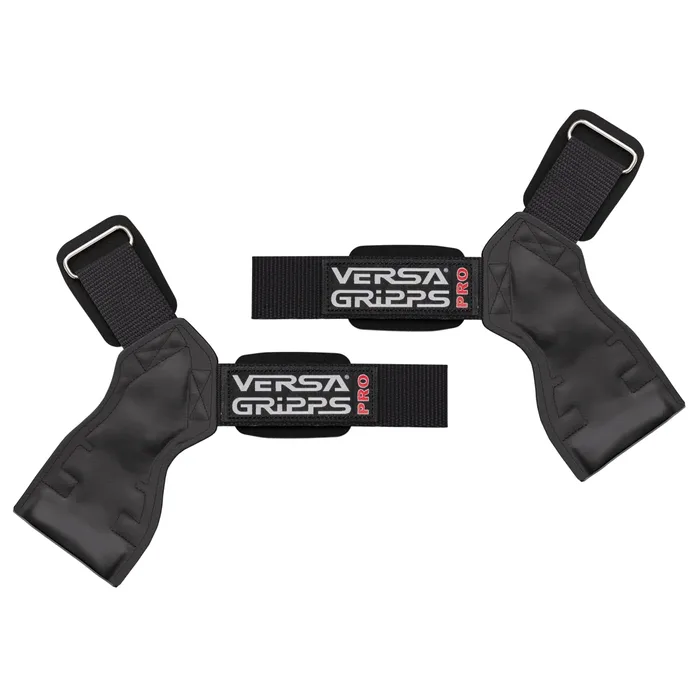
- Buy Versa Gripps PRO A patented grip pad with built-in wrist support that you can release instantly, sized to your wrist rather than sold one-size-fits-all.
- Buy Gymreapers Lifting Straps An 18 inch padded cotton lasso with a lifetime replacement guarantee, which is the sensible first pair for almost everyone.
- It depends SBD Apparel Figure 8 Lifting Straps Aramid-reinforced figure eights that tighten as the bar loads, which is exactly right for maximal deadlifts and wrong for almost everything else.
- Skip Iron Bull Strength Lifting Straps A perfectly ordinary padded cotton lasso that the maker's own spec table grades at the bottom of its strength scale.
What actually matters
- Design type - the single biggest decision. A lasso wraps and tightens under tension, a figure eight loops through itself and locks the hand to the bar, and a grip pad folds over the bar and releases the instant you open your hand.
- Release speed - how fast you can get off the bar matters for safety on rows and pull-ups and for convenience between sets. It is also the most common reason people stop using straps at all.
- Strap length - more length means more wraps and a more secure hold, at the cost of more material to manage. The usual range is 18 to 20 inches for a lasso.
- Wrist padding - neoprene or similar padding across the wrist stops the webbing cutting in under heavy shrugs and rack pulls. It adds little weight and a lot of tolerance for high-rep work.
- Material - cotton is comfortable, grippy and absorbs sweat, nylon is stronger and slicker, and aramid-reinforced webbing aims for the strength of synthetic with the feel of cotton.
- Fit and sizing - almost every strap is sold one-size, so a brand offering sizes by wrist circumference is offering something real, particularly at the small and large ends.
- Warranty wording - straps are consumables and the guarantee is where brands differentiate. Read the written policy, since a badge and the actual terms do not always agree.
The specs, in plain English
Green flags vs red flags
Green flags
- The design type is named clearly as lasso, figure eight or grip.
- Length is published, and ideally width as well.
- The wrist section is described as padded, with the padding material or thickness stated.
- Sizes are offered by wrist measurement rather than one-size-fits-all.
- A written warranty or replacement policy you can read in full.
Red flags
- No length published anywhere on the page.
- Figure eight straps recommended for rows, pull-ups or anything overhead.
- A warranty badge with no policy text behind it, or text that contradicts the badge.
- A brand's own spec table grading the product at the bottom of its own scale.
- Claims about how much weight the strap can hold with no material or construction detail.
Who's who: the brands
- Versa Gripps - Built its reputation on the quick-release grip pad design and is one of the few brands to size straps by wrist circumference.
- Gymreapers - Value-focused strength accessories, generally well specified and backed by a lifetime replacement guarantee.
- SBD Apparel - British powerlifting brand known for patented webbing construction and equipment built for competition standards.
- Iron Bull Strength - Broad range of budget and mid-tier lifting accessories, with its own internal strength grading printed on each spec table.
How to read a listing without getting fooled
Find the design type first, because everything else follows from it. Then look for a length; if there is not one, assume around 18 inches for a lasso and accept that you are guessing. Check whether the wrist section is padded and what with, since that is what decides whether high-rep shrugs are tolerable. Read the material line carefully: cotton, nylon and aramid-reinforced webbing feel and age differently, and a page that says only durable material is telling you nothing. If the brand publishes a sizing chart by wrist measurement, use it rather than estimating. Finally open the warranty page rather than trusting a badge in the header, because the two do not always say the same thing.
How much should you spend?
Budget buys a competent cotton lasso, and at this tier the differences are padding, length and whether anyone will replace them when they fray. A well-specified budget pair with a lifetime replacement guarantee is genuinely all most lifters need. The mid-range mostly buys better webbing and finishing rather than a different capability. Premium pricing buys one of two things: a patented construction aimed at competition-level pulls, or a grip pad system that changes how quickly you get on and off the bar. Both are defensible purchases if they match how you train, and neither is necessary to get the benefit straps provide.
Questions, answered
Can lifting straps cause injury?
The main risk is being attached to a bar you need to get away from. Figure eight straps in particular are designed to tighten as load increases, so bailing out of a failed rep is slow, and they are not appropriate for overhead work, rows or pull-ups. Lassos and grip pads release far more easily. There is also a general argument that leaning on straps for everything leaves your grip underdeveloped relative to your back, which becomes a weak link later. If you have a wrist injury, get clearance before adding straps, since they change how load transfers through the joint.
How do I wrap a lasso strap correctly?
Pass your hand through the loop so the tail comes off the palm side, then wrap the tail around the bar in the direction that tightens when you pull, usually away from you and underneath. Take up the slack by rolling the bar back towards you before you lift. The wrap should be snug before you start, not something you tighten mid-rep. It takes a few sessions to become automatic, and getting the direction wrong is the most common beginner mistake, since a strap wrapped the wrong way loosens under tension.
Do I need straps and wrist wraps?
They do different jobs, so possibly. Lifting straps assist grip on pulling movements. Wrist wraps stabilise the wrist joint under pressing and are used for bench and overhead work. Some strap designs, particularly grip pads, include a supportive wrist cuff, which blurs the line, but a strap is not a substitute for a wrap and a wrap will not help your grip. If you both pull heavy and press heavy, you will eventually want both.
Can I wash lifting straps?
Cotton straps can generally be washed cold and air dried, which helps with the stiffness and smell that builds up from sweat and chalk. Avoid high heat, which can damage stitching and shrink cotton webbing unevenly. Straps with neoprene padding or bonded components should be washed gently and never tumble dried. If a brand publishes care instructions, follow them, and inspect the stitching at the wrist loop afterwards, since that is where a worn strap fails first.
Or jump to the head-to-head: Versa Gripps PRO vs Gymreapers Lifting Straps.