Explained
Pilates Reformers, Explained
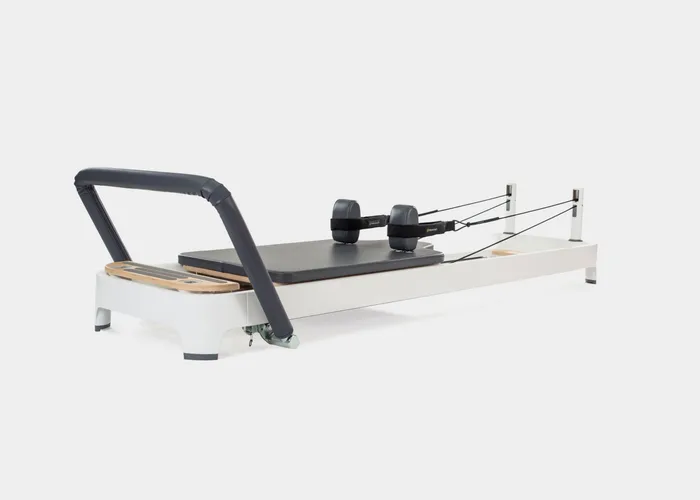
After reading, you'll understand how a reformer's springs, frame, footbar and storage options affect how it feels and whether it fits your home.
In this guide
Reformers look alike in photos, which hides the differences that matter. First-time buyers often compare the accessory list and miss whether the machine uses springs or elastic cords. Length, carriage height and user limits are rarely shown side by side, and some makers do not publish them at all. Storage claims also need a close read, because upright storage often depends on extra parts.
The 30-second version
- Springs and cords are different machines, so check the resistance type before anything else.
- Spring colors are brand-specific, since Balanced Body calls red medium while Elina calls red strong.
- User limits are often missing, and a page that states weight and height ranges is giving you useful information.
- Upright storage can cost extra, because some frames need a wheel kit, stand or wall strap to stand safely.
- Warranty terms vary by part, with frames often covered for years and upholstery or ropes for months.
The products this guide is about
Our verdict on each, with the full reasoning on the companion review.
- Buy Balanced Body Allegro 2 Reformer A studio-grade aluminum reformer with a full-length sliding footbar and a 10-year frame warranty, and the best long-term home machine here.
- Buy Merrithew At Home SPX Reformer Package A spring-loaded aluminum-rail reformer from the STOTT PILATES maker that arrives with the box, platform extender and pole, making it the value studio-grade pick.
- It depends Elina Pilates Domo Reformer A lightweight aluminum reformer with real springs that folds telescopically to slide under a bed or stand against a wall, at the cost of height and warranty.
- Skip AeroPilates Reformer Plus 379 A familiar budget reformer, but it runs on resistance cords on a shorter steel frame, so it does not feel or progress like a spring reformer.
What actually matters
- Resistance type - Springs resist harder as they stretch and can be combined to set the load precisely. Elastic cords on budget machines feel different and are hard to match to studio cues.
- Frame material - Aluminum frames are used on all three spring machines here and keep weight down without flex. The budget AeroPilates uses steel and a shorter frame.
- Overall length - The machines compared run from 86 in. to 99 in. long. A longer frame gives taller users room to extend fully.
- Carriage height - A low carriage saves height but means getting down to the floor every session. Some frames, like the Allegro 2, accept optional legs to raise it.
- Footbar adjustability - More footbar positions let you fit the machine to your leg length and the exercise. The Allegro 2's footbar also slides along the frame.
- Storage - Folding and upright storage free up floor space between sessions. Check what extra parts the maker requires to store it upright safely.
- Warranty split - Frame, springs, ropes and upholstery are usually covered for different lengths of time. Short parts coverage means wear items become your cost quickly.
The specs, in plain English
Green flags vs red flags
Green flags
- Steel springs with a stated count and resistance for each.
- A published weight capacity and user height range.
- A multi-year frame warranty with clear terms for wear parts.
- Multiple footbar, headrest and stopper positions listed.
- Replacement springs, ropes and upholstery sold by the maker.
Red flags
- Elastic cords sold as if they were equivalent to springs.
- No user weight or height limit anywhere on the page.
- Parts coverage measured in days rather than years.
- Upright storage claims that depend on accessories sold separately.
- A short frame with no stated user height range.
Who's who: the brands
- Balanced Body - A Sacramento, California maker whose Allegro 2 reformer has been sold since 2011 and is built for both studio and home use.
- Merrithew - The company behind STOTT PILATES, selling studio reformers and At Home packages with clearly stated user limits.
- Elina Pilates - A reformer maker with wooden and aluminum lines, including the folding Domo for home use.
- AeroPilates - Stamina Products' budget line of cord-based folding reformers.
How to read a listing without getting fooled
Start by finding the resistance line: it should say springs or cords and give the count. Then look for the dimensions block and note overall length, width, carriage or bed height and machine weight, and search the page for a weight capacity and user height range; if they are missing, write to the maker. Read the included-items list next, because box, jumpboard, platform extender and legs are often extras. Finally, read the warranty section part by part, since a long frame term can sit beside 90-day upholstery cover, and check whether home or commercial use changes it.
How much should you spend?
Budget reformers in the $ tier are almost all folding cord machines on steel frames, and they make sense only as a trial. The $$ mid-range is where folding aluminum machines with real springs appear, usually with shorter warranties and fewer adjustments. The $$$ premium tier covers studio-grade frames from established Pilates makers, with long frame warranties, more adjustment and upgrade paths. In that tier, compare what is included, because a package with a box and platform extender can be better value than a cheaper-looking base machine.
Questions, answered
How often do reformer springs need replacing?
It depends on use, and the makers set their own guidance. Springs are wear parts, which is why some warranties cover them for less time than the frame. Buy from a maker that sells replacements for your exact model. If a spring looks stretched, gapped or corroded, stop using it until it is replaced.
What does a platform extender do?
It fills the gap between the carriage and the standing platform so you can do kneeling and standing work with more surface under you. Merrithew includes a padded platform extender in the At Home SPX package. On other machines it is usually an optional extra.
Can a reformer go on carpet?
Most will work on a firm, level surface, but deep carpet can let the frame rock or the wheels sink. A thin, firm mat under the frame is a common fix. Check the owner's manual for the maker's flooring guidance before you set it up.
Do I need a box with a reformer?
A reformer box lets you do sitting and lying exercises on top of the carriage, and many standard programs use one. Merrithew includes a box in the At Home SPX package, while Balanced Body and Elina sell one as an option. If you follow classes or videos, it is worth budgeting for.
Or jump to the head-to-head: Balanced Body Allegro 2 Reformer vs Merrithew At Home SPX Reformer Package.