Explained
Punching Bags, Explained
You'll be able to look at any punching bag listing and know whether its fill, mount, and height actually match your space and the way you train.
In this guide
A punching bag looks like a simple purchase until you start comparing listings full of terms like 'dual strap,' 'swivel,' and 'reflex.' The two decisions that matter most are what the bag is made of inside and how it's held up, because those two things decide how it feels when you hit it and what your space needs to support it.
The 30-second version
- Fill type decides the feel. fabric fill stays even over years, sand is heavy and cheap but can settle hard at the bottom, and water is easiest to drain and move but softer underfoot for free-standing bases.
- Hanging bags need real structure. a joist, beam, or rated stand, not drywall or a doorway frame, because a loaded bag swinging under strikes puts far more stress on a mount than its static weight suggests.
- Free-standing bags trade stability for zero installation. you fill the base instead of drilling anything, but an under-filled base will rock or slide across the floor under hard shots.
- Height has to match your strikes, not just your reach. a bag sized only for punches often sits too low for knee strikes, so Muay Thai training needs a taller bag or one with a longer visible working surface.
- Hardware is a wear item. chains, straps, and swivels take repeated shock loading, and a cheap swivel or a bare chain against the top cap is a common failure point over time.
The products this guide is about
Our verdict on each, with the full reasoning on the companion review.
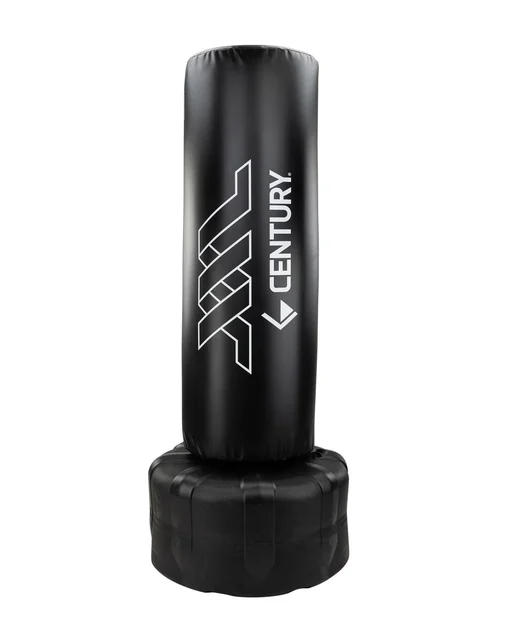
- Buy Century XXL Wavemaster Free-Standing Bag The most versatile free-standing bag for anyone who can't (or won't) drill into a ceiling. Amazon
- Buy Everlast Elite Nevatear Heavy Bag (70 lb) The straightforward, affordable hanging heavy bag that covers the basics well. Amazon
- It depends Outslayer 100 lb Filled Heavy Bag A made-in-USA workhorse that rewards a proper mount — and punishes a weak one. Amazon
- Skip Everlast Core Reflex Bag Fun for speed and timing drills, but not the all-around bag most shoppers actually want. Amazon
What actually matters
- Fill material determines density and how the bag feels on impact: fabric strips stay consistent, sand is dense and affordable but prone to settling, water is light to ship and easy to drain but less firm.
- Mount type (hanging vs free-standing) is really a decision about your space: do you have a rated ceiling point or stand, or do you need a bag that stands on its own?
- Bag height and working surface need to cover the strikes you actually throw: boxing only needs punch-height coverage, but kicks and especially knees need the bag to extend lower and be tall enough overall.
- Mounting hardware (chain, strap, and swivel) carries every impact from the bag to your structure, so its rating and quality matter as much as the bag's weight.
- Weight relative to your body affects how much the bag moves: lighter bags swing and suit speed work, heavier bags stay put and suit power and combinations, but they demand a stronger mount or base.
- Glove and wrap compatibility is really about surface and give: a bag that's rock-hard or has a stitched seam in the wrong spot can be harder on hands even with proper wraps and gloves.
The specs, in plain English
Green flags vs red flags
Green flags
- Listing specifies fill material (fabric vs sand vs water) rather than just total weight
- Includes a clearly rated hanging strap or chain-and-swivel set, not just a bare loop
- States a maximum fill capacity for free-standing bases, in both sand and water
- Owner reports mention consistent density after months of use, not a hardening bottom
- Height or working-surface length is listed, useful for checking knee-strike coverage
- Warranty length is specified and reasonable for the price tier
Red flags
- No mention of what the bag is filled with, just a total weight number
- Mounting hardware looks like a single thin chain with no swivel included
- Free-standing base gives no fill capacity or expected filled weight
- Marketing leans entirely on 'heavy-duty' language with no material or hardware specifics
- Reviews repeatedly mention the bag arriving lumpy, unevenly filled, or with a hard bottom out of the box
- No stated maximum user weight or striking force guidance for a free-standing base
Who's who: the brands
- Century - Known for free-standing striking equipment, including the Wavemaster line that popularized the fillable-base format for home use.
- Everlast - A long-running boxing equipment brand with a wide range spanning budget hanging bags to reflex trainers, widely stocked and beginner-friendly.
- Outslayer - A smaller, US-based manufacturer focused on fabric-filled heavy bags aimed at serious and long-term strikers.
- Ringside - A combat-sports equipment brand covering bags, gloves, and wraps, often positioned in the mid-range alongside Everlast.
- Title Boxing - Another established combat-sports brand with a broad bag lineup spanning hanging, free-standing, and specialty training bags.
How to read a listing without getting fooled
Start with what the bag is filled with, not just how much it weighs, because two 100-pound bags can feel completely different depending on whether they're packed with fabric, sand, or a mix. Then look past the headline weight to the mounting hardware included: a bag photographed on a fancy stand may ship with only a basic chain, so check whether a strap, swivel, or stand is actually in the box or sold separately. For free-standing bags, look for a stated fill capacity in both sand and water, since an underfilled base is the single most common complaint in owner reports. Finally, check the working height or overall dimensions against your own strikes; a bag description that only lists 'punching bag' with no height detail is a sign you'll need to dig into user photos or reviews to confirm it clears knee height if you plan to train kicks.
How much should you spend?
What you're really paying for as price rises is fill consistency and hardware durability, not just size. Entry-level hanging bags and reflex bags sit at the low end and are reasonable for casual use or as a second, supplemental bag. Mid-range hanging bags add better straps, swivels, and more consistent fill, which is where most first-time buyers land. Free-standing towers cost more because you're buying a stable, engineered base along with the bag itself, and that base is most of what you're paying for. At the top end, fabric-filled bags with long warranties are aimed at people who train often and want to buy once; the extra cost mainly buys years of consistent density rather than a bigger or heavier bag. Spending more only pays off if your training frequency and mounting situation can actually use the durability; an occasional user is usually better served by a solid mid-range bag than a premium one.
Questions, answered
Does fill type actually matter, or is it just marketing?
It matters. Sand and generic dense fill are the most common because they're cheap, but owner reports consistently show they can settle into a harder, denser section at the bottom of the bag over months of use. Fabric or cloth-strip fill costs more but tends to stay even throughout the bag's life, which is why it shows up in bags marketed for long-term, frequent use.
How do I know if my ceiling can hold a hanging bag?
You need a structural point, a ceiling joist, an exposed beam, or a bracket anchored into one, rated for the bag's loaded weight under dynamic load, not its resting weight alone. If you're unsure what's above your ceiling or don't want to find a stud, a heavy-bag stand or a free-standing base avoids the question entirely.
What height should I get for kickboxing or Muay Thai versus boxing?
Boxing only requires the bag's working surface to sit around fist-to-face height, so a shorter bag is fine. Kicks, and especially knee strikes in Muay Thai, need the bag to extend lower and the overall unit to be taller, since a bag sized only for punches often leaves knees striking too low on the bag or below it entirely.
Do I need special gloves or wraps for a punching bag?
Bag gloves or boxing gloves with adequate padding are strongly recommended for any real bag work, and hand wraps underneath them protect your wrists and knuckles regardless of glove padding. A denser or firmer bag (dense sand fill, an underfilled free-standing base) is generally harder on hands, which is another reason fill quality matters, not just weight.
Can I mount a heavy bag from a doorway frame?
Doorway frames and drywall are not rated for a swinging, struck load and are a common cause of mount failure. Use a structural beam or joist, a wall-mounted bracket anchored into structure, or a stand or free-standing base built for the purpose.
Is this guide medical or coaching advice?
No. This is general information about equipment specs and setup, not medical or coaching advice. If you have an injury, a physical limitation, or you're new to striking, consult a qualified coach or medical professional before starting a training program.
Or jump to the head-to-head: Century XXL Wavemaster Free-Standing Bag vs Everlast Elite Nevatear Heavy Bag (70 lb).