Explained
Spin Bikes, Explained
After reading this, you'll know what a spin bike's resistance, drive, flywheel, connectivity and fit specs actually do, and which ones are worth paying for.
In this guide
A spin bike is a studio-style indoor cycle: a heavy flywheel, a low forward riding position, and resistance you dial up to sprint and climb. Most listings bury the two things that decide whether you'll still like the bike in three years (how it creates resistance, and whether it talks to any app or only one company's app) under a pile of numbers about flywheel weight and level counts. Learn to read those two first and the rest of the spec sheet stops being intimidating.
The 30-second version
- Magnetic resistance beats friction. magnets slow the flywheel without touching it, so the ride is quiet, repeatable and effectively maintenance-free, while a friction pad rubs, wears, drifts and eventually needs replacing.
- App freedom is a hardware spec. a bike that broadcasts cadence, speed and resistance over standard Bluetooth works with almost any training app, while a closed bike only works properly inside one company's paid ecosystem.
- Numbered resistance is what makes training work. an unmarked knob means you can never repeat yesterday's effort, so marked levels or a watts readout matter more than the raw number of levels.
- Flywheel weight is oversold. it shapes momentum and smoothness, but frame rigidity and resistance quality decide far more about how planted a hard standing effort feels.
- Fit is the spec people forget. four-way adjustable seat and handlebars let one bike suit different body types and riding positions, and a bike that doesn't fit is a bike you stop using.
The products this guide is about
Our verdict on each, with the full reasoning on the companion review.
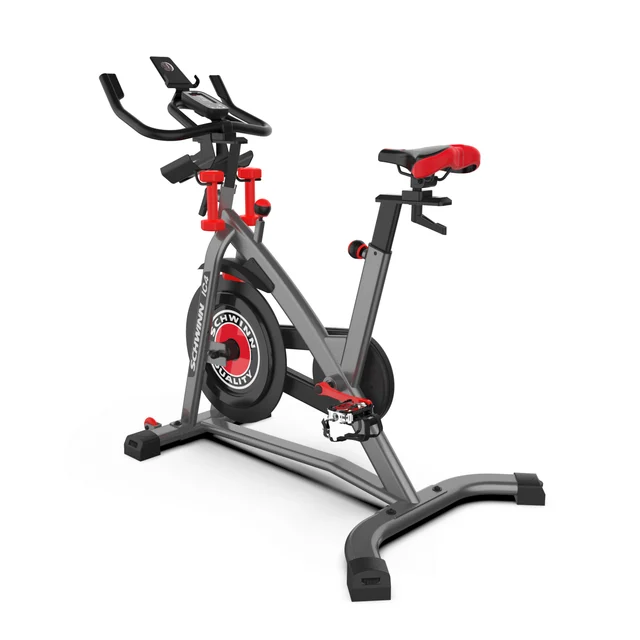
- Buy Schwinn IC4 Indoor Cycling Bike Studio-quiet magnetic resistance and true app freedom without a forced subscription: the value pick for most people.
- Buy Peloton Bike+ The most polished connected-class experience there is, worth the premium only if you will actually use the membership.
- It depends Yosuda EB1 Magnetic Indoor Cycling Bike A genuinely quiet magnetic bike at a rock-bottom price, if you accept a lighter feel and thinner support.
- Skip Sunny Health & Fitness SF-B1002 Belt Drive Indoor Cycling Bike A heavy-flywheel friction bike that feels solid but hides real long-term costs: skip it for a magnetic bike.
What actually matters
- Resistance type: magnetic resistance is quiet, consistent and has nothing that wears out, while a felt friction pad is cheaper up front but becomes a consumable you replace and readjust.
- Repeatable resistance settings: numbered levels, micro-adjustment or a watts readout let you repeat and progress workouts. An unmarked knob turns every session into a guess.
- Open connectivity: whether the bike broadcasts your metrics over standard Bluetooth to any app, or only feeds a built-in screen tied to a membership.
- Drive system: a belt drive is near-silent and needs no lubrication or tensioning, while a chain is louder and needs occasional upkeep.
- Frame stability and fit range: a rigid, heavy frame with four-way seat and bar adjustment stays planted under hard efforts and fits more than one rider.
- Pedals and shoe choice: dual-sided pedals (cage on one side, clip on the other) let you start in sneakers and move to cycling shoes without buying new parts.
- Total ongoing cost: any required membership, plus replacement friction pads on a friction bike, plus whatever screen or tablet you still need to supply.
The specs, in plain English
Green flags vs red flags
Green flags
- Magnetic resistance with numbered or micro-adjustable levels shown on a console, so efforts are repeatable week to week.
- Standard Bluetooth output that any training app can read, with no membership needed to make the hardware useful.
- A belt drive described as quiet and maintenance-free, with no lubrication schedule in the manual.
- Four-way adjustable seat and handlebars, plus a clearly stated rider height range and weight capacity.
- Dual-sided pedals included, so you can ride in sneakers now and clip in later without buying parts.
Red flags
- Resistance is an unmarked knob with no numbers or readout, which makes structured training and progress tracking impossible.
- A felt friction pad is presented as a feature: it is a wear part that will need adjusting and replacing.
- The built-in screen only runs the brand's own classes, and the bike does little without an active membership.
- A very heavy flywheel is the headline spec while the frame, resistance type and connectivity are barely described.
- Handlebars adjust only up and down, or the listing hides the seat and bar adjustment range entirely.
Who's who: the brands
- Schwinn - A long-established fitness name whose indoor cycles focus on quiet magnetic resistance, numbered levels and open Bluetooth rather than built-in screens.
- Peloton - The brand that made connected classes mainstream, known for its instructor library, auto-adjusting resistance and a closed ecosystem built around a membership.
- Keiser - A commercial studio name found in gyms, known for magnetic resistance, a rear-mounted flywheel and heavy-duty durability at a premium.
- Yosuda - A budget-focused direct seller that has moved to magnetic resistance on its main models, with basic consoles and lighter overall builds.
- Sunny Health & Fitness - A value brand with a wide range spanning old-school heavy-flywheel friction bikes and newer magnetic models, so the specific model matters a lot.
How to read a listing without getting fooled
Read the resistance line first. If it says magnetic, good. If it says friction, felt pad or leather brake, accept that you are buying a consumable. Next check whether resistance is numbered or micro-adjustable: 'infinite adjustment' with no display is marketing for an unmarked knob. Then look for how the bike connects. Phrases like 'Bluetooth broadcasts cadence, speed and resistance', 'works with third-party apps' or 'FTMS' mean freedom, while 'exclusive classes', 'app-connected' with no app names, or a big built-in screen usually mean one ecosystem and a fee. Treat flywheel weight as a feel preference rather than a ranking, and give more weight to frame construction, rider height range and weight capacity. Finally, scan the fit details: four-way seat and four-way handlebars, a stated inseam or height range, and included pedal type. Anything a listing declines to state (Q factor, adjustment range, what the bike does without a subscription) is worth treating as the weaker answer.
How much should you spend?
Two things drive cost on a spin bike, and only one of them is the bike. The hardware side pays for magnetic resistance, frame rigidity, adjustment range and build quality. The other side pays for a screen and a class library, which is a recurring fee, not a purchase. The value sweet spot for most people sits in the middle of the market: a magnetic, belt-driven bike with numbered levels and open Bluetooth, which you pair with a tablet you already own and whichever app you like. Spending more is genuinely worth it if guided classes are the thing that will get you on the bike, if you want resistance that sets itself to the instructor's target, or if you want gym-grade durability for heavy daily use. Spending more is not worth it if you are self-motivated and already own a tablet, since a large slice of a flagship's cost buys a screen and an ecosystem you can replicate. At the bottom of the market, put your money into magnetic resistance before anything else: a cheap magnetic bike ages far better than a cheap friction bike with a heavier flywheel, because the friction pad turns into an ongoing cost and a drifting, unrepeatable ride.
Questions, answered
What is the difference between a spin bike and a regular upright exercise bike?
Geometry and intent. A spin bike puts you in a low, forward, road-bike position over a heavy flywheel with a fixed or near-fixed drivetrain, so you can stand up, sprint and climb against high resistance. An upright exercise bike sits you taller with a wider, more padded saddle and usually a pedal-and-coast feel, aimed at steady, lower-intensity riding and comfort. Spin bikes tend to have narrower saddles and more adjustment; upright bikes tend to have easier consoles and preset programs.
Do I need a subscription to use a spin bike?
Only if you buy a bike designed around one. Bikes that broadcast their metrics over standard Bluetooth work fully on their own: you can ride with no app at all, or pair them with free and paid apps of your choosing on your own phone or tablet. Bikes built around a brand's touchscreen typically depend on that membership for their core experience and do very little without it. Check what the bike does with no fee before you buy, because the membership can quietly cost more over a few years than the bike did.
Can I use a spin bike with popular class apps without buying that brand's bike?
Usually yes. If your bike broadcasts cadence and speed over Bluetooth, most major class and virtual-riding apps will read it and show your metrics on screen. The difference is that you turn the resistance dial yourself to match the on-screen target, instead of the bike setting it automatically. Automatic resistance matching is a feature of a small number of bikes that are tied to their own platform.
How heavy should the flywheel be?
There is no magic number, and the spec is less important than sellers make it sound. Heavier flywheels carry more momentum and smooth out the pedal stroke; lighter ones with good magnetic resistance can feel just as controlled and let the bike be lighter to move. Be suspicious when a very heavy flywheel is the headline while resistance type, frame quality and connectivity go undescribed, since mass is the cheapest way to make a bike feel substantial.
Do I need cycling shoes, and can I change the pedals?
You don't need them. Toe cages and normal athletic shoes work fine, and many bikes ship with dual-sided pedals so you can start caged and clip in later. Clipless shoes (SPD or Delta) give a more secure connection and let you pull as well as push, which some riders prefer for standing efforts. Pedals are a standard part: they thread off with a 15mm wrench, with the left pedal reverse-threaded, so any bike can be switched to the system your shoes use.
Is indoor cycling a good workout, and is it right for me?
This is general product information to help you compare bikes, not medical, fitness or training advice. Indoor cycling is a widely used low-impact form of cardio, and proper bike fit matters for comfort and joint loading, but if you have a heart condition, joint or back issues, are pregnant, or have any health concern, consult a qualified professional before starting a new exercise program.
Or jump to the head-to-head: Schwinn IC4 Indoor Cycling Bike vs Peloton Bike+.