

Home Gym
The Best Home Gym Flooring: 4 Compared (and One to Skip)
We compared rubber mats, rubber rolls, interlocking rubber tiles and foam puzzle mats on thickness, density, installation and whether they can take dropped weights.
The short version
REP Fitness 4'x6' Floor Mats are our pick: 3/4 inch urethane-bound rubber, 88 lbs per mat, made in the USA and dense enough to sit under a rack and take dropped weights. Rubber-Cal Elephant Bark in 3/8 inch is the value pick for covering a large room with few seams, since it comes in 48 inch rolls cut to length. REP Interlocking Floor Tiles suit renters and anyone who wants to lift and rearrange their floor, with 1 inch tiles that one person can move. Skip foam puzzle mats like the ProsourceFit 3/4 inch Exercise Puzzle Mat for lifting: EVA foam is comfortable for floor work but soft under racks and dropped weights. Best for: anyone building a garage or basement gym that will see barbells.
Our picks at a glance
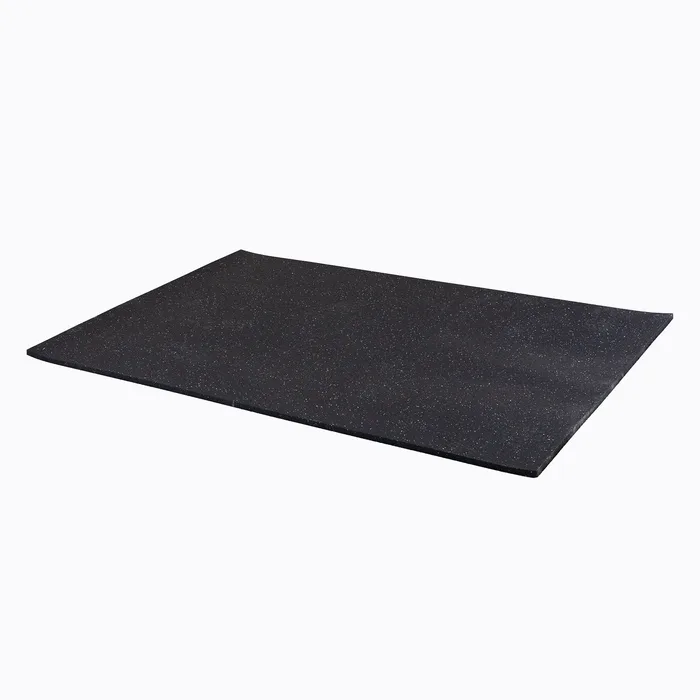
- REP Fitness 4'x6' Floor Mats (3/4 in) - Buy. Heavy 3/4 inch urethane-bound rubber mats that stay flat under racks and take dropped weights.
- Rubber-Cal Elephant Bark Rubber Flooring Roll (3/8 in) - Buy. A recycled rubber roll sold by the foot that covers a whole room with few seams.
- REP Fitness Interlocking Floor Tiles (1 in) - It depends. 1 inch interlocking rubber tiles that one person can lay, lift and rearrange without glue.
- ProsourceFit Exercise Puzzle Mat (3/4 in) - Skip. A popular EVA foam puzzle mat that is comfortable for floor work but too soft for a lifting gym.
The verdict in 30 seconds
What mattered most
- Format
- Material
- Thickness
- Weight per piece
- Installation
- Seams
Flooring is the least exciting part of a home gym and one of the most important. It protects the slab or subfloor, keeps racks stable and stops dropped weights from cracking concrete or waking the house. The choice comes down to dense rubber in mats, rolls or tiles, or soft foam that looks similar in photos. We compared a heavy rubber mat, a rubber roll, an interlocking rubber tile and a best-selling foam puzzle mat.
Heavy 3/4 inch urethane-bound rubber mats that stay flat under racks and take dropped weights.
Best for: Garage and basement gyms with a rack and barbell work.
- 3/4 inch thick, 88 lbs per mat, made by bonding recycled rubber with liquid urethane under heat and pressure.
- REP says they will not curl or change shape with temperature and do not absorb moisture.
- Untextured top is comfortable for push-ups and sit-ups, and the mats are made in the USA.
- At 88 lbs each, moving and placing them is a two-person job for most people.
- REP lists a 1/2 inch size tolerance, so small gaps between mats are normal.
- Minimum order of three mats, and REP suggests airing them out for a few days before use.
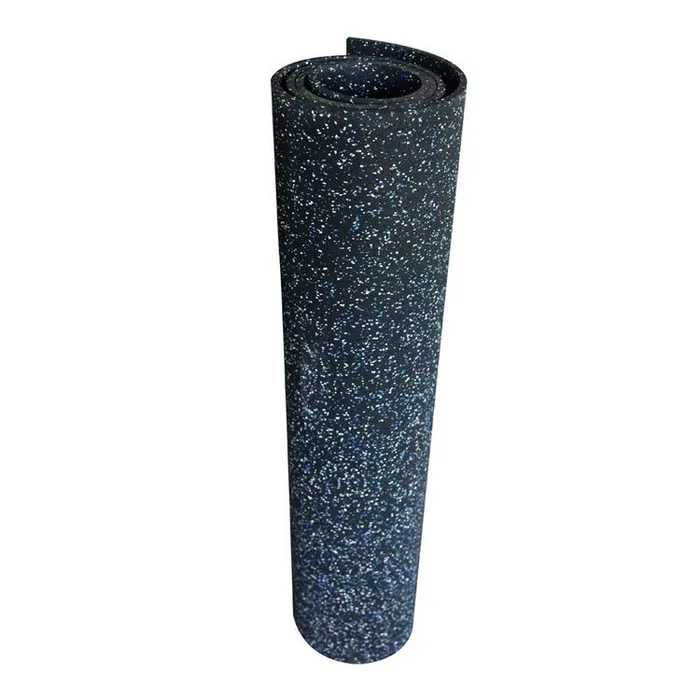
A recycled rubber roll sold by the foot that covers a whole room with few seams.
Best for: Covering a large gym or multipurpose room with continuous rubber for general training.
- 48 inch wide rolls in custom lengths from 4 feet to 50 feet, so big rooms need few seams.
- Recycled rubber with EPDM, 60 Shore A hardness, and Rubber-Cal rates it for indoor and outdoor use.
- Also sold in 5 mm and 1/4 inch thicknesses and several fleck colors.
- 3/8 inch is half the thickness of a 3/4 inch mat, so heavy iron plate drops need more protection.
- A full 50 foot roll is heavy and awkward to move and cut without help.
- Rolls can shift on smooth floors unless you tape or glue the edges.
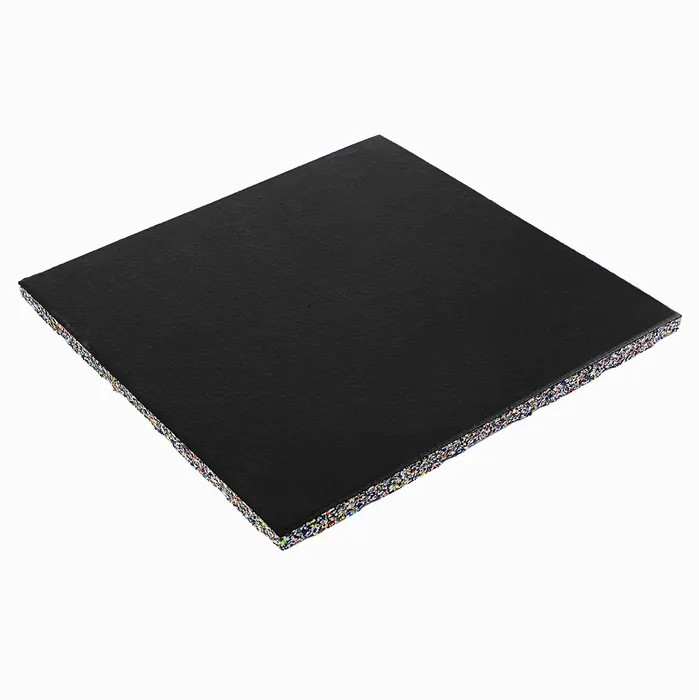
1 inch interlocking rubber tiles that one person can lay, lift and rearrange without glue.
Best for: Renters and anyone who wants a thick rubber floor they can move or reconfigure.
- 1 inch thick tiles, each about 11 lbs, so a single person can install them.
- No glue needed; border and corner pieces make a smooth transition for rolling a bench.
- Sold in bundles from 5.4 x 5.4 feet up to 20.7 x 20.7 feet, which makes planning easy.
- Tiles are 19.7 inches square, so a room needs many more pieces and joints than large mats.
- The system adds borders, corners and connector buckles to the parts list.
- For a permanent garage gym, heavy mats or rolls cover the same floor with fewer seams.
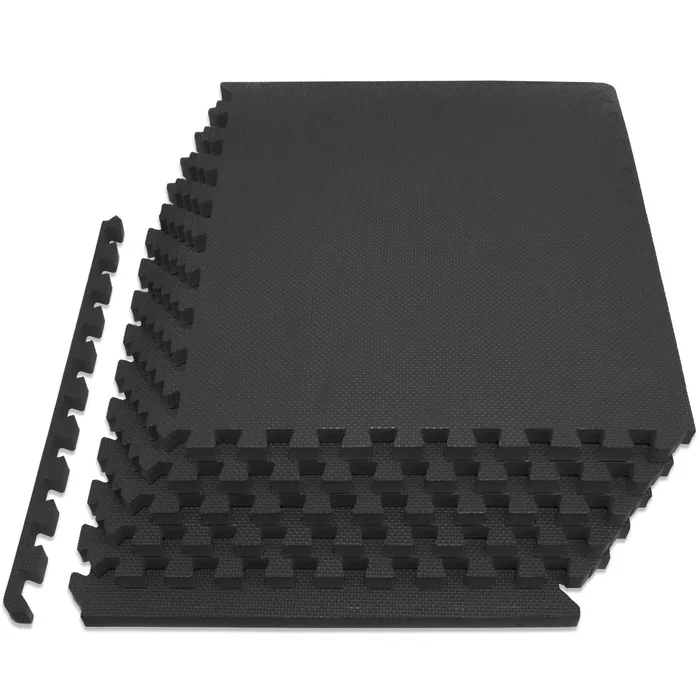
A popular EVA foam puzzle mat that is comfortable for floor work but too soft for a lifting gym.
Best for: Yoga, stretching, bodyweight training and kids' play areas, not barbell work.
- Light, easy to assemble, and six 24 inch tiles plus borders cover 24 square feet.
- Water-resistant, noise-reducing and cushioned for stretching, bodyweight work and play areas.
- Very affordable per square foot compared with rubber.
- EVA foam is soft; a soft surface under a rack or heavy lifts lets feet and equipment sink in.
- Foam is easily dented by rack feet and dropped plates, unlike dense rubber.
- ProsourceFit itself points buyers to its thicker 1 inch mat for ultra-heavy equipment.
- It looks like gym flooring in photos, so it is often bought for the wrong job.
| Criteria | REP Fitness 4'x6' Floor Mats (3/4 in) Top pick | Rubber-Cal Elephant Bark Rubber Flooring Roll (3/8 in) | REP Fitness Interlocking Floor Tiles (1 in) | ProsourceFit Exercise Puzzle Mat (3/4 in) |
|---|---|---|---|---|
| Verdict | Buy it | Buy it | It depends | Skip it |
| Best for | Garage and basement gyms with a rack and barbell work. | Covering a large gym or multipurpose room with continuous rubber for general training. | Renters and anyone who wants a thick rubber floor they can move or reconfigure. | Yoga, stretching, bodyweight training and kids' play areas, not barbell work. |
| Price tier | $$ · mid-range | $$ · mid-range | $$$ · premium | $ · budget |
| Format | 4 x 6 ft mats | 48 in wide rolls, cut to length | 19.7 in interlocking tiles | 24 in interlocking tiles |
| Material | Urethane-bound recycled rubber | Recycled rubber with EPDM | Rubber | EVA foam |
| Thickness | 3/4 in | 3/8 in (also 5 mm, 1/4 in) | 1 in | 3/4 in |
| Weight per piece | 88 lbs per mat | Not published per foot | About 11 lbs per tile | Not published |
| Installation | Lay in place, two people | Unroll, cut, tape or glue edges | Interlock, no glue, one person | Snap together, one person |
| Seams | Few, 1/2 in tolerance | Fewest | Many | Many |
| Under a rack and dropped weights | Yes | Yes for bumper drops; thicker for iron | Yes | No |
| Best for | Garage and basement gyms | Large rooms | Renters, movable setups | Floor work and play areas |
Which one is right for you?
- Garage and basement gyms with a rack and barbell work. Buy it REP Fitness 4'x6' Floor Mats (3/4 in)
- Covering a large gym or multipurpose room with continuous rubber for general training. Buy it Rubber-Cal Elephant Bark Rubber Flooring Roll (3/8 in)
- Renters and anyone who wants a thick rubber floor they can move or reconfigure. It depends REP Fitness Interlocking Floor Tiles (1 in)
- Yoga, stretching, bodyweight training and kids' play areas, not barbell work. Skip it ProsourceFit Exercise Puzzle Mat (3/4 in)
How we judged the field
Five things decide whether gym flooring works: density, thickness, how it handles dropped weight, how many seams it creates and how hard it is to install. Density keeps a rack stable and your feet planted. Thickness protects the floor underneath from drops. Seams are where edges lift and trip you, and installation matters because some of this material is very heavy.
The field splits into dense rubber, sold as large mats, rolls or interlocking tiles, and soft EVA foam puzzle mats that look similar in product photos. We picked a heavy rubber mat, a rubber roll, an interlocking rubber tile and a best-selling foam mat, then compared them on each maker’s published thickness, material and installation details.
REP Fitness 4’x6’ Floor Mats are the most dependable way to floor a garage or basement gym. Each mat is 3/4 inch thick and weighs 88 lbs, made by bonding recycled rubber with liquid urethane under heat and pressure. REP says the result will not curl or change shape with temperature and does not absorb moisture, which matters on a concrete slab. The top is untextured, so push-ups and floor work are comfortable, and the mats are made in the USA. The downsides come with the density. They are heavy enough that most people need a second person to place them, REP lists a 1/2 inch tolerance so small gaps between mats are normal, and there is a three-mat minimum order. REP also suggests airing them out for a few days. Under a rack, with a barbell and bumper plates, this is the flooring that simply works.
Rubber-Cal Elephant Bark is the smart choice when you want to cover a large room with as few seams as possible. It comes in 48 inch wide rolls cut to length anywhere from 4 feet to 50 feet, in 5 mm, 1/4 inch and 3/8 inch thicknesses. The 3/8 inch version we compared is recycled rubber with EPDM at a nominal 60 Shore A hardness, and Rubber-Cal rates it for indoor and outdoor use thanks to that EPDM content. Fewer seams means fewer edges to lift and fewer gaps for dust. The trade-offs are thickness and handling. At 3/8 inch, it is half as thick as a 3/4 inch mat, so heavy iron plate drops call for more protection. A long roll is heavy and awkward to cut, and on smooth concrete it may need tape or glue at the edges. For general training in a big space, it is excellent value.
REP Fitness Interlocking Floor Tiles solve a different problem: flooring you can install alone and take with you. Each 1 inch tile weighs about 11 lbs, so a single person can lay a whole floor, and REP says no glue is needed. Border and corner pieces give a smooth ramped edge, which helps when you roll a bench across the floor. REP sells bundles from 5.4 x 5.4 feet up to 20.7 x 20.7 feet, which takes the guesswork out of ordering. The catch is the size of each piece. At 19.7 inches square, the tiles create far more joints than 4 x 6 foot mats, and the system adds borders, corners and connector buckles to the order. For renters, shared spaces or anyone who reconfigures their gym, the portability is worth it. For a permanent garage gym, heavy mats or rolls cover the same floor with fewer seams.
The ProsourceFit Exercise Puzzle Mat is a good product sold into the wrong job. It is 3/4 inch high-density EVA foam, six 24 inch tiles plus border pieces cover 24 square feet, and it snaps together in minutes. It is water-resistant, quiet and cushioned, which makes it great for yoga, stretching, bodyweight training and kids’ play areas. The problem is lifting. Foam is soft, and a soft surface under a squat rack or heavy deadlifts lets your feet and the rack sink in, while rack feet and dropped plates dent it. ProsourceFit itself points buyers to its thicker 1 inch mat for ultra-heavy equipment. Because foam mats look like gym flooring in photos, they are often bought for barbell gyms and then replaced. If your training is on the floor, it is a fine buy. If it involves a rack, buy rubber.
REP Fitness 4’x6’ Floor Mats (3/4 in) vs Rubber-Cal Elephant Bark Rubber Flooring Roll (3/8 in): which should you buy?
REP’s 4’x6’ mats and Rubber-Cal’s Elephant Bark are both dense rubber, and the choice comes down to thickness versus coverage. The REP mats are 3/4 inch, heavy and stable, the better base under a rack and for dropping weight. Elephant Bark is thinner at 3/8 inch but comes in long rolls that cover a big room with very few seams.
If your gym is a rack in a garage bay, buy the mats. If you are covering a large basement or multipurpose room for general training, buy rolls, and consider putting a few 3/4 inch mats or a lifting platform where the barbell work happens. Plenty of home gyms combine the two.
What to look for
- Dense rubber under the rack: it keeps equipment stable and your feet planted.
- Thickness for your heaviest drop: 3/4 inch is a common baseline; heavy iron drops need more.
- Fewer seams: large mats and rolls leave fewer edges to lift or trip on.
- A realistic install: 88 lb mats need two people; tiles and foam do not.
- Low odor: urethane-bound rubber tends to smell less, but plan to air any new floor out.
- Foam only for floor work: EVA foam is for stretching and bodyweight training, not barbells.
Our final take
For a barbell gym, buy dense rubber. REP Fitness 4’x6’ Floor Mats are our pick: 3/4 inch, heavy, stable and made to hold their shape. Rubber-Cal Elephant Bark rolls are the better value when you need to cover a big room with few seams, as long as you add extra protection where heavy iron gets dropped. REP’s Interlocking Floor Tiles are worth it if you rent or like to rearrange. Keep foam puzzle mats like the ProsourceFit for yoga and play areas; under a rack, they are the flooring most people end up replacing.
Questions, answered
How thick should home gym flooring be?
For a rack and barbell work, 3/4 inch rubber is a common, dependable choice. Thinner rubber rolls work for general training and bumper plates, while heavy iron plate drops call for more thickness or a dedicated lifting platform. REP, for example, recommends its thicker roll options for dropping iron plates. Match the thickness to the heaviest thing you will drop, not the average workout.
Are horse stall mats the same as gym mats?
Many home gyms use 3/4 inch rubber stall mats from farm stores, and the format is similar to REP's 4 x 6 foot mats. Quality varies: some stall mats have a strong odor, a textured top or looser tolerances. Urethane-bound gym mats are made to lower odor and hold their shape. Either way, expect heavy mats and plan for two people to move them.
Is foam flooring OK for a home gym?
Foam is fine for yoga, stretching, bodyweight training and play areas. It is not a good base for a squat rack or heavy lifts, because the soft surface lets feet and equipment sink and dents under load. If you lift heavy, put rubber under the lifting area even if the rest of the room is foam.
Do rubber gym floors smell?
Recycled rubber can have an odor at first. REP says its urethane-bound mats have less odor but still suggests airing them out for a few days. Laying new flooring in a ventilated space before closing up the room helps. The smell usually fades with time.
Should I glue down rubber flooring?
Heavy mats and interlocking tiles usually stay put without glue. Rolls are more likely to shift on smooth concrete, and REP recommends double-sided tape or flooring glue for its rolls, though it is not required. In a rental, tape or no adhesive at all keeps the floor removable.
Deciding between the top two? See our head-to-head: REP Fitness 4'x6' Floor Mats (3/4 in) vs Rubber-Cal Elephant Bark Rubber Flooring Roll (3/8 in).
More Home Gym reviews
 The Best Jump Ropes: 4 Compared (and One to Skip)
  The Best Knee Sleeves: 4 Compared (and One to Skip)
  The Best Lifting Belts: 4 Compared (and One to Skip)
  The Best Lifting Straps: 4 Compared (and One to Skip)
  The Best Pull-Up Bars: 4 Compared (and One to Skip)
  The Best Resistance Bands Sets: 4 Compared (and One to Skip)