

Outdoors & Fitness
The Best Lifting Belts: 4 Compared (and One to Skip)
We compared four 10mm lever belts on leather construction, federation approval, published width and waist ranges, warranty coverage and lead time.
The short version
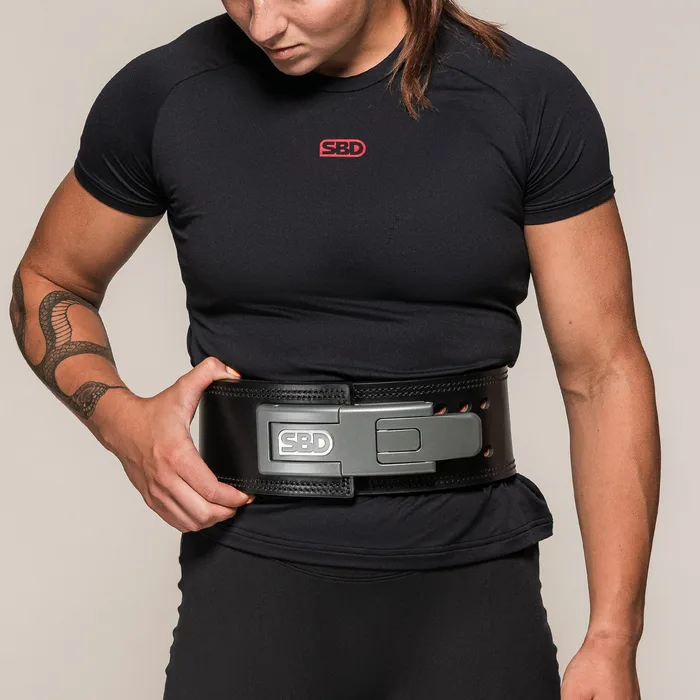
The SBD 10mm Lever Belt is the one to buy: a patented gliding lever that gives the adjustability of a prong belt with the tightness of a lever, two different cuts of hide so the belt keeps its support while moulding to your waist, a low-profile buckle with rounded edges and corners to stop it catching your legs, 10mm thick and 10cm wide, IPF approved, made exclusively from British cowhide in Great Britain. The Gymreapers 10MM Lever Belt is the value pick and carries the best warranty here, a lifetime covering both the lever and the belt, with IPF, IPL, USPA and USAPL approval and published waist ranges for every size. The Inzer Forever Lever Belt 10MM is one solid thickness of leather rather than glued layers, with a Reinforced Leather insert, four rows of lock-stitched nylon and edges deliberately left unrounded to preserve competition-legal width, and Inzer currently quotes 8 to 12 weeks for most configurations. The Strength Shop 10mm Lever Belt is the one to skip: it is Amara synthetic leather rather than hide, and its lifetime performance warranty covers the buckle rather than the belt. Best for: anyone squatting or deadlifting near their limit who wants something that will outlast their training career.
Our picks at a glance
- SBD 10mm Lever Belt - Buy. A gliding lever that adjusts like a prong belt, in British hide, with both dimensions published.
- Gymreapers 10MM Lever Belt - Buy. Four federation approvals, published waist ranges, and a lifetime warranty on the belt as well as the lever.
- Inzer Forever Lever Belt 10MM - It depends. One solid thickness of hide, unrounded edges on principle, and a two month wait.
- Strength Shop 10mm Lever Belt - Skip. Synthetic rather than hide, with a lifetime warranty that covers the buckle and not the belt.
The verdict in 30 seconds
What mattered most
- Material
- Thickness
- Width published
- Federation approval
- Lever
- Edges
A lifting belt is a strip of leather and a buckle, and the two makers with the strongest engineering opinions in this comparison disagree about the leather's edges. SBD rounds them, to stop the belt digging into your legs. Inzer refuses to, on the grounds that rounding reduces the effective width and therefore the support you paid for. Both positions are defensible, both are published, and knowing that the argument exists tells you more about buying a belt than any amount of marketing about bracing. The other things that separate these four are whether the leather is one piece or several, what the warranty actually covers, and whether you will wait two months for it.
A gliding lever that adjusts like a prong belt, in British hide, with both dimensions published.
Best for: Competitive lifting and long-term training, where comfort between the belt and your legs matters as much as support.
- A patented gliding lever giving the adjustability of a prong belt with the ease and tightness of a lever, so you can size up or down between sessions without a screwdriver.
- Built from two different cuts of hide so the belt retains support while moulding to your waist, with a low-profile buckle and rounded edges and corners to stop it catching your legs.
- Both dimensions published at 10mm thickness and 10cm width, IPF approved, black oiled leather with a red suede interior, made exclusively from British cowhide and manufactured in Great Britain.
- Rounding the edges reduces the effective width of the belt, which is the specific design trade Inzer publicly refuses to make.
- No warranty terms are published anywhere on the product page.
- No waist circumference ranges are given against the sizes.
- It is the most expensive belt in this comparison by a wide margin.
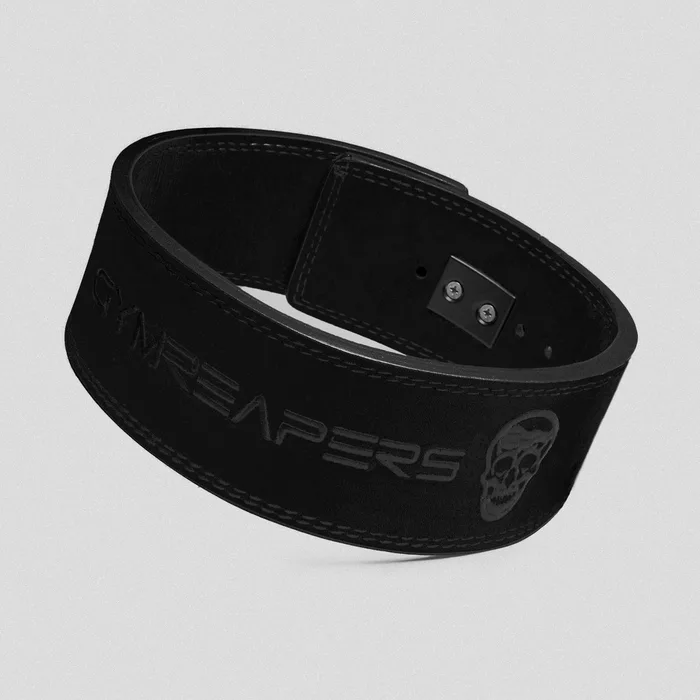
Four federation approvals, published waist ranges, and a lifetime warranty on the belt as well as the lever.
Best for: A first serious belt, and anyone who wants the warranty to cover the leather too.
- A lifetime warranty covering both the lever and the belt, which is the only warranty in this comparison that covers the leather rather than just the hardware.
- Approved by the IPF, IPL, USPA and USAPL, the broadest federation coverage here.
- Premium grade vegetable tan leather with reinforced stitching and a heavy-duty lever, and every size published as a waist range, from XS at 24 to 31 inches through to L at 34 to 41 inches.
- No belt width is published, which matters because federations specify a maximum.
- Gymreapers does not say whether the leather is a single thickness or laminated layers.
- No country of manufacture is given.
- The lever is described as heavy-duty rather than named or specified.
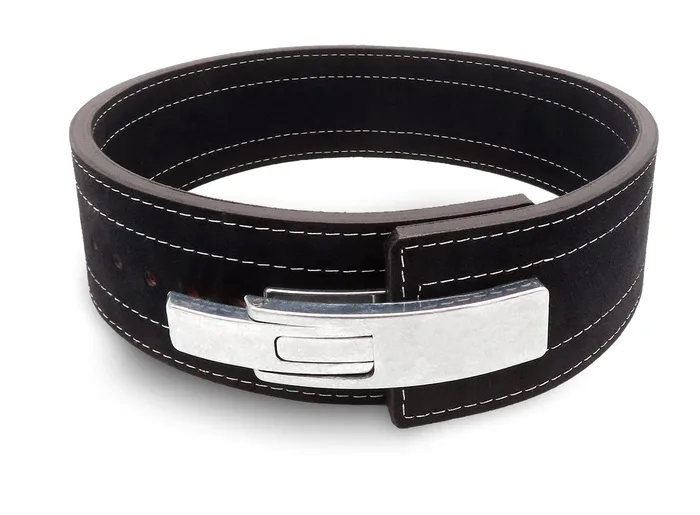
One solid thickness of hide, unrounded edges on principle, and a two month wait.
Best for: Lifters who want the maximum legal width and a belt made from a single piece of hide, and can wait for it.
- One solid thickness of leather rather than layers glued together, which Inzer contrasts directly with belts that can come apart years later, plus a Reinforced Leather component inside that helps the belt break in and hold your shape.
- Four rows of lock-stitched, corrosion-resistant, high-density nylon, and a suede finish that grips rather than slides.
- The edges are finished but deliberately not rounded, because Inzer argues rounding reduces the effective width, so the full competition-legal width is maintained, and the lever adjusts up to three inches tighter than a standard buckle.
- Inzer currently quotes 8 to 12 weeks for delivery of any belt made to order, which is most colours and sizes outside black in S to XXL.
- No federation approval is stated on the product page.
- No width figure is published, despite width being the basis of Inzer's argument about rounded edges.
- No warranty terms appear on the page.
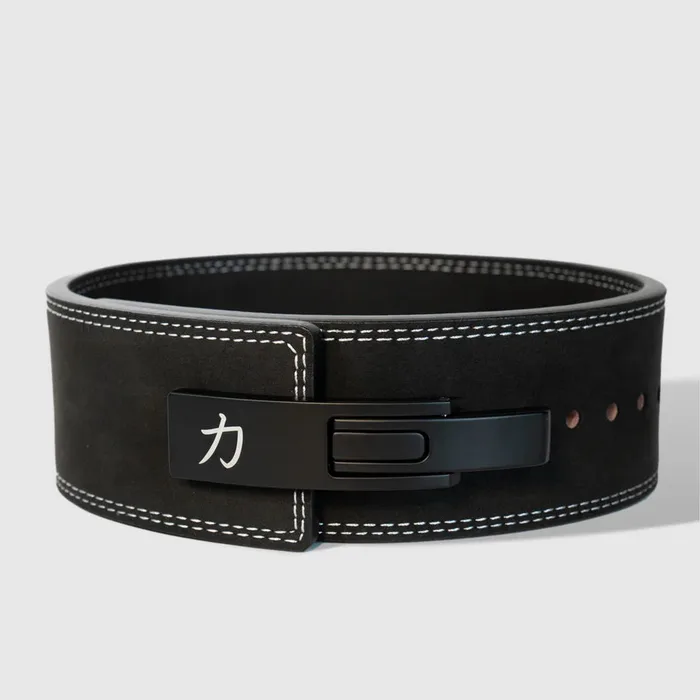
Synthetic rather than hide, with a lifetime warranty that covers the buckle and not the belt.
Best for: Someone who wants an IPF legal lever belt at the lowest price and does not expect to keep it for a decade.
- IPF approved, so it is legal in competition despite the synthetic construction.
- Waist ranges published against every size, and a choice of buckle finish including black, gun metal, obsidian and gold.
- Strength Shop is upfront that it uses Amara synthetic leather and explains the reasoning, describing it as firm yet comfortable.
- Amara synthetic leather rather than hide, which will not break in and mould the way leather does over years of use.
- The lifetime performance warranty is on the lever buckle, not on the belt itself.
- No belt width and no country of manufacture are published.
- Nothing is said about stitching, layering or reinforcement, which are the details the leather belts here compete on.
| Criteria | 10mm Lever Belt Top pick | 10MM Lever Belt | Forever Lever Belt 10MM | 10mm Lever Belt |
|---|---|---|---|---|
| Verdict | Buy it | Buy it | It depends | Skip it |
| Best for | Competitive lifting and long-term training, where comfort between the belt and your legs matters as much as support. | A first serious belt, and anyone who wants the warranty to cover the leather too. | Lifters who want the maximum legal width and a belt made from a single piece of hide, and can wait for it. | Someone who wants an IPF legal lever belt at the lowest price and does not expect to keep it for a decade. |
| Price tier | $$$$ · flagship | $ · budget | $$ · mid-range | $ · budget |
| Material | British cowhide, two cuts | Vegetable tan leather | One solid thickness of leather | Amara synthetic leather |
| Thickness | 10 mm | 10 mm | 10 mm | 10 mm |
| Width published | 10 cm | No | No | No |
| Federation approval | IPF | IPF, IPL, USPA, USAPL | Not stated | IPF |
| Lever | Patented gliding lever, low profile | Heavy-duty lever | Patented lever, 3 inches of adjustment | Lever with choice of finish |
| Edges | Rounded edges and corners | Not published | Deliberately not rounded | Not published |
| Waist ranges published | No | Yes, every size | Yes, in the size names | Yes, every size |
| Warranty | Not published | Lifetime, lever and belt | Not published | Lifetime on the buckle only |
| Made in | Great Britain | Not published | Not published | Not published |
| Lead time | In stock | In stock | 8 to 12 weeks if made to order | In stock |
Which one is right for you?
- Competitive lifting and long-term training, where comfort between the belt and your legs matters as much as support. Buy it SBD 10mm Lever Belt
- A first serious belt, and anyone who wants the warranty to cover the leather too. Buy it Gymreapers 10MM Lever Belt
- Lifters who want the maximum legal width and a belt made from a single piece of hide, and can wait for it. It depends Inzer Forever Lever Belt 10MM
- Someone who wants an IPF legal lever belt at the lowest price and does not expect to keep it for a decade. Skip it Strength Shop 10mm Lever Belt
How we judged the field
We compared four belts at the same 10mm thickness so the differences would be about construction rather than specification, and construction turned out to be where the makers genuinely disagree. The first question is what the belt is made of and how it is assembled: a single thickness of hide, two cuts of hide chosen for different jobs, laminated layers, or a synthetic. Inzer is explicit that layers glued together can come apart years later, SBD uses two cuts deliberately so the belt moulds without going soft, and Strength Shop uses Amara synthetic and says so.
Second, dimensions, and specifically width. Federations cap it, belts are built to the cap, and only one of these four publishes a figure. That is also where the most interesting disagreement sits, because rounding the edges for comfort necessarily reduces the width you brace against, and two makers take opposite positions on it in writing. Third, federation approval, which is the only external check in this category. Fourth, warranty, and precisely what it covers, since a lifetime warranty on a buckle is a different promise from a lifetime warranty on a belt. Fifth, the practicalities: published waist ranges, and whether the thing is in stock or made to order.
The SBD 10mm Lever Belt solves the one genuine annoyance of lever belts. A standard lever is fixed to a single setting, and changing it means a screwdriver and a few minutes; SBD’s patented gliding lever gives the adjustability of a prong belt with the ease and tightness of a lever, so you can size up or down between a training session and a competition without tools. The construction is thought through as well: the belt uses two different cuts of hide so that it retains support while moulding to the waist, rather than either staying rigid or going soft. The buckle is low profile, and the edges and corners are rounded specifically to minimise obstruction and discomfort where the belt meets your legs in the bottom of a squat. SBD publishes both dimensions, 10mm thick and 10cm wide, which nobody else here does, and states IPF approval, British cowhide and manufacture in Great Britain. The costs are price, which is the highest here by a distance, no published warranty terms, no waist ranges against the sizes, and the design trade Inzer objects to: rounding those edges takes effective width off the belt.
The Gymreapers 10MM Lever Belt is the value answer and it has the best warranty in this comparison, which is an unusual combination. The cover is a lifetime on both the lever and the belt, and the distinction matters: Strength Shop warrants only its buckle, and neither SBD nor Inzer publishes terms at all. The approvals are the broadest here too, IPF, IPL, USPA and USAPL, which means it is legal in essentially any federation you are likely to enter. The leather is premium grade vegetable tan with reinforced stitching, the lever is described as heavy-duty, and every size is published as a waist range, from XS at 24 to 31 inches through to L at 34 to 41 inches, which is the single most useful piece of sizing information a belt maker can give. What is missing is the detail the more expensive belts compete on: no width figure, nothing about whether the leather is one thickness or laminated, no country of manufacture, and no specification for the lever beyond heavy-duty.
The Inzer Forever Lever Belt 10MM has the strongest engineering argument here and the worst buying experience. Inzer is emphatic that the belt is one solid thickness of leather rather than layers glued together to make up thickness, which it says can come loose years later, and adds an internal Reinforced Leather component that helps the belt break in and remember your form. There are four rows of lock-stitched, corrosion-resistant, high-density nylon and a fine suede finish that stops the belt sliding on clothing. The edges are the interesting part. Inzer finishes them with refinement but deliberately does not round them, on the stated grounds that rounding lessens the effective width, so the complete competition-legal width is maintained. That is a direct and public disagreement with SBD’s approach, and it is worth understanding because it is the choice between maximum bracing surface and comfort against your legs. The lever adjusts up to three inches tighter than a standard buckle. Against all that: the product page states no federation approval, publishes no width figure despite width being the whole argument, gives no warranty terms, and Inzer currently quotes 8 to 12 weeks for anything made to order, which is everything except black in S to XXL.
The Strength Shop 10mm Lever Belt is the skip, and it is the most honest skip in a while, because Strength Shop tells you exactly what it is. The belt is made from Amara synthetic leather, which the company describes as something it leads the market in using and characterises as firm yet comfortable. It is IPF approved, so it is legal in competition, it publishes waist ranges for every size, and the lever buckle comes in a choice of finishes including gun metal, obsidian and gold. The reason it does not make the cut is what a lifting belt is for. A leather belt breaks in over months, moulds to your torso, and stays supportive for a decade or more, which is why Inzer calls its belt the Forever Belt and why SBD specifies two different cuts of hide. A synthetic does not do that. The warranty confirms the priority: the lifetime performance warranty applies to the lever buckle, not to the belt. And Strength Shop publishes no width, no country of manufacture and nothing about stitching or reinforcement.
SBD 10mm Lever Belt vs Gymreapers 10MM Lever Belt: which should you buy?
SBD against Gymreapers is the practical decision, and it comes down to whether you want the gliding lever and the published dimensions or the warranty and the money. SBD gives you a belt made from two cuts of British cowhide in Great Britain, both dimensions on the page, IPF approval, and a lever that can be re-sized without tools, which is genuinely useful if your waist moves between an off-season and a meet. Rounded edges and a low-profile buckle mean it is the most comfortable belt here against your legs in the hole of a squat.
Gymreapers gives you four federation approvals instead of one, waist ranges published against every size so you can order from a tape measure, vegetable tan leather with reinforced stitching, and a lifetime warranty that covers the belt as well as the lever, for a fraction of the price. It does not tell you how wide it is or where it was made. Buy the SBD if you compete, if you want the tool-free lever, or if you intend this to be the only belt you ever buy. Buy the Gymreapers if you want most of that with better warranty cover and would rather put the difference into a bar or a coach.
What to look for
- How the leather is assembled: one solid thickness, two chosen cuts, or laminated layers glued together, which is the failure mode good makers name.
- A published width: federations cap it and belts are built to the cap, and only one maker here prints a number.
- Edge treatment: rounded for comfort against your legs, or square to keep the full bracing width, and both are deliberate choices.
- Federation approval: IPF, IPL, USPA and USAPL all publish equipment rules, and approval is the only external check in this category.
- Exactly what the warranty covers: a lifetime on the buckle is a very different promise from a lifetime on the belt.
- Waist ranges against sizes, and lead time: a belt is sized to your waist at the navel, not to your trouser size, and one maker here quotes two to three months.
Our final take
Lifting belts are simple enough that the disagreements between good makers are the most informative thing on the page. The SBD 10mm Lever Belt is the one to buy: two cuts of British hide, both dimensions published, IPF approval, British manufacture, and a gliding lever that removes the need for a screwdriver when your waist changes. The Gymreapers 10MM is the smarter value purchase, with four federation approvals, published waist ranges and the only lifetime warranty here that covers the leather rather than just the hardware. The Inzer Forever is the purist’s belt, one solid thickness of hide with square edges to preserve every millimetre of legal width, if you can accept eight to twelve weeks and a page that states no approval and no warranty. And a belt made from synthetic material, warranted on its buckle alone, is not the thing you want under a maximal squat in ten years.
Questions, answered
Lever or prong?
A lever locks to one setting and opens and closes in a second, which is why competitive lifters use them: the tension is identical every time and you can get it off between attempts. The historic drawback is that changing the setting means unscrewing the lever and moving it, which is why SBD's gliding lever exists, giving prong-style adjustability with lever action. A prong belt adjusts freely but is slower to fasten tightly and the tension varies with how hard you pull. If your waist fluctuates or you are new to belted lifting, a prong is more forgiving.
10mm or 13mm?
10mm for most people, 13mm for maximal powerlifting. A 13mm belt is stiffer and gives more to brace against, and it is correspondingly harder to break in, less comfortable under a long training session and more punishing across the ribs and hips. Inzer describes 10mm as the choice when a thicker belt is not needed and notes it conforms to your body sooner. All four belts here are available in both thicknesses; if you are unsure, buy 10mm.
Why does belt width matter?
Because federations cap it and because it is the surface you brace against. The IPF and similar bodies specify a maximum width, and belts are built right up to it, which is why Inzer refuses to round its edges: rounding takes material off the top and bottom and reduces the effective width you are pushing into. SBD takes the opposite view and rounds the edges to stop the belt digging into the legs during squats. Only SBD publishes a width figure, at 10cm.
How tight should a lifting belt be?
Tight enough that you have to brace against it and loose enough that you can take a full breath into your stomach first. The belt is not a corset holding you in; it is a surface to push your abdominal wall against, which raises intra-abdominal pressure and stiffens the trunk. If you cannot get air into your belly, it is too tight; if you can slide a flat hand between belt and stomach after bracing, it is too loose. Most people size so the lever closes with real effort at the setting they use.
Do I need a belt at all?
Not to train, and not for most of your sets. A belt increases intra-abdominal pressure and lets you handle more load on heavy compound lifts, and it does nothing useful on warm-ups, accessory work or anything submaximal. Wearing one constantly means never asking your trunk to stabilise unaided. The usual approach is to belt the top working sets on squats, deadlifts and heavy presses and leave it off for everything else. If you have a back condition, ask a clinician before adding load rather than adding hardware.
Deciding between the top two? See our head-to-head: SBD 10mm Lever Belt vs Gymreapers 10MM Lever Belt.
More Outdoors & Fitness reviews
 The Best Merino Wool Base Layers: 4 Compared (and One to Skip)
  The Best Metal Detectors for Hobbyists: 4 Compared (and One to Skip)
  The Best Entry & Mid-Level Mountain Bikes: 4 Compared (and One to Skip)
  The Best Mountain Bike Grips: 4 Compared (and One to Skip)
  The Best Multi-Tools: 4 Compared (and One to Skip)
  The Best Night Vision Monoculars: 4 Compared (and One to Skip)