

Home Gym
The Best Pull-Up Bars: 4 Compared (and One to Skip)
We compared three no-drill doorway bars and one bolt-in wall mount on stability, grip options, doorframe safety, and who each one really suits.
The short version
The Sunny Health & Fitness Adjustable Pull-Up Bar is the best pick for most home gyms: a press-to-lock doorway bar with an anti-rotation lock, lab-tested to a stated 330 lb, that costs little and installs in seconds without tools. If you lift heavy or add weight, the wall-mounted Rogue Jammer bolts into studs and won't budge, justifying its premium price. The ProsourceFit Multi-Grip is a fine budget alternative if you want extra hand positions, though its extra grips don't change the workout much. Skip the Perfect Fitness Multi-Gym Pro: it charges mid-range money for the same leverage-bar function you get cheaper elsewhere. Every doorway bar loads your frame, so mind it. Best for: home trainers who want the most bar for the least money, with a clear upgrade path to a permanent mount.
Our picks at a glance
- Sunny Health & Fitness Adjustable Pull-Up Bar (NO. 109) - Buy. A press-to-lock doorway bar with a published 330 lb rating and an anti-rotation lock.
- Rogue Fitness Rogue Jammer Pull-up Bar - Buy. A bolt-in, rack-grade bar for people who take pull-ups (and weighted pull-ups) seriously.
- ProsourceFit Multi-Grip Pull-Up Bar - It depends. A budget doorway bar with more hand positions than you'll probably use.
- Perfect Fitness Multi-Gym Pro - Skip. You pay mid-range money for a doorway bar that does nothing a budget one can't.
The verdict in 30 seconds
What mattered most
- Mounting type
- Stability under load
- Weight capacity
- Grip options
- Doorframe / trim safety
- Removable / portable
A pull-up bar is the cheapest way to train your back and arms at home, but the category splits hard in two: no-drill doorway bars that lock into or hook over a frame in seconds, and wall-mounted bars that bolt permanently into studs. We synthesized independent testing and owner reports across four current models. Two earn a clear buy for very different buyers, one is a fine budget pick with caveats, and one asks you to pay more for no real gain.
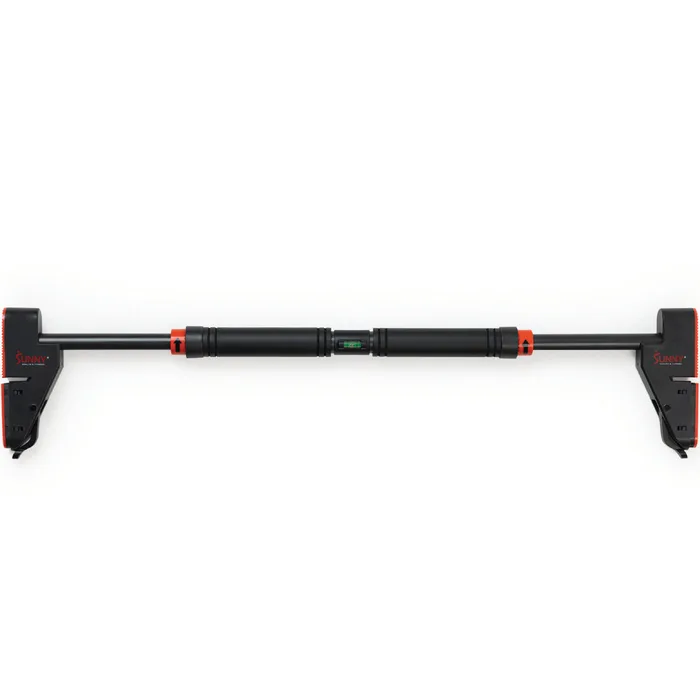
A press-to-lock doorway bar with a published 330 lb rating and an anti-rotation lock.
Best for: Beginners and renters who want a low-cost, removable bar with a published load rating.
- Press-to-lock design installs in seconds with no tools, and an anti-rotation lock stops the bar spinning mid-rep
- Sunny says it is lab-tested to 330 lb at full extension under static load, on carbon steel
- Adjusts from 28 to 38 inches, weighs a stated 4.6 lb, and has padded foam grips
- Sunny says it is for bodyweight training, not kipping, swinging or dynamic gymnastics movements
- A single straight bar, so no neutral-grip handles
- The warranty is 1 year on the frame and 180 days on other parts
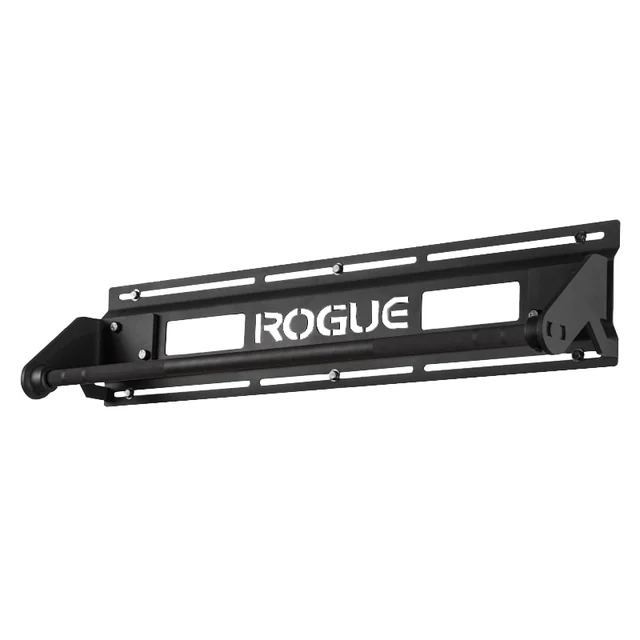
A bolt-in, rack-grade bar for people who take pull-ups (and weighted pull-ups) seriously.
Best for: Committed lifters who want a permanent, rock-solid bar above a doorway and plan to add weight.
- Bolts directly into wood studs - zero wobble or slip, even under weighted reps
- A 1.125 in diameter bar on 0.375 in laser-cut steel brackets and a 43 in stringer, made in the USA
- Bar offered knurled or smooth, in powder coat, stainless steel or Cerakote finishes
- Permanent installation requires stud-finding, drilling, and leaves holes
- Costs several times more than any doorway bar and ships with no grip variety (single straight bar)
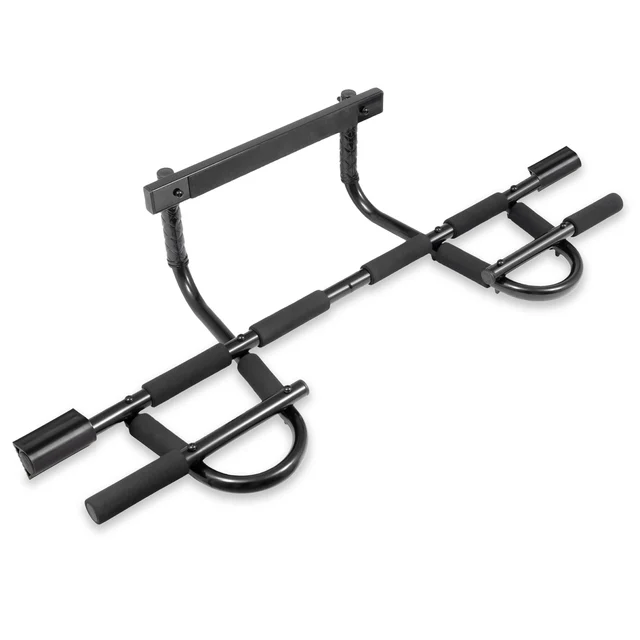
A budget doorway bar with more hand positions than you'll probably use.
Best for: Home users who specifically want lots of grip angles and don't mind a slightly busier, bulkier bar.
- Twelve cushioned foam grips (two of them door protectors) for wide, hammer, and close-grip pulls
- No-screw leverage fit on frames 24 to 36 in wide and up to 6 in thick, rated to 300 lb
- Priced right alongside the cheapest doorway bars
- Owners report some flex and creak under heavier users
- Extra grips add bulk and don't meaningfully change the workout versus a three-grip bar
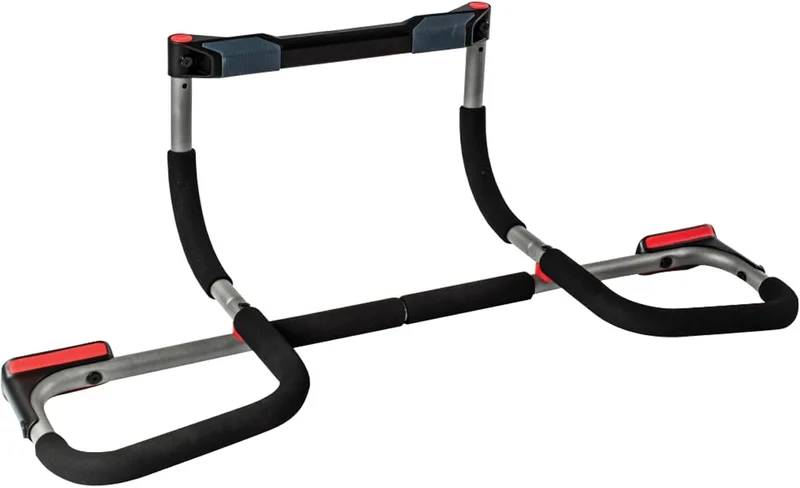
You pay mid-range money for a doorway bar that does nothing a budget one can't.
Best for: Only worth it if you find it heavily discounted; otherwise the Sunny does the same job for less.
- Ergonomic wide handles with several grip options
- Flips over for floor push-ups, dips, and sit-ups
- Costs noticeably more than equally capable budget doorway bars
- Bulky over-door bracket can mark trim and keeps the door from closing while mounted
| Criteria | Adjustable Pull-Up Bar (NO. 109) Top pick Buy it Buy | Rogue Jammer Pull-up Bar Buy it Buy | ProsourceFit Multi-Grip Pull-Up Bar It depends Buy | Perfect Fitness Multi-Gym Pro Skip it Buy |
|---|---|---|---|---|
| Best for | Beginners and renters who want a low-cost, removable bar with a published load rating. | Committed lifters who want a permanent, rock-solid bar above a doorway and plan to add weight. | Home users who specifically want lots of grip angles and don't mind a slightly busier, bulkier bar. | Only worth it if you find it heavily discounted; otherwise the Sunny does the same job for less. |
| Price tier | $ · budget | $$$ · premium | $ · budget | $$ · mid-range |
| Mounting type | Doorway, press-to-lock inside the frame | Wall-mounted, bolts into studs | Doorway, no-screw leverage | Doorway, over-door leverage frame |
| Stability under load | Anti-rotation lock | Rock-solid, no slip or flex | Solid, some flex when loaded | Stable but bulky bracket |
| Weight capacity | 330 lb (lab-tested, static) | Not published | 300 lb | Not confirmed on a maker page |
| Grip options | Single straight bar, padded | Single straight bar | 12 foam grips, 2 for door protection | Several positions |
| Doorframe / trim safety | Presses on the inside of the jambs | Permanent - no trim contact | Can scuff trim over time | Bracket can mark trim |
| Removable / portable | Removable in seconds | Permanent install | Removable in seconds | Removable but bulky |
| Price tier | $ · budget | $$$ · premium | $ · budget | $$ · mid-range |
Which one is right for you?
- Beginners and renters who want a low-cost, removable bar with a published load rating. Buy it Sunny Health & Fitness Adjustable Pull-Up Bar (NO. 109)
- Committed lifters who want a permanent, rock-solid bar above a doorway and plan to add weight. Buy it Rogue Fitness Rogue Jammer Pull-up Bar
- Home users who specifically want lots of grip angles and don't mind a slightly busier, bulkier bar. It depends ProsourceFit Multi-Grip Pull-Up Bar
- Only worth it if you find it heavily discounted; otherwise the Sunny does the same job for less. Skip it Perfect Fitness Multi-Gym Pro
How we judged the field
We don’t run our own lab. Instead we synthesize independent testing, expert teardowns, and aggregated owner reports, then weigh them against the things that actually decide whether a pull-up bar earns its wall (or doorway) space. Four criteria did the heavy lifting.
First, mounting and stability - the single biggest divide in this category. No-screw doorway bars trade a little rigidity for the freedom to install and remove in seconds; wall-mounted bars trade convenience for a bar that never moves. Second, doorframe safety, because every leverage bar presses on your trim and owners consistently report scuffs and marks over time. Third, grip options and comfort, though we’re skeptical of grip-count marketing - most people use two or three positions. Fourth, value: what you actually get for the money relative to the cheapest thing that does the same job.
Capacity mattered less than you’d think - ProsourceFit publishes a 300 pound rating, which covers most bodyweight training - so we treated it as a threshold rather than a ranking factor, and flagged the stud-mounted alternative for heavier work.
Sunny Health & Fitness Adjustable Pull-Up Bar
Buy itThis is the doorway bar we would hand most people, because its maker publishes what the others leave vague. It is a press-to-lock bar that sits between the jambs, installs in seconds with no tools, and adjusts from 28 to 38 inches. A built-in anti-rotation lock stops the bar spinning in your hands, and Sunny says it is lab-tested to support 330 lb at full extension under static load, in carbon steel, at a stated 4.6 lb. The padded foam grips cover pull-ups, chin-ups and hangs. The caveats are on the same page: Sunny says it is designed for bodyweight training, not kipping, swinging or dynamic gymnastics movements; it is a single straight bar, so there are no neutral-grip handles; and the warranty is 1 year on the frame and 180 days on other parts. For controlled bodyweight work at a budget price, it’s the easiest recommendation here.
Rogue Jammer Pull-up Bar
Buy itThe Jammer plays a completely different game. It’s a wall-mounted system that bolts into the wood studs above a doorway, with a 43 in stringer, 0.375 in laser-cut steel brackets and a 1.125 in bar, made in the USA. Once it’s lagged into studs it does not rely on doorframe leverage, which is why it suits weighted pull-ups that would make a leverage bar creak. The price is several times that of a doorway bar, and installation means finding studs, drilling, and living with the holes. It also ships as a single straight bar with no grip variety. But if you’re a committed lifter who wants a permanent, wobble-free bar and an upgrade path to added weight, this is the one to own.
ProsourceFit Multi-Grip Pull-Up Bar
It dependsThe Multi-Grip is a competent budget doorway bar whose headline feature is twelve cushioned foam grips, two of which protect the door. It installs with a no-screw leverage fit over the frame, on frames 24 to 36 inches wide and up to 6 inches thick, and ProsourceFit rates it to 300 pounds. Where it gets complicated is the value proposition: the extra grips add bulk and visual busyness without meaningfully changing the workout, and some owners note flex and creak under heavier loads. If you specifically want to dial in lots of hand angles - for shoulder comfort, say - it’s a reasonable pick at a budget price. If you don’t, you’re carrying extra hardware for little benefit, and the plainer Sunny is the cleaner choice.
Perfect Fitness Multi-Gym Pro
Skip itThe Multi-Gym Pro isn’t a bad product - it has ergonomic handles, several grip options, and flips over for floor work. The problem is what it costs. It sits at a mid-range price for a leverage doorway bar that does nothing a budget bar can’t, and its bulky over-door bracket can mark trim and prevents the door from closing while it’s mounted. Unless you catch it at a steep discount, you’re paying more for a doorway bar that, unlike the Sunny or the ProsourceFit, we could not confirm a weight rating for on a maker page. That’s the definition of a skip: not broken, just beaten on value by cheaper equals.
Sunny Adjustable Pull-Up Bar vs Rogue Jammer: which should you buy?
These two bookend the category, and the choice is really about commitment. The Sunny wins on flexibility and price: it’s cheap, it installs and removes in seconds without tools, it leaves your walls untouched, and with a stated 330 lb rating for controlled bodyweight work it’s all the bar most people ever need. It’s the obvious pick for renters, beginners, and anyone who doesn’t want to drill.
The Rogue Jammer wins on rigidity and longevity. It bolts into studs, never wobbles, and is built to take weighted pull-ups that a leverage bar shouldn’t. The costs are real - a premium price, a permanent install, holes in your wall, and no grip variety - but if you train seriously and own your space, it’s the bar you buy once and forget about.
Short version: start with the Sunny if you’re unsure or renting. Step up to the Rogue Jammer when you know you’re in it for the long haul and want to add weight.
What to look for
- Mounting style first. Decide between no-screw doorway (removable, cheap, marks trim) and bolt-in wall mount (permanent, rock-solid, needs studs) before comparing anything else.
- Your doorframe. Leverage bars need a solid wood frame with enough clearance; thin or hollow trim is a reason to go wall-mounted.
- Weight capacity headroom. A 300 lb rating suits most bodyweight training; if you’re near the limit or plan to add weight, choose a stud-mounted bar.
- Grip positions you’ll actually use. Two or three is plenty for most routines - don’t overpay for a dozen.
- Trim protection. Check for padding and expect some marking over time on any leverage bar.
- Value against the cheapest equal. If a pricier doorway bar doesn’t add stability or capacity, it’s not worth the premium.
Our final take
Most people should buy the Sunny Health & Fitness Adjustable Pull-Up Bar. It’s inexpensive, removable, rated to a stated 330 lb, and enough bar for the bodyweight training the vast majority of home exercisers actually do. When you outgrow it - heavier lifts, weighted pull-ups, or just a hatred of wobble - the Rogue Jammer is the permanent, stud-mounted upgrade worth its premium. The ProsourceFit Multi-Grip is a fine budget alternative if grip variety genuinely appeals to you, and the Perfect Fitness Multi-Gym Pro is the one to pass on at full price, since it charges more for the same job. Whatever you pick among the doorway bars, mind your trim and check the fit before every session.
Questions, answered
Are no-screw doorway pull-up bars safe?
For most users at or under their rated capacity, yes. Leverage bars like the ProsourceFit and Perfect Fitness models brace against the far side of the doorframe, and a press-to-lock bar like the Sunny locks between the jambs; both hold securely when installed correctly. The key is a solid, undamaged wood frame and following the fit instructions. Inspect the fit before every session, keep pulls controlled rather than kipping wildly, and step down if anything shifts. If your frame is weak, hollow, or trimmed with thin molding, a bolt-in bar is the safer route.
Will a doorway bar damage my door frame?
It can. Leverage-style bars press against the top and back edges of the frame, and press-to-lock bars push outward on the jambs, and over months of use that pressure can scuff paint, compress trim, or leave marks - owner reports mention this across brands. Using the included padding, not over-tightening, and removing the bar between sessions all help. If you want zero risk to your trim, the wall-mounted Rogue Jammer avoids frame contact entirely because it bolts into the studs above the door.
Doorway bar or wall-mounted - which should I choose?
Choose a doorway bar if you rent, want something removable and cheap, or are training with body weight only. Choose a wall-mounted bar like the Rogue Jammer if you own your space, plan to do weighted pull-ups, or simply want a bar that never wobbles. The trade-off is permanence: the wall mount requires drilling into studs and leaves holes, while a doorway bar comes down in seconds and leaves nothing behind.
Do the extra grip positions on the ProsourceFit actually matter?
A little, but less than the marketing suggests. Independent testing and owner feedback agree that most people train pull-ups and chin-ups with two or three hand positions, which every bar here offers. The ProsourceFit's twelve grips let you fine-tune angle and width, which some users like for shoulder comfort, but they add bulk and don't fundamentally change the movement. Don't pay extra for grip count alone.
What weight capacity do I need?
ProsourceFit rates its Multi-Grip to 300 pounds, which covers most adults doing bodyweight reps; check the published rating for any doorway bar before you buy, and remember your effective load is your body weight plus any momentum. If you weigh close to the limit or want to hang a weight belt for added resistance, don't push a leverage bar to its edge; a stud-mounted bar like the Rogue Jammer, bolted through steel brackets into wood studs, is the sturdier route.
Deciding between the top two? See our head-to-head: Sunny Health & Fitness Adjustable Pull-Up Bar (NO. 109) vs Rogue Fitness Rogue Jammer Pull-up Bar.
More in Home Gym
Pull-Up Bars, Explained Plain-English guide → Sunny Health & Fitness Adjustable Pull-Up Bar (NO. 109) vs Rogue Fitness Rogue Jammer Pull-up Bar Head-to-head →  The Best Rebounders (Mini Trampolines): 4 Compared (and One to Skip)
  The Best Resistance Bands Sets: 4 Compared (and One to Skip)
  The Best Rowing Machines: 4 Compared (and One to Skip)
  The Best Shaker Bottles: 4 Compared (and One to Skip)