Explained
Jump Ropes, Explained
After reading, you'll know which type of jump rope fits your goal and how to read a listing without being fooled by marketing.
In this guide
Jump ropes look interchangeable, but they split into families that train very differently: fast bearing speed ropes built for double-unders, heavy-cable ropes built for conditioning, convertible ropes that try to do both, and cordless novelties for tight spaces. Most people trip up by buying the wrong family for their goal, or by chasing a premium price tag they don't need. This guide decodes the terms so you can match the rope to what you actually want to do.
The 30-second version
- Pick the family first, not the brand. Speed rope for double-unders, weighted for conditioning, convertible if you're undecided, cordless only for zero-ceiling rooms.
- Bearings are what make a rope feel fast. Smooth ball bearings let the cable spin freely; sticky or notchy pivots fight your wrists and kill your rhythm.
- Adjustment that holds beats adjustment that's easy. Self-locking and clip-in systems keep your set length; cheap screw-downs creep loose mid-workout.
- A great rope costs less than lunch out. You only pay premium money for a true weighted system, and only if conditioning is the goal.
- Cordless ropes don't teach timing. Without a cable passing under your feet, you never build the coordination skipping is meant to train.
The products this guide is about
Our verdict on each, with the full reasoning on the companion review.
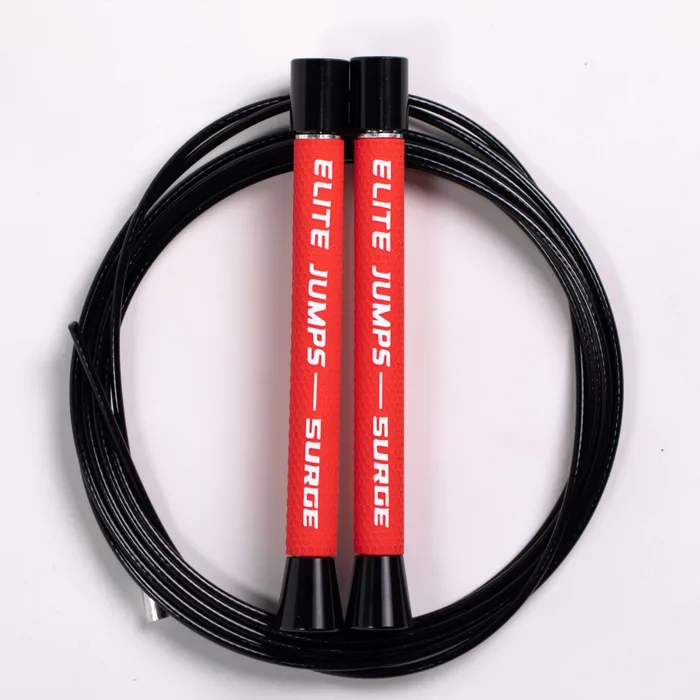
- Buy Elite Jumps Surge 4.0 Speed Rope A light dual-bearing aluminum speed rope built for double-unders, with a stated 1-year warranty. Amazon
- Buy Crossrope Get Strong Set A clip-in weighted-rope system that turns skipping into genuine conditioning and upper-body work. Amazon
- It depends WOD Nation Weighted Jump Rope A do-a-bit-of-everything rope with removable handle weights and two cables for the price of a single premium one. Amazon
- Skip Benvo Weighted Ropeless (Cordless) Jump Rope A cordless novelty that is genuinely useful for a narrow purpose but a poor everyday rope. Amazon
What actually matters
- Rope type / family - the single biggest decision; a speed rope and a weighted rope are as different as a road bike and a mountain bike, so match it to your goal before anything else.
- Turnover speed - how fast and smoothly the cable spins per rotation; this is what makes stringing together double-unders possible, and it's driven mostly by the bearings and cable weight.
- Cable type and coating - thin coated steel cables are fast and whippy; thicker or weighted cables spin slower but add training load and are more forgiving to learn on.
- Adjustability and how it holds - you'll set the length to your height, so it matters whether that length stays put (self-locking, clip-in) or slowly slips (basic screw-down).
- Handle feel and length - grip comfort over long sets matters more than it sounds; longer handles suit power and weighted work, shorter handles suit speed.
- Build and durability - coated cables fray on rough surfaces, and swappable parts can loosen, so honest durability depends as much on how you use it as on price.
- Form feedback - a rope with a little cable weight lets you feel where it is in its arc, which helps beginners time jumps; feather-light speed ropes give less of this cue.
The specs, in plain English
Green flags vs red flags
Green flags
- The rope clearly states its family (speed, weighted, convertible) and the intended use matches your goal
- Genuine ball bearings in the handles if you want fast turnover, described as smooth or free-spinning by owners
- A self-locking or clip-in adjustment that owners say holds its length rather than slipping
- A convertible set that ships with both a thin speed cable and a thicker weighted cable if you're undecided
- Owner reports praising build quality and, for weighted ropes, real shoulder and forearm fatigue
Red flags
- A 'do-everything' rope marketed as best-in-class for speed AND conditioning; those goals pull in opposite directions
- Vague adjustment described as easy but with owners reporting it loosens or creeps loose mid-set
- A cordless rope sold as a full replacement for a real rope rather than a niche stand-in
- Premium pricing on a plain single cable with no bearings, interchangeable weights, or other feature justifying the cost
- Very thin coated cables paired with claims of concrete durability; those cables fray on rough surfaces
Who's who: the brands
- Elite Jumps - Skipping-focused brand, sold at elitesrs.com, making bearing speed ropes such as the Surge for double-unders, plus cables and parts.
- Crossrope - Makers of clip-in weighted-rope systems aimed at strength and conditioning, with interchangeable heavier cables you scale over time.
- WOD Nation - Value-oriented CrossFit-adjacent brand offering convertible ropes with both speed and weighted cables plus removable handle weights.
- Benvo - Budget brand associated with cordless, weighted-ball ropes marketed for low-ceiling and travel use.
How to read a listing without getting fooled
Start by finding the rope's family in the listing, because a spec sheet full of impressive words means nothing if it's the wrong type for your goal. If a listing brags about being the best rope for both blistering double-unders and heavy conditioning, be skeptical: those are opposing jobs, and a jack-of-all-trades will trail a specialist at each. Look for concrete mechanisms over adjectives, real ball bearings rather than just the word 'fast', a named self-locking or clip-in adjustment rather than 'easy to adjust', and cable details rather than 'premium.' Cross-check the marketing against aggregated owner reports for the two failure points listings never mention: adjustment that slips and cables that fray on the wrong surface. And treat cordless ropes for what they are, a narrow stand-in, no matter how the copy frames them.
How much should you spend?
The good news is that a genuinely excellent speed rope costs about what a takeaway meal does, so for most buyers chasing double-unders or general cardio there's no reason to spend up; the value sweet spot is a well-reviewed bearing speed rope with an adjustment that holds. Spending more is only worth it for a true weighted system, where the money buys interchangeable heavier cables, sturdier handles, and clip-in hardware that survives the extra load, features a single thin cable can't fake. If you're undecided between speed and strength, a convertible rope with two cables is a sensible middle spend that flexes across goals, though it won't match a specialist at either. What you should not do is pay premium prices for a plain rope with no bearings, no weight system, and no locking adjustment, because there you're paying for branding, not performance.
Questions, answered
Should a beginner start with a speed rope or a weighted rope?
A lightly weighted or convertible rope is usually easier to learn on, because the extra cable weight lets you feel where the rope is in its arc and time your jumps. Once your rhythm is reliable, a fast bearing speed rope becomes the better tool for building double-unders. Save a very heavy conditioning rope until your basic timing is solid.
What length jump rope should I get?
A common starting point is to stand on the middle of the cable and check that the handles reach roughly to your armpits or lower chest; taller jumpers need longer cables. Most quality ropes are adjustable, but the method differs, some self-lock, some are cut to length, some clip in. Set or trim conservatively, because you can always shorten a cable but you can't add it back.
Do cordless jump ropes actually work?
They give a cardio stimulus and are handy where you truly can't swing a real rope, but independent testing and owner reports widely agree they feel toy-like and never build the timing a cable passing under your feet forces you to develop. Treat a cordless rope as a niche stand-in for low-ceiling rooms or travel, not as your primary rope.
Why do weighted ropes cost so much more?
Premium weighted systems charge for interchangeable heavier cables, sturdier handles, and clip-in hardware that survives the extra load, rather than a single thin cable. The upside is a training range a light rope can't match; the downside is that the weight makes fast double-unders harder, so you're paying for conditioning capability, not speed.
How do I keep a jump rope cable from breaking?
Jump on a smooth surface such as a mat, wood, or rubber gym flooring rather than rough concrete, which is the fastest way to fray a coated steel cable. Store it coiled loosely rather than kinked, wipe off sweat and grit, and periodically re-check any screw-down or clip fittings so nothing works itself loose mid-set.
Or jump to the head-to-head: Elite Jumps Surge 4.0 Speed Rope vs Crossrope Get Strong Set.