Explained
Adjustable Kettlebells, Explained
After reading, you will understand how adjustable kettlebells change weight, which specs decide whether one feels like a real bell, and how to match a model to the way you train.
In this guide
An adjustable kettlebell packs a whole rack of fixed bells into a single unit that changes weight with a dial, a pin, or loadable plates. The appeal is obvious for a home gym, but the mechanism and the shape of the loaded bell decide whether it feels like a true kettlebell or an awkward compromise. Most first-time buyers fixate on the headline weight range and overlook the things that matter more day to day: handle feel, increment spacing, and how the bell behaves during swings and cleans.
The 30-second version
- The mechanism defines the experience. Dial and magnetic-pin systems change weight in seconds and hold firm, while plate-loaded posts are slow and sit off-balance.
- Shape and handle matter more than the number. A rounded, cast-iron or steel body with a 33 to 35 mm handle swings and racks far more naturally than a plastic shell or a square profile.
- Check the increments, not just the range. A bell that spans a wide range in only four or five big jumps can leave you stuck between a weight that is too easy and one that is too hard.
- Match the ceiling to your strength. A 40-pound top end suits many beginners, but stronger lifters should look at heavier models or plan to buy a second unit.
- Build quality is a durability bet. Metal bodies generally hold up to years of swinging better than plastic components, though even some metal bells are not rated for dropping.
The products this guide is about
Our verdict on each, with the full reasoning on the companion review.
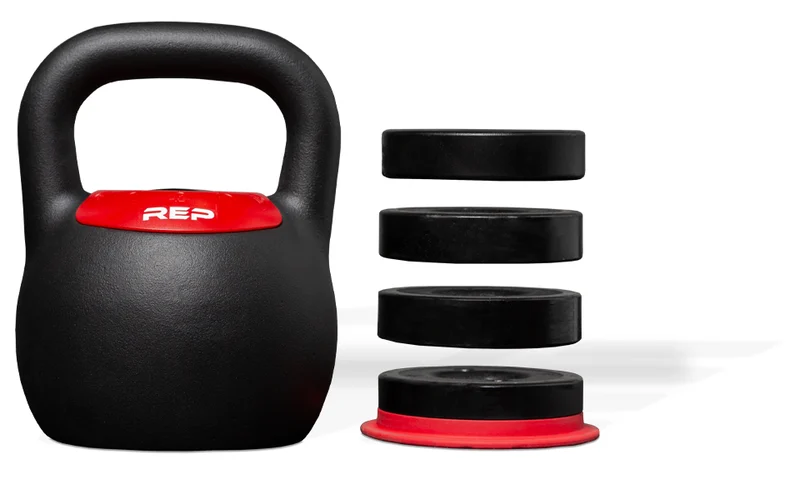
- Buy REP Fitness Adjustable Kettlebell The closest an adjustable bell gets to a real cast-iron kettlebell, with a quick push-and-twist dial. Amazon
- Buy PowerBlock Adjustable Kettlebell The most rugged, compact option, with a pin selector that changes weight in seconds. Amazon
- It depends Bowflex SelectTech 840 The fastest, most affordable dial bell, if you can live with a 40 lb ceiling and uneven steps. Amazon
- Skip Titan Fitness Titan Plate-Loadable Kettlebell Swing A cheap plate-loaded post that swings like a lopsided club, not a kettlebell. Amazon
What actually matters
- Adjustment mechanism - how you change weight (dial, magnetic pin, or loadable plates) determines both speed mid-workout and long-term reliability.
- Shape and feel of the loaded bell - a rounded body tracks smoothly through swings, cleans, and get-ups, while square or off-center designs feel awkward on anything but basic movements.
- Handle geometry - the diameter and the depth of the window where your hand sits affect grip security and whether your wrist catches the mechanism during cleans.
- Increment spacing - small steps between weights let you progress gradually; large jumps can stall you.
- Weight range and ceiling - the span from lightest to heaviest setting, and whether the top end is enough for your strongest lifts.
- Shell material and build - cast iron and steel resist damage and rattle less under load than plastic.
- Warranty - a long or lifetime warranty signals the maker's confidence in the mechanism, the part most likely to wear.
The specs, in plain English
Green flags vs red flags
Green flags
- A rounded, cast-iron or steel body that mimics a traditional competition kettlebell
- A powder-coated handle in the 33 to 35 mm range with a deep enough window to clear your wrist
- A dial or magnetic-pin mechanism that locks firmly with little rattle under load
- Reasonably small increments so you are not forced into big jumps
- A long or lifetime warranty covering the adjustment mechanism
Red flags
- A plastic outer shell that feels less rugged than metal rivals
- A square or cowbell-like profile that feels awkward for halos and get-ups
- A plate-loaded post where the weight sits off-center and low
- Only three or four increments spread across a wide range, leaving large gaps
- A shallow handle window or a bar so thin or thick that grip suffers when loaded
Who's who: the brands
- REP Fitness - Home-gym maker known for a competition-shaped adjustable bell with a matte powder-coated handle and a lifetime kettlebell warranty.
- PowerBlock - Long-running adjustable-equipment brand whose compact, square-bodied kettlebell uses a pin selector and prizes durability.
- Bowflex - Consumer fitness brand whose SelectTech 840 dial bell is fast and affordable, covering 8 to 40 lb in six uneven steps.
- Titan Fitness - Budget strength-equipment seller offering a plate-loadable swing bell with a 33 mm handle that leans on Olympic plates you supply.
How to read a listing without getting fooled
Read a listing from the mechanism outward. First find out how it changes weight: a dial or magnetic pin is quick and firm, while a plate-loaded post is slow and off-balance no matter how high its capacity sounds. Then look past the headline range to the increment list, because a bell that advertises a wide span in only four steps hides big jumps between weights. Check the shell material (cast iron or steel over plastic) and the handle spec, especially the diameter and whether the description mentions a shallow window, which owners complain about once the bell is loaded. Treat a huge capacity number on a plate-loaded post with suspicion; it usually means plates are not included and the loaded bell will handle like a lopsided club. Finally, weigh the warranty as a signal of how much the maker trusts the mechanism over years of dropping and swinging.
How much should you spend?
Spend based on how you train rather than on the biggest weight range. The best value sits with a metal-bodied dial or pin bell that feels like a real kettlebell and holds up for years; paying more here buys durability and an authentic shape, not just extra settings. Budget plastic-shelled dial bells are reasonable if fast changes and low cost matter more to you than a metal build, and they suit beginners and circuit work. The cheapest option, a plate-loadable post, looks like a bargain but usually excludes the plates and compromises the feel of every movement beyond a two-handed swing, so the apparent saving rarely pays off. Spending more is worth it when you do technical, ballistic work and want a bell that lasts; it is not worth it if you only ever perform basic two-handed swings and already own plates.
Questions, answered
Do adjustable kettlebells feel like real kettlebells?
The better ones come close. A cast-iron or steel bell with a rounded, traditional body and a 33 to 35 mm handle swings and racks much like a fixed bell. Plastic-shelled and plate-loaded designs feel bulkier or off-balance, especially on cleans and get-ups.
Which adjustment mechanism is most reliable?
Metal dial and magnetic-pin systems tend to last longest. They change weight in seconds and hold firm under load. Plate-loaded posts are the slowest to change, and plastic-shelled dials are quick but feel less rugged over years of dropping.
What weight range should a beginner choose?
Many beginners are well served by a bell topping out near 35 to 40 pounds. Just as important, check the increments: smaller steps let you progress gradually, while large jumps can leave you stuck between a weight that is too easy and one that is too hard.
Are plate-loadable kettlebells worth it?
Rarely, for most people. They are cheap and have a high nominal ceiling, but the plates sit off-center and low, so the bell handles like a lopsided club on anything beyond two-handed swings. For cleans, presses, and get-ups, a dial or pin bell is the better buy.
Can one adjustable bell replace a whole set?
Largely, yes, which is the main appeal for a home gym. One unit can stand in for many fixed bells and saves floor space. The catch is that a single unit spans a limited range, so very light and very heavy lifters occasionally need a second unit to cover both ends.
Or jump to the head-to-head: REP Fitness Adjustable Kettlebell vs PowerBlock Adjustable Kettlebell.