Explained
Ab Rollers, Explained
After reading this you'll know exactly which ab-roller features earn your money and which ones quietly ruin the exercise.
In this guide
An ab roller looks like the simplest piece of fitness gear there is: a wheel with two handles. But the market is now split between honest steel-and-rubber wheels and gadget-loaded 'smart' rollers with springs, timers and phone holders. The thing that trips buyers up is assuming more features means a better workout, when the opposite is usually true.
The 30-second version
- The difficulty is the point. an ab wheel works because it forces your core to resist your spine folding under load, so features that make the movement easier are quietly removing the benefit.
- Wheel width beats everything. a wide, grippy wheel tracks straight and stays stable, while a narrow one wanders and feels sketchy the moment you extend.
- Spring assist comes in two very different flavors. a small assist out of the bottom keeps the return controlled, but a full rebound spring that pops you back up strips out the training effect.
- Extras rarely justify the price. a knee pad in the box is genuinely useful; rep timers and phone holders are markup, not muscle.
- Buy for room to progress. the best wheel lets you go from kneeling partials to standing full rollouts over years, not one you outgrow in weeks.
The products this guide is about
Our verdict on each, with the full reasoning on the companion review.
- Buy Perfect Fitness Ab Carver Pro The premium wheel that makes a punishing exercise feel controlled instead of chaotic. Amazon
- Buy Vinsguir Ab Roller Wheel A no-nonsense wheel that covers the core movement premium rollers do for a fraction of the price. Amazon
- It depends Lifeline Power Wheel A wheel with foot stirrups as well as hand grips, which turns it into a full-body tool - if you want variety more than a classic rollout. Amazon
- Skip FEIERDUN Automatic Rebound Ab Roller A spring-loaded gadget that does so much of the work for you that your core barely has to.
What actually matters
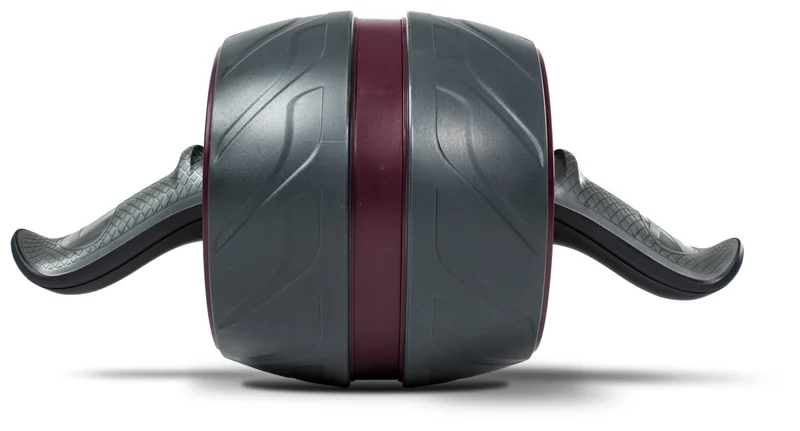
- Wheel width and grip - a wide, rubberized wheel is the single biggest driver of stability and how straight the roller tracks; it is what separates a controlled rollout from a wobbly, intimidating one.
- Honest resistance - a good roller makes your core do the work through the fullest range you can control; be wary of any mechanism designed to make reps feel easy.
- Axle and build quality - this is a high-load exercise, so a solid steel axle and a wheel that doesn't rattle or flex are early indicators of whether the tool will last.
- Handle ergonomics - comfortable, grippy handles (angled on premium wheels, foam on budget ones) matter because sweaty hands slipping mid-rollout is both frustrating and unsafe.
- Range of motion - a real wheel lets you extend fully; short fixed tracks and forearm-plank frames cap how far you can go and cap your results with them.
- Room to progress - look for a design that scales from partial kneeling reps to harder variations, so you don't have to rebuy as you get stronger.
- Assist type (if any) - distinguish a gentle assist out of full extension from a full rebound spring; only the former is worth having.
The specs, in plain English
Green flags vs red flags
Green flags
- A wide, clearly rubberized wheel that owners describe as stable and grippy on hard floors
- A solid steel axle and a wheel that stays quiet and rattle-free under repeated heavy use
- Comfortable, grippy handles that reviewers single out for staying put when hands sweat
- A knee pad included in the box, so you can start training without buying anything else
- A design that scales from kneeling partials up to standing full rollouts over time
Red flags
- A strong rebound spring that pushes you back up and makes the movement feel easy
- A short fixed track or forearm-plank frame that caps your range of motion
- Gimmick features like a rep timer or phone holder padding out the price
- A narrow wheel or two loose wheels that wander and feel unstable as you extend
- Owner reports of wobble, or hinge and spring failures over time
Who's who: the brands
- Perfect Fitness - Makes the Ab Carver Pro, the go-to premium wheel known for a wide carving tread, a gentle spring assist and comfortable angled handles.
- Vinsguir - A value-focused brand whose no-frills wheel nails the fundamentals with non-slip foam handles and an included knee pad.
- Lifeline - A home-fitness brand whose Power Wheel adds adjustable foot stirrups to the usual hand grips, so the wheel covers pikes, tucks and crawls as well as rollouts.
- FEIERDUN - Sells spring-loaded 'automatic rebound' rollers bundled with extras like timers and phone holders; representative of the gadget category to approach with caution.
How to read a listing without getting fooled
When you read an ab-roller listing, translate the marketing back into what it does to the exercise. 'Automatic rebound' and 'effortless' are warnings, not selling points, because an ab wheel is supposed to be hard. Look first for wheel width and material (wide and rubberized is what you want), then for a steel axle and a full range of motion. If a spring is mentioned, figure out whether it's a gentle assist out of the bottom of the rollout or a full rebound that returns you to the top; only the former helps. Treat bundled timers, phone holders and app connectivity as cost you're paying for gadgetry rather than a better core workout, and weigh photos and owner comments about stability and long-term durability more heavily than the feature bullet list.
How much should you spend?
You do not need to spend much to get a genuinely effective ab roller, which is unusual in fitness gear. A simple wide wheel with a steel axle and a knee pad already does the core job about as well as anything, so the budget tier is a legitimate long-term buy rather than a compromise. Paying up for a premium wheel buys real comfort and capability, mainly a carving tread for oblique work, a gentle spring assist and noticeably better handles, and it's worth it if you'll actually use those features for years. Where spending more backfires is the mid-priced 'smart' rebound category, where the extra money goes toward springs and gadgets that make the exercise easier and less durable. In short, spend at the low end for a rock-solid basic wheel, spend at the high end only for features you'll use, and be most skeptical of the middle when the price is justified by gimmicks.
Questions, answered
Are ab rollers actually effective, or just hype?
The rollout is one of the most demanding core exercises there is, because it trains your abs to resist your spine over-extending under load, which is exactly what they're built to do. Independent testing and coaches consistently rate a plain wheel among the most effective at-home core tools. The catch is that the effectiveness comes from the difficulty, which is why you should distrust any wheel engineered to make the movement easy.
What's the difference between a spring-assisted wheel and a rebound roller?
They sound similar but do opposite things. A small assist, like the one on a premium carving wheel, gives a gentle push only out of the fully extended position to keep the return controlled while you still do the vast majority of the work. A full rebound roller adds a strong spring that pops you back to the top, usually with elbow pads and a short track, and that removes most of the training stimulus so it stops challenging you within weeks.
Should a complete beginner start with an ab roller?
Yes, but start from your knees with a partial range and only roll out as far as you can control without your hips sagging. If you can't manage a single kneeling rollout yet, build up with planks and similar core work first rather than buying a rebound gadget as a shortcut. You'll progress faster and won't waste money on a tool you outgrow almost immediately.
Is a twin-wheel roller better than a single wide wheel?
Only for specific goals. Two independent wheels let you train each side on its own and add rotation, and they pack small for travel. But two loose wheels are much less stable and harder to keep aligned than one wide wheel, and they're not the right tool for a clean straight-ahead rollout. For most people, and especially beginners, a single wide wheel is the more stable and more forgiving choice.
What should I look for so I don't waste money?
Prioritize a wide, grippy wheel for stability, a solid steel axle, comfortable handles and a design that lets the movement get harder as you improve. Be skeptical of built-in timers, phone holders and rebound springs, since they raise the price and, in the case of the spring, actively reduce the training effect. An included knee pad is a genuinely useful extra.
Is the ab roller safe for my lower back?
Used with control it's a well-regarded core tool, but the rollout does load the spine, so keep your core braced, avoid letting your hips sag, and stop short of any range you can't control. This is general information, not medical advice; if you have a history of back problems or pain, check with a doctor or physical therapist before starting.
Or jump to the head-to-head: Perfect Fitness Ab Carver Pro vs Vinsguir Ab Roller Wheel.