Explained
Wrist Rests, Explained
After reading, you'll understand which numbers on a wrist rest listing matter, how to measure your own keyboard against them, and what the ergonomics guidance actually says about using one.
In this guide
First-time buyers almost always shop by feel: they look for the plushest pad in a nice colour and assume softer means healthier. The listings encourage it, because plenty of makers publish width and depth and quietly leave out thickness. The result is a rest that sits higher or lower than the keyboard it is supposed to sit next to, which bends the wrist in exactly the direction you were trying to avoid. The fix is boring and effective: one ruler, one number, and a short list of specs to read.
The 30-second version
- Height is the whole decision, because the top of the rest needs to line up with the front edge of your keyboard.
- Rest between typing, not during, since OSHA says hands should move freely and stay elevated above the pad while you type.
- The pad meets your palm, not your wrist, which is why depth of at least 1.5 in (3.8 cm) is part of the official guidance.
- Soft fills hide their height, because foam, gel and neoprene compress under your hands and keep compressing as they age.
- Cleanability is not a luxury, as a sewn fabric top with no removable cover collects years of hand oil and sweat.
The products this guide is about
Our verdict on each, with the full reasoning on the companion review.
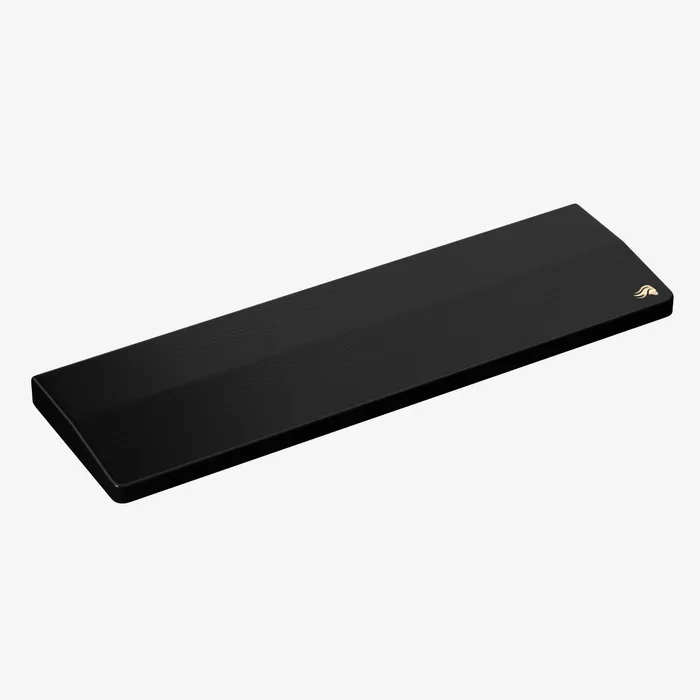
- Buy Glorious Wood Ergonomic Wrist Rest A solid hardwood bar with a published 20 mm thickness and three lengths, which makes height matching a decision instead of a guess. Amazon
- Buy Keychron Silicone Palm Rest An 18 mm silicone bar sold in more than a dozen exact lengths, which is the cheapest way to get a proper height and length match. Amazon
- It depends Grifiti Fat Wrist Pad 17 A squishy neoprene pad with a washable nylon surface, right for a tall mechanical keyboard and wrong for a slim one unless you buy the thinner version. Amazon
- Skip HyperX Wrist Rest (Keyboard) Gel-infused memory foam under a sewn fabric top, sold without a published height, which is the one specification this category runs on. Amazon
What actually matters
- Front edge height - This is the height of your keyboard where your palms would land, and the number every rest should be compared against. A rest taller than that edge tips your hands downward into the keys, and a shorter one lets them sag, and both bend the wrist.
- Depth - The front-to-back measurement of the rest. OSHA suggests at least 1.5 in (3.8 cm) so the support meets the heel or palm of the hand rather than pressing into a narrow strip of wrist, and more depth gives you room to shift.
- Length - The rest should run the width of the part of the keyboard you type on. Too short and your outer hands are unsupported, too long and it steals the desk space your mouse needs.
- Fill material - Foam, gel and neoprene compress, so their working height is lower than their listed height. Silicone, wood and resin hold their dimensions, which makes the published number trustworthy.
- Surface and cleanability - Fabric tops absorb sweat and hand oils and mostly cannot be removed or washed. Silicone, wood, resin and washable nylon can be cleaned, which matters over the several years these things last.
- Non-slip base - Rubber feet or a textured underside keep the rest lined up with the keyboard. A pad that slides forward under your palms breaks the height match you shopped for.
- Firmness - OSHA suggests supports that are fairly soft and rounded to minimise pressure on the wrist, but a very soft rest also encourages resting while typing. Somewhere in the middle, used as a resting place between bouts, is the sensible target.
The specs, in plain English
Green flags vs red flags
Green flags
- The maker publishes a height or thickness in millimetres, not just width and depth.
- There is a full size table mapping rest lengths to keyboard layouts or lengths.
- The surface is silicone, wood, resin or a washable fabric that the maker says can be cleaned.
- The listing names a real non-slip base, such as rubber feet or a textured rubber underside.
- Depth is at least 1.5 in (3.8 cm), so the rest meets the heel of your palm rather than your wrist.
Red flags
- No height or thickness anywhere in the specifications.
- Claims that the product prevents, treats or relieves carpal tunnel syndrome or any other diagnosed condition.
- A sewn fabric cover with no mention of removing or washing it.
- Only one length offered for every keyboard size.
- Marketing that shows wrists pressed into the pad while the model is mid-keystroke.
Who's who: the brands
- Glorious - Keyboard brand whose wrist rests come in hardwood and padded cloth; the hardwood version publishes a 20 mm thickness and three matched lengths.
- Keychron - Publishes the most detailed size tables in the category, with silicone, wooden and resin palm rests mapped to specific keyboard layouts.
- Grifiti - Small specialist making neoprene wrist pads in a wide range of lengths and in both fat and slim thicknesses, with washable surface options.
- HyperX - Gaming peripheral brand whose gel-infused memory foam rests are widely sold but ship without a published height.
- Kensington and 3M - Long-running office ergonomics lines built around gel and memory foam rests; check their own sites for current models, as several listings are marked discontinued.
How to read a listing without getting fooled
Start at the specifications table and look for three numbers: length, depth and height. Length tells you whether it matches your keyboard, depth tells you whether it will meet your palm, and height tells you whether it will sit level with the front edge of your board. If the height is missing, that is the answer, and you can move on. When a maker lists sizes by layout class rather than millimetres, check whether it also gives the actual dimensions for each class, because a tenkeyless keyboard from one brand can be 20 mm wider than another. Read the material line separately from the marketing copy: cooling gel, breathable and plush describe how something feels, not how it measures. Finally, look for the words that describe the base and the surface, because non-slip and washable are the two features that decide whether the rest still works properly in two years.
How much should you spend?
This is an inexpensive category, and spending more mostly buys material rather than better ergonomics. At the budget tier you get silicone bars and neoprene pads, and this is where the best value sits, because several of the budget options publish full dimension tables and can be wiped clean. The mid-range tier is mostly padded fabric over foam or gel from peripheral brands, where you are paying for branding and stitching rather than for information, and it is the tier most likely to omit a height. The premium tier is solid hardwood or resin, which buys permanence, a surface that does not compress and one that wipes clean easily, and it is worth it only if you have measured your keyboard and know the fixed height is right for you. Nothing at any tier justifies a health claim, so treat price as a proxy for material and finish, not for benefit.
Questions, answered
What is the difference between a wrist rest and a palm rest?
Physically, usually nothing: the same product is sold under both names. The difference is in how you are meant to use it, and the palm rest name is the more accurate one. OSHA's guidance is that when resting, the pad should contact the heel or palm of your hand rather than your wrist. If you find yourself pressing the underside of your wrist into it, you are using it the way the older name suggests and the newer name warns against.
How do I measure my keyboard for a wrist rest?
Stand a ruler upright against the front edge of the keyboard, the edge nearest you, and read the height at the top of the case. Then measure the keyboard's width across the case, not just the keys. Those two numbers, height and width, are what you compare against a rest's listed thickness and length. If you use the keyboard's rear legs or a stand, measure in the position you actually type in, because tilting the board changes the front edge height.
How do I keep a wrist rest clean?
It depends entirely on what the top is made of. Silicone, wood and resin wipe down with a damp cloth and mild cleaner, which is the main practical argument for those materials. Neoprene pads with a nylon surface are often washable, and Grifiti sells its Fat Wrist Pads with exactly that option. Sewn fabric over foam or gel is the hard case, because the cover generally does not come off and soaking the foam is a bad idea, so all you can really do is spot clean and replace it when it gets bad.
Do wrist rests make sense with a laptop or a low-profile keyboard?
They can, but the height has to come right down. A laptop's front edge is only a few millimetres tall, so a rest built for a tall mechanical keyboard will tilt your hands the wrong way. Look for thin pads sold specifically for slim boards, such as quarter-inch neoprene versions, rather than buying the standard thickness and hoping. With a laptop, raising the screen and using a separate keyboard usually does more for your posture than any pad.
Or jump to the head-to-head: Glorious Wood Ergonomic Wrist Rest vs Keychron Silicone Palm Rest.