Explained
Anti-Fatigue Mats, Explained
After reading this, you'll know why the softest mat is the wrong buy, and exactly which specs separate a mat that cuts fatigue from one that goes flat in months.
In this guide
Anti-fatigue mats are sold on a promise of plush, cloud-like softness, and that promise is exactly what trips people up. The mats that genuinely reduce fatigue are firm-but-cushioned, not squishy, and the cheap thick-foam ones that feel best in the first minute are usually the ones that fail you by hour three and pack down into a dead flat spot within months. This guide walks you through what actually matters so you buy once and stand comfortably.
The 30-second version
- Firmness beats softness. The Goldilocks point is firm-but-cushioned; a mat you sink into makes your legs work harder to stay balanced, so you tire faster, not slower.
- Material decides lifespan. Dense polyurethane or gel-core mats hold their shape for years, while cheap foam takes a permanent compression set and stops cushioning where you stand most.
- Flat vs contoured is a taste split. Terrain mats with mounds and ramps prompt the micro-movement that fights fatigue, but some people find the bumps distracting, so pick based on how you like to stand.
- The boring details do the work. Beveled low-profile edges, a non-slip backing, and a wipe-clean top are what keep a mat from tripping you, sliding, or getting gross.
- A mat is a complement, not a cure. No mat makes standing all day healthy; the real win is alternating sit and stand and shifting your weight, with the mat taking the edge off.
The products this guide is about
Our verdict on each, with the full reasoning on the companion review.
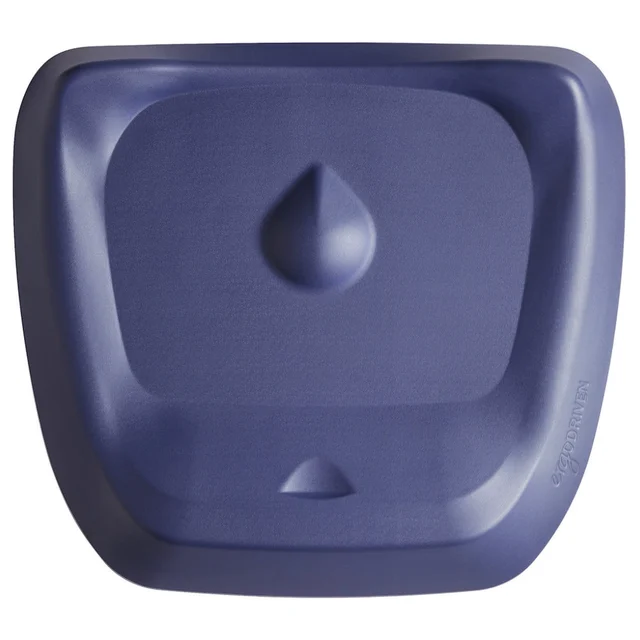
- Buy Ergodriven Topo A firm terrain mat whose bumps and ramps nudge you to keep shifting — the closest thing to a standing-desk cheat code.
- Buy Imprint CumulusPRO Commercial The firm-but-cushioned flat mat that hits the Goldilocks point and refuses to pack down.
- It depends WellnessMats Original A buy-it-for-life flat polyurethane mat that's superb — if you're willing to pay flagship money for a plain rectangle.
- Skip Gorilla Grip Anti-Fatigue Mat Comfy for the first five minutes, then it's a soft foam cushion that packs down and slides — not a real anti-fatigue mat.
What actually matters
- Firmness (the Goldilocks point) — This is the single criterion that separates a useful mat from a useless one. Too soft and your foot sinks and rolls, so your legs quietly burn energy staying balanced all day; firm-but-cushioned feels stable while still relieving a hard floor.
- Material and durability — A dense polyurethane (PU) or gel-foam core resists compression and keeps its support for years. Cheap open-cell foam feels great at first, then takes a permanent set — a dead flat spot — right where you stand most.
- Flat vs contoured surface — A flat cushioned mat is simple, stable, and versatile. A contoured or terrain mat adds mounds, ramps, and pockets that nudge you to keep moving your feet; that movement helps many people but annoys others, so it's a genuine preference.
- Edges — Beveled, low-profile edges lie flat so you won't trip on the lip or catch a chair caster, and they resist curling upward over time. Cheap mats often have edges that lift after a few months.
- Non-slip backing — On hard floors (wood, tile, laminate) a grippy underside keeps the mat planted so it doesn't slide out from under you. This matters far more on hard floors than on carpet.
- Sizing to your stance and desk — The mat needs to cover the zone where your feet actually roam, plus room to shift your weight and step slightly. Measure your standing area and your desk footprint before choosing a size.
- Easy-clean surface — A smooth, wipe-clean top matters most in a kitchen near spills, but it's a nice-to-have anywhere. Textured foam that traps crumbs and grime is harder to keep presentable.
The specs, in plain English
Green flags vs red flags
Green flags
- Described as firm, supportive, or buoyant — not just soft, plush, or cloud-like
- Made of dense polyurethane or a quality gel core rather than generic foam
- Beveled, low-profile edges that lie flat and are described as no-trip or no-curl
- A non-slip backing specifically for hard floors
- A long or lifetime-class warranty, which signals the maker expects it not to pack down
- A wipe-clean surface and a size that fits your actual standing zone and desk
Red flags
- Marketing that leans entirely on softness, plushness, or memory-foam comfort
- Very thick but very squishy — a combination that usually compresses into a flat spot fast
- Owner reports of a permanent dent, dead spot, or the mat 'going flat' within months
- Edges that reportedly curl, peel, or lift after a short time
- No non-slip backing, or reports of the mat sliding on hard floors
- A short or vague warranty on a foam mat sold as an all-day standing solution
Who's who: the brands
- Ergodriven - Makes the Topo, the best-known contoured terrain mat — firm sculpted shapes designed to keep standing-desk users subtly moving.
- Imprint - Known for firm one-piece polyurethane flat mats (the CumulusPRO line) that hit the firm-but-cushioned sweet spot and resist packing down.
- WellnessMats - Premium seamless polyurethane mats with a buy-it-for-life reputation; owners routinely report years of use without a flat spot.
- Gorilla Grip - Popular budget foam mats sold in many colors and sizes; comfy at first but soft foam that tends to compress — the cautionary category, not a standing-desk pick.
- Sky Solutions / Kangaroo - Common value-oriented foam and gel mats widely sold online; quality varies, so read for firmness and durability rather than assuming plush equals good.
How to read a listing without getting fooled
Start by ignoring the softness superlatives — 'cloud,' 'plush,' 'memory foam' are selling you the wrong thing. Look instead for the words firm, supportive, high-density, and polyurethane or gel core, which point to a mat that stays buoyant instead of bottoming out. Check the edge description: beveled and no-curl is what you want, and be wary of listings that don't mention edges at all. Confirm there's a non-slip backing if you're on hard floors. Treat the warranty as a confidence meter — a maker offering long or lifetime coverage is betting the mat won't pack down, while a short warranty on a cheap foam mat quietly tells you the opposite. Finally, sanity-check the size against your standing zone, and when a listing is thick but obviously soft, read that as a compression set waiting to happen rather than a bonus.
How much should you spend?
Anti-fatigue mats span a wide range, and price mostly tracks the material: cheap ones are generic foam, the durable ones are dense polyurethane or gel, and the flagship ones are seamless single-piece PU built to outlast a decade. The value sweet spot sits with a firm mid-range polyurethane flat mat or a well-made terrain mat — enough to get real firmness and a non-slip, no-curl build without paying flagship money. Spending more is genuinely worth it when you stand for hours daily and want a mat you'll never think about again, since the premium buys longevity, not just comfort. Spending more is not worth it if you only stand at a kitchen sink for a few minutes at a time — but even then, the trap is going too cheap on soft foam that packs flat, because replacing it twice costs more than one firm mat. The false economy to avoid is a thick, plush, inexpensive mat sold as an all-day solution; it's the option most likely to need replacing within a year.
Questions, answered
Aren't softer, thicker mats more comfortable and therefore better?
Only for the first few minutes. A mat you sink deeply into forces your feet and legs to keep micro-correcting for balance, which tires you out faster over a long standing session. The mats that actually reduce fatigue are firm-but-cushioned — supportive enough to feel stable, with just enough give to take the edge off a hard floor. Softness feels great in the store and works against you at hour three.
Do anti-fatigue mats really wear out or go flat?
Cheap foam mats commonly do. Owners frequently report budget foam packing down into a permanent depression — a dead flat spot right where they stand — within months of heavy use, at which point it stops cushioning. Dense polyurethane and gel-core mats resist this and keep their support for years, which is why the durable ones tend to carry long or lifetime-class warranties. If a mat is inexpensive, thick, and very soft, treat quick compression as the likely outcome.
Contoured (terrain) mat or flat mat — which should I get?
It's a real preference split. Contoured mats add mounds and ramps that prompt you to keep shifting your stance, and many people find that constant small movement is what keeps them comfortable at a standing desk. Others find the terrain distracting, awkward in socks, or annoying when they just want to plant both feet and focus. If you like to fidget and move, go contoured; if you want a stable, predictable surface, a firm flat mat is the safer bet — and it's also the more versatile choice for a kitchen.
What thickness and features should I look for?
Roughly three-quarters of an inch of firm cushioning is a common sweet spot for standing work, but don't chase thickness for its own sake — a thick-but-soft mat is worse than a thinner firm one. Beyond that, prioritize a dense polyurethane or gel core over plain foam, beveled low-profile edges that lie flat so you won't trip, a non-slip backing for hard floors, and a wipe-clean top. A meaningful warranty is a useful proxy for how confident the maker is that the mat won't pack down.
Will a mat fix the aches from standing all day?
Not on its own. A good mat takes the harshness out of a hard floor and encourages small movements, but no mat makes standing motionless for eight hours healthy. The bigger win is alternating between sitting and standing, shifting your weight often, and taking short walks — the mat is a complement to moving, not a cure for standing still. Think of it as one part of an ergonomic setup, not a magic pad.
Can one mat work for both a standing desk and the kitchen?
Yes — a firm flat polyurethane mat works well in either spot, since both reward you for standing without sinking. The main differences are size and mess: kitchens benefit from an easy-to-wipe surface near spills, while a desk may want a footprint sized to your standing zone and clear of your chair. If you specifically want the movement cues for long focused desk sessions, that's where a contoured mat has an edge; for a do-everything single mat, a firm flat one is the practical pick.
Or jump to the head-to-head: Ergodriven Topo vs Imprint CumulusPRO Commercial.