Explained
Whiteboards, Explained
You will be able to look at any whiteboard listing and know what the writing surface is made of, how long it will stay clean, and whether magnets will actually stick to it.
In this guide
A whiteboard looks like a commodity: a white rectangle in a frame, sold by size and price. It is not. The only thing that determines whether a board still looks good in five years is what the writing surface is made of, and that is the one spec most listings work hard to avoid printing. Everything else you see in the photos, the frame finish, the marker tray, the bundled pens, is decoration.
The 30-second version
- The surface material is the whole product. Porcelain enamel on steel stays like new for many years, lacquered steel is fine for a few years of light use, and melamine starts shadowing your handwriting within months.
- If a listing will not name the surface, it is the cheap one. A manufacturer that paid for porcelain almost always says porcelain, because it is the expensive part. Vague phrases like premium coated surface mean painted steel or worse.
- Magnetism comes from the substrate, not the coating. A board holds magnets only if there is a steel sheet under the writing surface, which is why a genuinely magnetic board is usually better built even if you never use a magnet.
- The warranty tells you what the maker believes. Porcelain boards often carry a lifetime warranty, and painted or melamine boards carry none worth reading. That silence is a specification.
- Glass solves ghosting and creates two new problems. Tempered glass is non absorbent, but the steel backer sits behind a thick pane, so ordinary magnets hold poorly, and the gloss reflects windows and video call lights.
The products this guide is about
Our verdict on each, with the full reasoning on the companion review.
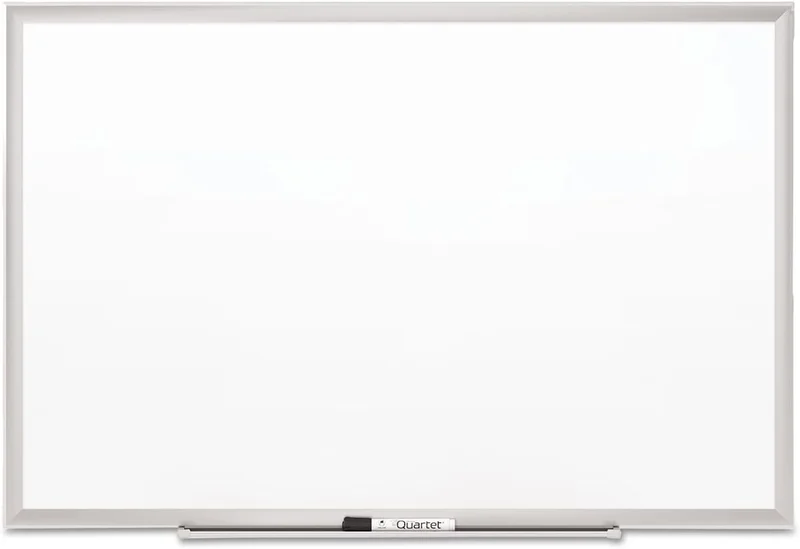
- Buy Quartet DuraMax Porcelain Magnetic Whiteboard Porcelain enamel fused to steel, with a lifetime warranty that painted boards rarely offer. Amazon
- Buy VIZ-PRO Magnetic Dry Erase Board Lacquered steel done properly, which is the right amount of board for a few uses a week. Amazon
- It depends Quartet Infinity Magnetic Glass Dry Erase Board Glass resists ghosting and scratches, but it barely holds a magnet and it throws glare. Amazon
- Skip U Brands Melamine Non-Magnetic Dry Erase Board The cheapest surface in the category, and it starts shadowing your handwriting within months. Amazon
What actually matters
- Surface material, stated in plain words. Porcelain enamel (also sold as ceramic on steel) is glass fused to steel at high heat and is non porous, so ink lifts off completely and keeps doing so for many years. Lacquered or painted steel is a sprayed coating that wears microscopically until ink starts soaking in. Melamine is resin coated paper over fiberboard, the cheapest surface made, and it degrades fastest.
- Whether there is steel in the board at all. Magnetic means a steel substrate. Melamine and hardboard boards cannot be magnetic no matter how the listing is worded, and phrases like magnet friendly are not a claim of magnetism.
- Surface warranty versus frame warranty. Many boards advertise a warranty that only covers the aluminum frame and hardware. What you want covered is the writing surface, because the surface is what fails.
- Duty cycle, meaning how hard you will actually use it. A board that gets a to do list wiped the same day survives on a lacquered surface for years. A board you plan against daily and leave content on for weeks needs porcelain or glass.
- Glare and sightlines. Glossy surfaces bounce windows, ceiling lights and video call lighting straight back at you and into your camera. Check where your light sources sit before choosing a high gloss board or glass.
- Weight and wall type. Porcelain and glass panels are heavy enough to need studs or anchors rated well above the board weight. A light melamine or thin steel board hangs on ordinary drywall anchors.
- Size sanity. A board too small to hold one complete thought stops getting used. Buying too small is the more common regret, and a smaller board with a better surface beats a larger one with a worse surface.
The specs, in plain English
Green flags vs red flags
Green flags
- The listing uses the words porcelain, porcelain enamel or ceramic on steel somewhere in the specifications, not just in the marketing headline.
- A stated warranty on the writing surface, such as lifetime coverage on porcelain or a long limited warranty on glass, rather than a warranty on the frame only.
- An explicit claim of a steel substrate, which tells you ordinary magnets will hold and the board is not fiberboard underneath.
- Mounting hardware for both portrait and landscape, plus a marker tray, which signals a maker thinking about installation rather than shipping cost.
- Plain language about what the board is not, for example a listing that plainly states melamine and non magnetic instead of implying otherwise.
Red flags
- The surface is described only as premium coated, magnetic dry erase surface or high quality writing surface. If the material is not named, assume the cheaper one.
- Magnet friendly, magnet ready or similar phrasing without the word steel. That is language written to imply magnetism without claiming it.
- A bundle of markers, erasers and magnets doing the heavy lifting in the photos while the surface line stays blank.
- Care instructions that quietly describe a fragile surface, such as erase immediately, clean regularly and use only fresh markers. That is a maker warning you about melamine.
- A warranty that covers frame and hardware with no mention of the writing surface at all.
- A very large board at a very low price. Size is cheap to add on melamine and expensive to add on porcelain, so an unusually big cheap board is telling you which one it is.
Who's who: the brands
- Quartet - The mainstream office brand with the widest ladder, from painted steel up to porcelain enamel boards with lifetime warranties and frameless glass panels.
- Ghent - Commercial and education focused maker known for porcelain enamel steel boards built for institutional duty cycles and long surface warranties.
- VIZ-PRO - Value oriented brand selling genuine lacquered steel boards in aluminum frames, the sensible middle of the market for a home office scratchpad.
- U Brands - Consumer and craft oriented boards, mostly melamine and decorative frames. Unusually clear about labeling boards non magnetic, which is more than most budget sellers manage.
- Audio-Visual Direct - Specialist in tempered glass dry erase boards in a wide range of colors and sizes, for buyers who care about appearance and want a surface that resists ghosting.
- Luxor - Known for mobile and reversible easel style boards on casters, useful when the board needs to move between rooms rather than live on one wall.
How to read a listing without getting fooled
Ignore the headline and the photos and go straight to the specifications block, hunting for one word: the surface material. Porcelain, porcelain enamel or ceramic on steel is the top tier. Lacquered, coated, painted or a bare mention of a magnetic dry erase surface is painted steel. Melamine, or a listing that names no material at all while being the cheapest option on the page, is melamine. Next, check whether the word steel appears anywhere describing what is under the surface, because that is the only thing that makes a board magnetic, and note that a bundled pack of magnets in the box is not evidence the board holds them. Then find the warranty and read what it actually covers: a lifetime frame warranty on a board with an uncovered surface is a distraction. Finally, sanity check weight against your wall. A board that weighs a lot is usually a good sign about the surface and a warning about the installation, and a board that weighs almost nothing at a large size is fiberboard.
How much should you spend?
Whiteboard pricing tracks the surface almost perfectly, and there are three plateaus. The bottom plateau is melamine, and it is a false economy: the gap between it and a real lacquered steel board of the same size is small, while the difference in how long the board stays usable is measured in years. Skip it unless the board is genuinely decorative. The middle plateau, lacquered steel in an aluminum frame, is where most home offices should land. It holds ordinary magnets, writes and erases cleanly, and at a few uses a week it will outlast your interest in the board. The top plateau, porcelain enamel or tempered glass, costs several times the middle one, and it is worth it in exactly two situations: you write on the board most days and want it to look new for many years, or the board lives in a room where appearance matters as much as function. Spending more inside a tier buys frame finish and bundled accessories, which is the least useful money in this category. If your budget is fixed and tight, buy a smaller board with a better surface rather than a bigger board with a worse one, and put a few of the savings into low odor dry erase markers and a dedicated board cleaner, which extend any surface and are the cheapest upgrade here.
Questions, answered
How do I tell whether a board is porcelain or just painted steel?
Read the surface line rather than the headline. Porcelain boards say porcelain, porcelain enamel or ceramic on steel, and they often carry a lifetime warranty. Painted boards use vaguer wording such as coated, lacquered, or simply magnetic dry erase surface, with no surface warranty. If the listing refuses to name the material, assume the cheaper one, because a manufacturer that paid for porcelain will usually tell you.
Do I actually need a magnetic whiteboard?
Only if you plan to hang paper on it, but the answer matters more than it sounds. Magnetism comes from a steel sheet under the writing surface, and steel is also what porcelain and lacquer get applied to. So a magnetic board is usually a sign of better construction, while a non magnetic board is usually melamine over fiberboard. Even if you never touch a magnet, choosing a steel board tends to get you a better writing surface.
Why does my whiteboard ghost, and can I fix it?
Ghosting is dry erase pigment that has worked into pores or micro scratches in the coating, so wiping removes the top layer and leaves a stain behind. On melamine it starts early and is essentially permanent. On lacquered steel it comes on slowly and a dedicated whiteboard cleaner or isopropyl alcohol usually recovers most of it. On porcelain and glass it should not happen at all. Prevention beats any cleaner: erase within a day or two, avoid permanent markers, and never use abrasive pads.
Is a glass whiteboard worth it for a home office?
It depends what the room is for. Glass resists ghosting and scratches, and reads as furniture rather than office equipment, which matters in a bedroom or living room. In exchange you get weak magnet hold that requires rare earth magnets, noticeable glare from windows and video call lighting, and a heavy pane to mount. If the board sits behind a closed door and gets used hard, a porcelain board does the same job better for less.
What size should I buy for a home office?
Something in the two feet by three feet range suits most desks. It is big enough to hold a full plan or diagram without cramping your handwriting, and small enough to hang above a desk without taking over the wall. Buying too small is the more common mistake, because a board that cannot hold a complete thought stops getting used. If wall space is tight, favor a smaller board with a better surface over a larger melamine one.
How do I keep any whiteboard in good shape?
Erase within a day or two rather than leaving content up for weeks, since time is what lets pigment settle into the surface. Use low odor dry erase markers and replace them when they start writing faintly, because a dying marker deposits more pigment for less line. Wipe with a dry microfiber cloth for daily use and a dedicated board cleaner occasionally, and never use abrasive pads or household scouring products, which scratch coatings and create the pores that cause ghosting in the first place.
Or jump to the head-to-head: Quartet DuraMax Porcelain Magnetic Whiteboard vs VIZ-PRO Magnetic Dry Erase Board.