Explained
Wet/Dry Shop Vacuums, Explained
After reading, you'll know which shop vac numbers to trust, which to ignore, and how to match a wet/dry vac to the mess you actually make.
In this guide
A wet/dry (shop) vacuum has to swallow sawdust, drywall grit, stray bolts and the occasional flooded floor without clogging or dying. The trouble is that the two biggest numbers on the box, 'peak horsepower' and total gallons, are close to meaningless, while the specs that actually decide whether you're happy a year in barely get mentioned. This guide translates the jargon so you can shop on what matters instead of what's printed loudest.
The 30-second version
- Ignore 'peak HP.' it's a lab-condition maximum figure that doesn't predict real cleaning power; airflow and sealed suction tell you far more.
- Usable capacity is less than the label. you leave room for airflow and the filter, so a 16-gallon drum never holds 16 gallons of debris in practice.
- Filtration is where cheap vacs fail. basic foam-and-cartridge filters clog and blow fine sanding or drywall dust right back into the room.
- Hose diameter decides what clogs. a wide 2-1/2 in. hose swallows bolts and offcuts that jam a narrow 1-1/4 in. one.
- Match size to the job. 12 to 16 gallons suits most garages; tiny cordless units are portable second vacs, not primary cleaners.
The products this guide is about
Our verdict on each, with the full reasoning on the companion review.
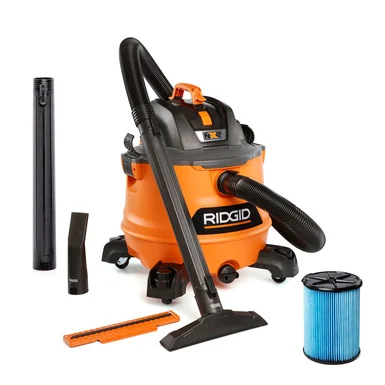
- Buy RIDGID 14 Gallon 6.0 Peak HP NXT Wet/Dry Vac The all-rounder that gets suction, filtration, durability and warranty right without overcharging. Amazon
- Buy CRAFTSMAN 16 Gallon 6.5 Peak HP Corded Wet/Dry Shop Vac A big, widely available tank that undercuts the top pick on capacity and price. Amazon
- It depends DEWALT 2 Gallon 20V MAX Cordless Wet-Dry Vacuum (DCV580H) A grab-and-go 2-gallon that shines only if you already live in the 20V MAX battery world.
- Skip Shop-Vac 16 Gallon 6.5 Peak HP SVX2 Wet/Dry Vac A famous name coasting on nostalgia while newer rivals out-clean it for similar money. Amazon
What actually matters
- Airflow (CFM) and sealed suction (water lift) - airflow moves debris through the hose; sealed suction is how hard the vac pulls against resistance like a packed filter or a full drum. Together they predict real cleaning power far better than horsepower.
- Filtration quality - the difference between a vac that captures fine dust and one that recirculates it. Matters most if you sand, cut drywall, or care about the air you breathe.
- Hose and inlet diameter - a wider 2-1/2 in. hose passes wood scraps, nuts and bolts without jamming; a narrow hose clogs on the same debris.
- Usable tank capacity - bigger drums mean fewer trips to empty on wet jobs, but also more weight and bulk. Right-size to how often you do big cleanups.
- Build and stability - drum thickness, caster quality and how tip-prone the unit is when you drag the hose across the floor.
- Power source - corded gives unlimited runtime and stronger, steadier suction; cordless or hybrid units trade power for grab-and-go portability.
- Noise - shop vacs are loud, and cheaper ones are louder; worth weighing if you run it often or in a shared space.
The specs, in plain English
Green flags vs red flags
Green flags
- A wide 2-1/2 in. hose and generous accessory kit included in the box
- A clear fine-dust or HEPA-grade filter upgrade path for sanding and drywall work
- Owner reports describing suction that holds up as the drum fills, not just when empty
- A sturdy drum, solid casters and a manufacturer warranty that outlasts rivals
- Filters and parts that are easy to find and replace years down the line
Red flags
- Marketing that leans hard on 'peak HP' and giant gallon numbers with no airflow or suction spec
- Only a basic foam-and-cartridge filter with no finer option for fine dust
- A narrow 1-1/4 in. hose on a vac you plan to use for workshop debris
- A tiny tank being sold as an all-purpose primary garage vac
- Light, flexy-feeling build and reports of tipping when you pull the hose
- Uncertain long-term parts or support, such as filters that are hard to find for the model
Who's who: the brands
- RIDGID - Corded shop vacs known for strong filtration, rugged drums and a lifetime service agreement with registration.
- CRAFTSMAN - Widely stocked corded tanks that lean on capacity, value and easy-to-find filters and parts.
- DEWALT - Compact 20V MAX wet/dry vacs aimed at jobsite portability for owners already in the 20V MAX battery world; the DCV580H is battery only.
- Shop-Vac - The name that became the category; check current owner reports for suction and filtration before buying.
How to read a listing without getting fooled
Start by skipping the two loudest numbers. 'Peak HP' is a lab-condition maximum figure and total gallons is the drum's volume, not what you'll actually collect, so neither predicts how the vac cleans. Instead look for airflow (CFM) and sealed suction or water lift; if a listing hides both and shouts horsepower, that's a tell. Check the hose diameter (2-1/2 in. clears bulky debris, 1-1/4 in. clogs on it) and whether a full accessory kit is really included or sold separately. Read the filtration line carefully: 'washable filter' is fine for general dust but you want a named fine-dust or HEPA-grade option if you sand or cut drywall. Finally, scan owner reports for how the vac behaves as the drum fills and how the build holds up, because that's where spec sheets go quiet and real ownership begins.
How much should you spend?
You don't need to spend the most to get a genuinely good shop vac, but the very cheapest tanks are usually a false economy: they clean worse than the box claims, clog on fine dust, and feel flimsy. The value sweet spot sits in the mid-range, where you get real airflow, a proper filtration path, a wide hose and a build that survives years of abuse, often backed by a strong warranty. Spending more is worth it when durability, quieter operation and better fine-dust control matter to you, or when a long warranty offsets the premium. Spending more is not worth it for a small portable unit unless you already own the matching batteries, in which case the convenience can justify the outlay. Above all, budget a little for the right filter and a few collection bags; getting filtration matched to your kind of dust does more for real performance than chasing a higher horsepower number.
Questions, answered
What size shop vac do I need for a garage?
For most garages and home workshops, a 12-to-16-gallon corded vac is the sweet spot: big enough to clean the whole floor or a flooded spill without emptying constantly, but still easy to roll and store. Smaller 2-to-6-gallon units make better portable second vacs than primary cleaners.
Are the 'peak HP' and gallon numbers reliable?
Not really. Peak horsepower is a lab-condition maximum figure, and usable gallon capacity is always less than the drum's total volume because you leave room for airflow and the filter. Independent testing and owner reports consistently show these headline numbers don't predict real cleaning power; airflow (CFM) and sealed suction tell you far more.
Can I vacuum water and fine sawdust with the same shop vac?
Yes, that's what a wet/dry vac is for, but you swap setups. Use a cartridge or fine-dust filter for dry debris and remove it or switch to a foam sleeve for wet pickup. For fine sanding or drywall dust, add a fine-dust or HEPA-grade filter and ideally a collection bag, or the dust blows straight back into the room. Always empty and dry the drum before switching.
Corded or cordless for a garage shop vac?
Corded is the right call for a primary garage vac: unlimited runtime and stronger, steadier suction for big jobs. Cordless or battery/corded hybrids are great as a portable second vac for cars, quick spills and cleaning up after one tool, especially if you already own the matching batteries, but their small tanks and limited runtime make them a poor only-vac.
How do I keep suction strong over time?
Clean or tap out the filter regularly, replace it when it stays gray after cleaning, and don't overfill the drum. Check the hose and inlet for clogs from wood scraps or shavings, and use a collection bag for fine dust so the filter lasts longer. A dedicated fine-dust or HEPA filter keeps airflow up during heavy sanding.
Or jump to the head-to-head: RIDGID 14 Gallon 6.0 Peak HP NXT Wet/Dry Vac vs CRAFTSMAN 16 Gallon 6.5 Peak HP Corded Wet/Dry Shop Vac.