Explained
Vacuum Storage Bags, Explained
Choose a compression method you can repeat wherever you pack.
In this guide
The important distinction is how the air leaves the bag. Some sacks roll down by hand; others need a pump or vacuum hose. Start with that routine before comparing pack counts or space-saving headlines.
The 30-second version
- Repacking comes first. Choose equipment you will have at the destination.
- Size names are insufficient. Match the dimensions and packed shape to the storage space.
- Volume and weight differ. Compression does not make the contents lighter.
- Pack count is a selection problem. Count the useful sizes, not every bag in the bundle.
- A seal needs an acceptance check. Test the load before depending on it for travel.
The products this guide is about
Our verdict on each, with the full reasoning on the companion review.
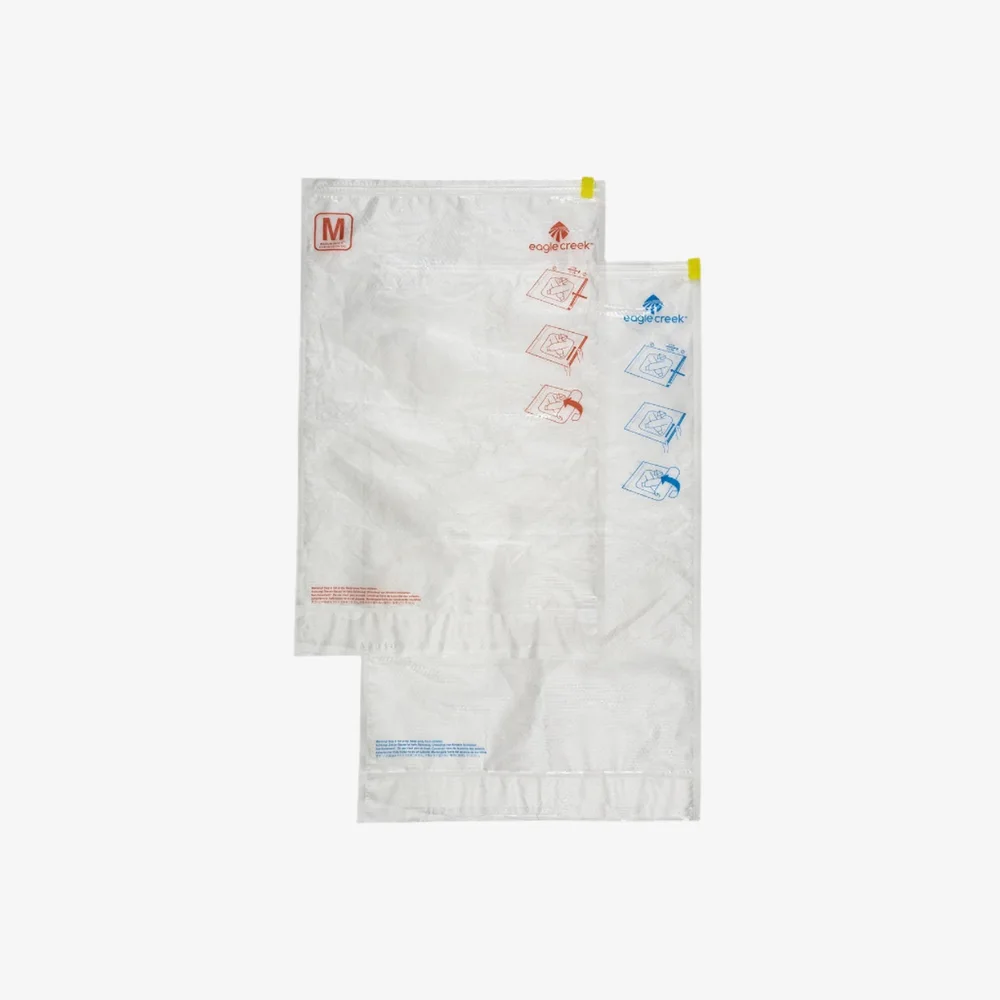
- Buy Eagle Creek Pack-It Compression Sack Set M/L The travel pick when repacking without a pump matters more than buying a large multipack. Amazon
- Buy Compactor M-L-XXL Set of 3 Vacuum Storage Bags A household bedding system with three defined sizes and vacuum-hose compression.
- It depends TAILI Cream Flat Vacuum Storage Bags, 8 pack A flat-bag multipack worth considering after confirming the exact size and contents. Amazon
What actually matters
- Compression method: roll-up sacks and pumped bags involve different routines. Practise the method before travel.
- Footprint: an empty bag can be wider than the place it is meant to fit. Measure the available space and check its packed shape.
- Closure access: the opening has to be reachable for loading and for inspection. A crowded packing arrangement can make a simple routine awkward.
- Textile care: use the clothing or bedding maker's storage instructions. A space-saving claim does not establish suitability for every fabric.
- Pack composition: distinguish a mixed-size set from a pack of identical bags. A nominally larger count can supply fewer sizes you can use.
- Repair and replacement: a misplaced closure slider or damaged valve can interrupt repacking. Check what the maker offers for that exact model.
The specs, in plain English
Green flags vs red flags
Green flags
- A clear repacking demonstration.
- Dimensions tied to the selected variant.
- Exact bag counts and sizes.
- Accessible product instructions.
- A clear replacement or return process.
Red flags
- Contradictory size fields.
- A package photo that differs from the selected variant.
- A percentage claim without a useful load description.
- A kit that depends on equipment you will not carry.
- Assuming a clothing bag is certified protection for valuables.
Who's who: the brands
- Eagle Creek - Offers roll-up travel sacks alongside packing cubes.
- Compactor - Offers household vacuum-storage formats, including structured sets.
- TAILI - Offers several flat and cube variants; match the selected pack carefully.
How to read a listing without getting fooled
Read the selected variant name, its individual bag dimensions, its count and its compression instructions together. If one field contradicts another, ask for clarification before choosing the listing. Compare the resulting routine with what you can do at home and while traveling.
How much should you spend?
A budget multipack can work when every included bag is useful. Mid-range travel sacks can justify their place by keeping repacking simple. A premium structured system makes sense when it fits a specific household storage routine. Judge the useful configuration before the advertised saving.
Questions, answered
Are packing cubes and vacuum bags interchangeable?
Packing cubes mainly divide and organize a load. Compression designs add a way to reduce occupied space. A bag can be effective at one job without being the right answer to the other.
Should I keep a bag compressed for months?
Follow the textile maker's care instructions and the bag maker's storage guidance. Check the contents and seal periodically. Do not assume one storage routine suits every garment or filling.
What if the bag expands again?
Check the closure, valve and bag for a missed seal or damage. Repack according to the instructions. If the problem persists, use the maker's replacement or return process instead of depending on the bag for travel.
Can I pack more because the case looks emptier?
The remaining volume can conceal an already heavy load. Weigh the complete case and compare it with your booking's allowance. Leave some space for the return journey.
Or jump to the head-to-head: Eagle Creek Pack-It Compression Sack Set M/L vs Compactor M-L-XXL Set of 3 Vacuum Storage Bags.