Explained
Packing Cubes, Explained
After reading, you'll know whether you need compression, what sizes to buy, and which specifications a good product page should give.
In this guide
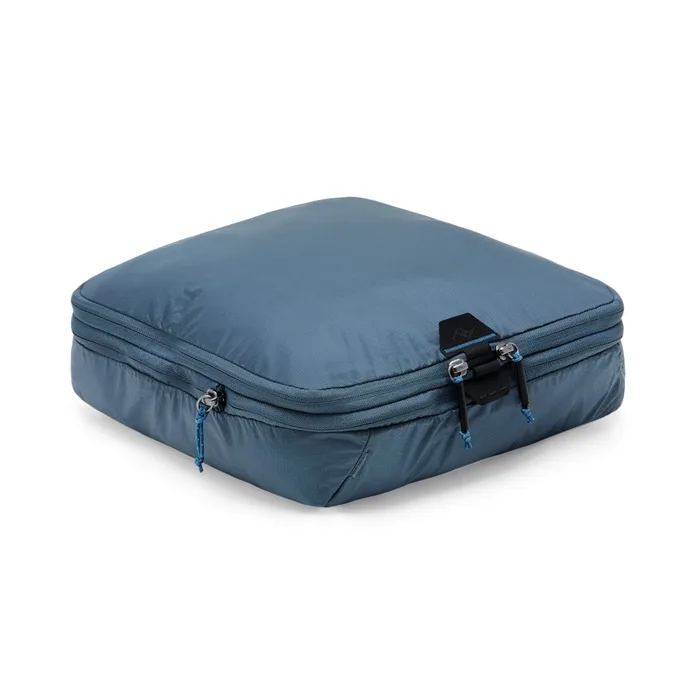
A packing cube is a zipped fabric box. Some of them have a second zip that pulls the walls inward and forces air out, and those are a different product with a different purpose. Knowing which one you are looking at, and what volume it holds in each state, is most of what there is to learn here.
The 30-second version
- Only compression cubes create space, and plain cubes simply organise what you already had.
- Dimensions matter more than volume, because a cube has to fit your case.
- Mesh finds things fast, and is the part most likely to tear.
- Weight adds up on a carry-on, with good cubes running 45 to 110 grams each.
- A clean and dirty divider solves the mid-trip problem, that no amount of compression addresses.
The products this guide is about
Our verdict on each, with the full reasoning on the companion review.
- Buy Peak Design Packing Cube, Medium Volume published twice, an internal clean and dirty divider, and a lifetime warranty.
- Buy Matador Packing Cube Set 3-Pack Three sizes with a volume, a weight and a dimension published for each.
- It depends Eagle Creek Pack-It Reveal Compression Cube Set Real compression and the best warranty here, with no dimensions to plan around.
- Skip Cotopaxi Cubo 6L Expandable Packing Cube Six litres, expandable, lifetime warranty, and that is the whole page.
What actually matters
- Volume - in litres, and on a compression cube it should be given both full and compressed. The difference is what you actually gain.
- Dimensions - in centimetres, because the constraint is the internal size of your suitcase rather than the volume of your clothes.
- Compression - a second zip that draws the sides in and expels air. Without it, a cube is an organiser.
- Weight - per cube. A full set of light cubes is under 200 grams; heavier structured sets can be several times that.
- Fabric - denier and finish, such as 70D ripstop, and whether it is water-resistant or recycled.
- Zips - brand, size and thread. Zips are the component that fails on a cube packed to bursting.
- Visibility and separation - mesh panels or windows to see contents, and any internal divider for clean and worn clothing.
The specs, in plain English
Green flags vs red flags
Green flags
- Volume given both compressed and expanded.
- Dimensions in centimetres for every size in the set.
- A weight published per cube.
- Fabric named with a denier, and the zip brand stated.
- A clear statement of whether it compresses or only organises.
Red flags
- Compression implied but no compressed volume given.
- No dimensions anywhere on the page.
- No weight, on a product sold for travel.
- Fabric described only as durable.
- A one-sentence description on a mid-priced item.
Who's who: the brands
- Peak Design - Publishes compressed and expanded volumes and dimensions, self-healing recycled ripstop and a clean-dirty divider, all under a lifetime warranty.
- Matador - Ultralight travel brand publishing volume, weight and dimensions for every cube in a set, with mesh windows and YKK zips.
- Eagle Creek - Effectively created the packing cube category, with the Pack-It range built around compression zippers and the No Matter What warranty.
- Cotopaxi - Colourful outdoor brand offering expandable Cubo cubes in two sizes under a lifetime warranty, with minimal published specification.
- Osprey - Pack maker whose packing cubes and sacks are sized to match its own luggage, widely used by long-term travellers.
How to read a listing without getting fooled
Work out first whether the cube compresses, because that determines whether it saves space or only sorts it. If a maker claims compression, look for two volumes; a single figure on a compression product tells you nothing about how much you gain. Then find the dimensions and hold them against the internal measurements of your case, since fit is the real constraint. Check for a weight per cube if you travel carry-on. Read the fabric description for a denier and a finish, and note whether the zip brand is named, because the zip is what fails when a cube is overstuffed. Look for mesh, which is the fastest way to find a shirt and also the first thing to tear. And if the trip is longer than a few days, look specifically for an internal divider, which is the only feature here designed for the state your bag is in halfway through a holiday.
How much should you spend?
Packing cubes are inexpensive relative to the luggage they go inside, and the spread here is mostly about documentation and features rather than basic function. The mid-range buys a complete set of three well-specified, very light cubes with mesh windows and named zips, which is the sensible purchase for most travellers and will organise a whole bag in one go. Also at mid-range money sit compression sets from established luggage brands, which genuinely reduce packed volume and come with excellent warranties, and which are worth choosing if you habitually travel with a bag that is too full. The premium tier buys individually sold cubes with published specifications for every state, self-healing fabric, an internal clean-dirty divider and a lifetime warranty, which is defensible for someone travelling constantly and expensive for someone packing twice a year.
Questions, answered
Should I roll or fold inside a cube?
Rolling generally fits more into a fixed volume and creases differently rather than less, while folding stacks flatter and suits shirts you want to keep sharp. In a compression cube the distinction matters less, because the second zip squeezes air out either way. The more useful habit is packing by category rather than by outfit, so one cube holds shirts and another holds underwear, which is what makes the mesh windows on cubes like Matador's genuinely useful.
Will compression cubes wrinkle my clothes?
Compression itself creases less than you would expect, because what it removes is mostly air. What creases clothes is packing them loosely so they shift, or squashing them into irregular shapes around hard objects. If wrinkles matter, fold flat, fill the cube evenly so there are no voids, and unpack promptly on arrival. For anything genuinely delicate, a plain organiser cube or a garment folder is a better choice than a compression cube.
How many cubes do I need?
Three is the usual answer and it is the set size most makers ship. A large cube for bulky items, a medium for shirts and trousers, and a small for underwear and socks covers a week for one person, which is exactly the 7.5, 5 and 2.5 litre split Matador uses. For two people sharing a case, one set each is far easier than dividing cubes by garment type, and it makes the airport security unpack considerably less painful.
Can I wash packing cubes?
Most are machine washable on a cool cycle, and the parts to be careful with are the zips and any mesh. Close all zips before washing so the sliders do not catch on mesh panels, use a laundry bag if the cube has a lot of mesh, and air dry rather than tumbling, since heat degrades coatings and the elastic in any compression panel. Check the maker's guidance, particularly on anything with a water-resistant finish, which repeated hot washing will strip.
Or jump to the head-to-head: Peak Design Packing Cube, Medium vs Matador Packing Cube Set 3-Pack.