Explained
Travel Strollers, Explained
After reading this you'll understand exactly what makes a travel stroller worth buying and how to read the spec sheet without getting fooled.
In this guide
A travel stroller is a lightweight, compact-folding stroller built to fly, stow, and carry easily while still rolling like a real stroller at your destination. What trips first-time buyers up is that 'compact' and 'cabin-approved' mean different things across brands, and the smallest fold often hides a cramped seat and a rough ride. This guide translates the specs so you can weigh packability, comfort, and longevity against each other.
The 30-second version
- Fold size isn't the whole story. the smallest-folding stroller often has the least comfortable seat and the harshest ride, so match the fold to how you'll actually use it.
- 'Cabin-approved' is never guaranteed. overhead-bin fit depends on the exact folded dimensions and your specific airline and aircraft, so always confirm the policy before you fly.
- Weight limit decides longevity. a higher toddler weight ceiling can mean a full extra year of use, which matters more than a pound of packed weight.
- Every model sold in the US must meet the same safety floor. US strollers must comply with the federal ASTM F833 standard, so the real differences are in how easy each is to use safely day to day.
The products this guide is about
Our verdict on each, with the full reasoning on the companion review.
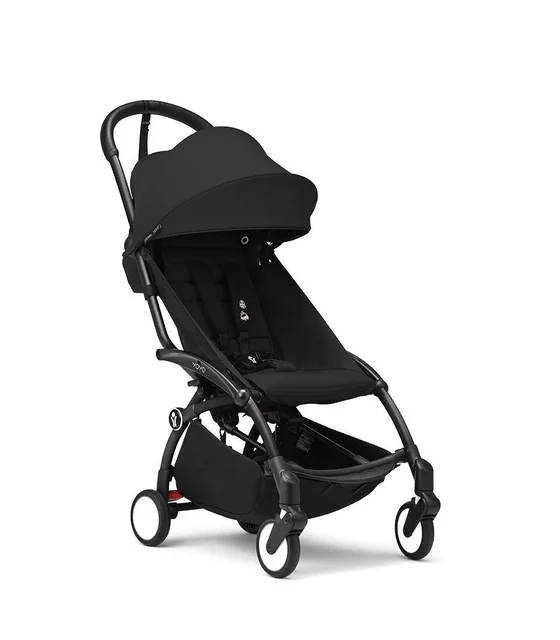
- Buy Stokke YOYO3 The benchmark cabin stroller - the old Babyzen YOYO, now under Stokke, folds compactly and owners praise the ride for its size. Amazon
- Buy Cybex Libelle The value pick: a light, compact fold for noticeably less money than the premium names. Amazon
- Buy Joolz Aer2 A from-birth cabin stroller with a one-hand, one-second fold and a 50 lb limit, the closest premium rival to the YOYO3.
- Buy Zoe The Traveler The lightest stroller here at a stated 13 lb, with a one-handed fold, at a mid-range price.
- It depends Bugaboo Butterfly 2 Plus A comfort-first compact with a one-second fold - worth it if ride quality matters more than shaving every ounce. Amazon
- It depends UPPAbaby Minu V3 A from-birth travel stroller with all-wheel suspension and a 20 lb basket, paid for in weight and fold size.
- Skip GB Pockit+ All-City It folds ultra-small - owners pack it in a backpack - but the low seat and small hard wheels make it a stroller you tolerate rather than enjoy. Amazon
What actually matters
- Packed size and cabin fit - check the actual folded measurements against your airline's carry-on limits, because a stroller that clears an overhead bin saves you gate-checking at every flight.
- Weight - you carry this through terminals, often with a child on the other arm, so every pound of the frame counts.
- Fold and unfold mechanism - a one-hand, self-standing fold is easier than a two-hand wrestle when you're holding a baby at the boarding gate.
- Ride and seat comfort - wheel size, suspension, and recline depth decide whether your child naps or melts down on the go.
- Longevity - the weight limit and whether it accepts a newborn pack or infant car seat determine how many years you'll actually use it.
- Safety and ease of safe use - a five-point harness, reliable brakes, and clear locking are the baseline; look for how simple they are to use correctly every time.
The specs, in plain English
Green flags vs red flags
Green flags
- Published folded dimensions (length x width x height), not just the word 'compact'
- A five-point harness with an easy, one-pull tightening adjustment
- A clear weight limit (Cybex lists 55 lb for the Libelle) and a clear newborn-use path if you need it
- A fold that self-stands and, ideally, works with one hand
- Current model that states it meets the ASTM F833 standard, with JPMA certification a bonus
Red flags
- Claims of 'cabin-approved' with no actual folded measurements listed
- A shallow recline or a very low, small seat that a toddler will quickly outgrow in comfort
- Tiny hard wheels with no suspension, which transmit every bump on anything but smooth floors
- A fussy multi-step fold that owners describe as having a steep learning curve
- A three-point (lap-only) harness instead of a five-point, or vague, missing safety-standard information
Who's who: the brands
- Stokke (Babyzen YOYO) - Makes the benchmark cabin stroller - the model long sold as the Babyzen YOYO, known for folding small yet riding smoothly.
- Cybex - German brand whose Libelle is the go-to value pick: very light and packable with a high weight limit for the money.
- Bugaboo - Premium Dutch maker focused on ride comfort; its Butterfly 2 Plus is a compact with a spacious seat, a fully flat recline and a one-second fold per the maker.
- GB - Known for the Pockit line, which folds very small - owners stow it in a backpack - at the cost of seat comfort and ride.
How to read a listing without getting fooled
Start with the folded dimensions, not the adjectives. 'Compact' and 'cabin-approved' are marketing words; the length-by-width-by-height numbers are what you compare against your airline's carry-on allowance. Next, separate frame weight (what you carry) from the child weight limit (how long it lasts) - listings sometimes blur the two. Check whether the fold is one-hand or two-hand and whether it self-stands, since that's the difference between smooth and stressful at a gate. Confirm the harness is five-point and the recline depth suits your child's age. Finally, if newborn use matters, read the fine print for whether a bassinet, newborn pack, or car-seat adapter is included or sold separately - it usually is separate.
How much should you spend?
Travel strollers span a wide range, and more money mostly buys a smoother ride, a cleaner fold, and a bigger accessory ecosystem rather than better safety - every current model clears the same federal standard. The value sweet spot sits in the mid-range, where you get near-flagship packability, a genuinely usable seat, and often a higher weight limit without paying for the premium name. Spending up is worth it if you fly often and want one refined stroller you'll keep and accessorize for years. Spending less is fine if you travel occasionally, but going bottom-of-the-barrel usually means a cramped seat and hard wheels you'll regret on every trip. The one place not to economize is fit for your child's age: pay for the weight limit and recline you'll actually use.
Questions, answered
Can a travel stroller really go on the plane as carry-on?
Often, but never assume. Some compact models fold small enough to fit an overhead bin or even under the seat in front of you, but airline policies differ: some let you bring a folded stroller into the cabin, while others require you to gate-check it at the jet bridge (where it's handed back as you step off). Overhead-bin fit is not guaranteed on smaller regional aircraft, so always confirm your specific airline's stroller policy before you fly.
What's the safest way to use the harness?
Use the five-point harness (two shoulder, two hip, one crotch strap) every single time, even for short trips. Tighten the straps so you can slip no more than a couple of fingers between the strap and your child's chest, set the shoulder straps at or just below shoulder height, and keep bulky coats out from under the straps. Use the crotch strap so a child can't slide down. This is general product information, not a substitute for your model's manual - always follow the manufacturer's directions for your specific stroller.
Do travel strollers meet current safety standards like ASTM and JPMA?
Any stroller legally sold in the US must comply with the federally mandated ASTM F833 stroller safety standard, which covers stability, brakes, restraint systems, and locking mechanisms. Many mainstream brands also carry JPMA certification, a voluntary third-party program that verifies compliance with that standard. If certification matters to you, look for the JPMA seal on the current listing or box, since it can vary by model and production run.
What are the weight and age limits?
As a seat stroller, most are rated from about 6 months - when a baby can sit up with support - up to a toddler weight limit that varies by model, often around 45 to 55 pounds. Many accept a separate newborn pack, bassinet, or compatible infant car seat so they can be used from birth. Always go by the weight limit printed on your specific stroller rather than age alone, since children grow at different rates.
Is the smallest-folding stroller the best choice?
Not usually. The models that fold to backpack size tend, per owner reports, to have lower, more cramped seats, shorter recline, and small hard wheels that feel every bump. If ultra-small packing is your single overriding priority they win, but for most families a slightly larger fold with a comfortable seat and better wheels is the smarter trade. Decide what you'll do more of - packing it or pushing it - and buy for that.
Or jump to the head-to-head: Stokke YOYO3 vs Cybex Libelle.