Explained
Baby Bouncers & Swings, Explained
After reading, you'll understand the difference between a bouncer and a swing, which specs actually matter, and how to choose one safely without overspending.
In this guide
Shopping for a baby seat gets confusing fast because two very different products share the shelf: bouncers, which rock from your baby's own movement, and swings, which are powered machines that do the soothing for you. First-time buyers usually trip over that distinction and end up paying flagship prices for motion their baby may not even need. This guide untangles the two, translates the spec-sheet jargon, and keeps safety front and center.
The 30-second version
- Bouncer vs. swing is the first fork: a bouncer is a light, self-powered seat, while a swing is a bigger machine with a motor that moves the baby for you.
- You may not need a motor at all: many babies settle fine with the gentle rocking a self-powered bouncer gives, which saves money, space, and things that can break.
- Footprint and power source decide daily livability: full-size swings eat floor space and need an outlet, while bouncers fold flat and go anywhere.
- Safety is non-negotiable: always use the harness, keep the seat on the floor, and never let a baby sleep in one.
- Longevity beats features: a seat that converts as your baby grows outlasts a swing they age out of in a few months.
The products this guide is about
Our verdict on each, with the full reasoning on the companion review.
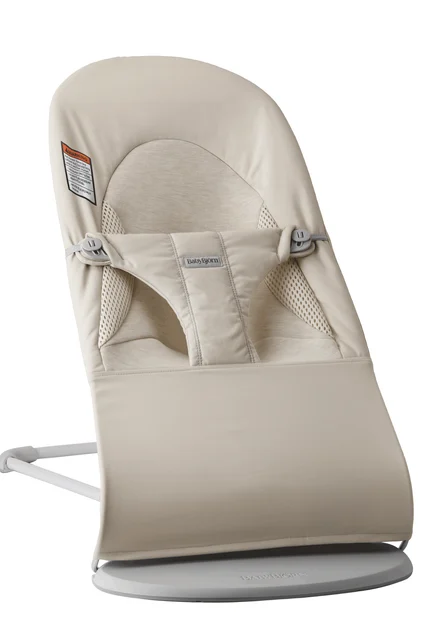
- Buy BabyBjörn Bouncer Balance Soft The no-motor bouncer that just works - light, foldable, and long popular. Amazon
- Buy 4moms mamaRoo 5 Multi-Motion Baby Swing The powered swing with a wide range of motions - worth it for babies who need to be moved.
- It depends Ingenuity InLighten Baby Swing A feature-packed full-size swing at a friendly price - if you have the floor space. Amazon
- Skip Graco DuetSoothe Swing and Rocker A capable 2-in-1 on paper, but a bulky, dated platform that newer swings have passed. Amazon
What actually matters
- Soothing type - decide whether your baby needs to be actively moved (a powered swing) or just gently held and rocked (a self-powered bouncer). This single choice drives price, size, and everything else.
- Footprint and portability - measure your space first. Full-size swings have wide, tall frames that rarely fold; bouncers are light and easy to fold for storage or travel.
- Power source - self-powered means nothing to break and no running cost. Motorized swings run on batteries (expensive over time) or a plug-in adapter (favor this), and must live near an outlet.
- Safety design - a secure five-point or three-point harness, a wide stable base, and clearly stated weight and age limits matter more than any soothing gimmick.
- Ease of cleaning - babies are messy, so a removable, machine-washable seat pad is close to essential.
- Longevity - seats that convert (a bouncer that becomes a toddler chair, for example) stretch your money far beyond swings a baby outgrows in months.
- Motion variety - if you do go powered, more distinct, realistic motions and speeds give you a better chance of finding the one that calms a fussy baby.
The specs, in plain English
Green flags vs red flags
Green flags
- A secure, easy-to-buckle harness and a wide, stable base
- A removable, machine-washable seat pad
- Clearly stated weight and age limits you can actually find
- A plug-in adapter option rather than batteries only
- Recognition for hip-healthy design from an independent authority
- A convertible design that keeps working as your baby grows
Red flags
- Marketed or shaped for infant sleep, or an inclined seat that encourages a baby to nod off
- A flimsy harness, wobbly frame, or narrow base
- A huge footprint that won't fit or fold in your space
- Battery-only power with no adapter, which gets expensive fast
- Vague or missing weight and age limits
- A dated design that owners say feels worse than newer, cheaper rivals
Who's who: the brands
- BabyBjörn - Known for simple self-powered bouncers that the International Hip Dysplasia Institute acknowledges as hip healthy, and that are easy to fold.
- 4moms - The tech-forward maker of the mamaRoo, a powered swing known for its range of motions and app control.
- Ingenuity - Value-focused full-size swings that pile on features like light-up mobiles and sounds at a friendly price.
- Graco - A long-established, widely available baby-gear brand whose swings tend to be capable but bulkier and more dated.
- Fisher-Price - A mass-market staple offering a broad range of affordable bouncers and swings across many styles.
How to read a listing without getting fooled
When you scan a product listing, start by working out which type it actually is: if it moves on its own it's a powered swing, and if it only rocks when the baby moves it's a bouncer, no matter what the marketing calls it. Then check the physical footprint and whether it folds, because 'compact' can still mean a tall frame that dominates a room. Confirm the power source (self-powered, battery, or plug-in) and the harness type, and hunt down the real weight and age limits rather than trusting a vague 'newborn to toddler' claim. Treat counts of 'motions,' 'melodies,' and 'sounds' as tie-breakers, not deciding factors, and be skeptical of any wording that hints the seat is fine for sleep, because it isn't.
How much should you spend?
How much to spend comes down to the type, not the badge. A self-powered bouncer can carry a premium price despite being mechanically simple, and for many families that simplicity, safety, and longevity are worth it. Powered swings climb higher, and the top of the range buys more motion variety and app control, which is genuinely worth it only if your baby refuses to settle without varied, active motion. In the middle sit budget full-size swings that deliver lots of soothing features for less, provided you have the floor space. Where you can go wrong is paying a mid-tier price for a bulky, dated swing that offers less than a cheaper, more modern rival, so let the type and your baby's actual needs, not the sticker, set your budget.
Questions, answered
What's the difference between a bouncer and a swing?
A bouncer is a lightweight seat that rocks from your baby's own movements (sometimes with a small vibration motor). A swing is a powered machine that moves the baby on its own through set motions and speeds. Bouncers are lighter, cheaper to run, and more portable; swings do more of the soothing work but are bigger and usually need power.
How do I use a bouncer or swing safely?
Always buckle your baby into the harness every time, even for a quick moment, and keep the seat on the floor, never on a table or counter. Follow the weight and age limits and stop using it once your baby can push up or climb out. Importantly, bouncers and swings are for supervised, awake playtime, not for sleep: if your baby dozes off, safety guidance is to move them to a firm, flat crib or bassinet on their back. This is general product-use information, not a substitute for your pediatrician's advice.
Do I really need a powered swing, or is a bouncer enough?
Many babies settle happily with the gentle rocking a self-powered bouncer provides, so a bouncer is the sensible starting point for most families. Reserve the step up to a powered swing for a fussy baby who only calms when something is actively moving them. Plenty of parents own a bouncer for everyday use and only add a swing if the bouncer isn't enough.
How long will my baby use one?
Most swings support newborns up to roughly the point they can sit up or hit the weight limit, so typically the first several months. A convertible bouncer can stretch further because some become a toddler chair; check the maker's limits for the model.
Do these need batteries or an outlet?
A self-powered bouncer needs no power at all, since it runs on your baby's movement. Powered swings either stay plugged into an outlet or run on batteries or a plug-in adapter. Choosing the adapter option saves you from constantly replacing batteries.
Which is best for a small home or for travel?
A light, foldable bouncer wins easily for small spaces and trips, since it is light and easy to fold. Powered swings, even ones with a compact base, must stay near an outlet, and full-size swings take up meaningful floor space and don't fold small.
Or jump to the head-to-head: BabyBjörn Bouncer Balance Soft vs 4moms mamaRoo 5 Multi-Motion Baby Swing.