Explained
Baby Food Storage Containers, Explained
After reading this you will know whether you need a freezer tray or individual containers, what portion size fits your baby's stage, and which spec-sheet claims actually predict whether the thing works.
In this guide
Baby food storage looks like a single purchase, but it is really two different jobs. One is production: turning a big pot of puree into portions and getting them frozen without a mess. The other is transport: moving one portion from freezer to daycare bag to spoon. Most first-time buyers pick a product for the wrong job, then discover the problem six weeks in when the freezer shelf is sticky or every meal needs an extra dish.
The 30-second version
- Trays are for production, containers are for transport. A tray freezes a big batch cheaply and densely because you pop the cubes into a bag and reload it, while individual containers skip the bagging step and travel sealed. Neither wins both jobs, and plenty of families end up with one of each.
- Rigidity is the spec nobody lists and everybody complains about. A bare silicone tray sags when full, which is how puree ends up across the freezer shelf. A steel frame in the rim or a genuinely reinforced base is worth more than any other upgrade in this category.
- The lid is the whole reason to buy a purpose-made tray. A gasketed or snug-fit cover keeps ice crystals off the surface. A loose clip-on cap that works its way off under a stacked tray leaves you with freezer burn and a puddle, which makes the tray no better than a plain ice cube tray with plastic wrap.
- Match the well size to the stage you are in, not the whole first year. Early purees want roughly one ounce, a nine or ten month old wants two to three. A tray with wells that are too big forces you to thaw more than the baby will eat, and thawed puree does not go back in the freezer.
- Gear with a second life is worth more than its sticker suggests. Most families use freezer trays for about six months of purees. A tray that is oven safe and sized for stock, pesto, or herb butter keeps earning shelf space long after the puree stage ends.
The products this guide is about
Our verdict on each, with the full reasoning on the companion review.
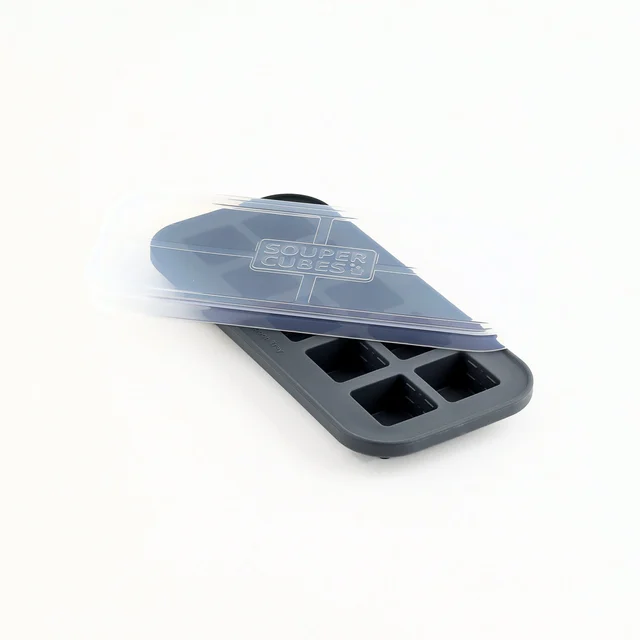
- Buy Souper Cubes 2 Tablespoon Freezer Tray A steel-framed silicone tray with a real lid that portions purees at one ounce and keeps working long after the baby food stage. Amazon
- Buy OXO Tot Baby Blocks Freezer Storage Containers Airtight single-portion containers that go freezer to fridge to microwave to spoon without ever changing vessels. Amazon
- It depends WeeSprout Silicone Baby Food Freezer Tray (1.5 oz Sections) A capable budget tray with clean cube release and molded fill lines, held back by a thinner body and a plain clip-on lid. Amazon
- Skip Mushie Baby Food Freezer Tray The prettiest tray in the aisle asks near-premium money for a budget design, and the lid is the part owners complain about. Amazon
What actually matters
- Portion size per well. Roughly one ounce suits a six month old starting solids, and two to three ounces suits a hungry ten month old. Wells that are too generous mean thawing food that gets thrown away, since thawed puree should not be refrozen. Several brands sell the same tray in two well sizes, so buy for the stage you are in rather than assuming one tray covers the year.
- Structure when full. Silicone is floppy by nature. A tray with a steel frame embedded in the rim, or a thick reinforced base, stays flat and level on the one-handed walk from counter to freezer. This is the single most common owner complaint in the category and the easiest thing to check before buying.
- Lid type and seal quality. There are three tiers. Gasketed lids that lock down airtight are the best, snug-fit covers that grip the whole rim are next, and loose clip-on plastic caps are the weakest. Freezer burn is the main reason frozen puree gets thrown out, and it is an air-contact problem.
- Release without a fight. Good silicone lets a frozen cube pop out with thumb pressure from underneath. If a tray needs twisting, flexing hard, or a run under hot water, it will crack or tear at the seams within a year and you will start avoiding it.
- Molded fill lines. Measurement markings inside each well let you portion consistently without dirtying a measuring spoon. Practical for tracking how much your baby eats, and useful later for stock and sauce portions.
- Freezer space efficiency. Ten cubes squeezed flat in a zip bag take a fraction of the space of ten containers with lids. If you batch cook large or your freezer is a drawer under the fridge, this is the constraint that decides the whole purchase.
- Cleaning and material reality. Silicone releases food cleanly and does not stain, but absorbs garlic and curry smells and wants an occasional baking soda soak. Plastic containers are light and microwave friendly but can stain from carrot and tomato. Gaskets have to come out of lids periodically or they trap water and film.
The specs, in plain English
Green flags vs red flags
Green flags
- A steel frame in the rim or an explicitly reinforced base, described in the listing rather than left to your imagination
- A lid described as sealing, gasketed, or snug fitting, with photos showing it gripping the full rim rather than clipping at the corners
- Fill lines molded into each well, ideally in more than one unit
- The same tray offered in two or more well sizes, which means the brand understands that portion needs change across the first year
- An oven-safe rating or explicit non-baby uses, which tells you the tray keeps working after purees end
- A real warranty, which is rare here and signals the maker does not expect the tray to be treated as disposable
Red flags
- Owner reports clustering on the lid not staying attached, which is the exact failure that causes freezer burn and spills
- A near-premium price on a tray whose specs match the budget tier, where you are paying for colorways rather than function
- No mention of base reinforcement or rim structure anywhere in the listing or photos
- Instructions that involve twisting the tray or running it under hot water to release cubes, which is a durability warning in disguise
- Only BPA free listed with no word on the silicone grade or the other additives
- Container sets sold on portion count without mentioning stacking or trays, since loose containers tip over and swallow freezer space fast
Who's who: the brands
- Souper Cubes - A kitchen brand rather than a baby brand, known for steel-framed silicone trays with sealing lids and generous oven ratings, which is why their smallest size doubles as a starter puree tray.
- OXO Tot - The baby line of a housewares brand with a long usability track record. Their storage sets lean on gasketed lids and snap-together trays, aimed at families whose problem is daily handoffs rather than batch volume.
- WeeSprout - A value-focused baby storage specialist. Solid fundamentals like molded markings and clean cube release, with thinner bodies and plain clip-on lids as the tradeoff for the lower price.
- Mushie - A Scandinavian-styled baby brand built on muted colorways and design appeal. Good-looking gear, but on freezer trays the specs sit in budget territory while the price does not.
- Bumkins, Nuby, and other baby-aisle brands - Widely stocked and cheap, typically bare silicone trays with basic covers. Fine as an extra tray for overflow batch cooking, weaker as your only tray if you freeze deep.
How to read a listing without getting fooled
Start by ignoring the headline count and finding the volume per well, because ten wells at one ounce and nine at 1.5 ounces are different products for different months. Next, hunt for structure: search the listing text for a steel frame, a reinforced base, or a stated silicone thickness, and if none of those appear, assume the tray flexes when full. Then look hard at the lid photos rather than the lid adjective. A cover that grips the whole rim behaves differently from one that clips at four points, and marketing calls both a lid. Check for molded fill lines inside the wells, not printed markings on the outside, since printing wears off. Read the care line for top-rack dishwasher safe as a minimum, and treat an oven-safe rating as a bonus that predicts a second life. Finally, read owner reports for one thing specifically: whether the cover stays on. Complaints in this category cluster almost entirely on lids working loose and on trays sagging in transit, and both are things a spec sheet will never tell you.
How much should you spend?
This is a low-stakes category in money terms, which is exactly why people overthink it. The real cost of a bad choice is spilled puree and freezer-burned food you spent a Sunday making, not the purchase itself. The value sweet spot for a tray sits at the point where you get structure and a sealing lid, which is a modest step up from the cheapest baby-aisle offerings and usually the last upgrade that changes the daily experience. Below that, you get functional silicone with a plain clip-on cover, and that is a fair trade if you turn portions over quickly or would rather own three cheap trays than one good one, which genuinely speeds up batch cooking. Above the sweet spot, extra money mostly buys colorways and branding, so treat a premium price on budget specs as the clearest warning in the aisle. For containers, pay for gasketed lids and stackable trays, because a set that leaks or tips is worse than no set. And weigh the second life realistically: an oven-safe tray you will actually use for stock later is cheaper per year than a baby-only tray you will donate in six months.
Questions, answered
Do I need a tray, containers, or both?
Start with the bottleneck you actually have. If you cook big batches on the weekend and have freezer room, a tray is far more efficient, since you pop cubes into a labeled bag and reload the tray immediately. If your day is full of handoffs to daycare, grandparents, or a partner, containers save a step every single time because a sealed portion goes freezer to fridge to microwave to spoon without changing dishes. Many families end up with one tray for production and a handful of containers for transport, which is a sensible outcome rather than overbuying.
How long does homemade baby food keep in the freezer?
General guidance is up to about three months for frozen purees, and one to two days in the fridge once thawed, with meat and fish at the shorter end. In practice freezer burn is the limit you hit first, which is why a sealing lid and prompt transfer into a labeled zip bag matter more than the calendar. This is general product information rather than nutrition or medical advice, so follow your pediatrician and your local food safety guidance for your situation.
Is silicone safe for freezing and reheating baby food?
Food-grade silicone is stable across a very wide temperature range and is the standard material for freezer trays. Look for products described as food grade and free of BPA, BPS, PVC, and phthalates, and prefer designs where the lid is a separate part you can inspect and clean. One practical note: reheat in a bowl or a microwave-safe container rather than in the tray unless the maker specifically rates the tray for it, and never pour boiling liquid straight into a filled tray. This is general product information, not medical advice.
Glass, plastic, or silicone: which material should I choose?
Each trades something. Silicone releases frozen portions cleanly and does not stain, but picks up odor from garlic and spices. Plastic is light, cheap, and microwave friendly, but carrot and tomato stain it permanently. Glass resists both stains and odors and reheats evenly, but it is heavy, it breaks, and freezing in glass needs headspace so expansion does not crack the jar. For freezing, silicone trays are easiest. For fridge storage and reheating, glass is excellent.
How do I stop freezer burn and stains?
Freezer burn comes from air contact, so fill wells close to the top, use the lid instead of plastic wrap, and move cubes into a squeezed-flat zip bag within a day or two rather than leaving them in the open tray for weeks. Label the bag with the food and the date. For stains, rinse plastic in cold water before anything hot touches it, since heat sets carrot and tomato pigment. For silicone odor, soak in a baking soda solution or run a hot dishwasher cycle and let the tray air out.
Do I need to buy a second tray in a bigger size later?
Often yes, and it is worth planning for. Portions roughly double or triple between starting solids and the end of the first year, so a one ounce well that was perfect at six months means thawing three cubes at ten months. Some brands sell the same tray in multiple sizes, which makes the upgrade cheap and predictable. An alternative is buying a larger well size up front and simply underfilling the wells early on, which works but wastes a little freezer space and makes portions less consistent.
Or jump to the head-to-head: Souper Cubes 2 Tablespoon Freezer Tray vs OXO Tot Baby Blocks Freezer Storage Containers.