Explained
Baby Food Makers, Explained
After reading this, you'll know exactly what a baby food maker does, which specs matter for the short puree window, and how to spot a machine that will last.
In this guide
A baby food maker is a small countertop appliance that steams fruits, vegetables, or meat and then purees them in the same unit, replacing a pot, a steamer basket, and a blender. The catch is that you'll only use it heavily for about six to twelve months, so the specs that matter are different from a normal kitchen appliance: reliability, cleanup, and what touches the food count for far more than raw power. First-time buyers most often get tripped up by 'one-step' marketing claims, hidden water tanks, and bowl sizes measured in ways that overstate real capacity.
The 30-second version
- The useful life is short, roughly six to eighteen months of heavy use - so a machine that fails early has effectively failed completely, and reliability outweighs almost every other spec.
- "One-step" and "4-in-1" mean different things: true one-step machines steam and then blend automatically, while most machines make you tip a steam basket into the bowl yourself between steps.
- Food-contact materials are the main price divider: glass bowls and stainless steamer baskets cost more but keep hot food off plastic and resist stains and odors; plastic bowls are food-safe by regulation but wear faster.
- The water reservoir is the hidden weak point: every steam machine builds up mineral scale in its tank, and a tank you can see into and reach is the difference between hygienic and quietly grimy.
- A pot and blender make identical purees - you are buying convenience and fewer parts to wash, not a capability you can't get any other way.
The products this guide is about
Our verdict on each, with the full reasoning on the companion review.
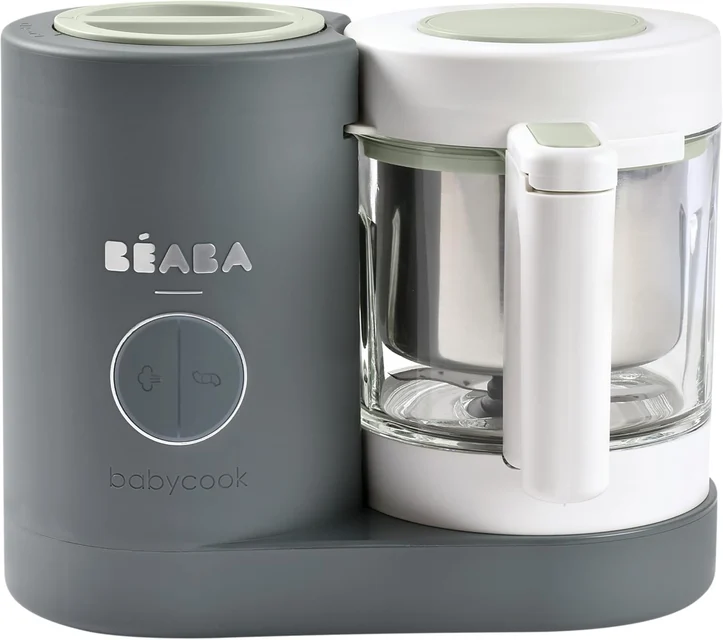
- Buy BEABA Babycook Neo The premium pick: a glass bowl, stainless steamer basket, and genuinely smooth purees from the brand that invented the category. Amazon
- Buy GROWNSY NutriChef Baby Food Maker The value pick: steam, blend, and sterilize modes with automatic and manual blending, at a budget price. Amazon
- It depends QOOC 4-in-1 Baby Food Maker A minimalist, one-button Babycook alternative that purees beautifully - if you can live with its quirks and small bowl.
- Skip Baby Brezza One Step Baby Food Maker Deluxe The one-button steam-then-blend automation is genuinely clever, but too many owners report the machine failing within months. Amazon
What actually matters
- Reliability track record matters more than any feature, because the machine only has about a year to earn its keep - read recent owner reports for motor failures, cracked bowls, or error loops before trusting a clever feature list.
- Steam-to-blend workflow determines daily effort: fully automatic machines steam then blend untouched, while two-step machines require you to flip the steamed food into the blending bowl - fine, but it's one more hot-handed step with a baby on your hip.
- Food-contact materials are a comfort-and-durability call: glass and stainless steel never touch hot food with plastic and shrug off carrot stains; plastic bowls are lighter and cheaper but scratch, stain, and absorb odors over months of daily use.
- Capacity should match your cooking style - a compact bowl suits fresh daily portions, while batch-cooking a freezer stash in one session needs the largest bowl you can find.
- Reservoir access and cleanup decide whether the machine stays hygienic: count the parts washed after every use, check which are dishwasher-safe, and favor a water tank with a wide opening you can inspect and dry.
- Noise level is underrated - you will run this machine during naps, so quiet operation is worth real weight in your decision.
- Extra modes vary in usefulness: sterilizing and defrost functions get genuine daily use, while most other bundled features are padding on the box.
The specs, in plain English
Green flags vs red flags
Green flags
- Glass or stainless-steel food path, or at minimum a plastic bowl with a strong long-term owner record
- A wide-mouth water reservoir you can see into, reach, and leave open to dry
- Dishwasher-safe removable parts and a low total part count per use
- Owner reports that consistently mention the machine still working after a year of daily use
- Quiet operation mentioned repeatedly in owner feedback - quiet enough for nap time
- Simple controls you could operate one-handed while holding a baby
Red flags
- Recurring owner reports of motors dying, bowls cracking, or error beeping within weeks to months
- Any mention of coating flaking or peeling inside the bowl or food path - an immediate disqualifier in a baby product
- A sealed or hidden water tank you can't inspect or clean, especially paired with odor complaints
- Instructions or steam-time guides that contradict the markings on the machine itself
- Blend modes that require holding a button down for the entire cycle
- A long feature list on a brand with no track record - automation you can't trust is worse than a manual step
Who's who: the brands
- BEABA - The French brand that essentially invented the countertop baby food maker; known for premium materials - glass bowls, stainless baskets - and machines that last the whole feeding window.
- GROWNSY - A budget brand that has earned a strong reputation by packing a sterilize mode into well-executed machines at entry-level prices.
- QOOC - A minimalist Babycook-style alternative at a mid-range price; purees well once dialed in, though its documentation and consistency draw more mixed owner sentiment.
- Baby Brezza - A baby-gear brand known for automation-first appliances, including true one-step steam-then-blend machines - clever workflows, but its food makers carry a notable volume of owner-reported durability complaints.
- Babymoov - A French baby-gear maker whose multi-function 'Nutribaby' machines compete at the mid-to-premium end.
How to read a listing without getting fooled
Start with the workflow, because listings bury it: search the description for whether the machine blends automatically after steaming or whether you flip a basket yourself - 'one-step' should mean no transfer at all, and '4-in-1' tells you almost nothing since reheat and defrost are common. Next, find what the bowl and basket are made of; if the listing doesn't proudly say glass or stainless steel, assume plastic. Check the stated capacity against how you'll actually cook - daily fresh portions or weekend freezer batches - and remember that headline cup counts often describe the brim, not the usable working volume. Then go straight to recent owner feedback and read the negative reports first, looking for patterns rather than one-offs: repeated mentions of dead motors, cracked bowls, flaking coatings, or funky smells from the water tank are category-specific failure modes that glossy product photos never show. Finally, count the parts you'd wash after every single use and check whether the water tank is one you can open, see into, and dry.
How much should you spend?
Price in this category is driven mostly by materials and automation: a glass bowl with a stainless steam basket costs meaningfully more than an all-plastic build, and true one-step steam-then-blend automation adds cost and complexity. The value sweet spot for most first-time parents sits at the budget end from a proven brand - well-executed budget machines now include a sterilize mode that some pricier machines lack, and they handle daily fresh portions perfectly well. Spending up to the premium tier makes sense in two cases: you want hot food kept entirely off plastic, or you plan to batch-cook and freeze, where a large-capacity bowl turns three cooking sessions into one. Mid-priced machines are the tier to scrutinize hardest, because some deliver premium-style workflows with budget-grade reliability - and given the short useful life, a cheap machine that lasts the full feeding window is a far better buy than an impressive one that dies at month four.
Questions, answered
Do I actually need a baby food maker, or will a pot and blender do?
A pot, steamer basket, and regular blender produce identical purees - the machine buys convenience, not capability. What you're paying for is doing everything in one small appliance with one or two parts to wash, which matters most during the intense early months of puree feeding. If you already batch-cook comfortably, you may not need one; if steaming and blending with a baby on your hip sounds exhausting, it earns its counter space.
How long will we actually use one?
Most families use a baby food maker heavily from around six months, when solids begin, until roughly twelve to eighteen months, when babies move to mashed and finger foods. That short window is why reliability and price deserve so much weight: a machine that fails a few months in misses most of its useful life, and an ultra-premium machine has limited time to justify itself unless more children are planned or it will be reused as a small steamer.
Is a glass bowl really worth paying more for?
It's the main thing separating premium machines from budget ones. Steaming happens at high heat, and some parents simply prefer that hot food and steam never touch plastic; glass also resists the staining and odor absorption that carrots and beets inflict on plastic bowls over months of use. The plastic used in reputable machines is food-safe by regulation, so this is a preference and peace-of-mind decision rather than a settled safety issue.
Is one-step automation better than a two-step machine?
Only if the machine is reliable. Automatic steam-then-blend is genuinely the nicest workflow - no hot basket to flip, no standing by - but it adds mechanical complexity, and in this category the most automated machines have not always had the best durability records. A two-step machine with a strong owner track record is usually the safer buy than automation you can't trust.
What's the most common mistake owners make?
Neglecting the water reservoir. Every steam-based machine concentrates minerals from tap water and can develop scale or residue in the tank, and complaints about odors or weak steam almost always trace back to it. Use distilled or filtered water if yours is hard, run the cleaning cycle or a vinegar rinse regularly, and leave the tank open to dry. Machines with wide, visible reservoirs make this far less of a chore.
When should my baby start on purees, and how smooth do they need to be?
Most babies start solids around six months, beginning with very smooth single-ingredient purees and progressing to thicker textures - which is why blend quality matters early and matters less later. This is general information, not medical advice: timing, textures, and allergen introduction should be guided by your pediatrician, especially for premature babies or any feeding or allergy concerns.
Or jump to the head-to-head: BEABA Babycook Neo vs GROWNSY NutriChef Baby Food Maker.