Explained
Tire Plug Kits, Explained
After reading, you'll understand what a plug kit can and cannot do, what belongs in the box, and where on a tire a puncture can legitimately be fixed.
In this guide
First-time buyers usually get tripped up by one assumption: that plugging a tire ends the problem. It does not, and the industry is unusually direct about it. The other traps are quieter. People buy a kit with five plugs and no cement, discover the T-handle bends on the first real tread block, or plug a puncture that turns out to be in the shoulder where no repair is allowed at all. Knowing the boundaries before you buy makes the kit far more useful than knowing the brand.
The 30-second version
- A plug alone is not a repair, USTMA's chart states a repair using a plug only or a patch only is NOT ACCEPTABLE.
- The accepted repair goes in from the inside, with the tire off the wheel, a rubber stem filling the injury and a patch sealing the innerliner, commonly as a one-piece combination unit.
- Repairs live in the tread area only, with a maximum injury of 1/4 inch, or 6 mm, and nothing in the shoulder, belt edge or sidewall.
- Driving on a flat can end the tire, because a tire run under inflated even a short distance may be damaged beyond repair and re-inflating it does not undo that.
- Handle construction predicts frustration, since steel reamers and needles hold up where thin stamped handles bend at the moment you need force.
The products this guide is about
Our verdict on each, with the full reasoning on the companion review.
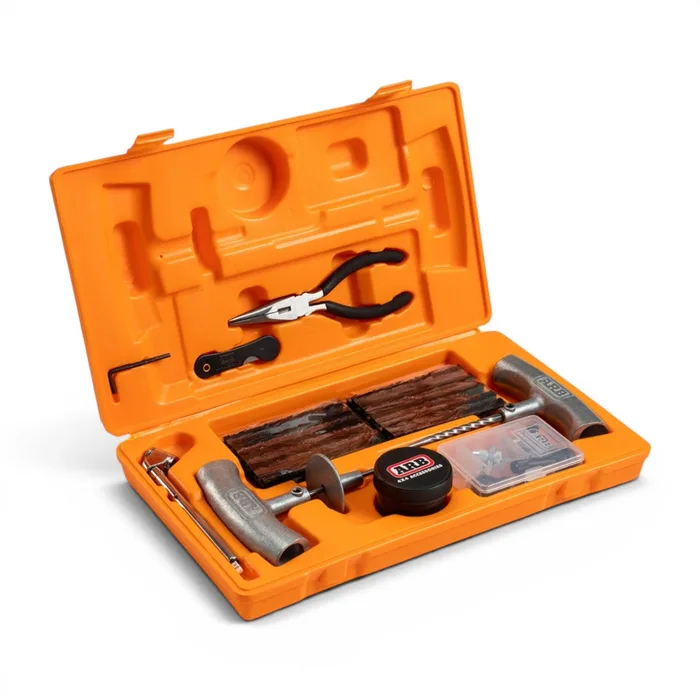
- Buy ARB Speedy Seal Series II Repair Kit The best-built roadside plug kit here, with steel tools, 40 cords and enough spares to matter far from a shop. Amazon
- Buy Slime Rugged Tire Plug Kit A 28 piece kit that costs the least and is the only one that prints the truth about what a plug actually is.
- It depends Dynaplug Pro Xtreme A genuinely different plug design that needs no reamer, no cement and no muscle, at a price that only makes sense for some riders. Amazon
- Skip BlackJack KT-340 Tire Repair Kit Passenger Good steel tools attached to a claim that a string plug is a permanent repair guaranteed for the life of the tire. Amazon
What actually matters
- Reamer - This is the rasp-like tool that cleans and sizes the injury so the plug can seat. Skipping it, or using a flimsy one, is why plugs blow back out under pressure.
- Insertion tool - The open eye needle that carries the cord into the tire and slides back out leaving the plug behind. The eye and the shaft take the load, so cheap ones deform first.
- String or rope plug - A fiber cord impregnated with rubber that conforms to the shape of the injury. It is the standard consumable in most kits and comes in small and large diameters.
- Combination patch-plug unit - The one-piece stem-and-patch unit a shop installs from inside the demounted tire. This is what the industry considers a proper repair, and no roadside kit contains one.
- Innerliner - The airtight rubber layer on the inside of a tubeless tire. Sealing it is half the job of a real repair, and a plug pushed in from outside never touches it.
- Repair area - The crown or tread zone defined on the USTMA chart. Outside it, including the shoulder and belt edge, no repair is permitted regardless of how small the hole looks.
- Vulcanizing cement - The chemical that helps the plug bond to the surrounding rubber. It dries out in storage, so an old tube in a long-forgotten kit is worth replacing before you need it.
The specs, in plain English
Green flags vs red flags
Green flags
- The listing or manual states the kit is for emergency use until the tire can be properly repaired.
- Reamer and insertion tools are steel, with solid handles rather than hollow stamped ones.
- Twenty or more plugs included, ideally in both small and large diameters.
- Spare valve cores and a valve core removal tool are in the box.
- The maker publishes clear limits, such as tread area only and no bead, sidewall or shoulder repairs.
Red flags
- Any wording describing a plug as a permanent repair or guaranteeing it for the life of the tire.
- A piece count inflated by dozens of identical cords with only two flimsy tools.
- Plastic or thin folded-metal T-handles that flex when you twist them.
- No cement or lubricant included, and no mention of what the plugs are made from.
- Instructions that never mention taking the tire to a shop or having it inspected afterwards.
Who's who: the brands
- ARB - Australian 4x4 outfitter whose Speedy Seal kits are built around steel tools and a large cord count for remote travel.
- Safety Seal - A professional insert system sold through trade channels, with its own probe and insertion tools.
- Dynaplug - US maker of machined tipped-plug tools that insert a brass-nosed plug without reaming, cement or waiting.
- Slime - Mass-market tire care brand whose plug kits are inexpensive and carry unusually explicit emergency-use warnings.
- BlackJack - Tire shop supply house selling steel T-Bone handled kits, patches and combination inserts, mostly to the trade.
How to read a listing without getting fooled
Ignore the piece count in the headline, because 60 pieces usually means 50 cords and a handful of small parts. Read the contents line by line instead and check for four things: a reamer, an insertion tool, plugs, and cement or lubricant. Then look at what the handles are made of, since that single detail separates kits that survive a real puncture from kits that bend. Next, look for published limits: tread area only, no sidewall or shoulder, maximum injury size, tread thickness range where the maker gives one. Finally, read the warning text. A maker that tells you to take the vehicle to a service center afterwards is aligned with the industry standard; one that promises a permanent repair is not, and that tells you something about everything else on the page.
How much should you spend?
Budget kits get you a workable set of tools, a decent supply of cords and usually one tube of cement, which is genuinely enough for the once-every-few-years puncture most drivers face. Mid-range buys better metallurgy, more consumables and the small extras that matter at the roadside, such as spare valve cores, a valve tool and a pressure gauge in a case that holds together. Premium is where the machined tipped-plug tools sit, and you are paying for speed, one-handed operation and pocketability rather than for a better repair. Spending more never buys you a permanent fix, because no roadside kit can deliver one, so treat extra money as insurance against tool failure and against running out of plugs, not as an upgrade in the repair itself.
Questions, answered
How long can I drive on a plugged tire?
Treat it as the distance to a tire shop, not a duration. A plug is an outside-in fix on a mounted tire, so nobody has looked at the innerliner or confirmed there is no internal damage. Keep speed and load down and go straight to a shop. If the tire was driven flat before you plugged it, tell them, because run flat damage shows up on the inside.
Can a shop still repair a tire I already plugged?
Often yes, if the injury is in the tread area, is no larger than 1/4 inch, and does not overlap an existing repair. The technician removes the tire, pulls or trims the plug, cleans and buffs the injury and installs a proper combination unit. What they cannot do is repair over an existing improper repair, which is why a tire with an old plug left in it long-term can end up scrapped.
What about tire sealant instead of a plug?
Sealant and plug kits solve different problems. Sealant can slow or stop a small tread leak without any tools and works when you cannot find the hole, but it makes a mess inside the tire that a shop has to clean before repairing it, and some tire pressure sensors do not like it. A plug is more targeted and does not coat the innerliner. Neither is a repair.
Do I need an air compressor too?
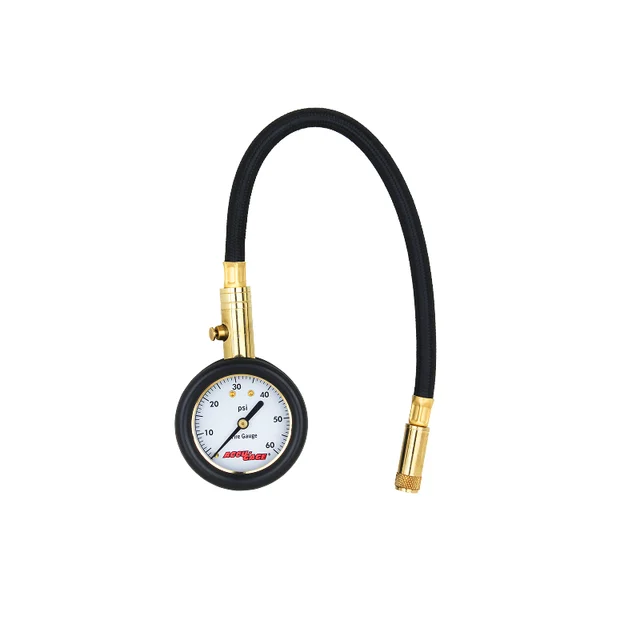
Almost certainly. Plugging the hole does nothing about the air you already lost, and most punctured tires are too soft to drive on safely once you find them. A small 12 volt inflator, or CO2 cartridges for a motorcycle, turns a plug kit into a complete roadside solution. A gauge matters as much as the pump, since guessing pressure by eye is how tires get run under inflated.
Or jump to the head-to-head: ARB Speedy Seal Series II Repair Kit vs Slime Rugged Tire Plug Kit.