Explained
Stroller Footmuffs, Explained
After reading, you'll understand how to compare footmuff warmth, check stroller fit, and avoid the car seat mistake many parents make.
In this guide
Footmuffs look alike in photos, so first-time buyers tend to pick on color and price. The real differences are in the details: whether the brand publishes a temperature rating, whether the harness openings line up with your stroller, and whether the footmuff is designed for one stroller family only. Many parents also assume a footmuff that fits the stroller is fine in the car seat, which the AAP advises against.
The 30-second version
- A temperature rating is the best warmth signal, and a footmuff without one gives you nothing to compare.
- Universal fit depends on harness openings, so check that the slots line up with a 5-point harness.
- Brand footmuffs often fit only that brand, which matters if you might change strollers.
- Stroller accessories do not belong in car seats, according to the AAP, because they have not been crash tested with the seat.
- Care instructions vary widely, and a footmuff that cannot be tumble dried stays out of use longer after a wash.
The products this guide is about
Our verdict on each, with the full reasoning on the companion review.
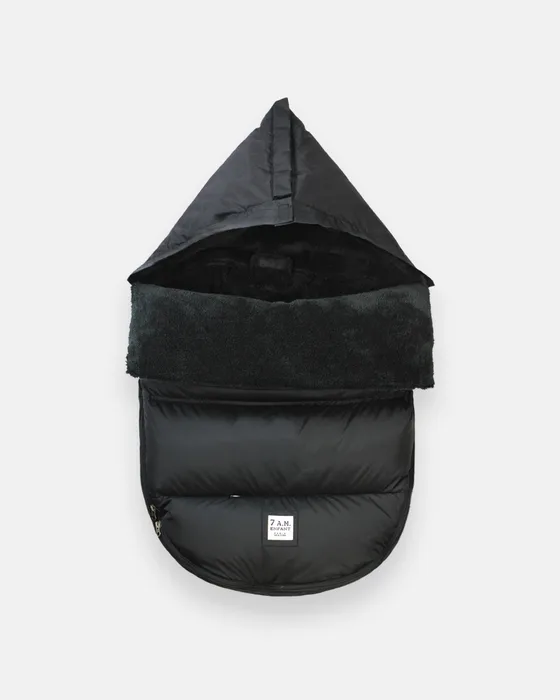
- Buy 7AM Enfant PlushPOD A heavyweight universal footmuff rated to 5°F/-15°C, sold in two sizes so it lasts from infancy to 3T.
- Buy Colugo The Cozy A 14 oz quilted footmuff that Colugo says fits most strollers, at the lowest price tier here.
- It depends UPPAbaby CozyGanoosh A 2-in-1 seasonal footmuff rated to -5°F/-20°C, built around UPPAbaby strollers and RumbleSeats.
- Skip Bugaboo THERMOLITE performance footmuff A well-made winter footmuff that costs the most here and is listed only for Bugaboo strollers.
What actually matters
- Temperature rating - Brands that publish one, like 7AM and UPPAbaby, let you compare warmth directly. Treat it as a guide for the coldest walks, not a promise of comfort.
- Harness openings - Slots must line up with the stroller's 5-point harness so straps sit against the child. Poorly placed slots leave straps loose or twisted.
- Seat anchoring - A hood that slips over the seat back or non-slip grips keep the footmuff from sliding. Without them, a toddler can wriggle it down.
- Fit claims - Universal footmuffs aim to fit most strollers, while brand footmuffs list their own models. Read the compatibility list, not just the product name.
- Room to grow - Some footmuffs come in age-based sizes, others add a zip-out extension. Measure shoulder to feet and compare it with the published size.
- Convertibility - Removable liners, inserts or front panels let one footmuff cover autumn and winter. That flexibility reduces overheating on milder days.
- Care - Muddy shoes and snacks mean frequent washing. Check for machine washing and whether tumble drying is allowed.
The specs, in plain English
Green flags vs red flags
Green flags
- A published temperature rating on the product page.
- Harness openings described for a 5-point harness.
- A hood or grips that anchor the footmuff to the seat back.
- Clear care instructions that allow machine washing.
- A compatibility list that names your stroller model.
Red flags
- No temperature rating or materials listed at all.
- Marketing that encourages use in a car seat.
- A compatibility list limited to one stroller brand you do not own.
- No size or dimensions published.
- Final-sale terms that rule out returns if it does not fit.
Who's who: the brands
- 7AM Enfant - Known for heavyweight cold-weather footmuffs, stroller hand muffs and diaper bags.
- Colugo - A direct-to-consumer brand known for its Compact stroller and low-cost stroller accessories.
- UPPAbaby - A stroller maker whose accessories, including the CozyGanoosh, are designed around its own strollers and RumbleSeats.
- Bugaboo - A stroller maker whose footmuffs and accessories are listed for its own strollers.
How to read a listing without getting fooled
Start with the temperature rating and the compatibility section, because those decide whether a footmuff suits your winters and your stroller. Then check the size or dimensions against your child's shoulder-to-feet length, and look for how it attaches: harness slots, a hood that slips over the seat, or grips. Read the care instructions next, especially whether tumble drying is allowed. Finally, look at what the brand leaves out. A product page with no rating, no dimensions and no care details is asking you to buy on photos alone.
How much should you spend?
Budget footmuffs ($ · budget) are usually light quilted covers with broad fit claims and little published data, which is fine for mild winters and travel strollers. Mid-range models ($$ · mid-range) tend to add a published temperature rating, heavier insulation and convertible panels. Premium footmuffs ($$$ · premium) are often brand-matched accessories from stroller makers, with features like removable insulation inserts and shoe shields, but you pay extra for the brand fit. Spend more only if the rating, fit or care features match how you actually use the stroller.
Questions, answered
Is a footmuff better than a snowsuit for stroller walks?
For stroller walks, many parents prefer a footmuff because it zips around the child and is easy to open when you go inside. A snowsuit plus a warm footmuff can be too much, so check the back of the neck for sweat. The AAP suggests several thin layers to keep kids warm and dry. Use a snowsuit for time out of the stroller.
Can a newborn use a footmuff?
Some footmuffs are sized from birth, like the PlushPOD in its 0-18 months size, but fit depends on your stroller seat. Newborns often ride in a bassinet or infant car seat rather than a toddler seat. Follow your stroller's guidance on seat use by age. Keep the child's face uncovered and check temperature often.
How do I stop a footmuff from sliding down?
Use whatever anchoring the footmuff provides: a hood that slips over the seat back, hook-and-loop slots or non-slip grips. Thread the harness through the openings and tighten straps against the child. If it still slides, the footmuff may be too long for the seat. Check the published dimensions against your seat height.
Should I buy a footmuff from my stroller's brand?
A brand footmuff will match your stroller's harness and seat shape, which is its main advantage. The downside is that it may not fit a different stroller later. If you plan to switch strollers or use a second one for travel, a universal footmuff with clear harness openings is more flexible. Compare temperature ratings either way.
Or jump to the head-to-head: 7AM Enfant PlushPOD vs Colugo The Cozy.