Explained
Steering Wheel Covers, Explained
You will know exactly which two measurements to take, what the grip surface names really mean, and when the right answer is no cover at all.
In this guide
A steering wheel cover is the one accessory you hold with both hands at highway speed, so fit is a safety question rather than a styling one. The failure that matters is a cover that creeps or rotates on the rim, putting a seam under your thumb during an input you did not plan for. Almost every bad purchase in this category traces back to the same thing: buying on looks and size guessing instead of measuring the two numbers that decide whether the cover can move.
The 30-second version
- Fit is the safety spec. A cover that can rotate on the rim is a hazard, not an annoyance, and no amount of material quality fixes a size that is wrong.
- Measure two numbers, not one. Outside diameter across the wheel and grip circumference around the rim at its thickest point, because a cover can match one and fail the other.
- Texture beats material marketing. Perforated leather, microfiber leather and textured silicone give a damp palm something to hold, while velvet, plush, printed fabric and rhinestone panels give it less.
- Treat universal fit as a warning label. One size claiming to fit everything is a size band nobody published, and loose is the state that rotates.
- Some wheels should stay bare. Heated or ventilated rims and wheels with capacitive hands on detection or touch controls are wheels you leave uncovered.
The products this guide is about
Our verdict on each, with the full reasoning on the companion review.
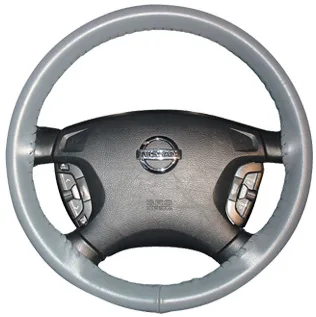
- Buy Wheelskins Original Steering Wheel Cover Genuine leather you lace onto the rim, made to your wheel's diameter and grip circumference, so rotation stops being possible. Amazon
- Buy FH Group Perforated Genuine Leather Steering Wheel Cover A perforated genuine leather slip on for wheels inside the 14.5 to 15.5 inch band, on in minutes. Amazon
- It depends Leader Accessories Textured Steering Wheel Cover for Trucks & SUVs A textured truck and SUV cover with clear install rules, if you can confirm which size band you are actually getting.
- Skip Coverking Velour Steering Wheel Cover A machine washable velour cover sold as one universal size, which is the fit claim this category should make you wary of.
What actually matters
- Outside diameter is the straight line across the wheel from outer edge to outer edge. Most passenger cars land near 14.5 to 15 inches, pickups and SUVs mostly sit in the 15 to 16 inch range, and semi trucks and RVs run 17.5 to 18 inches. Buying a band above where your wheel actually sits is the single most common mistake, because the cover slides on easily and easy is what loose feels like.
- Grip circumference is the distance all the way around the rim itself, measured at the thickest point. It is the number nearly everyone skips. A cover sized right for diameter but wrong for grip thickness either refuses to close over a fat rim or hangs loose on a thin one, and both outcomes are bad.
- Attachment method decides whether rotation is even possible. A lace on cover is hand stitched to the rim and has nothing to creep against. A slip on relies on tension, sometimes helped by an internal rubber ring or elastic band, which works well when the size is right and not at all when it is not.
- Grip surface is what your palm actually contacts. Perforated surfaces vent sweat and stay usable when your hands are warm, which matters far more in summer than any material name on the label.
- Added thickness changes how the wheel feels in your hand. A heavily padded cover on an already thick rim leaves smaller hands gripping with fingertips instead of a closed hand, so thin is usually the better call.
- Airbag and sensor clearance means the cover stays on the rim only, never over the center hub or across the spokes. On modern vehicles it also means checking whether the rim carries heating elements, capacitive sensing or touch panels, because a cover interferes with all three.
- Durability at the contact points is where covers actually die. The ten and two positions glaze and smooth first, and printed fabric faces get there noticeably sooner than real hide.
The specs, in plain English
Green flags vs red flags
Green flags
- The listing publishes a real diameter range, and ideally a separate grip circumference chart, rather than one universal size
- The grip surface is perforated or textured leather, microfiber leather or silicone rather than a printed fabric face
- The cover stays close to the original rim thickness instead of bulking it up
- Airbag compatibility is stated explicitly and the cover clearly wraps the rim only
- Lace on construction if your wheel falls between published bands, is worn slick, or is an odd size
- Owner reports over a year or more mention the cover staying put and the surface holding texture
Red flags
- Universal fit with no numbers attached, or a size band that starts above 15 inches for a normal car
- Sizing given on diameter only, with no mention of grip thickness
- Velvet, plush, rhinestone or heavily printed fabric surfaces, which look distinctive and give warm palms less to hold
- Any product that extends over the center hub or across the spokes
- Thick padded construction sold as comfort, which pushes the rim past what a normal hand closes around
- Reviews describing the cover as easy to slide on, which usually means it is loose
Who's who: the brands
- Wheelskins - Ohio maker of genuine leather lace on covers, sold in six standard sizes and made to order from outside diameter and grip circumference.
- FH Group - Car accessory brand whose perforated genuine leather slip on targets the 14.5 to 15.5 inch band, with rubber molding for grip on the rim.
- Leader Accessories - Vehicle accessory brand selling textured covers for trucks and SUVs, with explicit install and rotation warnings.
- Coverking - Custom car cover and seat cover maker whose velour steering wheel cover is sold as a universal fit to match its velour interiors.
- SEG Direct - Volume seller offering more than one size band rather than a single universal fit.
- Valleycomfy - Budget focused leather slip ons sold in stated size ranges.
How to read a listing without getting fooled
Start at the size section and ignore everything above it. If the listing does not publish a diameter range in inches, treat the product as unsized and move on. If it publishes diameter but says nothing about grip circumference, understand that you are gambling on your rim being average thickness, which trucks, older cars and aftermarket wheels frequently are not. Next, read the surface description literally: perforated leather and perforated microfiber leather describe texture that helps a damp hand, while phrases like plush, velvet, crystal, bling and printed shell describe how it photographs. Photos are unreliable for thickness, so look for owner comments about the rim feeling fat or hard to close a hand around. Check that airbag compatibility is stated and that the product images show the cover on the rim only, never over the hub or spokes. Finally, scan the negative reviews specifically for the words slips, spins, rotates and loose, because those are the reports that tell you the size band runs generous. A cover that people describe as a tight fit that took some working on is the one you want.
How much should you spend?
This is a category where spending more buys fit precision and surface longevity, not features. At the low end you get a slip on with one broad size band and a synthetic surface, which is fine and genuinely useful if your wheel measures inside the standard band and you accept replacing it when the contact points wear smooth. The middle is where most people should sit: real or high grade microfiber leather, published size ranges, perforation that actually vents, and construction thin enough to leave the rim feeling like a rim. Paying up beyond that makes sense for exactly two reasons. One is a lace on cowhide cover ordered to both your diameter and your grip circumference, which is the surest way to stop rotation and the most complete fix for a factory wheel that has gone shiny and slick. The other is a purpose built cover for a genuinely large commercial or RV wheel, where the thing is a working tool used for hours a day. What is never worth paying for is decoration: pattern licensing, rhinestones and plush shells cost more and perform worse where your hands sit. If your budget is tight, buy the cheapest correctly sized cover with a textured surface rather than the nicest looking one in the wrong size band.
Questions, answered
How do I measure my steering wheel for a cover?
Take two measurements. Outside diameter is the straight line across the wheel from outer edge to outer edge, which a tape measure or ruler handles fine. Grip circumference is the distance all the way around the rim itself at its thickest point, best taken with a tailor's tape, or with a strip of paper you wrap, mark, and then lay flat against a ruler. Most passenger cars land near 14.5 to 15 inches diameter, but grip thickness varies, and trucks, older vehicles and commercial wheels sit well outside that. Ordering on diameter alone is the most common mistake in this category.
Can I put a cover on a heated steering wheel?
You should not. The cover sits between the heating element and your hands and insulates the warmth away from exactly where it is meant to go, so the feature stops doing anything useful while the element keeps drawing power. The same reasoning applies to ventilated or cooled wheels. If a heated wheel has worn slick, the better fixes are a professional rewrap or a replacement rim, unless you are genuinely willing to give up the heating function.
What about wheels with touch controls or hands on wheel detection?
Leave those uncovered. Many current vehicles use capacitive sensing in the rim to confirm your hands are on the wheel for lane keeping and other driver assistance systems, and a layer of leather or fabric can prevent that detection or make it intermittent, which means warnings and system dropouts when you least want them. Touch sensitive panels on the rim or spokes have the same problem in a more obvious form, since a cover simply blocks them. None of the covers in our comparison claims to be designed around either system.
Are steering wheel covers safe with an airbag?
A properly fitted cover on the rim is fine, and reputable products state airbag compatibility explicitly. The rule is that the cover stays on the rim and never extends over the center hub or across the spokes, because that is where the airbag deploys from. The larger real world risk is not the airbag at all, it is a cover that is too big for the wheel and can rotate, putting a seam under your thumb or shifting your hand position during a sudden input.
Does a cover actually improve grip, or is it just looks?
It depends entirely on the surface. Perforated leather, microfiber leather and textured silicone give your palm something to hold and vent moisture, which is a real improvement over a factory wheel that has gone shiny with age. Velvet, plush, printed fabric shells and rhinestone panels do the opposite, giving warm hands less to hold while looking distinctive in photos. If grip is why you are shopping, buy on texture and fit and treat pattern as the last consideration.
Why do covers slip, and can I stop one that already does?
Slipping is almost always a sizing problem: the cover was made for a larger diameter or a thicker rim than yours, so tension alone cannot hold it. Warming a slip on before installation, by leaving it in the sun or a warm room, helps it stretch and seat fully, and a fully seated cover is much less likely to move. But if it is genuinely oversized, no install trick fixes it. Return it, order the correct band, or move to a lace on cover that stitches to the rim.
Or jump to the head-to-head: Wheelskins Original Steering Wheel Cover vs FH Group Perforated Genuine Leather Steering Wheel Cover.