Explained
Smart Smoke & CO Detectors, Explained
After reading this you'll understand what actually makes a smart smoke and CO alarm worth buying, and be able to decode any product listing on your own.
In this guide
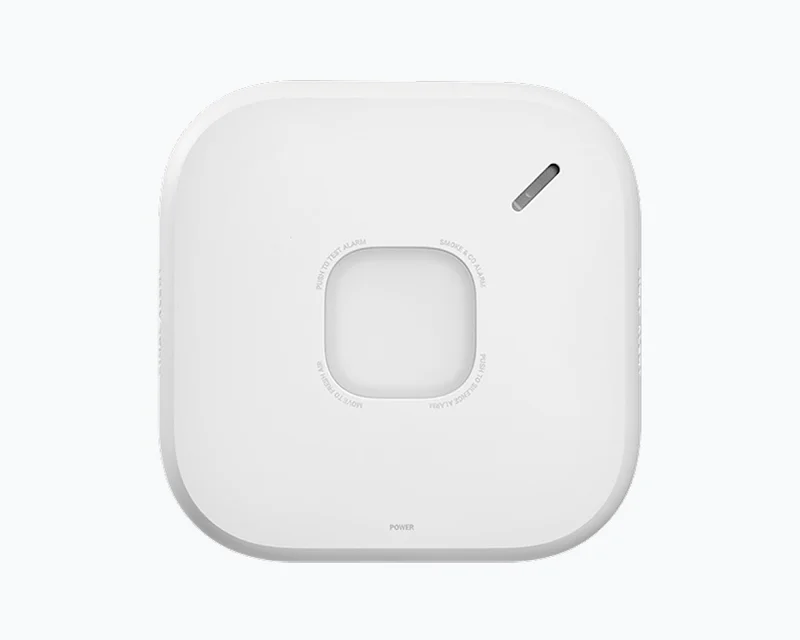
A smart smoke and carbon-monoxide alarm has one job that matters above all others: make noise the instant there's a fire or CO leak, whether or not your phone is nearby. The 'smart' features (app alerts, which-room notifications, silence-from-phone) are a genuine upgrade, but only once the core detection is solid. The thing that trips up first-time buyers is a slick app hiding a device that only detects half the threat, or a code requirement they didn't know they had.
The 30-second version
- Both sensors, always. For this category, insist on combined smoke and carbon-monoxide detection; a smart-looking smoke-only alarm leaves the most dangerous gap, because CO is invisible and odorless.
- The alarm sounds locally no matter what. The alarm's detection and horn do not depend on Wi-Fi, an app, or a subscription; those only add remote alerts and convenience on top.
- How it powers up decides who it's for. Battery and standalone-Wi-Fi models suit renters and quick coverage; hardwired models suit wired homes that want always-on power and code-style interconnect.
- Good alerts name the room. The best systems tell you exactly where the threat is and let you silence a nuisance trip from your phone, far more useful than a generic 'alarm sounding' ping.
- Every alarm has an expiry date. Sensors degrade, so the whole unit must be replaced on a schedule (check the label for the interval), no matter how new it looks.
The products this guide is about
Our verdict on each, with the full reasoning on the companion review.
- Buy First Alert SC5 Smart Smoke & Carbon Monoxide Alarm The de facto successor to the old Google smart alarm, with phone alerts and Google Home compatibility. Amazon
- Buy X-Sense XP0A-iR Wi-Fi Smart Smoke & Carbon Monoxide Alarm Standalone Wi-Fi with voice alerts and phone notifications - the value pick that needs no hub.
- It depends Kidde Smoke + Carbon Monoxide Alarm with Smart Features (P4010ACSCO-WF) A hardwired smart combo that works with existing Kidde interconnected alarms - great if you have the wiring and patience for the app.
- Skip Heiman Matter Smart Smoke Alarm (HS2SA) Cheap and compact, but it only detects smoke - leaving the carbon-monoxide half of the job undone.
What actually matters
- Dual detection (smoke and CO) is the whole point of this category; a device missing the CO sensor fails the brief no matter how smart it is.
- Detection reliability is what saves lives; look for consistent, false-alarm-resistant sensing backed by certifications such as UL 217 and owner reports, not marketing.
- Power and install determine whether you can mount it yourself (battery / standalone Wi-Fi) or need existing wiring or an electrician (hardwired).
- Interconnect means that when one alarm trips, the rest sound too; whole-home linking (wired or wireless) buys you critical seconds in a big or multi-story home.
- Alert quality is the real 'smart' payoff: room identification and remote silencing beat a bare notification.
- Ecosystem fit matters if you want alarms folded into Google Home, Alexa, or Matter routines rather than living in a brand's own separate app.
- Lifespan and power type (replaceable battery vs. sealed 10-year unit) affect ongoing hassle and when you must replace the whole device.
The specs, in plain English
Green flags vs red flags
Green flags
- Clearly states it detects both smoke and carbon monoxide, not just smoke.
- Offers the install path you need (a battery/standalone model for renters, or a hardwired version for wired homes).
- App alerts name the specific room and let you silence a nuisance trip from your phone.
- A clearly printed replace-by date and honest guidance on sensor lifespan.
- Consistent owner reports of reliable detection and few false alarms, plus responsive support.
Red flags
- 'Smart smoke alarm' with no mention of carbon monoxide anywhere in the specs.
- Marketing that leans entirely on app features while staying vague about the actual sensors.
- A hardwired-only device bought without checking you have the wiring (or budget for an electrician).
- Implies Wi-Fi or a subscription is required for the alarm to sound, when local detection should work on its own.
- An obscure brand with thin support and a history of unresolved reliability complaints or unaddressed safety notices.
Who's who: the brands
- First Alert - Long-established alarm maker; its SC5 smart combos work with the First Alert app and Google Home and come in battery or hardwired versions.
- X-Sense - Value-focused brand known for standalone Wi-Fi combos with voice alerts, no hub required.
- Kidde - Ubiquitous, widely stocked alarm maker; strong on hardwired interconnected systems, though worth checking a model's safety notices before buying.
- Heiman - Budget maker; note that some of its smart alarms detect smoke only, so read the sensor list carefully.
How to read a listing without getting fooled
Start at the sensor line, not the app screenshots. The single most important words are 'smoke and carbon monoxide' (or 'smoke + CO'); if you only see 'smoke', the device covers half the job no matter how smart it looks. Next, find how it's powered, battery, standalone Wi-Fi, or hardwired, because that decides whether you can install it yourself. Then check what the phone alerts actually do: 'app notifications' is the bare minimum, while 'names the room' and 'silence from phone' are the features worth paying for. Confirm whether units interconnect so they all sound together, and whether that's via wiring, wireless linking, or an app. Finally, hunt for the replace-by lifespan and whether the battery is replaceable or sealed. Treat 'works with Google Home / Alexa / Matter' as a convenience note, not proof of good detection; those badges tell you about integration, never about whether the sensing is trustworthy.
How much should you spend?
Think in tiers, not dollars. Budget alarms can be tempting but are exactly where the dangerous compromise hides, some drop the CO sensor entirely, which is a false economy for this category. The value sweet spot is a mid-range combo that detects both threats and sends real phone alerts on its own, with no platform to buy into; this is enough for most homes and makes whole-home coverage realistic across several rooms. Spending more buys ecosystem polish (cleaner integration with a smart-home app) or the convenience of always-powered hardwired units with sealed long-life backups. That premium is worth it if you already live in that ecosystem or specifically want an interconnected wired system; it is not worth it purely for better detection, since a solid mid-range combo already covers the fundamentals. Because you'll want several alarms to cover a whole home, weigh the per-unit cost of multi-packs, not just the price of one.
Questions, answered
Do smart alarms replace the smoke and CO alarms my local code requires?
Not automatically. Many places require interconnected, hardwired smoke alarms and CO alarms in specific spots, and a Wi-Fi feature doesn't change those rules. Some smart models come in hardwired, code-oriented versions and some don't, so always confirm with your local authority (often the fire or building department) before relying on any alarm to meet code. Treat 'smart' as an upgrade on top of compliance, never a substitute for the alarms your code requires.
Why do I need carbon-monoxide detection and not just smoke?
Carbon monoxide is invisible and odorless, so unlike smoke you have no way to sense it yourself, which is exactly why a device has to catch it. It comes from anything that burns fuel: furnaces, gas appliances, cars, and generators. A smoke-only alarm, however smart, leaves that threat completely uncovered, which is why combined smoke-and-CO detection is the whole point of this category.
Do these need Wi-Fi or a paid subscription to work?
No. The alarm sounds locally the instant it detects smoke or CO, with no internet, phone, or account needed; that core safety function does not depend on a subscription. Wi-Fi and the app only add the extras: phone alerts, room identification, and remote silencing. A few brands offer optional professional-monitoring plans, but the alarm itself works without paying for one.
How often should I test them, and when do I replace them?
Press the test button at least once a month to confirm the horn and sensors respond, and vacuum the vents occasionally to keep dust out. Replace the whole unit on the manufacturer's schedule printed on the back, which varies by model and by sensor. A single intermittent 'chirp' usually means a low battery or that the alarm has reached end of life and needs replacing; don't just mute it.
Where should I place smoke and carbon-monoxide alarms?
As a general guide, put smoke alarms on every level of the home, inside each bedroom, and outside each sleeping area, keeping them a sensible distance from kitchens and steamy bathrooms to cut nuisance trips. Put CO alarms on each level and near sleeping areas. Mounting height and ceiling-versus-wall placement vary by model and by how CO behaves, so follow the specific instructions in your alarm's manual and any local requirements.
Is this a substitute for professional safety advice?
No. This is general buying and safety information to help you shop, not fire-safety or professional advice. The alarms you're required to have, where to place them, and how to respond to an alert should follow the guidance of your alarm's manual, your local fire or building authority, and emergency services. If a CO alarm sounds, treat it as real: get everyone to fresh air and call your local emergency number.
Or jump to the head-to-head: First Alert SC5 Smart Smoke & Carbon Monoxide Alarm vs X-Sense XP0A-iR Wi-Fi Smart Smoke & Carbon Monoxide Alarm.