

Smart Home
The Best Smart Smoke & Carbon Monoxide Detectors: 4 Compared (and One to Skip)
We compared four current smart smoke and CO detectors on detection, phone alerts, install and value - two clear buys, one it-depends, and one to skip.
The short version
For most people the First Alert SC5 is the smart smoke-and-CO alarm to buy: it detects both threats, plugs straight into the Google Home app for room-by-room phone alerts, and comes in battery or hardwired versions. If you want the same dual protection for less and don't care about a smart-home platform, the X-Sense XP0A-iR is superb value - standalone Wi-Fi, voice alerts and phone notifications, no hub required. The Kidde smart combo is a solid it-depends: excellent if you already have alarm wiring and want an always-powered, interconnected system, but the hardwired install and clunkier app hold it back. Skip the Heiman alarm for this purpose - it is cheap but only detects smoke, not carbon monoxide, so it leaves half the job undone. Best for: homeowners and renters who want real dual smoke-and-CO protection with phone alerts, matched to how wired (or not) their home is.
Our picks at a glance
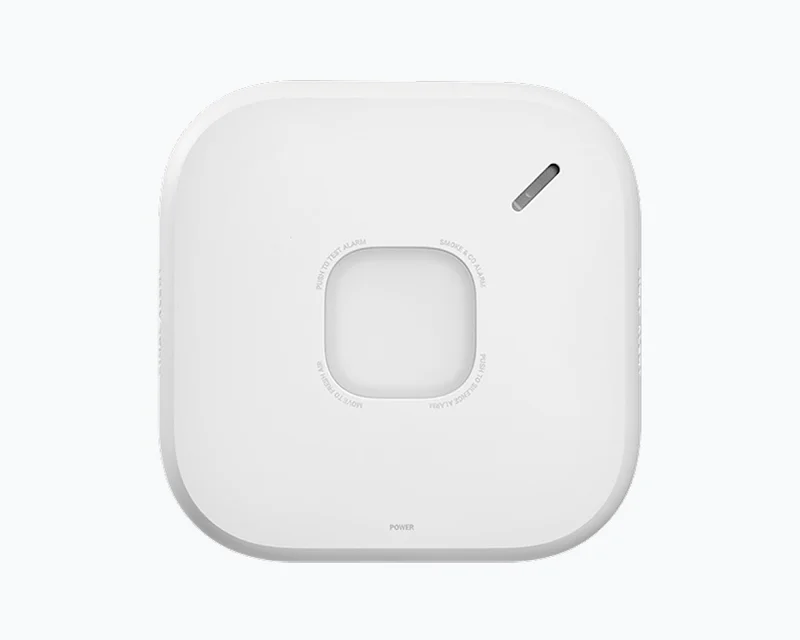
- First Alert SC5 Smart Smoke & Carbon Monoxide Alarm - Buy. The de facto successor to the old Google smart alarm, with phone alerts and Google Home compatibility.
- X-Sense XP0A-iR Wi-Fi Smart Smoke & Carbon Monoxide Alarm - Buy. Standalone Wi-Fi with voice alerts and phone notifications - the value pick that needs no hub.
- Kidde Smoke + Carbon Monoxide Alarm with Smart Features (P4010ACSCO-WF) - It depends. A hardwired smart combo that works with existing Kidde interconnected alarms - great if you have the wiring and patience for the app.
- Heiman Matter Smart Smoke Alarm (HS2SA) - Skip. Cheap and compact, but it only detects smoke - leaving the carbon-monoxide half of the job undone.
The verdict in 30 seconds
What mattered most
- Detects
- Smart platform
- Power
- Phone alerts + room ID
- Interconnect (all sound together)
- Install friendliness
A smart smoke and carbon-monoxide alarm still has one job that matters most: make noise the instant there is a fire or CO leak, whether or not your phone is nearby. The 'smart' part - app alerts that tell you which room, silence-from-phone, and links to the rest of your home - is a genuine upgrade, but only if the core detection is solid. We lined up four alarms you can actually buy in 2026: two we would happily mount today, one that fits a specific kind of home, and one that looks tempting but leaves a dangerous gap.
The de facto successor to the old Google smart alarm, with phone alerts and Google Home compatibility.
Best for: Anyone already running a Google/Nest home who wants smart alerts that work with Google Home.
- Detects both smoke and carbon monoxide and works with the First Alert app and the Google Home app, with voice alerts that name the danger and location
- Sold in both battery and hardwired versions, so it fits renters and wired homes
- Interconnects with compatible alarms, sends phone alerts, and uses voice alerts with a heads-up warning
- You are buying into the Google Home ecosystem - the best features assume you use that app
- Premium price, especially once you cover a whole house
Own the First Alert SC5 Smart Smoke & Carbon Monoxide Alarm? Tell us how it held up.
Thanks. Counted, and shown once enough owners have weighed in.
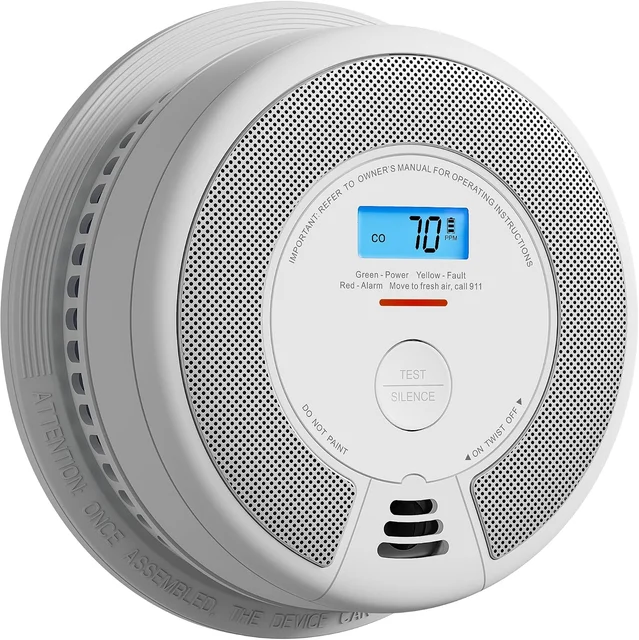
Standalone Wi-Fi with voice alerts and phone notifications - the value pick that needs no hub.
Best for: Value hunters and non-ecosystem homes that want app alerts without buying into a smart-home platform.
- Connects to Wi-Fi and pushes phone alerts on its own - no separate base station or bridge required
- Photoelectric smoke sensor and electrochemical CO sensor, with a voice alarm that announces the type of hazard
- Replaceable battery keeps maintenance simple
- Lives in X-Sense's own app rather than plugging into Google Home or Alexa routines
- 2.4 GHz Wi-Fi only, and the brand has less name recognition than First Alert or Kidde
- X-Sense's own page contradicts itself on interconnection, so confirm with X-Sense before counting on linked alarms
Own the X-Sense XP0A-iR Wi-Fi Smart Smoke & Carbon Monoxide Alarm? Tell us how it held up.
Thanks. Counted, and shown once enough owners have weighed in.
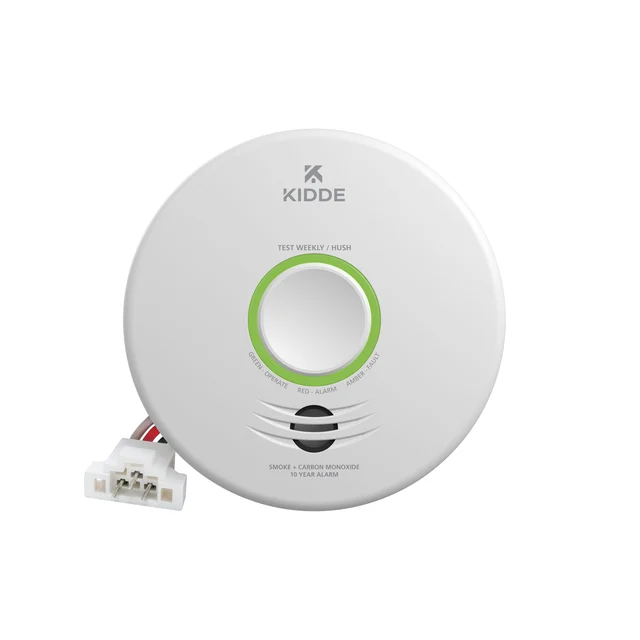
A hardwired smart combo that works with existing Kidde interconnected alarms - great if you have the wiring and patience for the app.
Best for: Owners of wired homes who want a set-and-forget, whole-home interconnected system and don't mind the app.
- Hardwired, so it draws house power rather than relying on a battery alone
- Designed to work with existing Kidde hardwire interconnected alarms so they all sound together, plus Wi-Fi phone alerts through the Kidde app
- Widely stocked and easy to find replacements and support for
- Hardwired install means existing wiring or an electrician - not a renter-friendly, peel-and-stick job
- Owner reports flag a fiddly setup and less-polished app than the competition; Kidde publishes product safety notices, so check the current model's notices before you buy
Own the Kidde Smoke + Carbon Monoxide Alarm with Smart Features (P4010ACSCO-WF)? Tell us how it held up.
Thanks. Counted, and shown once enough owners have weighed in.
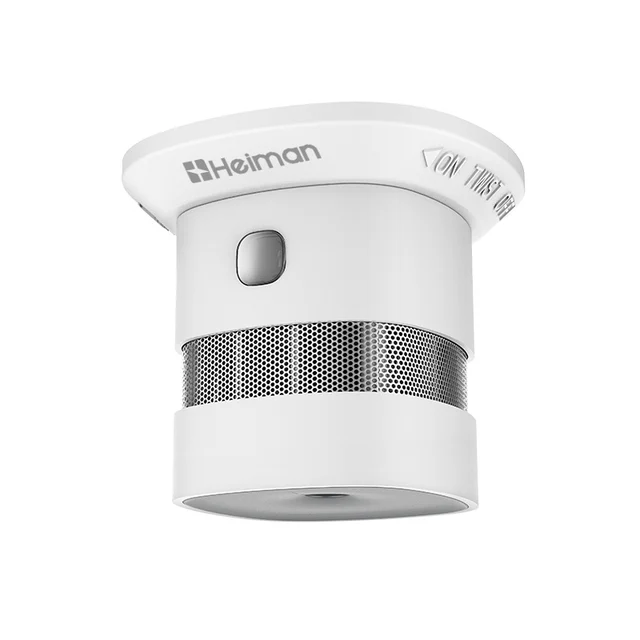
Cheap and compact, but it only detects smoke - leaving the carbon-monoxide half of the job undone.
Best for: Almost no one shopping for smoke-and-CO protection; at most a supplement where CO is already covered.
- Inexpensive and compact
- Maker lists Zigbee and Wi-Fi wireless options across the HS2SA series
- Detects smoke only - it does not sense carbon monoxide at all, so it fails the core 'smoke and CO' brief
- You would still need to buy separate CO alarms, and support for the lesser-known brand is thin
Own the Heiman Matter Smart Smoke Alarm (HS2SA)? Tell us how it held up.
Thanks. Counted, and shown once enough owners have weighed in.
| Criteria | First Alert SC5 Smart Smoke & Carbon Monoxide Alarm Top pick Buy it Buy | X-Sense XP0A-iR Wi-Fi Smart Smoke & Carbon Monoxide Alarm Buy it Buy | Kidde Smoke + Carbon Monoxide Alarm with Smart Features (P4010ACSCO-WF) It depends Buy | Heiman Matter Smart Smoke Alarm (HS2SA) Skip it Buy |
|---|---|---|---|---|
| Best for | Anyone already running a Google/Nest home who wants smart alerts that work with Google Home. | Value hunters and non-ecosystem homes that want app alerts without buying into a smart-home platform. | Owners of wired homes who want a set-and-forget, whole-home interconnected system and don't mind the app. | Almost no one shopping for smoke-and-CO protection; at most a supplement where CO is already covered. |
| Price tier | $$$ · premium | $$ · mid-range | $$$ · premium | $ · budget |
| Detects | Smoke + CO | Smoke + CO | Smoke + CO | Smoke only - no CO |
| Smart platform | Google Home app | X-Sense app (standalone) | Kidde app | Zigbee or Wi-Fi (varies by model) |
| Power | Battery or hardwired versions | Replaceable battery, standalone Wi-Fi | Hardwired | CR123A battery |
| Phone alerts + room ID | Yes, via the First Alert or Google Home app | Yes, push alerts + spoken location | Yes, via Kidde app | App alerts (smoke only) |
| Interconnect (all sound together) | Yes, with compatible alarms | Unclear: maker page lists 'Interconnected Alarm' but files it under 'No Alarm Interconnection' | Yes, with Kidde hardwire interconnected alarms | Depends on model |
| Install friendliness | Easy (battery model) | Very easy - no hub | Needs house wiring | Easy |
| Replace-by lifespan | Per label | Per label | Per label | Per label |
| Price tier | $$$ · premium | $$ · mid-range | $$$ · premium | $ · budget |
Which one is right for you?
- Anyone already running a Google/Nest home who wants smart alerts that work with Google Home. Buy it First Alert SC5 Smart Smoke & Carbon Monoxide Alarm
- Value hunters and non-ecosystem homes that want app alerts without buying into a smart-home platform. Buy it X-Sense XP0A-iR Wi-Fi Smart Smoke & Carbon Monoxide Alarm
- Owners of wired homes who want a set-and-forget, whole-home interconnected system and don't mind the app. It depends Kidde Smoke + Carbon Monoxide Alarm with Smart Features (P4010ACSCO-WF)
- Almost no one shopping for smoke-and-CO protection; at most a supplement where CO is already covered. Skip it Heiman Matter Smart Smoke Alarm (HS2SA)
How we judged the field
We don’t run a fire lab, and we don’t pretend to. Instead we synthesize maker specifications and a large pool of owner reports, then weigh it against the one thing that actually saves lives: reliable, loud detection of both smoke and carbon monoxide. The ‘smart’ layer is a real convenience - but it only earns points once the fundamentals are covered.
The criteria that mattered most: does it detect both smoke and CO, or just one; how trustworthy and false-alarm-resistant the sensing is according to maker specs and owner reports; how the phone alerts behave (do they name the room, can you silence from your phone); how it installs (peel-and-stick battery versus house wiring); whether units interconnect so they all sound together; and lifespan before you must replace the whole unit. Price we treat only in qualitative tiers, because what you really care about is value for whole-home coverage.
First Alert SC5 Smart Smoke & Carbon Monoxide Alarm
Buy itThis is the alarm most people should start with. It detects smoke and carbon monoxide and connects to the Google Home app, where the maker highlights phone alerts, interconnect with compatible alarms, and voice alerts that name the type and location of the danger. Owners like that it comes in both a battery model (simple to mount anywhere) and a hardwired model (for homes with existing wiring). The trade-off is ecosystem gravity: you get the most out of it inside a Google/Nest household, and it sits at a premium price once you cover several rooms. For the target buyer, that’s a fair deal for the most complete package here.
X-Sense XP0A-iR Wi-Fi Smart Smoke & Carbon Monoxide Alarm
Buy itThe X-Sense is the value story of this group and, for a lot of homes, the smarter buy. It connects straight to Wi-Fi with no separate hub or bridge, pushes alerts to your phone, and a built-in voice alarm announces the type of hazard. Combined with a replaceable battery, it keeps maintenance simple. The caveats: X-Sense’s page lists ‘Interconnected Alarm’ among this model’s features while its site menu files it under ‘No Alarm Interconnection’, so confirm with X-Sense before you plan on alarms sounding together; everything runs through X-Sense’s own app rather than folding into Google Home or Alexa routines, it uses 2.4 GHz Wi-Fi only, and the brand carries less household recognition than the legacy names. None of that undercuts the core protection, which is why it lands as a confident buy.
Kidde Smoke + Carbon Monoxide Alarm with Smart Features
It dependsKidde’s smart combo is hardware aimed at a specific home. It’s hardwired and designed to work with existing Kidde hardwire interconnected alarms, so a threat in one room sets off all of them, plus Wi-Fi phone alerts through the Kidde app. The reasons it’s an ‘it depends’ rather than a straight buy: the hardwired install assumes you already have alarm wiring (or will pay an electrician), which rules out most renters, and owner reports describe a fussier setup and a less-refined app than rivals. Kidde publishes product safety notices, so it’s worth a quick check of the current model’s notices before purchase. If you own a wired home and want a set-and-forget interconnected system, it’s a reasonable pick; if not, one of the buys above is easier to live with.
Heiman Matter Smart Smoke Alarm
Skip itOn paper the Heiman looks appealing: it’s inexpensive, compact, and the maker offers Zigbee and Wi-Fi wireless options across the series. The problem is the one that matters. It detects smoke only - it does not sense carbon monoxide at all. In a roundup about smoke and CO protection, that’s a disqualifying gap, because CO is the invisible, odorless threat you most need a device to catch. Buying it and assuming you’re covered would leave you exposed, and you’d still have to purchase separate CO alarms. Combined with thin support for the lesser-known brand, it’s the one to skip for this purpose; at best it’s a supplement in a home where CO is already handled by proper combo alarms.
Sources
Specs in this review come from these pages.
First Alert SC5 vs X-Sense XP0A-iR: which should you buy?
Both detect smoke and CO, both send phone alerts, and both are easy to recommend - the deciding factor is your home. Choose the First Alert SC5 if you live in the Google/Nest world and want the most polished smart experience: phone alerts, voice alerts, and interconnect with compatible alarms, with Google Home compatibility. It also gives you a hardwired path if you want alarms tied into house power. Choose the X-Sense XP0A-iR if you’d rather not adopt a platform at all: it stands alone on Wi-Fi, announces the hazard by voice, and needs no platform. Put simply - SC5 for ecosystem polish, XP0A-iR for value and independence. Neither is a wrong answer.
What to look for
- Both sensors, always. For this category, insist on combined smoke and carbon-monoxide detection; a smart smoke-only alarm leaves the most dangerous gap.
- How it installs. Battery and standalone-Wi-Fi models suit renters and quick coverage; hardwired models suit wired homes that want always-on power and code-style interconnect.
- Useful alerts. The best systems name the room and let you silence a nuisance alarm from your phone - far more valuable than a generic ‘alarm sounding’ ping.
- Interconnection. If one alarm trips, do the rest sound too? Whole-home linking (wired or wireless) buys you critical seconds.
- Lifespan and power. Check the replace-by date and whether the battery is replaceable or sealed for the life of the unit.
- Local rules first. Confirm what your local code requires before relying on any alarm; smart features don’t override those requirements.
Our final take
Start with the First Alert SC5: it’s the most complete smart smoke-and-CO alarm for most homes, it plays nicely with the Google Home app, and the choice of battery or hardwired versions means almost anyone can fit it. If you want the same dual protection for less and don’t care about a smart-home platform, the X-Sense XP0A-iR is the value pick that punches above its tier with a standalone Wi-Fi setup, voice alerts and phone notifications. Reserve the Kidde smart combo for wired homes that specifically want an always-powered, interconnected system and can tolerate a rougher app. And whatever you do, don’t let the cheap, smart-looking Heiman fool you - a smoke-only alarm is no substitute for real carbon-monoxide protection. Buy the right alarm for how your home is wired, mount enough of them, test monthly, and replace them on schedule.
Questions, answered
Do smart smoke and CO detectors replace the alarms my local code requires?
Not automatically. Many jurisdictions require interconnected, hardwired smoke alarms and CO alarms placed in specific spots, and a Wi-Fi feature does not change those rules. Some of these models are sold in hardwired, code-oriented versions and some are not - always confirm with your local authority having jurisdiction (often the fire department or building department) before you rely on any alarm to meet code. Treat 'smart' features as an upgrade on top of code compliance, not a substitute for it.
How often should I test them, and when do I replace them?
Press the test button at least once a month to confirm the horn and sensors respond, and vacuum the vents occasionally to keep dust out. Replace the whole unit on the manufacturer's schedule printed on the back - with the replace-by interval varying by model and sensor, whichever comes first. A single intermittent 'chirp' usually means a low battery or that the alarm has reached end of life and needs replacing; don't just mute it.
Where should I place smoke and carbon-monoxide alarms?
As a general guide, put smoke alarms on every level of the home, inside each bedroom and outside each sleeping area, keeping them a sensible distance from kitchens and steamy bathrooms to cut nuisance alarms. Put CO alarms on each level and near sleeping areas. Mounting height and ceiling-versus-wall placement vary by model and by CO's behavior, so follow the specific instructions in your alarm's manual and any local requirements.
Do these need Wi-Fi or a paid subscription to work?
The alarm itself sounds locally the moment it detects smoke or CO, with no internet, phone or account needed - that safety function does not depend on a subscription. Wi-Fi and the app add the extras: phone alerts, room identification and remote silencing. A few brands offer optional professional-monitoring plans, but the core alarm works without paying for one.
What should I do if the carbon-monoxide alarm goes off?
Treat every CO alarm as real. Get everyone (and pets) to fresh air outside right away, then call your local emergency number, and seek medical attention if anyone feels unwell - headache, dizziness, nausea, confusion or drowsiness can signal CO exposure. Do not re-enter until responders say it is safe. This is general safety information, not professional or medical advice; follow the instructions in your alarm's manual and the guidance of your local emergency services.
Deciding between the top two? See our head-to-head: First Alert SC5 Smart Smoke & Carbon Monoxide Alarm vs X-Sense XP0A-iR Wi-Fi Smart Smoke & Carbon Monoxide Alarm.
More in Smart Home
Smart Smoke & CO Detectors, Explained Plain-English guide → First Alert SC5 Smart Smoke & Carbon Monoxide Alarm vs X-Sense XP0A-iR Wi-Fi Smart Smoke & Carbon Monoxide Alarm Head-to-head →  The Best Smart Speakers: 4 Compared (and One to Skip)
  Smart Sprinkler Controllers: Which to Buy and Which to Skip
  Best Smart Thermostats of 2026: Honest Picks and One to Skip
  The Best Smart Water Leak Detectors: 4 Compared (and One to Skip)