Explained
Quick Detailers, Explained
After reading, you'll understand when a quick detailer is safe to use, and how to tell whether the one you own adds anything at all.
In this guide
Quick detailer is a description of a routine rather than a product type: spray on, wipe off, walk away. What is in the bottle varies enormously, from sprays that deliberately leave nothing behind to sprays that deposit ceramic protection. The category also sits next to waterless and rinseless washes, which look similar and are formulated for a much heavier job, and confusing the two is how people put scratches in an otherwise clean car.
The 30-second version
- The name describes a method, so two quick detailers can add completely different things or nothing at all.
- Never use one on a dirty car, because there is not enough lubrication to move grit without dragging it.
- A drying aid is the best use, since towelling wet paint is the highest-risk moment in any wash.
- Matte paint needs a stated clearance, and silence on the label should be treated as a no.
- Extending protection is different from adding it, and only one of those works without a wax already on the car.
The products this guide is about
Our verdict on each, with the full reasoning on the companion review.
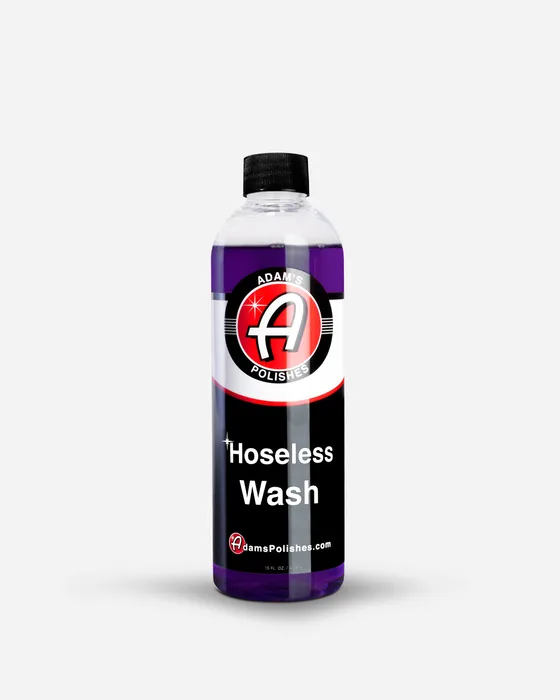
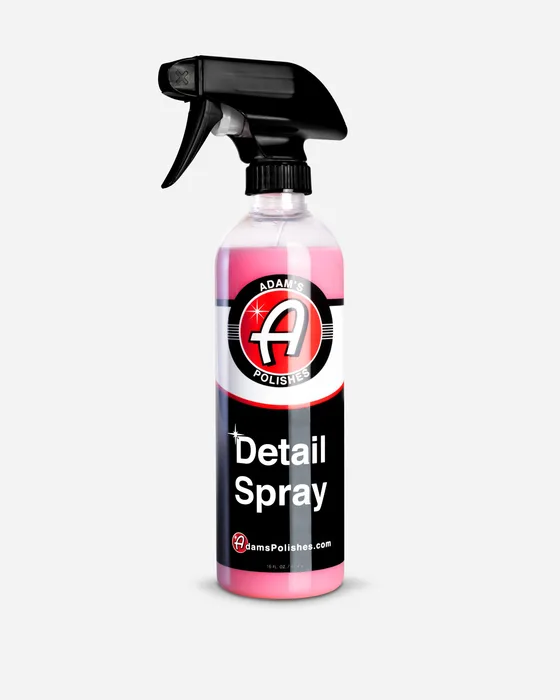
- Buy Adam's Polishes Detail Spray The only quick detailer here that puts a number on its protection benefit, and it doubles as a drying aid. Amazon
- Buy Turtle Wax Mister Cartoon Quick Detailer, 23 fl oz Ceramic and carnauba in one spray, cleared for the widest range of surfaces here including wraps and PPF. Amazon
- It depends P&S Detail Products Pit Stop All Purpose Quick Detailer Claims UV protection and is stated safe on matte finishes, which is a narrow property that matters enormously if you need it. Amazon
- Skip Chemical Guys Extreme Slick Streak-Free Polymer Quick Detail Spray Its own page says it delivers gloss without the use of waxes or sealants, which is the entire review. Amazon
What actually matters
- What it leaves behind - nothing, a polymer film, a carnauba or ceramic layer, or an extension of your existing protection. This is the first thing to establish and the thing the category name obscures.
- Lubricity - how slippery the product makes the surface. It is what allows a towel to move over paint without dragging particles, and it is the property that makes a detailer safe or unsafe at the drying stage.
- Surface clearance - paint only, or glass, wheels, trim, plastics, wraps and paint protection film. A broad clearance turns one bottle into several.
- Finish compatibility - whether the product is safe on matte and satin paint. Gloss enhancers fill the texture that makes matte look matte, and the damage is not easily reversed.
- Streak behaviour - the hardest thing for a spray-and-wipe product to get right, especially in sun or on glass. A streaky detailer creates more work than it saves.
- Concentration and sizes - most are ready to use. Larger sizes matter because this is a product people reach for constantly once they own it.
- Fragrance and dye - cosmetic on most products, and worth thinking about on one you will use on every panel every week.
The specs, in plain English
Green flags vs red flags
Green flags
- A clear statement of what the product leaves behind, or explicitly leaves nothing.
- A quantified claim, such as extending existing protection by a stated number of months.
- Clearance for matte and satin finishes stated either way.
- Wraps and paint protection film addressed by name.
- Drying aid use described, which is where the product does the most good.
Red flags
- Gloss and shine language throughout with no statement of what is deposited.
- No mention of matte compatibility on a product sold for all finishes.
- Claimed protection with no indication of how long it lasts.
- No surface list beyond exterior on a product priced as a multi-surface spray.
- Marketing that positions it as a substitute for washing.
Who's who: the brands
- Adam's Polishes - Quantifies its detail spray as extending existing protection by a stated period, which is rare in this category.
- Turtle Wax - Mass-market sprays that increasingly carry ceramic content and, unusually, state clearance for wraps and paint protection film.
- Chemical Guys - A very wide range of detail sprays, including ones that state openly that they deposit no wax or sealant.
- P&S Detail Products - Professional supply, and one of the few brands to state matte finish compatibility on a general detailing spray.
- Meguiar's - A long-established consumer line whose quick detailer is one of the reference products people compare others against.
How to read a listing without getting fooled
Find the sentence that says what the product leaves on the paint. If it says without waxes or sealants, believe it, and buy it only if leaving nothing behind is what you want. If it claims to extend protection, note that it needs protection already there. If it claims ceramic or carnauba, it stands alone but you should look for a durability figure and usually will not find one. Then check the surface list for glass, wheels, trim, wraps and paint protection film, since a broad clearance genuinely replaces bottles. Look for matte compatibility if you have a matte or satin car and treat silence as a no. Finally, check whether the page mentions drying aid use, because that is where these products earn their place.
How much should you spend?
Quick detailers are cheap enough that the deciding factor should be function rather than price, and the trap is paying mid-range money for a product that deposits nothing. The budget tier now includes sprays with real ceramic content and broad surface clearance, so cheap does not mean empty. What is worth paying up for is a larger size, because this is the bottle you will reach for most often once you own it, and gallon sizing changes the economics of using it as a drying aid on every wash. Do not buy a quick detailer expecting it to replace a wax or sealant; buy the sealant, then buy this to extend it.
Questions, answered
How often can I use a quick detailer?
As often as the car needs it, provided the car is genuinely clean. Light dust after a week in a garage, fingerprints around door handles, water spots caught before they dry, all fine. The limit is not the product, it is the dirt: every use on a surface with real grit on it is a set of fine scratches. If you find yourself reaching for it on a car that has been rained on and driven, use a rinseless wash instead.
Why is my detailer leaving streaks?
Usually too much product, a saturated towel, or working in direct sun. These sprays are designed to be used lightly, one or two mists per panel, and buffed off with a clean dry side of a towel before they can dry on their own. Heat accelerates that, which is why a product that is streak-free in a garage streaks in a driveway at midday. Flip to a dry towel face often, and work small areas.
Can I use a quick detailer on glass?
Only if the product says so. Many contain gloss enhancers or polymers that smear on glass and are difficult to buff clear, which is why dedicated glass cleaners exist. Two products in the comparison above state clearance for glass explicitly. If yours does not, use it on paint and keep a separate glass cleaner, which will do a better job on the inside of the windscreen anyway.
Is a quick detailer worth using as a drying aid?
It is arguably the best use for one. Drying is the moment a towel is pulled across paint that may still hold small particles, and it accounts for a large share of the swirl marks on a well-washed car. Misting a lubricating spray onto the panel before the towel touches it reduces friction and gives the particles a chance to float rather than drag. Products that state drying aid use are formulated with exactly that in mind.
Or jump to the head-to-head: Adam's Polishes Detail Spray vs Turtle Wax Mister Cartoon Quick Detailer, 23 fl oz.