Explained
Potty Training Seats, Explained
After reading, you will know the difference between a floor potty, a toilet-ring trainer, and a convertible, and how to match the right one to your child's stage instead of guessing.
In this guide
"Potty training seat" is really three different products wearing one label: a standalone potty that sits on the floor, a ring that shrinks the family toilet down to child size, and a convertible that tries to be both plus a step stool. New buyers usually pick on looks or price and only discover the mismatch after weeks of daily use. This guide explains the types, the specs that actually matter, and how to sequence your purchases.
The 30-second version
- Type matters more than brand, because a floor potty, a toilet ring, and a travel potty solve different problems and most families eventually need more than one.
- Cleaning determines whether a potty gets used, so a removable inner bowl that lifts out and rinses clean beats every other feature on a floor potty.
- Grip is a safety spec, not a nice-to-have, so check for a wide non-slip base on a floor potty or a grippy rubber underside on a toilet ring before anything else.
- Splash guard placement matters for boys, since a guard shaped and positioned to redirect a stream down keeps both the seat and the surrounding floor dry.
- Convertible 3-in-1s trade quality for convenience, and each of the three stages tends to work less well than a dedicated piece would.
The products this guide is about
Our verdict on each, with the full reasoning on the companion review.
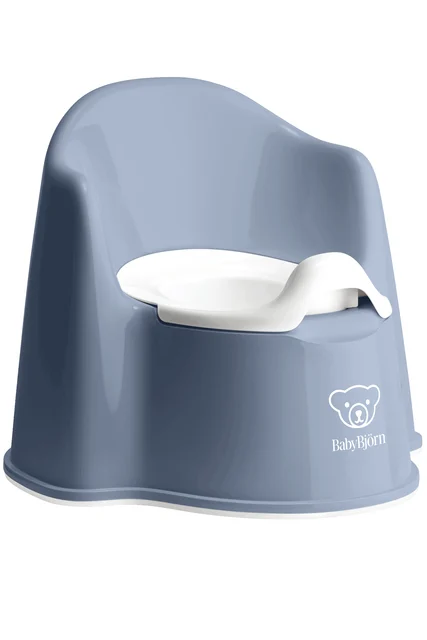
- Buy BabyBjorn Potty Chair A high-backed, one-piece floor potty that stays put, empties cleanly, and asks nothing of your toddler except to sit down.
- Buy BabyBjorn Toilet Training Seat A simple, grippy ring that shrinks the family toilet to toddler size with nothing to empty afterward.
- It depends OXO Tot 2-in-1 Go Potty A fold-flat travel potty that saves the day in the car or a strange bathroom - as long as you treat it as a backup, not your main potty.
- Skip Munchkin Arm & Hammer Multi-Stage 3-in-1 Potty The all-in-one that promises a potty, a toilet ring, and a step stool - and does each of the three jobs less well than a dedicated piece.
What actually matters
- Type - a standalone floor potty, a toilet-ring trainer seat, and a 3-in-1 convertible are built for different stages, and picking the wrong type first is the most common mistake new buyers make.
- Non-slip base or underside - a floor potty needs a wide, grippy base so it does not skid when a child climbs on or off; a toilet ring needs a rubber underside that holds firm on the toilet seat.
- Splash guard design and placement - the guard's shape and position decide whether it actually redirects a stream downward, which matters most for boys and for keeping the floor dry.
- Cleanup method - a floor potty needs a removable inner bowl that lifts out and rinses easily; a toilet ring needs nothing emptied at all, since waste flushes straight away.
- Portability and foldability - if you are often away from home, a fold-flat travel potty that collapses into a bag is a different purchase from your everyday training seat.
- Fit against your toilet - a ring's fixed shape suits standard round and oval seats well but can sit poorly on an unusually elongated or square seat, so check before buying.
- Independence for the child - a floor potty lets a toddler get on and off alone, while a toilet ring usually needs a step stool alongside it for the same independence.
The specs, in plain English
Green flags vs red flags
Green flags
- A wide, genuinely non-slip base that stays put when pushed sideways
- An inner bowl that lifts out in one piece and rinses clean quickly
- A splash guard that is tall enough and correctly angled, not just decorative
- A rubber underside on a toilet ring that grips real toilet-seat material, not just smooth plastic
- A travel potty with legs that lock with a firm, obvious snap
- A smooth, mostly seamless shell with few crevices to trap grime
Red flags
- A base that skids on tile or slides under light pressure
- A splash guard that pops off easily or is described by owners as fragile
- A fixed ring shape clearly designed for a different toilet outline than yours
- Legs on a folding potty that need real force to lock and still feel loose
- Lots of separate small parts with no clear way to clean between them
- Electronics, flushing sounds, or built-in wipe dispensers that add breakable parts without solving cleaning or stability
Who's who: the brands
- BabyBjorn - Known for simple, sturdy Scandinavian-designed potties and toilet-ring seats built around stability and easy cleaning rather than added features.
- OXO Tot - Maker of fold-flat travel potties designed to double as both a standalone potty and a public-toilet seat cover.
- Munchkin - Large juvenile-products brand behind budget-friendly multi-stage convertible potties that bundle several functions into one purchase.
- Fisher-Price - Mainstream brand with a wide range of potty products, from basic floor potties to step-stool and ring combinations.
- Summer Infant - Value-focused baby brand offering straightforward toilet-ring trainer seats and step stools sold separately or as sets.
How to read a listing without getting fooled
Start by identifying which of the three types you are actually looking at, since listings do not always make it obvious. A product photographed on a bathroom floor with a bowl is a standalone potty; one shown clamped onto a toilet is a ring; anything promising three stages in one box is a convertible, and deserves extra scrutiny. Next, look past the marketing language for the base or underside description: words like "non-slip," "rubber grip," or "weighted" are the actual safety spec, while a listing that skips this detail entirely is worth being cautious about. For a floor potty, confirm the inner bowl is described as removable, not just "easy to clean," since that phrase can mean anything. For a ring, check the seat shape against your own toilet, since round, oval, and elongated seats are not interchangeable. Finally, treat any convertible's list of stages as a set of compromises to verify individually rather than a single feature to trust at face value.
How much should you spend?
Spending more on a potty training seat mostly buys a better base or underside grip, a bowl or ring that is genuinely easy to clean, and a shell built to survive daily use without cracking. A basic floor potty or ring can work perfectly well for a family that only needs to cover the training months, provided the grip and cleanup are solid. The value sweet spot for most households is a simple, stable floor potty paired with a simple, secure toilet ring, bought separately rather than combined. Paying extra for a convertible 3-in-1 rarely buys convenience in practice, since it tends to compromise on grip, cleanup, or durability at each stage to fit all three functions into one product. A travel potty is worth its own separate spend only if you are genuinely out and about often; otherwise it is a purchase you can delay or skip.
Questions, answered
Should we start with a floor potty or a toilet-ring seat?
Most children do better starting with a floor potty. It sits low, lets a child climb on and off without help, and removes any fear of the big toilet or dangling feet. A toilet-ring seat is usually the better second step, once your child understands the idea and wants to use the same toilet as the rest of the family. Add a sturdy step stool alongside a ring so your child can stay independent.
Is a 3-in-1 convertible potty worth buying instead of separate pieces?
It can look like the efficient choice, but each stage typically works a little less well than a dedicated product. The detachable ring is often smaller and less secure on an adult toilet than a purpose-built ring, splash guards on convertibles are commonly reported as prone to popping off, and the step-stool stage tends to be short and less stable than a standalone stool. Buying a separate floor potty and ring usually costs little more and performs better at each stage.
Why does splash guard placement matter, especially for boys?
A stream aimed upward or outward, rather than down into the bowl, is one of the most common complaints with poorly designed seats. A splash guard built with boys in mind is taller and angled to redirect the stream downward, which keeps both the seat and the surrounding floor dry. Check that the guard's height and angle are described clearly, not just present as a small ridge.
Do we actually need a separate travel potty?
Only if you are frequently out of the house during training. A fold-flat travel potty is genuinely useful for road trips, long errands, and unfamiliar public bathrooms, since it works either as a standalone potty with a disposable liner or as a seat cover on a public toilet. It is not a good substitute for your everyday potty at home, since it is smaller and relies on liners you need to keep restocked.
How do I know a toilet-ring seat will fit our toilet?
Most ring-style seats are shaped for standard round and oval toilet seats and sit securely on them. Unusually elongated, square, or heavily contoured toilets are a poorer match, so compare the ring's shape against your actual seat before buying rather than assuming a universal fit. Whatever ring you choose, pair it with a step stool your child can use unaided.
What is the single feature most likely to determine whether a potty gets used?
Ease of cleaning, more than any other spec. A floor potty with a bowl that lifts out and rinses in seconds gets used consistently, while a fiddly one gets avoided by tired parents just as much as by kids. Stability is a close second, since a seat or potty that slides undermines a child's confidence no matter how good the rest of the design is.
Or jump to the head-to-head: BabyBjorn Potty Chair vs BabyBjorn Toilet Training Seat.