Explained
Pack 'n Plays, Explained
You'll understand the difference between a playard, a nursery center, and a travel crib, and know exactly which features are worth paying for based on how you'll use it.
In this guide
A "pack 'n play" has to do two jobs at once: be a safe place for a baby to sleep and a contained place for them to play. The names get muddy fast, though, because "Pack 'n Play" is really one brand's product that became a catch-all term for the whole category. The most common mistake first-time buyers make is buying for the wrong job, paying for a heavy, extras-loaded nursery center when they actually needed something light enough to fly with, or the reverse.
The 30-second version
- Match the category to the job first. a nursery center lives at home, a travel crib goes places, and choosing the wrong one is the most common regret.
- The fold matters more than the frame. almost all of them are sturdy enough; how big and heavy they are once collapsed is what you'll actually live with.
- Included extras add value only if you'll use them. a bassinet and changer are genuinely handy early on, but they also add bulk and cost you may not need.
- The firm, thin mattress is a feature, not a flaw. that firmness is a deliberate safe-sleep design, so don't try to "fix" it with extra padding.
- Read owner reports for long-term wear. setup gripes fade fast, but comments on seams, zippers, and mesh after months of use tell you what lasts.
The products this guide is about
Our verdict on each, with the full reasoning on the companion review.
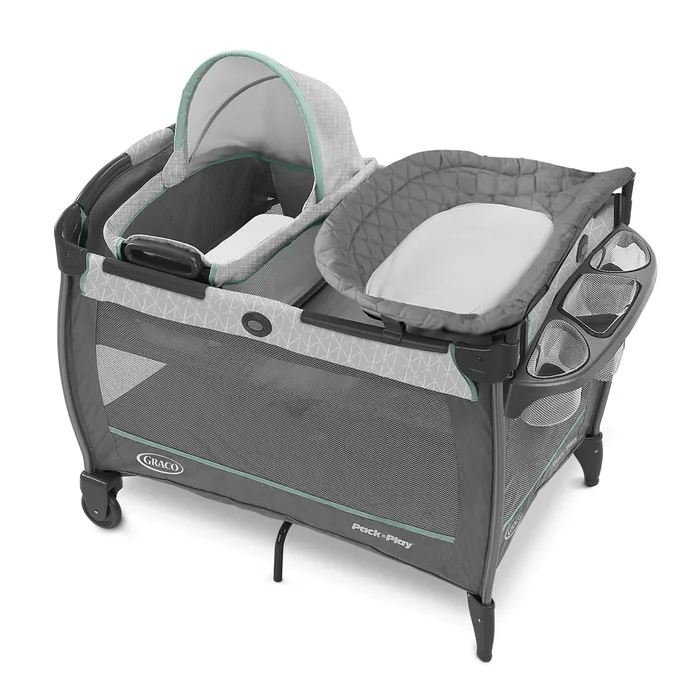
- Buy Graco Pack 'n Play Close2Baby Bassinet Playard A complete home nursery center, with two bassinets, a changer and storage built into one playard. Amazon
- Buy Guava Family Guava Lotus Everywhere Travel Crib The one to own if you actually travel - it folds into a backpack and sets up quickly. Amazon
- It depends 4moms Breeze Plus Playard The one-hand open-and-close is genuinely magic - if you can live with the weight and the price.
- Skip Baby Trend Lil' Snooze Deluxe III Nursery Center A feature checklist on paper, but bulky and with more wear complaints, while the Graco covers the same job. Amazon
What actually matters
- Product category - Decide up front whether you need a home base or a travel piece. A nursery center packs in a bassinet, changer, and storage for daily home use; a travel crib strips back to a light, packable crib. Buying across purpose is the biggest source of buyer's remorse.
- Packed size and weight - This is the single most practical spec. A unit that folds small and light enough for a plane or a closet lives a completely different life than one that only realistically moves from room to room.
- Setup and takedown ease - How many steps, and can you do it one-handed with a baby on your hip? Some fold in seconds tool-free; others are a multi-part wrestle. You'll do this more often than you expect.
- Included extras - A removable bassinet raises a newborn to a comfortable height, a changing station saves floor trips, and wheels and caddies add convenience. Each adds real value early, and real bulk you carry forever.
- Durability over months - The sleep surface and the mesh sides take daily use. Look for consistent long-term reliability in owner reports rather than a glossy first impression, especially at seams and zippers.
- Age and weight range - Most cover newborn through toddler, but bassinet inserts have their own lower weight limits, and floor-level travel cribs often have no upper cap because there's no raised platform to overload.
- Safe-sleep design - A firm, flat surface, a snugly fitting sheet made for that exact model, and no add-on padding. This is non-negotiable and should shape which extras you trust.
The specs, in plain English
Green flags vs red flags
Green flags
- The category clearly matches your use: a nursery center if it lives at home, a travel crib if it moves.
- A firm, flat sleep surface with a fitted sheet sold specifically for that model.
- Consistent long-term durability in owner reports, especially at seams, zippers, and mesh.
- A fold and weight that realistically fit where it needs to go, your trunk, closet, or overhead bin.
- Clear, honest age and weight limits stated for both the main floor and any bassinet insert.
Red flags
- A spec sheet stuffed with extras but vague or mixed reports on how well it holds up.
- Marketing that suggests adding a thicker aftermarket mattress or extra padding for "comfort."
- A travel crib that's actually heavy and bulky once folded, defeating its whole purpose.
- No model-specific fitted sheet available, forcing a loose, general-size sheet.
- Setup that owners repeatedly describe as a multi-part struggle you'll face every single time.
Who's who: the brands
- Graco - The brand behind the original "Pack 'n Play"; known for dependable, widely available nursery-center playards at mid-range prices.
- Guava Family - Makers of the Lotus travel crib line, focused on lightweight, backpack-packable cribs with certified low-emission materials.
- 4moms - Premium baby-gear maker known for engineering-forward touches like a genuine one-handed open-and-close mechanism.
- Baby Trend - Budget-friendly brand that bundles lots of features (bassinet, changer, music center) at low prices, with more variable durability.
How to read a listing without getting fooled
Start by placing the product in a category before you read a single feature: is this a heavy nursery center meant to stay home, or a light travel crib meant to move? A long list of included extras looks impressive but tells you nothing about how the thing lives day to day, so weigh the packed dimensions and weight just as heavily as the feature bullets. Treat "newborn to toddler" as a headline, then look for the fine print: bassinet inserts have their own lower weight limits, and the main floor has its own. When a listing brags about a plush or thick mattress, read it as a caution rather than a selling point; the safe surface is firm and flat by design. Finally, discount first-impression praise and hunt for comments from owners months in, which is where seams, zippers, and mesh reveal whether it was built to last.
How much should you spend?
Price mostly tracks two things: how many extras are bundled in and how cleverly the thing folds and travels. At the budget end you can get a full feature list on paper, bassinet, changer, music center, but that's often where durability and materials get thinner, so the lowest price can cost you sooner. The sensible-value sweet spot for a home base is a well-known mid-range nursery center that includes the bassinet and changer and has a long track record of holding up; paying more than that at home mainly buys convenience like a one-handed fold, which is worth it only if you set up and pack down daily. Travel cribs are their own pricing world: you pay a premium for lightweight, packable engineering and low-emission certification, and if you actually fly or live small, that premium buys something the cheaper units simply can't do. Spending more is worth it for genuine portability or daily-setup convenience; it's wasted if you're paying for extras you'll never unpack.
Questions, answered
What's the difference between a pack 'n play, a playard, and a travel crib?
They overlap heavily. "Playard" is the neutral umbrella term for the folding, mesh-sided enclosure. "Pack 'n Play" is a brand name (Graco's) that became a generic nickname for them. A nursery center is a playard with a bassinet, changing station, and storage added for home use, while a travel crib strips all that back to a lightweight crib designed to fold small and travel. Same family, different jobs.
Do I need to buy a separate mattress or extra padding?
No, and you specifically shouldn't. As a general safe-sleep principle, use only the firm mattress or pad that came with the unit, paired with a snug fitted sheet made for that exact model, and skip all extra bedding, thick aftermarket mattresses, pillows, and bumpers. That firm, flat surface is a deliberate safety feature, not something to "upgrade." This is general product information, not medical advice; always follow the product's own instructions and consult a pediatric professional with any sleep-safety questions.
Which type is actually best for air travel?
A dedicated travel crib, not a nursery center. Travel cribs are the kind that fold small and light enough to realistically carry through an airport, often into an included backpack. Nursery-center playards pack into large, heavy bags meant for a car trunk, not a plane, so if flying is your real need, buy for portability first.
Are the bundled extras like a bassinet and changer worth it?
Early on, yes, if you'll use them. A raised bassinet saves your back with a newborn, and a changing station saves trips across the house in the first months. But both add bulk and weight you'll carry for the product's whole life, and they get used less as the baby grows. If you already have a separate changing setup, you may be paying for bulk you don't need.
Can a playard be used as a full-time crib?
For the first several months, many families do use one as the primary bed, since a unit built to the safety standard gives a firm, flat sleep surface. As babies get bigger and more mobile, most parents move nightly sleep to a standard crib and keep the playard for daytime play, travel, and grandparents' houses. Always follow the specific model's stated age and weight limits.
Or jump to the head-to-head: Graco Pack 'n Play Close2Baby Bassinet Playard vs Guava Family Guava Lotus Everywhere Travel Crib.