Explained
Nose Hair Trimmers, Explained
After reading, you'll understand how a nose trimmer cuts without pulling, what the water claims on the box really mean, and which specs are worth paying for.
In this guide
Nose hair trimmers look almost identical, so first-time buyers tend to shop on price or brand alone. The real differences sit in small print: the shape of the cutter, whether the maker states a waterproof rating or just says washable, how the head gets cleaned, and what powers it. Marketing words like "painless" tell you little. A stated water rating and a stated warranty tell you much more.
The 30-second version
- The guard does the safety work, so look for blades that sit behind a slotted cap rather than exposed edges.
- Washable is not waterproof, and only a stated waterproof rating means the maker expects shower use.
- Cleaning matters more than motor speed, because a small cutter clogs quickly and a clogged cutter pulls.
- A single AA is perfectly practical, since most people use a nose trimmer for a minute or two a week.
- The warranty is the best durability clue, so favor makers that state two or three years on the product page.
The products this guide is about
Our verdict on each, with the full reasoning on the companion review.
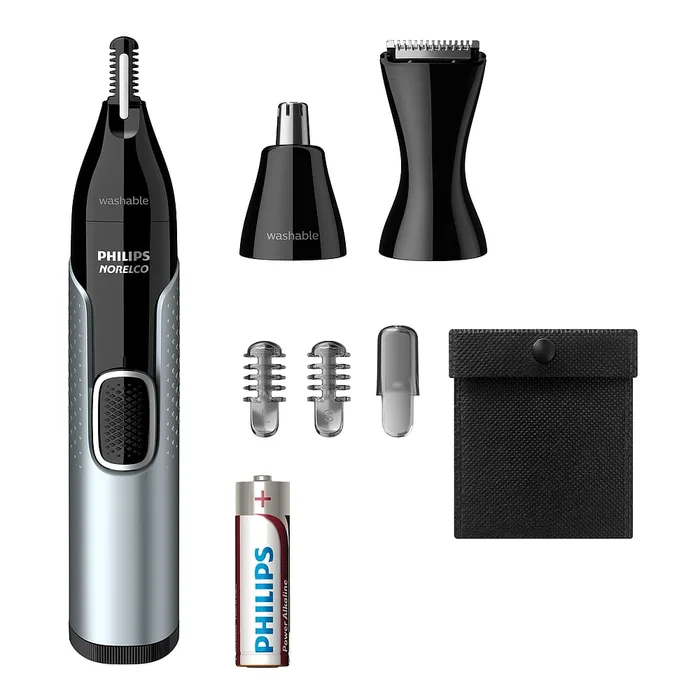
- Buy Philips Norelco Nose Trimmer 5000 (NT5600/62) A complete nose, ear and brow kit with three trimmer heads, two eyebrow guards and a 2-year warranty. Amazon
- Buy Panasonic ER-GN30 Ear, Nose & Facial Hair Trimmer A simple, fully waterproof single-head trimmer with curved dual-edge blades and a fast rinse clean. Amazon
- Buy Remington Nose, Ear & Detail Trimmer with CLEANBoost (NE3845C) A 100% waterproof trimmer with vertical and rotary heads and a push-button blade washout. Amazon
- It depends Wahl Ear, Nose & Brow 3-in-1 Battery Trimmer (05545-400) A three-head battery trimmer with the longest stated warranty here, but no published water rating. Amazon
- It depends MANGROOMER INTELLIMAX PRO Nose and Ear Trimmer A USB-C rechargeable rotary trimmer with a swappable battery, a spare cutter and a 100% waterproof body. Amazon
- Skip Pete & Pedro Nose & Ear Hair Trimmer w/ 3 Attachments A USB-rechargeable three-head trimmer let down by a vague water claim, a slow charge and an unguarded eyebrow head. Amazon
What actually matters
- Cutter type - Rotary heads spin blades behind a round guard; dual-edge or vertical heads also cut along the sides. Nostril shape decides which feels better.
- Guard design - The slots let hair in and keep skin out. A well-made guard is what stops nicks and tugging.
- Water rating - Fully waterproof means rinse it and use it wet. Washable or water-resistant alone does not promise shower use.
- Cleaning system - Washout buttons and rinse channels flush clippings out of the head. Without one, you rely on a brush.
- Power source - AA models are cheap and easy to keep running. Rechargeable models skip batteries but add charge time and a cell that can wear out.
- Included heads - Detail heads and eyebrow combs add range. They are only worth paying for if you will use them.
- Stated warranty - Two or three years on the maker page is a meaningful signal on a cheap tool. No stated warranty is a gap worth noticing.
The specs, in plain English
Green flags vs red flags
Green flags
- Blades sit behind a slotted guard or cap
- A stated fully waterproof or 100% waterproof rating
- A washout button or rinse system for the head
- A warranty length stated on the maker page
- Included heads and combs match how you will use it
Red flags
- Only "water-resistant" with no rating, but shower use suggested
- No warranty length anywhere on the product page
- An eyebrow head with no guard or comb
- Long charge times for short runtimes on rechargeable models
- Award badges in place of specs in the product images
Who's who: the brands
- Philips Norelco - Known for multi-head nose trimmer kits with its Protective Guard System and stated 2-year warranties.
- Panasonic - Known for compact waterproof trimmers with curved dual-edge blades and rinse-clean heads.
- Remington - Known for budget trimmers with washout features such as CLEANBoost and stated waterproof ratings.
- Wahl - Known for barber clippers and simple battery trimmers, with warranties of up to 3 years on some models.
- MANGROOMER - Known for back shavers and body groomers, plus a swappable rechargeable battery shared across its INTELLIMAX PRO line.
How to read a listing without getting fooled
Start with the box contents, because they tell you which heads and combs you actually get and whether a battery is included. Next, find the exact water wording: fully waterproof or a stated percentage means the maker expects wet use, while washable or water-resistant is weaker. Look for how the head is cleaned, whether by washout button, rinse channel or brush. Check the power line for AA versus rechargeable, and on rechargeable models look for both charge time and runtime. Finally, find the warranty. If a spec is missing from the maker page, assume it is not a selling point.
How much should you spend?
Most good nose and ear trimmers sit in the budget tier, and paying more rarely buys a better cut. Budget AA models from the major grooming brands cover the essentials, often with a stated waterproof rating and a two- or three-year warranty. Mid-range prices usually buy a rechargeable battery, extra heads or a spare cutter. There is little reason to go premium for a tool this small; spend the difference on a model with a clear water rating and warranty.
Questions, answered
How often should I trim nose hair?
Whenever hair starts to show at the nostril opening, which for many people is every week or two. A quick pass takes under a minute. Trim only what is visible, since nose hair helps filter the air you breathe. Clean the head after each use so it does not clog.
Why does my trimmer pull instead of cut?
The usual cause is a clogged or dull cutter, or a weak battery. Rinse or brush out the head, then fit a fresh battery or charge it. If it still pulls, the blade may need replacing; some makers sell replacement heads.
Can I use a nose trimmer on my eyebrows?
Many trimmers include a detail head and an eyebrow comb for exactly that. The comb keeps the blade off the skin so brows are shortened evenly. Without a comb, a trimmer will cut brow hair very short, so go slowly.
Should I oil a nose trimmer?
Follow your model's instructions. Some battery trimmers ship with oil and a brush, while others are designed to be rinsed under water instead. If the manual does not mention oil, do not add it.
Or jump to the head-to-head: Philips Norelco Nose Trimmer 5000 (NT5600/62) vs Panasonic ER-GN30 Ear, Nose & Facial Hair Trimmer.