Explained
Music Streamers, Explained
After reading, you'll understand which streaming protocols, DAC figures and connections matter for your amplifier and speakers, and which spec-sheet numbers you can ignore.
In this guide
First-time buyers often assume every streamer plays every service the same way, then find their phone cannot cast to it. Others chase sample-rate numbers while missing that the box has no input for their TV. Streamers also differ in whether their built-in DAC is good enough to use, or whether they are meant to feed a separate converter. Reading the protocol list and the connection panel first avoids most of these mistakes.
The 30-second version
- Protocol support decides daily use, so match AirPlay 2, Google Cast or Spotify Connect to the phones and apps in your home.
- A published DAC spec is a good sign, because makers who list SNR and THD+N give you something real to compare.
- Sample rates above 24-bit/192 kHz only matter if you own files recorded at those rates.
- HDMI ARC or eARC is the clean way to run TV sound through a stereo streamer.
- Room correction can do more for sound than a better DAC chip in most living rooms.
The products this guide is about
Our verdict on each, with the full reasoning on the companion review.
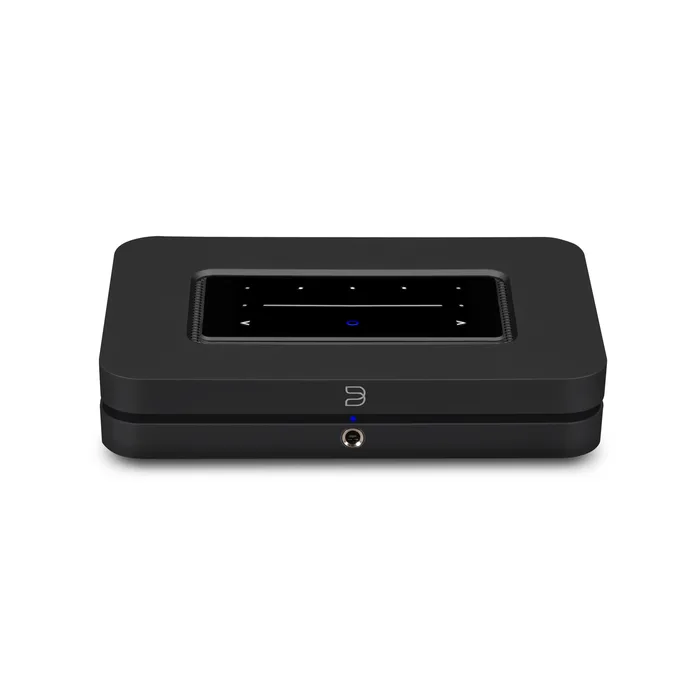
- Buy Bluesound NODE The most complete streamer here, with HDMI eARC, a THX AAA headphone amp and almost every casting protocol that matters.
- Buy WiiM Pro Plus A small streamer with a strong built-in DAC, both AirPlay 2 and Google Cast, and room correction for a fraction of the premium spend.
- It depends Eversolo DMP-A6 Gen 2 A full-size touchscreen player built around a local music library, with balanced outputs and an internal SSD slot.
- Skip Sonos Port A tidy way to add a stereo to a Sonos system, but a weak buy as a hi-fi streamer.
What actually matters
- Casting protocols - AirPlay 2 serves Apple devices and Google Cast serves Android and Chrome apps. A streamer that lacks the one your household uses forces you back to Bluetooth.
- Service Connect support - Spotify Connect, TIDAL Connect and Qobuz Connect let the service stream directly to the box. Your phone becomes a remote, so calls and battery drain do not interrupt playback.
- DAC quality - The DAC turns digital music into the analog signal your amplifier needs. A good built-in DAC with published SNR and distortion figures saves buying a separate converter.
- Outputs - RCA suits most amplifiers and powered speakers, while XLR suits balanced gear. Optical, coax and USB outputs let you keep using an external DAC you already own.
- Inputs - HDMI ARC or eARC, optical and line-in decide whether a TV, CD player or turntable can play through the same system. Some streamers can also share those inputs to other rooms.
- Room correction and EQ - Tools like RoomFit or Dirac Live measure your room and adjust the response. Bass peaks from room shape are often the biggest flaw in a home system.
- Network connection - Ethernet is more reliable than Wi-Fi for large hi-res files. Gigabit ports and Wi-Fi 5 or newer give more headroom than older standards.
The specs, in plain English
Green flags vs red flags
Green flags
- The maker names the DAC chip and publishes SNR and THD+N figures.
- AirPlay 2 and Google Cast are both listed, or the one your household needs is.
- Wired Ethernet is included alongside dual-band Wi-Fi.
- Inputs and outputs match your gear, including HDMI ARC if a TV is involved.
- Room correction or a detailed EQ is built in or supported.
Red flags
- No DAC, sample-rate or distortion figure anywhere on the spec sheet.
- Only one casting protocol, and it is not the one your phone uses.
- Digital output limited to a single connector type you do not have.
- An app requirement that ties the box to one brand's ecosystem.
- Headline sample rates promoted while basic connections are missing.
Who's who: the brands
- Bluesound - Known for its BluOS multiroom platform and the long-running NODE streamer.
- WiiM - Known for compact, well-equipped streamers that support both AirPlay 2 and Google Cast at modest prices.
- Eversolo - Known for full-size touchscreen streamers built around local music libraries.
- Sonos - Known for multiroom speakers and an app-driven ecosystem rather than hi-fi spec sheets.
How to read a listing without getting fooled
Start with the protocol list and make sure the casting method your household uses is there. Then read the connection panel: count the analog outputs, digital outputs and inputs, and check them against your amplifier, TV and any turntable or CD player. Next, look for the DAC chip name and the published SNR and THD+N figures for the analog output you will use, since some makers list different figures for XLR and RCA. Treat sample-rate ceilings as a check that your files are covered, not as a quality score. Finally, note the network spec, the power supply and what comes in the box, such as a remote or cables.
How much should you spend?
Budget and lower mid-range streamers now cover the core job well: casting, a decent DAC and the basic outputs. Mid-range models add better published DAC figures, room correction and remotes. Premium streamers earn their tier with HDMI eARC, headphone amps, subwoofer outputs, balanced outputs, screens or storage, so pay up only for a connection or feature you will use. Be wary of premium-priced boxes that publish few specs; in this category, the spec sheet is the clearest sign of what you are paying for.
Questions, answered
Can I use a music streamer with powered speakers?
Yes, as long as the speakers have an input that matches one of the streamer's outputs. Most powered speakers take RCA, and some take optical or coax. Use the streamer's volume control if the speakers have no remote. A 12V trigger is rarely useful here unless the speakers have a trigger input.
Can I connect a turntable to a music streamer?
Yes, through a line input, but the turntable must have a built-in phono preamp or go through a separate one first. A line input expects a much stronger signal than a cartridge produces. Some streamers can then share the turntable to other rooms on the same system.
Does a streamer need a wired network connection?
No, all four here work over Wi-Fi. Ethernet is still the more reliable choice for large hi-res files or a congested network. If your router is nearby, a cable removes one common cause of dropouts.
Will a streamer from one brand work with another brand's speakers?
For playback, yes, because the streamer simply feeds an amplifier or powered speakers through a standard connection. Multiroom grouping is where brands differ. AirPlay 2 and Google Cast can group across brands, while ecosystems like Sonos and BluOS group best with their own products.
Or jump to the head-to-head: Bluesound NODE vs WiiM Pro Plus.