Explained
Outdoor Speakers, Explained
After reading, you'll understand how permanent outdoor speakers actually work and which specs genuinely change what you hear in your yard.
In this guide
Permanent outdoor speakers are a different animal from the portable Bluetooth pucks you toss in a cooler: they are passive, weather-sealed boxes wired to an amplifier, built to stay mounted year-round. First-time buyers usually trip over two things: assuming these speakers are 'powered' like a Bluetooth unit, and chasing big spec numbers when, outdoors, even coverage and durability matter far more. This guide decodes the terms so you buy the right thing once.
The 30-second version
- Passive, not powered. these speakers have no battery and no built-in Bluetooth; you drive them from a separate amplifier or receiver, so budget for one.
- Weatherproofing is survival, not a feature. weather-resistant cabinets, rust-resistant hardware, and UV-stable finishes decide whether your speaker sounds great two summers later or fails after one winter.
- Outdoors, dispersion beats raw wattage. with no walls or ceiling to reinforce sound, even coverage from well-placed speakers matters more than peak volume or a big power rating.
- Check whether you're buying one speaker or a pair. a single flagship unit can cost more than a complete mid-range pair, so compare on what actually lands on your doorstep.
- Camouflage costs clarity. rock speakers hide beautifully in landscaping but their irregular sealed shape and low placement blur detail, so buy them only when looks are the whole point.
The products this guide is about
Our verdict on each, with the full reasoning on the companion review.
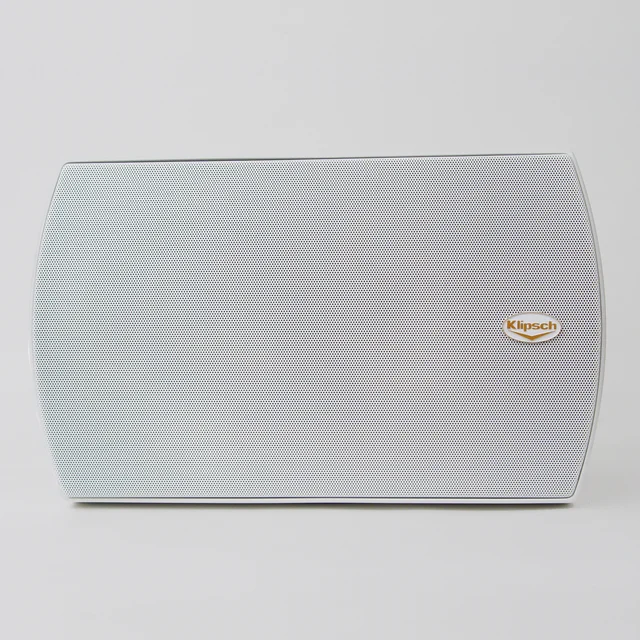
- Buy Klipsch AW-650 All-Weather Outdoor Speaker (Pair) The crisp, detailed patio-mount pair that most people should just buy and forget about. Amazon
- Buy Polk Audio Atrium 8 Outdoor Speaker (Pair) The value pick that trades a little finesse for bigger, fuller sound and the easiest mounting here. Amazon
- It depends OSD Audio RX805 8-Inch Rock Speaker (Pair) Disappears into the landscaping beautifully, but you give up clarity and imaging to get that camouflage. Amazon
- Skip Sonance Mariner 66 Outdoor Speaker A superb custom-install speaker that is flagship-priced, sold one at a time, and overkill for a normal backyard. Amazon
What actually matters
- Weatherproofing and durability decide the whole purchase, because a speaker that dies after one winter is a bad buy no matter how it sounds. Look for weather-resistant cabinets, treated drivers, rust-resistant hardware, and UV-stable finishes, especially near coast or in harsh sun.
- Sound clarity and dispersion matter more outdoors than raw power. With no room to reinforce it, sound spreads out and thins, so honest midrange, clear highs, and wide, even coverage beat a big spec sheet.
- What you actually get for the money varies: some models are sold as a ready-to-mount pair, others one at a time. Always confirm before comparing prices.
- Install effort covers mounting brackets, cable runs, and sheer weight. An included bracket and a tool-friendly design save real time; heavy speakers need solid anchoring.
- Visual footprint is a satisfaction driver, not a spec. Decide up front whether you want a discreet wall box or a hidden rock, because that choice shapes both looks and sound.
- Amplification needs apply to every passive speaker. Match the amp's power to your zone, and consider a multi-zone amp or speaker selector if you're wiring more than one pair.
- Coverage planning matters for bigger spaces: two well-placed pairs on separate zones usually sound better than one pair cranked loud and harsh.
The specs, in plain English
Green flags vs red flags
Green flags
- Sold as a ready-to-mount pair with an included bracket, so install is simpler and you're not buying half a system.
- Explicit weather testing or rating against heat, humidity, UV, and (near coast) salt fog, with weatherproofed drivers and rust-resistant hardware.
- A design that pairs a clear tweeter with a properly sized woofer, so highs stay crisp and coverage is even outdoors.
- Available in black or white so it blends into a wall or eave, or a molded finish if you genuinely need it to hide.
- Long-term owner reports describing multiple seasons outside without failure, not just first-week impressions.
Red flags
- A listing that hides whether you're getting one speaker or a pair, which can make a flagship look deceptively affordable.
- Marketing that leans on huge wattage or bass numbers while saying little about weather sealing or materials.
- A rock or novelty enclosure sold purely on looks, with no honest acknowledgment of the clarity trade-off.
- No mention of mounting hardware, weight, or how the speaker attaches, which often means a fiddly or heavy install.
- Any implication that the speaker is 'wireless' or self-powered when it's actually a passive speaker needing an amp.
Who's who: the brands
- Klipsch - Known for horn-loaded tweeters that keep highs crisp and detailed, a house sound that pays off outdoors.
- Polk Audio - Value-focused brand whose outdoor line emphasizes full sound, easy mounting, and testing against sun and salt.
- OSD Audio - Specialists in landscape and rock speakers designed to disappear into gardens and flower beds.
- Sonance - Premium custom-install brand favored by integrators for high-end, architectural, and coastal outdoor systems.
How to read a listing without getting fooled
Start by confirming the fundamentals a marketing headline tends to skip. First, is it passive? Almost always yes, which means you'll need an amp or receiver, so don't be fooled by anything implying it's wireless or self-powered. Second, is the price for one speaker or a pair? This single detail can make a flagship look cheaper than a full mid-range set. Then read the durability language literally: 'weather-resistant' is vaguer than a stated test against heat, humidity, UV, and salt fog, and you want to see weatherproofed drivers and rust-resistant hardware spelled out. Treat woofer size and wattage as rough context, not a ranking, because outdoors dispersion and clarity decide how it actually sounds. Finally, check what's in the box for mounting, since an included bracket and manageable weight save you real time and money on the install.
How much should you spend?
Outdoors, the gap between a good speaker and a great one narrows fast, because open air, wind, and reflections erase the fine differences you'd hear in a treated room. That makes the mid-range the value sweet spot for most patios and decks: a solid weather-sealed pair delivers the clarity, coverage, and durability the overwhelming majority of yards ever need. Spending more genuinely pays off in two cases, harsh coastal environments where marine-grade construction earns its keep, and high-end custom installs run by an integrator, where refined voicing and finish matter and the budget already assumes it. For a normal backyard, a flagship speaker sold one at a time rarely delivers enough audible advantage to justify costing more than a complete mid-range pair. Spend your money first on durability and correct placement, then on sound; and if the budget is tight, a second well-placed pair usually improves real-world listening more than one pricier pair ever will.
Questions, answered
Do I really need a separate amplifier?
Yes, for permanent outdoor speakers you almost always do. They're passive, meaning no battery and no built-in Bluetooth, so any home receiver or integrated amp with enough power for your zone will drive them. For long cable runs or multiple pairs, a dedicated multi-zone amp or a speaker selector keeps volume even and the amp comfortable.
How are these different from portable Bluetooth outdoor speakers?
Completely different. Portable Bluetooth speakers are powered, have a battery, and connect wirelessly for a few hours before recharging. Permanent outdoor speakers are passive and wired to an amp, with no battery to babysit, which is exactly what lets them fill a whole yard and play all day.
Are rock speakers worth it, or just a gimmick?
They're worth it for one specific job: making the speaker vanish into landscaping, which matters if you or an HOA don't want boxes on the wall. The honest trade-off is that the irregular sealed shape and low, upward-firing placement blur detail and imaging, and plants can block the sound. If looks aren't a constraint, a mounted pair sounds better for the money.
How many speakers do I need to cover my space?
For a typical patio or deck, one stereo pair placed a few feet apart and angled toward the seating area is plenty. For larger yards, pool areas, or L-shaped spaces, adding a second pair on a separate zone beats cranking one pair, keeping volume even and avoiding a single harsh, loud corner.
How weatherproof are these speakers really?
Good ones use weather-resistant cabinets, rust-resistant hardware, UV-stable materials, and treated drivers, and both independent testing and long-term owner reports back up multi-season survival in sun, rain, humidity, and salt air. They're built to live outside year-round. Mounting under an eave and angling them slightly downward still extends their life, and rock speakers shouldn't sit in standing water or under sprinkler spray.
Does a bigger woofer or higher wattage mean better outdoor sound?
Not directly. A larger woofer can add fullness and a higher power rating can add headroom, but outdoors there are no walls or ceiling to reinforce sound, so even dispersion and clear midrange matter more than peak specs. Two well-placed speakers almost always sound better than one loud one, regardless of the numbers on the box.
Or jump to the head-to-head: Klipsch AW-650 All-Weather Outdoor Speaker (Pair) vs Polk Audio Atrium 8 Outdoor Speaker (Pair).