

Audio & Headphones
The Best Outdoor Speakers: 4 Compared (and One to Skip)
We compared four permanent-mount and rock outdoor speakers on real-world patio sound, weatherproofing, install effort, looks, and value.
The short version
For a permanently mounted patio or deck, the Klipsch AW-650 pair is the safe, clear-sounding choice most people should buy, and the Polk Audio Atrium 8 is the value alternative with fuller sound and the simplest mounting. Rock speakers like the OSD Audio RX805 make sense only when hiding the speaker matters more than hearing it at its best, since the disguised enclosure trades away clarity and imaging. The Sonance Mariner 66 is a genuinely excellent custom-install speaker, but it is flagship-priced, typically sold one at a time, and delivers little audible advantage outdoors over a good mid-range pair, so it is a skip for almost everyone. All four are passive and need an amplifier or receiver. Best for: anyone wiring up a yard who wants durable, great-sounding permanent speakers without overpaying.
Our picks at a glance
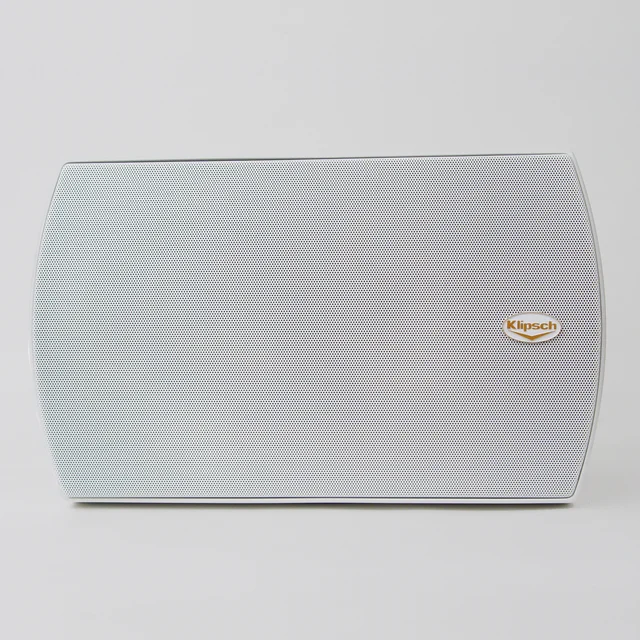
- Klipsch AW-650 All-Weather Outdoor Speaker (Pair) - Buy. The crisp, detailed patio-mount pair that most people should just buy and forget about.
- Polk Audio Atrium 8 Outdoor Speaker (Pair) - Buy. The value pick that trades a little finesse for bigger, fuller sound and the easiest mounting here.
- OSD Audio RX805 8-Inch Rock Speaker (Pair) - It depends. Disappears into the landscaping beautifully, but you give up clarity and imaging to get that camouflage.
- Sonance Mariner 66 Outdoor Speaker - Skip. A superb custom-install speaker that is flagship-priced, sold one at a time, and overkill for a normal backyard.
The verdict in 30 seconds
What mattered most
- Sound clarity & detail
- Bass & low-end output
- Weatherproofing & durability
- Install & mounting ease
- Visual discretion
- What you get
Outdoor speakers that stay mounted year-round are a different animal from the portable Bluetooth pucks you toss in a cooler bag: they are passive, weather-sealed, and wired to an amp so they can fill a whole yard without a battery to babysit. We synthesized independent testing and long-term owner reports on the mounted patio boxes and camouflaged rock speakers people actually keep buying in 2026. Two of these earn an easy recommendation, one is a fine choice only if you value hiding the speaker over hearing it at its best, and one is a genuinely good speaker that is still the wrong buy for almost everyone.
The crisp, detailed patio-mount pair that most people should just buy and forget about.
Best for: Most patios and decks that want clear, articulate sound from a fuss-free wall-mount pair.
- Titanium dome tweeter on a Tractrix horn gives vocals and acoustic detail unusual clarity outdoors, where sound normally goes muddy
- Sold as a ready-to-mount pair with an included bracket, in black or white to blend into a wall or eave
- Reviewers and owners consistently rate its weather sealing and multi-season durability as a strength
- At 6.5 inches it needs a subwoofer or a second pair for big, party-level low end across a large yard
- The bright Klipsch voicing can sound a touch forward to listeners who prefer a warmer, laid-back tone
Own the Klipsch AW-650 All-Weather Outdoor Speaker (Pair)? Tell us how it held up.
Thanks. Counted, and shown once enough owners have weighed in.
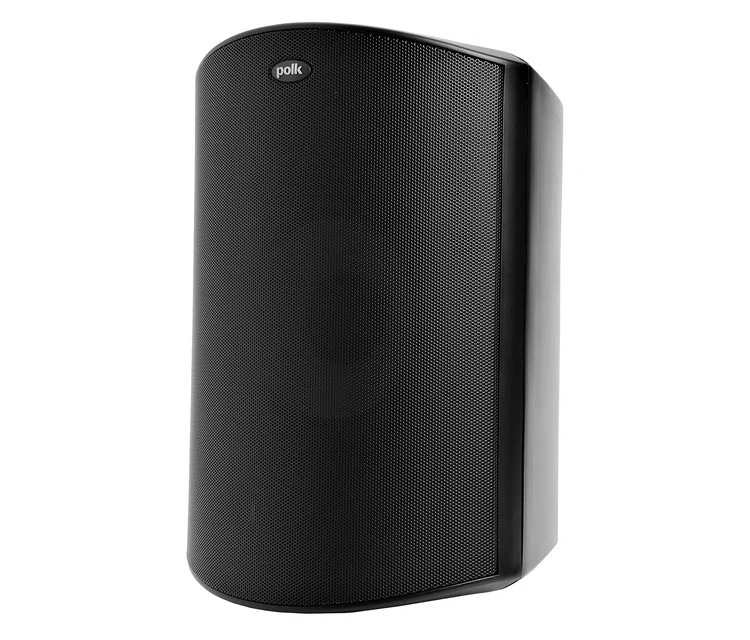
The value pick that trades a little finesse for bigger, fuller sound and the easiest mounting here.
Best for: Budget-conscious buyers who want room-filling volume and a painless install over last-word detail.
- PowerPort bass venting and a larger cabinet give it noticeably fuller low end than most speakers its size
- The tool-friendly Speed-Lock mounting bracket makes install the simplest of the group, per owner reports
- Polk says the Atrium line exceeds industrial and military specs for UV, salt fog, immersion, and corrosion, so it suits coastal and sun-baked spots
- Highs are a bit softer and less detailed than the Klipsch, so it rewards volume over critical listening
- The chunky enclosure is more visible on a wall than slimmer architectural designs
Own the Polk Audio Atrium 8 Outdoor Speaker (Pair)? Tell us how it held up.
Thanks. Counted, and shown once enough owners have weighed in.
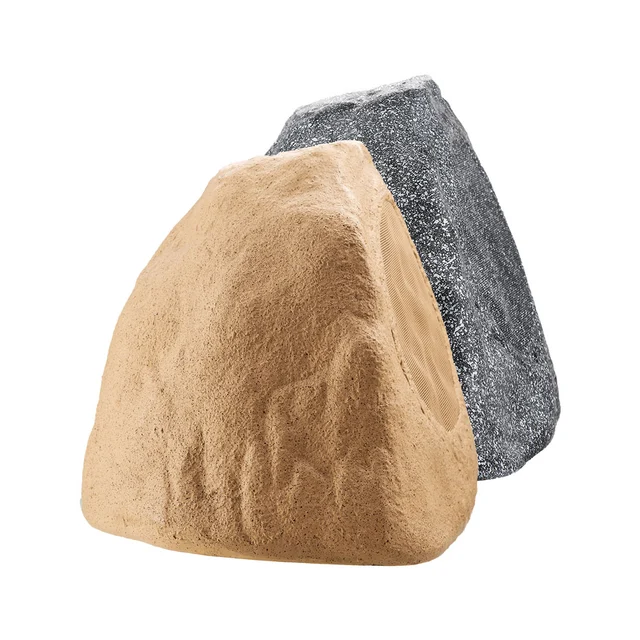
Disappears into the landscaping beautifully, but you give up clarity and imaging to get that camouflage.
Best for: Yards and gardens where the speaker must vanish visually and background ambiance beats critical fidelity.
- The molded rock enclosure genuinely hides in flower beds and along paths
- An 8-inch woofer moves enough air to cover a lawn or pool area with easygoing background sound
- Weatherproof enclosure is built to sit outside in the dirt year-round without a bracket or wall
- The irregular, sealed rock shape smears imaging and detail; owners describe the sound as diffuse rather than precise
- Placed low in landscaping and firing upward, it is easily blocked by plants and loses presence
- Heavy and awkward to reposition once wired and settled into a bed
Own the OSD Audio RX805 8-Inch Rock Speaker (Pair)? Tell us how it held up.
Thanks. Counted, and shown once enough owners have weighed in.
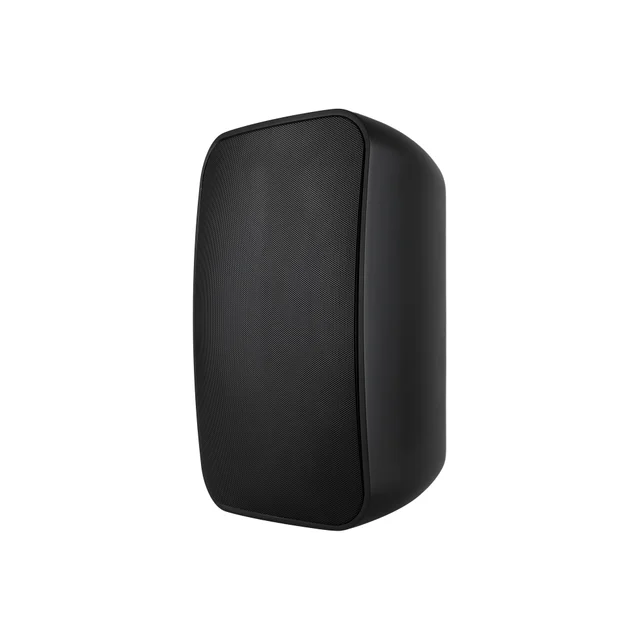
A superb custom-install speaker that is flagship-priced, sold one at a time, and overkill for a normal backyard.
Best for: High-end custom installs and coastal homes with an integrator and budget to match, not typical DIY patios.
- Marine-grade construction and finish are a clear step above the mainstream pack for coastal and premium installs
- Refined, even voicing that integrators trust in high-end multi-zone outdoor systems
- Discreet, architectural low-profile look
- Priced at flagship level and typically sold individually, so a stereo pair costs far more than a full pair from our top picks
- Passive and install-oriented: it expects a capable amp or distribution system, not a casual hookup
- Outdoors, where reflections and open air dominate, most listeners will not hear enough gain over a mid-range pair to justify the spend
Own the Sonance Mariner 66 Outdoor Speaker? Tell us how it held up.
Thanks. Counted, and shown once enough owners have weighed in.
| Criteria | Klipsch AW-650 All-Weather Outdoor Speaker (Pair) Top pick Buy it Buy | Polk Audio Atrium 8 Outdoor Speaker (Pair) Buy it Buy | OSD Audio RX805 8-Inch Rock Speaker (Pair) It depends Buy | Sonance Mariner 66 Outdoor Speaker Skip it Buy |
|---|---|---|---|---|
| Best for | Most patios and decks that want clear, articulate sound from a fuss-free wall-mount pair. | Budget-conscious buyers who want room-filling volume and a painless install over last-word detail. | Yards and gardens where the speaker must vanish visually and background ambiance beats critical fidelity. | High-end custom installs and coastal homes with an integrator and budget to match, not typical DIY patios. |
| Price tier | $$ · mid-range | $$ · mid-range | $$ · mid-range | $$$$ · flagship |
| Sound clarity & detail | Excellent - crisp horn-loaded highs | Good - fuller but softer highs | Fair - diffuse, imprecise imaging | Excellent - refined and even |
| Bass & low-end output | Moderate (6.5") | Strong for its size (PowerPort) | Strong (8" woofer) | Moderate (6.5") |
| Weatherproofing & durability | Strong, multi-season | Strong, rated for UV, salt fog & immersion | Strong, sits in the dirt year-round | Strong, marine-oriented |
| Install & mounting ease | Easy - bracket included | Easiest - Speed-Lock bracket | Set-and-place, no wall needed | Integrator-oriented, not casual DIY |
| Visual discretion | Visible wall box | Bulkier wall box | Hides in landscaping | Low-profile architectural |
| What you get | Sold as a pair | Polk sells it individually; one SDI unit can play stereo | Sold as a pair | Typically sold individually |
| Needs a separate amp | Yes | Yes | Yes | Yes - and a capable one |
| Price tier | $$ · mid-range | $$ · mid-range | $$ · mid-range | $$$$ · flagship |
Which one is right for you?
- Most patios and decks that want clear, articulate sound from a fuss-free wall-mount pair. Buy it Klipsch AW-650 All-Weather Outdoor Speaker (Pair)
- Budget-conscious buyers who want room-filling volume and a painless install over last-word detail. Buy it Polk Audio Atrium 8 Outdoor Speaker (Pair)
- Yards and gardens where the speaker must vanish visually and background ambiance beats critical fidelity. It depends OSD Audio RX805 8-Inch Rock Speaker (Pair)
- High-end custom installs and coastal homes with an integrator and budget to match, not typical DIY patios. Skip it Sonance Mariner 66 Outdoor Speaker
How we judged the field
We do not run our own outdoor listening lab. Instead, we synthesized independent testing and a large pool of long-term owner reports, then weighed the things that actually decide whether you are happy with an outdoor speaker two summers later.
Sound outdoors was first, but judged on its own terms: there are no walls to reinforce bass and no ceiling to bounce highs, so clarity, dispersion, and honest midrange matter more than a big spec sheet. We looked hard at weatherproofing and multi-season durability, since a speaker that sounds great but fails after one winter is a bad buy. We factored in install effort (brackets, wiring, weight), visual footprint (a wall box versus a hidden rock), and what you actually get for the money including whether a model is sold as a pair or one at a time. Finally, we treated value as a first-class criterion, because outdoors the gap between a good speaker and a great one narrows fast.
Klipsch AW-650
Buy itThis is the one to beat. The horn-loaded titanium tweeter that defines Klipsch’s house sound pays off outdoors, where lesser speakers turn vocals and acoustic guitar into mush: reviewers repeatedly single out the AW-650 for clarity and intelligibility in open air. It ships as a mount-ready pair with a bracket, in black or white, so it tucks under an eave and stays out of the way. Owners report it shrugging off multiple seasons of sun and rain. It is a 6.5-inch two-way, so it will not shake a large yard on its own, and the voicing leans bright, but for the overwhelming majority of patios and decks it is the smart, no-regrets pick.
Polk Audio Atrium 8
Buy itThe Atrium 8 is what you buy when you want more sound for less money and the least fiddly install in this group. Its PowerPort bass venting and larger cabinet give it fuller, more satisfying low end than its size suggests, and the Speed-Lock mounting bracket earns steady praise from owners for making the physical install quick. Polk says the Atrium line exceeds industrial and military specs for UV, salt fog, immersion, and corrosion, so it is a strong choice for coastal or brutally sunny locations. You give up a little of the Klipsch’s top-end sparkle and it is a chunkier box on the wall, but as a value pick it is hard to argue with.
OSD Audio RX805 Rock Speaker
It dependsThe RX805 does one thing the others cannot: it vanishes. The molded rock enclosure really does read as landscaping in a flower bed or along a path, and the 8-inch woofer pushes enough air to wash a lawn or pool deck in easygoing background sound. But the honest trade-off is right there in the shape. The irregular, sealed rock body and the low, upward-firing placement smear imaging and detail; owners describe the result as pleasant and diffuse rather than clear and precise, and plants can physically block the output. Buy it if hiding the speaker is the whole point. If it is not, a mounted pair sounds better for similar money.
Sonance Mariner 66
Skip itTo be clear, this is not a bad speaker. It is a genuinely excellent one, with marine-grade construction, a refined and even voicing, and the kind of fit and finish that custom integrators rely on for high-end coastal installs. The problem is who it is for. It carries a flagship price and is typically sold individually, so a stereo pair costs far more than a complete pair of either of our top picks. It is a passive, install-oriented speaker that expects a capable amplifier or a distribution system behind it. And here is the part that matters most outdoors: in open air, where reflections and wind dominate, most listeners simply will not hear enough advantage over a good mid-range pair to justify the spend. For a custom install with an integrator and a matching budget, fine. For a normal backyard, it is a skip.
Sources
Specs in this review come from these pages.
Klipsch AW-650 vs Polk Audio Atrium 8: which should you buy?
These are the two you are really choosing between, and the split is clean. The Klipsch AW-650 wins on sound quality: its horn-loaded tweeter keeps vocals and detail crisp outdoors, which is exactly where cheaper speakers fall apart. It is the pick if you actually sit and listen on the patio. The Polk Atrium 8 wins on value, bass, and install: it plays fuller and louder for the money, its Speed-Lock bracket is the easiest to mount, and it is engineered for punishing coastal and high-sun conditions. Choose the Klipsch if clarity is your priority and the Polk if you want the most room-filling sound and simplest setup per dollar. Both are genuine buys; there is no wrong answer, only a preference between finesse and value.
What to look for
- Passive, not powered: permanent outdoor speakers need an amp or receiver. Budget for one, and consider a multi-zone amp or speaker selector if you are wiring more than one pair.
- Sold as a pair or singly: check before you buy. A single flagship speaker can cost more than a complete mid-range pair.
- Weather rating and materials: look for weather-resistant cabinets, rust-resistant hardware, UV-stable finishes, and treated drivers, especially near coast or in extreme sun.
- Mounting system: an included bracket and a tool-friendly design save real time; heavy speakers need solid anchoring.
- Dispersion over raw power: outdoors, even coverage beats peak volume. Two well-placed pairs usually beat one pair turned up loud.
- Visual footprint: decide up front whether you want a discreet wall box or a hidden rock, because that choice, not the spec sheet, drives satisfaction.
Our final take
For a permanent outdoor setup, the Klipsch AW-650 is the pick we would hand most people: a mount-ready pair that sounds clear and holds up, with no drama. The Polk Audio Atrium 8 is the value runner-up, giving up a sliver of detail for bigger sound and the easiest install here. Reach for the OSD Audio RX805 rock speakers only when disappearing into the garden matters more than outright fidelity, and go in knowing the sound is the compromise. And skip the Sonance Mariner 66 unless you are doing a high-end custom install; it is a fine speaker aimed at a buyer who is not you. Whatever you choose, remember these are passive speakers, so plan the amp, place them well, and outdoors you will be surprised how far a single good pair goes.
Questions, answered
Are these different from portable Bluetooth outdoor speakers?
Yes, completely. These are passive, weather-sealed speakers meant to be permanently mounted or placed and wired to an amplifier or receiver. They have no battery and no built-in Bluetooth; you drive them from an amp indoors or in a weatherproof enclosure. That is what lets them fill a whole yard and run all day without recharging, unlike a portable rugged Bluetooth speaker.
Do I need a special amplifier for outdoor speakers?
You need an amp or receiver, but usually not a special one. All four here are standard passive speakers, so any home receiver or integrated amp with enough power for your zone will drive them. For long outdoor cable runs or multiple pairs, many owners use a dedicated multi-zone amp or a speaker selector so volume stays even and the amp is not strained.
How weatherproof are permanent outdoor speakers really?
The models here use weather-resistant cabinets, rust-resistant hardware, UV-stable materials, and treated drivers, and independent testing plus long-term owner reports back up multi-season survival in sun, rain, humidity, and salt air. They are built to live outside year-round. Still, mounting under an eave or overhang and angling them slightly downward meaningfully extends their life, and rock speakers should not sit in standing water or under sprinkler spray.
Are rock speakers worth it, or a gimmick?
They are worth it for one specific job: making the speaker disappear into landscaping. If a spouse or an HOA does not want to see boxes on the wall, a rock speaker solves that. The trade-off is real, though: the irregular sealed enclosure and low, upward-firing placement blur detail and imaging, so you are buying camouflage at the cost of some sound quality. If looks are not a constraint, a mounted pair sounds better for the money.
How many speakers do I need to cover my patio or yard?
For a typical patio or deck, one stereo pair placed a few feet apart and angled toward the seating area is plenty. For larger yards, pool areas, or L-shaped spaces, owners commonly add a second pair on a separate zone rather than cranking one pair, which keeps volume even and avoids a single loud, harsh corner. A subwoofer is optional outdoors, since open air swallows deep bass and neighbors rarely appreciate it.
Deciding between the top two? See our head-to-head: Klipsch AW-650 All-Weather Outdoor Speaker (Pair) vs Polk Audio Atrium 8 Outdoor Speaker (Pair).
More in Audio & Headphones
Outdoor Speakers, Explained Plain-English guide → Klipsch AW-650 All-Weather Outdoor Speaker (Pair) vs Polk Audio Atrium 8 Outdoor Speaker (Pair) Head-to-head →  Which Party Speaker Should You Buy? 8 Compared
  The Best Phono Preamps: 4 Compared (and One to Skip)
  The Best Pop Filters: 4 Compared (and One to Skip)
  The Best Portable Audio Recorders: 4 Compared (and One to Skip)