Explained
Premium Noise-Cancelling Headphones, Explained
After reading this you will understand what separates a true flagship over-ear noise-canceller from a mid-range one, and where the extra money does and does not buy real performance.
In this guide
Premium over-ear headphones now cancel noise so well that the marketing has moved on to codecs, spatial audio, and adaptive modes, which is where most buyers get lost. The truth is that at the flagship tier the silence is largely a solved problem, so the real decisions are comfort, battery, sound taste, and how much of the price is buying luxury materials rather than performance. This guide decodes the spec sheet so you can spot which numbers matter and which are just noise.
The 30-second version
- At the flagship tier, noise cancelling is close to a tie, so comfort, battery life, sound signature, and price should decide your pick far more than ANC bragging rights.
- A higher price does not guarantee better silence, and the most luxurious, best-built models can actually cancel less noise than cheaper rivals.
- Battery life is where these models genuinely diverge, ranging from roughly a single long day to well over two, so heavy users should weigh it heavily.
- Sound signature is a matter of taste, not price, so warm, bass-forward, and detailed-neutral are choices rather than tiers of quality.
- The app and feature set are easy to overlook until you miss them, because EQ, multipoint pairing, and adaptive modes vary widely between otherwise similar flagships.
The products this guide is about
Our verdict on each, with the full reasoning on the companion review.
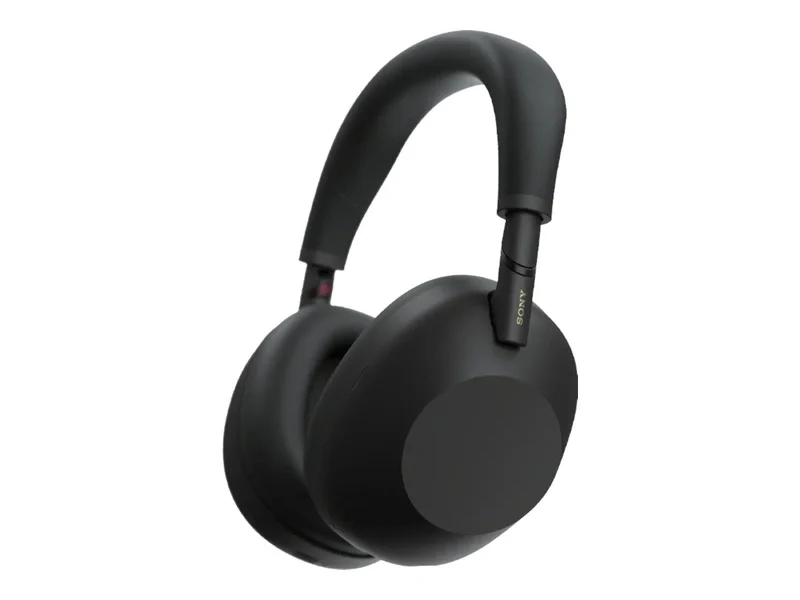
- Buy Sony WH-1000XM6 The most complete flagship: class-leading noise cancelling, a lightweight fit, and the deepest feature set. Amazon
- Buy Bose QuietComfort Ultra Headphones (2nd Gen) The comfort-and-quiet champion, with noise cancelling that reviewers consistently place among the very best. Amazon
- It depends Sony 1000X THE COLLEXION (WH-1000XX) Sony's luxury edition: stainless steel, faux leather, and a bespoke driver, at a higher price and with a shorter battery than the WH-1000XM6.
- Skip Bowers & Wilkins Px8 Gorgeous materials and audiophile sound, but its maker now sells a newer Px8 S2, and the spec sheet lists no multipoint or LDAC. Amazon
What actually matters
- Noise-cancelling strength on low-frequency drone (engines, HVAC, traffic) is the whole point of the category, and the flagships remove noticeably more of it than mid-range models, especially the deep rumble you feel more than hear.
- Comfort and clamping force matter more than any spec over a multi-hour flight, because a lighter headphone with softer pads and gentler clamp stays wearable long after a heavier, tighter one becomes painful.
- Battery life decides how often you are tethered to a charger, and the gap between models here is large, so match it honestly to how long your travel days and work sessions actually run.
- Sound signature is about the flavour of the tuning rather than raw quality, and at this level the choice between warm, bass-forward, and detailed-neutral comes down to your ears and your music.
- App depth and features such as adjustable EQ, multipoint pairing, and adaptive transparency turn a good headphone into one you keep reaching for, and they differ far more than the hardware does.
- Build and materials versus value is the quiet trap of the category, because aluminium and leather raise the price and the pleasure of holding the thing without necessarily improving noise cancelling or battery life.
- Call quality matters if you take meetings on the move, and the better flagships use larger microphone arrays and smarter processing to keep your voice clear in wind and background chatter.
The specs, in plain English
Green flags vs red flags
Green flags
- Independent testing and a large body of owner reports agree the noise cancelling is at or near the top of the category, not just the maker's own claim.
- Reviewers repeatedly describe it as comfortable for hours, with light weight and gentle clamping rather than a tight grip.
- A mature companion app with adjustable EQ, reliable multipoint, and firmware updates that keep improving the product after launch.
- Rated battery life that comfortably covers your longest realistic day with ANC on, plus a fast-charge option for quick top-ups.
- A design that folds or packs into a genuinely compact case if you travel with it.
Red flags
- A flagship price justified mainly by luxury materials, while its measured noise cancelling trails cheaper rivals.
- Battery life that looks short for the tier, especially once spatial audio or higher-quality codecs are switched on.
- A thin app with little or no EQ, shaky multipoint, or a history of buggy firmware.
- Touch controls that owners widely report as fiddly, unreliable in cold weather, or hard to use with gloves.
- Marketing that leans on codec logos and driver materials rather than on how the headphone actually performs day to day.
Who's who: the brands
- Sony - The all-rounder benchmark, known for class-leading adaptive noise cancelling paired with the deepest app and feature set, now with a luxury stainless-steel edition, 1000X THE COLLEXION, alongside the WH-1000XM6.
- Bose - The comfort-and-quiet specialist, consistently praised for plush, low-clamp fit and top-tier silence.
- Sennheiser - The sound-and-endurance house, favoured for a warm, refined tuning and unusually long battery life.
- Bowers & Wilkins - The luxury audiophile option, prized for aluminium-and-leather build and detailed sound rather than best-in-class ANC.
- Apple - The ecosystem pick for iPhone owners, strong on seamless pairing, spatial audio, and transparency mode.
How to read a listing without getting fooled
Read a flagship spec sheet from the outside in. Start by ignoring the codec logos and driver-material boasts, which tell you almost nothing about real performance, and go straight to the things that vary in daily use: rated battery life (and remember it is a best case measured with ANC on), weight and clamping comfort, and whether it offers multipoint and a proper EQ app. Treat the maker's own noise-cancelling claims as marketing and lean instead on independent testing and the weight of owner reports, because at this tier the differences are small and easy to overstate. Finally, separate what you are paying for performance from what you are paying for materials: aluminium arms and leather pads feel wonderful and photograph beautifully, but they do not make a headphone quieter or its battery last longer.
How much should you spend?
Spending up to the premium flagship tier does buy something real: the best noise cancelling, the most comfortable long-wear fits, the strongest call performance, and the deepest apps. Beyond that, the curve flattens fast. The most expensive models in the category are often priced for their luxury materials and audiophile tuning rather than for better silence, so paying the very top price can actually get you weaker noise cancelling and shorter battery than a slightly cheaper rival. The value sweet spot sits with the well-reviewed flagships that lead on ANC, comfort, and features, while a mid-range model discounted below them is the smart choice if you mainly want long battery and easygoing sound. Spend more only if a specific strength, such as luxury build or a particular sound signature, genuinely matters to you; otherwise the extra money buys a nicer object, not a quieter one.
Questions, answered
Is a premium flagship really quieter than a mid-range noise-canceller?
Yes, but the gap is smaller than the price gap suggests. The best flagships remove noticeably more low-frequency drone and sound more natural in transparency mode, which matters for frequent flyers and open-office workers. If you only use headphones occasionally at home, a good mid-range model captures most of the benefit for far less.
Does the most expensive headphone have the best noise cancelling?
Not necessarily. Some of the priciest models are built around luxury materials and audiophile sound, and independent testing often places their noise cancelling behind cheaper flagships. Higher price at this tier frequently buys build quality and tuning rather than more silence.
How much does battery life really differ between flagships?
A lot. The longest-lasting over-ear models are rated for about twice the playback of others in the same tier, and enabling spatial audio shortens that further. If you travel or wear headphones all day, treat battery life as a top-tier decision factor rather than a footnote.
Do I need high-end Bluetooth codecs to get good sound?
For most people, no. Codecs like LDAC or aptX can carry more detail, but the difference is subtle, requires your source device to support the same codec, and is easily outweighed by the headphone's tuning and your own ears. Do not let a codec logo alone drive your choice.
Are these good enough for phone calls and video meetings?
The better flagships are, thanks to larger microphone arrays and smarter processing that keep your voice clear in wind and background chatter. If meetings are a priority, favour a model that reviewers single out for call clarity and reliable multipoint switching between your laptop and phone.
Is it worth paying extra for spatial or immersive audio?
Treat it as a bonus, not a reason to buy. It can be convincing for films and relaxed listening, but it typically reduces battery life and is not something most people leave on for everyday music. Buy for core noise cancelling, comfort, and battery first.
Is a luxury edition of a flagship worth the extra money?
Only if you value the materials for their own sake. Sony's 1000X THE COLLEXION is a good example. Sony builds it from stainless steel and faux leather with a bespoke driver, yet its own spec sheet lists it at approx. 320 g with up to 24 hours of battery with noise cancelling on, against approx. 254 g and up to 30 hours for the WH-1000XM6. Luxury builds tend to add weight and cost without adding silence.
Or jump to the head-to-head: Sony WH-1000XM6 vs Bose QuietComfort Ultra Headphones (2nd Gen).