Explained
Microcurrent Face Devices, Explained
After reading, you'll understand what the current ratings, gel requirements, FDA wording and contraindication lists on a microcurrent device actually tell you.
In this guide
Most first-time buyers compare microcurrent devices on photos and brand names, because the specs are hard to find. Some makers publish their maximum current and some publish nothing. Every device needs a conductive gel, which becomes an ongoing cost. And the safety lists, especially for implanted devices and pregnancy, are easy to miss if you only read the product page.
The 30-second version
- Microcurrent is measured in microamps, and a maker that publishes its maximum, written as uA, gives you a real way to compare strength.
- Gel is not optional, since the makers say their devices must be used with a conductive gel or serum to carry the current.
- FDA wording varies, so report and read the exact phrase each maker uses rather than assuming two devices share a status.
- Contraindications are consistent across brands, with pregnancy, seizures, active cancer and implanted electronics such as pacemakers on nearly every published list.
- Not every face wand is microcurrent, because some use galvanic current or light instead, so check the maker's technology list.
The products this guide is about
Our verdict on each, with the full reasoning on the companion review.
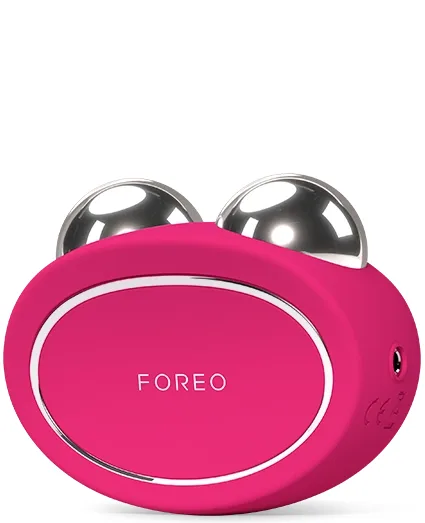
- Buy FOREO BEAR 2 A light, waterproof two-sphere toner with 10 intensity levels, a published 680 uA ceiling and a 300-minute battery. Amazon
- Buy NuFACE MINI+ Starter Kit NuFACE's smaller, cheaper FDA-cleared device: three intensities, a simple routine and the same activator-gel system as the TRINITY+. Amazon
- It depends ZIIP Beauty ZIIP HALO An app-driven device that sends a different microcurrent and nanocurrent waveform for each treatment, with four gels in the box.
- It depends 7E Wellness (MyoLift) MyoLift Mini A pro-style unit with an LCD screen and wired probe applicators, sold to estheticians and home users alike. Amazon
- It depends Bio-Therapeutic bt-sculpt GEN2 A handheld from a professional microcurrent maker with four probes on two channels, two preset programs and five power levels. Amazon
- Skip Solawave 4-in-1 Radiant Renewal Skincare Wand A popular red light wand that often shows up in microcurrent searches, but its maker lists galvanic current, not microcurrent. Amazon
What actually matters
- Maximum current - This is the strongest output the device can deliver, usually stated in microamps. Without it you cannot compare one brand's strength with another's.
- Intensity levels - Makers tell you to turn intensity down if you feel the current. More steps give you finer control as your skin gets used to it.
- Contact design - Two spheres glide easily over the face, while probes give more precise placement. Four-probe designs cover more skin per pass.
- Conductive medium - Gel or serum carries the current into the skin. Most makers want their own formula, so refills add to the cost.
- Published contraindications - A clear list tells you before you buy whether the device is safe for you to use. Look for it on the product page or in a downloadable manual.
- Water resistance - Some devices are waterproof and some must be kept dry. This matters if you use the device in a bathroom.
- Warranty coverage - Most makers here offer two years, some one. Check whether probes, leads or batteries get shorter coverage.
The specs, in plain English
Green flags vs red flags
Green flags
- The maker publishes a maximum current figure.
- A full contraindication list is on the product page or in a free manual.
- Several intensity levels, with guidance to start low.
- A clear treatment schedule with time limits per session or area.
- A 2-year warranty that covers the device itself.
Red flags
- No current output, intensity or weight published anywhere.
- Safety documentation that requires an account login to read.
- FDA wording that differs from the usual phrasing with no detail behind it.
- A face wand whose technology list does not include microcurrent at all.
- Product page FAQs that describe a different model.
Who's who: the brands
- NuFACE - The best-known home microcurrent brand, with the TRINITY+ and MINI+ and detailed downloadable manuals.
- FOREO - A Swedish beauty-device maker whose BEAR line adds app control, Anti-Shock sensing and T-Sonic massage.
- ZIIP Beauty - Known for app-driven devices that send different waveforms per treatment.
- 7E Wellness (MyoLift) - Makes probe-based MyoLift devices for both estheticians and home users.
- Bio-Therapeutic - A professional skincare equipment maker whose bt-sculpt brings its microcurrent approach to a handheld.
How to read a listing without getting fooled
Start with the electrical facts: look for a maximum current in microamps, the number of intensity levels and the contact design (spheres or probes). Then find the safety section, usually in the user manual rather than on the product page, and read the contraindications in full. Note what the maker says about gel, since that tells you what you will keep buying. Check the FDA wording exactly as written, the water rating, the battery figures and the warranty, including any shorter coverage on probes or batteries. If a listing has none of these and only shows before-and-after photos, treat that absence as the main finding.
How much should you spend?
Microcurrent devices sit mostly in the mid-range and premium tiers. Mid-range options, like the NuFACE MINI+ and Bio-Therapeutic bt-sculpt GEN2, give you a capable device with fewer intensity steps or extras. Premium devices, like the FOREO BEAR 2, ZIIP HALO and MyoLift Mini, add more intensity levels, app control, longer battery life or pro-style probes. Budget wands in this space are often light-based or galvanic rather than microcurrent, so check the technology list before assuming a lower tier buys you the same thing. Every tier adds the ongoing cost of gel.
Questions, answered
Can I use my own moisturizer instead of the maker's gel?
The makers here steer you to their own conductive products: NuFACE says to always apply a NuFACE Microcurrent Activator, and FOREO says the BEAR 2 must be used with a conductive serum and recommends its own. A thick or oily moisturizer may not carry current the same way. Sticking with the maker's instructions also keeps you within how the device was designed to be used.
Can I use a microcurrent device on my neck?
Both NuFACE and FOREO list the intended use as facial and neck stimulation. NuFACE's manual warns it may not be safe on the neck for people with a history of carotid artery disease, stroke, unstable blood pressure, thyroid disease or prior neck surgery, and FOREO says not to use the BEAR 2 on the mid-line bone of the neck or over major arteries. Follow the treatment map in your device's manual.
What should I do if I feel a tingle or zap?
NuFACE's manual says to add more activator to the area and lower the intensity, which may reduce or remove the sensation. FOREO's manual says a microcurrent sensation may occur and is normal, and that lowering intensity may help. If you have a negative reaction, the makers say to stop and consult a healthcare provider.
Can I use one after Botox or a laser treatment?
ZIIP recommends waiting 10 days after an injectable or laser procedure before using its device. FOREO says not to use the BEAR 2 after laser treatment, a chemical peel or facial cosmetic surgery, and NuFACE lists recent surgery as a contraindication. Ask the provider who did your treatment how long to wait.
Or jump to the head-to-head: FOREO BEAR 2 vs NuFACE MINI+ Starter Kit.