Explained
Garbage Disposals, Explained
After reading, you'll know exactly what horsepower, feed type, grind stages, and build materials mean, and which ones actually matter for your kitchen.
In this guide
A garbage disposal seems like a commodity until you own a bad one that jams, stinks, or roars every time you flip the switch. The spec sheets are full of jargon (continuous vs. batch feed, horsepower ratings, grind stages) that hides the two or three things that truly separate a keeper from a regret. This guide decodes that language so you can shop by what matters, not by the biggest number on the box.
The 30-second version
- Horsepower matters, but only to a point: 3/4 HP to 1 HP is the sweet spot for most homes; 1/2 HP is strictly for light, occasional use.
- Stainless grind components beat galvanized: they resist corrosion, which makes them a strong sign of a long-lived unit.
- Sound insulation is the biggest quality-of-life upgrade: an insulated body turns an industrial roar into a muffled hum, which matters most in open-plan kitchens.
- Feed type is a safety and workflow decision: continuous feed is faster and more common; batch feed can't run with an open drain, which suits homes with kids.
- The warranty is a durability signal: longer coverage often tracks with better internal parts, though not always.
The products this guide is about
Our verdict on each, with the full reasoning on the companion review.
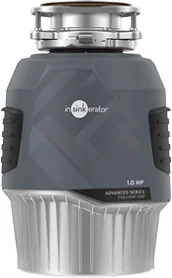
- Buy InSinkErator Evolution 1 HP The quiet, do-everything workhorse that grinds tough scraps without waking the house. Amazon
- Buy Waste King L-8000 (Legend Series, 1 HP) A 1 HP disposal at a mid-range price with a 20-year limited warranty. Amazon
- It depends Moen GX Series GXB75C (Batch Feed, 3/4 HP) A batch-feed unit that runs only with its cover in place, built around galvanized grind parts. Amazon
- Skip InSinkErator Badger 5 (1/2 HP) The builder-grade default that most owners outgrow within a couple of years. Amazon
What actually matters
- Grinding power - a combination of motor horsepower and the number of grind stages determines whether the unit chews through bones, pits, and fibrous peels or stalls and jams on them.
- Grind component material - stainless steel grinding parts resist rust and last for years; galvanized parts corrode sooner and are the tell-tale sign of a budget build.
- Noise / sound insulation - an insulated body dramatically lowers the volume; without it, even a powerful disposal is jarringly loud, which is a daily annoyance in kitchens open to living spaces.
- Feed type (continuous vs. batch) - continuous feed lets you keep flowing scraps in while it runs; batch feed only runs when its cover is in place, trading speed for a safety interlock.
- Motor type - induction motors are generally heavier and slower-turning; permanent-magnet (high-speed) motors are lighter and spin up fast. Check the maker's sound rating rather than assuming from motor type.
- Physical size and fit - more powerful units are taller and heavier, and can crowd an under-sink cabinet or interfere with plumbing, so cabinet space is a real constraint.
- Installation hardware - a twist-and-lock mount and a pre-attached power cord make DIY installation far easier, especially when swapping a like-for-like unit onto an existing mount.
The specs, in plain English
Green flags vs red flags
Green flags
- Stainless steel grind components listed in the specs
- An insulated or sound-reducing body, especially for open-plan kitchens
- 3/4 HP or 1 HP with multi-stage grinding for regular cooks
- A long in-home or limited warranty from the maker
- A twist-and-lock mount and pre-attached cord if you plan to install it yourself
- Consistent owner reports of quiet operation and years of trouble-free use
Red flags
- Galvanized (non-stainless) grind components at any price
- A 1/2 HP single-stage motor if you cook regularly or grind tough scraps
- No mention of sound insulation on a unit going in a living space
- A very short warranty, which can signal low expectations
- Owner reports clustering around early rust, jamming, or leaks
- A body too tall or bulky for your under-sink cabinet and plumbing
Who's who: the brands
- InSinkErator - The category's dominant name; makes everything from the ubiquitous builder-grade Badger line to the quiet, powerful Evolution units.
- Waste King - Known for permanent-magnet motors and value pricing; EZ Mount twist-and-lock designs and long limited warranties on models like the L-8000.
- Moen - Sells its own disposals, including the GX Series GXB75C batch-feed unit, which Moen lists with a 2700 RPM permanent-magnet motor, SoundSHIELD insulation and galvanized steel grind components.
- Waste Maid (Anaheim) - A value-focused disposal maker; check each model's spec sheet for grind materials and warranty.
- GE - A broad appliance brand offering straightforward disposals across budget and mid-range tiers, widely stocked at home centers.
How to read a listing without getting fooled
Start with the two specs that predict longevity: the grind component material and the warranty. If the listing brags about horsepower but stays silent on whether the grinding parts are stainless, assume they're galvanized, that's a corrosion clock ticking. Next, match horsepower to how you cook rather than buying the biggest number: 3/4 HP to 1 HP covers almost everyone, and a multi-stage grind matters more than raw HP for avoiding clogs. Look for the words 'insulated' or 'sound-reducing' if noise bothers you, because a powerful bare-shell unit is genuinely loud. Finally, check the physical dimensions against your cabinet and note the feed type and mount: continuous feed with a twist-and-lock collar is the easy DIY swap, while batch feed is a deliberate safety choice, not a value tier.
How much should you spend?
Think of disposals in three tiers. The budget tier buys you a compact 1/2 HP unit with galvanized parts and no insulation, fine for a rental or a kitchen that rarely cooks, but its short life often means the savings evaporate into an early replacement. The mid-range is where value peaks: real 1 HP power, stainless grind components, and a strong warranty, though insulation levels vary by model. The premium tier adds stronger sound insulation, multi-stage grinding, and a heavier build meant to disappear into your kitchen for a decade. Spending up is worth it when you cook daily, have an open-plan kitchen where noise carries, or simply want to forget the appliance exists; it's not worth it for a lightly used second kitchen or a short-term rental. Wherever you land, avoid trading away stainless components to save a little, since that is a corner that tends to cost more later.
Questions, answered
How much horsepower do I actually need?
For a typical household, 3/4 HP to 1 HP is the sweet spot and handles everyday waste without jamming. A 1/2 HP unit works for light, occasional use, but owners who cook often report more clogs. If you regularly grind fibrous peels, small bones, or fruit pits, step up to a 1 HP multi-stage grinder.
Continuous feed or batch feed, which should I choose?
Continuous feed is faster and far more common: it runs while you keep scraps flowing in. Batch feed only runs when its cover is seated in the drain, so it can't spin with an open, hand-accessible chamber, which is reassuring for homes with young kids or kitchens without a switched outlet. Batch feed trades speed for that built-in safety.
Why does the grind component material matter so much?
The impellers and grind ring do the actual shredding, and they're either stainless steel or galvanized. Stainless resists corrosion; galvanized parts rust sooner and usually signal a build made to hit a low price. Everything else being equal, stainless components are a strong sign of a longer-lived disposal.
Are garbage disposals hard to install yourself?
Continuous-feed models with twist-and-lock mounts are among the friendliest for a confident DIYer, especially when replacing an existing disposal on the same mount. Wiring and plumbing still apply, so if your kitchen needs a new switch or dedicated circuit, plan for an electrician. This is general product information, not installation or electrical advice, follow the manufacturer's manual and local code, or hire a licensed pro.
How do I keep a disposal from smelling and make it last longer?
Run cold water before, during, and for a few seconds after grinding, and feed waste gradually rather than dumping it all at once. Avoid grease, fibrous husks, and large bones in weaker units. Periodically grinding ice and citrus peel helps clean the chamber and cut odors. Stainless-component models tolerate this routine better than galvanized ones over time.
Is a more expensive disposal actually worth it?
It depends on how you cook and where the unit sits. If you cook daily, have an open-plan kitchen where noise carries, or want an appliance you can ignore for a decade, the premium features (insulation, multi-stage grinding, stainless parts, a long warranty) pay off. For a lightly used or rental kitchen, a solid mid-range unit is plenty. Stainless grind components are the upgrade most worth paying for.
Or jump to the head-to-head: InSinkErator Evolution 1 HP vs Waste King L-8000 (Legend Series, 1 HP).