Explained
Food Storage Containers, Explained
After reading this you'll know exactly which container features matter for how you actually store food, and which ones are just marketing.
In this guide
Food storage containers look interchangeable on the shelf, but they split into two worlds: plastic that survives a commute and glass that goes from freezer to oven. The words on the box (airtight, leakproof, BPA-free, tempered, borosilicate) sound reassuring but often blur together, and the part that fails first (the lid) is rarely the part being advertised. This guide translates the label so you can match a set to how you really eat, cook, and carry food.
The 30-second version
- Match material to your main use. glass for reheating and no-plastic-on-hot-food, plastic for carrying meals and surviving drops.
- "Airtight" and "leakproof" are not the same promise. a snap lid can be airtight enough for crackers yet still weep soup, so look specifically for latches or locking tabs with a gasket if you transport liquids.
- The lid is the weak link. bodies last for years, so favor a line whose replacement lids are easy to buy and treat lid durability as the real durability question.
- You're often paying for looks, not performance. past a mid-range set, extra money usually buys coatings, colors, and organizers rather than better food storage.
- Owning a mix beats forcing one set to do everything. a plastic set for transport plus a glass set for the oven covers almost every household need.
The products this guide is about
Our verdict on each, with the full reasoning on the companion review.
- Buy Pyrex Simply Store 18-Piece Glass Food Storage Set The default budget glass set: durable, oven-safe, and endlessly replaceable. Amazon
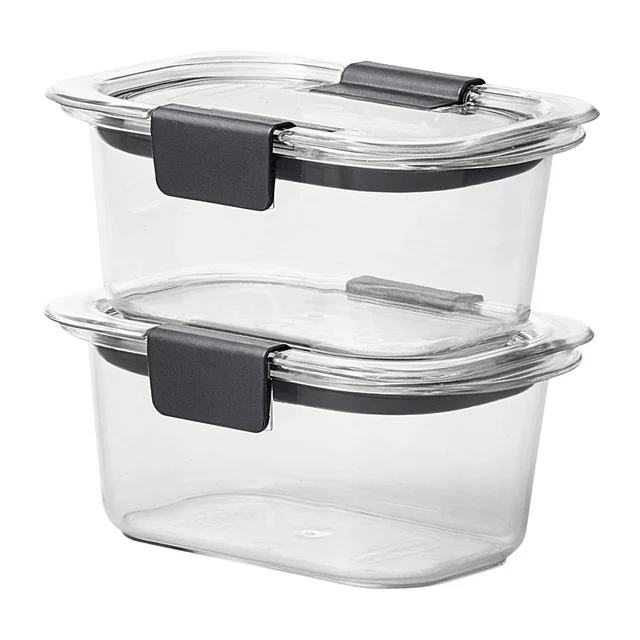
- Buy Rubbermaid Brilliance Leak-Proof Food Storage Set The most reliably leakproof everyday set, and it stacks beautifully. Amazon
- It depends OXO Good Grips Smart Seal Glass Container Set Leakproof glass done well, if you can live with fiddly four-tab lids. Amazon
- Skip Caraway Glass Food Storage Set Gorgeous ceramic-coated glass that charges flagship money for modest gains. Amazon
What actually matters
- Seal type decides whether liquids stay in. Plain snap lids press on and vent under pressure; latching lids and locking tabs compress a gasket for a genuine leakproof seal. If you carry soup, dressing, or chili, this is the single most important spec.
- Material governs heat safety and weight. Glass handles the oven and lets you microwave without plastic touching hot food, but it's heavier and can shatter; plastic is light and less breakable but not meant for the oven.
- Heat range (microwave, oven, freezer, dishwasher) determines how many jobs one set can do. Read it per component, because a glass body may be oven-safe while its lid is not.
- Stackability is quiet but daily. Nesting bodies and flat, uniform lids reclaim real shelf and fridge space; mismatched shapes waste it.
- Stain and odor resistance matters if you store tomato sauce, curry, or spices. Most quality glass and modern plastics resist both, but it's worth confirming.
- Replaceability extends a set's life. Since lids fail first, a line stocked at major retailers outlasts one whose parts only come from the brand.
- Upkeep is the hidden tax of a good seal. Removable gaskets seal beautifully but add a part to clean and reseat; simpler lids are easier but seal less tightly.
The specs, in plain English
Green flags vs red flags
Green flags
- Latching lids or locking tabs with a gasket if you plan to carry liquids
- Clearly stated, per-component heat ratings (which pieces are oven-safe, which aren't)
- Nesting bodies and flat, uniform lids that stack without a jumble
- Replacement lids widely stocked at major retailers
- Clear glass or plastic that resists staining after sauces and spices
Red flags
- "Airtight" claims with no mention of a latch or gasket when you need it leakproof
- Lids sold only direct from the brand, or hard to find at all
- Wildly mismatched shapes and lid sizes that won't stack or share lids
- Flagship pricing justified mainly by color, coating, or a matching organizer
- Fine print warning that lids warp or crack in the microwave or dishwasher
- Opaque or heavily tinted bodies that hide what's stored inside
Who's who: the brands
- Pyrex - The default in affordable tempered glass; durable, stain-resistant, and easy to replace, though its snap lids aren't leakproof.
- Rubbermaid - Known for the Brilliance line's latching lids in clear Tritan plastic.
- OXO - Makes leakproof glass with four-tab locking lids and a removable gasket; excellent seal, fussier to close.
- Caraway - Design-forward ceramic-coated glass sold with organizers; premium looks at flagship prices.
How to read a listing without getting fooled
Start by separating two claims that listings deliberately blur: airtight (keeps air out) and leakproof (holds liquid on its side). If a set only promises airtight and you want to carry soup, assume it will seep. Next, read heat safety per piece, not per set: glass bodies are usually oven-safe but their lids generally are not, and plastic is for the microwave, not the oven. Treat "BPA-free" as a baseline, not a selling point, and be skeptical of premium words like ceramic-coated, artisan, or non-toxic that describe the finish rather than the function. Finally, glance at the shapes: uniform, nesting pieces with shared lid sizes will actually save space, while a set of pretty but mismatched bowls won't. The most honest signal of long-term value isn't the body at all, it's whether you can easily buy a replacement lid two years from now.
How much should you spend?
Think in tiers rather than dollars. The budget tier, typically basic tempered-glass sets with snap lids, is genuinely good value for reheating and leftovers and is where most kitchens should start. Stepping up to the mid-range mainly buys you a real leakproof seal (latching lids and gaskets), which is worth it if you carry liquids and a waste of money if you don't. The premium tier adds capabilities like borosilicate glass that survives freezer-to-oven shock or leakproof glass, sensible only if you specifically need both glass and a tight seal. The flagship tier is where you mostly pay for aesthetics: coatings, colors, and organizers that store food no better than sets a fraction of the price. The value sweet spot for most people is a budget glass set plus one mid-range leakproof plastic set, covering nearly every use without overspending on either.
Questions, answered
Glass or plastic, which should I get?
Get glass if you reheat in the microwave or oven often and want no plastic touching hot food; it's heavier but very durable. Get plastic if you carry meals in a bag, want the lightest, most shatter-resistant option, and need the most dependable leakproof seal. Many households keep some of each and use plastic for transport, glass for reheating.
What's the difference between airtight and leakproof?
Airtight means air can't get in, which keeps food fresh and odors out. Leakproof means liquid can't get out even if the container tips or lies on its side. A lid can be airtight enough for dry goods yet still leak soup, so if you carry liquids look specifically for latches or locking tabs pressing on a gasket.
Can I put these in the microwave, oven, and freezer?
Most glass bodies handle microwave, oven, fridge, and freezer, but their lids do not go in the oven; remove the lid first. Plastic sets are typically rated for the microwave (often with a vent open) but not the oven. Borosilicate glass is the best choice if you want to go straight from freezer to a hot oven. Always check the rating stamped on each piece.
Is plastic food storage safe?
Check the maker's own statement about the plastic and food contact. If you prefer to avoid plastic near hot food, reheat in glass and reserve plastic for cold storage and transport. This is general product information, not health or safety advice; follow the manufacturer's guidance for specific concerns.
Why do the lids always break first, and can I replace them?
Lids take the abuse: they flex, get microwaved, and their latches loosen over years, while the bodies last far longer. That's why replaceability matters more than it seems. Favor a line whose lids are widely stocked at major retailers so you can refresh a set instead of tossing it when a lid warps or cracks.
Are the expensive designer sets worth it?
Usually not, if your goal is storing food well. Past the mid-range, extra money mostly buys coatings, colors, matching organizers, and looks rather than better sealing or heat performance. They're a reasonable choice only if you specifically want storage that doubles as visible kitchen decor and have the budget for it.
Or jump to the head-to-head: Rubbermaid Brilliance Leak-Proof Food Storage Set vs Pyrex Simply Store 18-Piece Glass Food Storage Set.