Explained
ESD Mats, Explained
After reading, you'll understand what the ohms figures on an ESD mat listing mean, which standard sets the limit, why the mat is useless until it and you are bonded to the same ground, and how to spot a listing that is hiding the numbers.
In this guide
The word anti-static is doing most of the work in this category, and it is the least informative word on the page. First-time buyers reasonably assume it is a graded claim, like a waterproof rating, when it describes a charging behaviour and implies nothing about resistance. The second trap is treating the mat as the product. It is one third of a control path, and the other two thirds are a cord to a known ground and something bonding you to the same point. Get those two ideas straight and the spec sheets become easy to read.
The 30-second version
- A mat only works once it is grounded, and Desco's own product documentation states that worksurface mats must be properly grounded to remove ESD charges.
- You have to be bonded too, because the ESD Association's guidance is that a wrist strap keeps the wearer at ground potential or at the same potential as the object being handled.
- The number to look for is ohms, specifically a point to point resistance and a resistance to the groundable point, measured to ANSI/ESD STM4.1.
- Anti-static is not a grade, since the ESD Association defines it as inhibiting triboelectric charging and notes it does not necessarily correlate with resistivity.
- The 1 megohm resistor is for you, not for the components, because its job is limiting current through your body if the strap ever meets a live conductor.
The products this guide is about
Our verdict on each, with the full reasoning on the companion review.
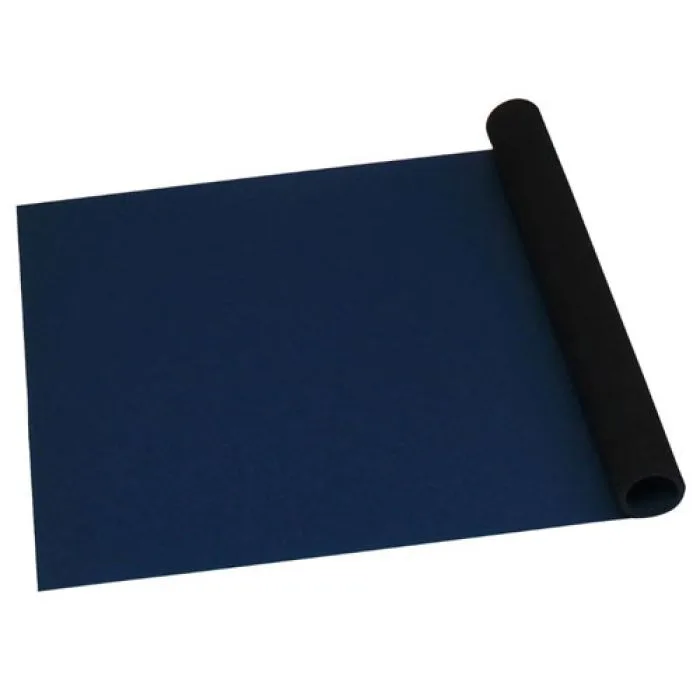
- Buy Desco Statfree T2 Plus Dissipative Dual Layer Mat Kit (66425) A dual-layer nitrile rubber worksurface with per-layer resistance figures published against the worksurface standard, sold as a kit with a ground cord and hardware.
- Buy Bertech ESD High Temperature Mat Kit (2059T Series) A two-ply rubber mat kit that ships the mat, a wrist strap and a ground cord, and is backed by an independent test report measured to the current worksurface test method. Amazon
- It depends iFixit Portable Anti-Static Mat (IF145-202-5) A folding 24 by 24 inch mat that publishes a surface resistivity figure and ships with both a grounding cord and a wrist strap, aimed at repairs away from a fixed bench. Amazon
- Skip iFixit Anti-Static Mat (IF145-036-8) A popular consumer bench mat that ships a coiled ground cord but no wrist strap, publishes no resistance figure of any kind, and cites a superseded edition of a programme standard as its only electrical claim. Amazon
What actually matters
- Resistance to groundable point (Rtg) - the resistance from the working surface to the stud the ground cord clips onto. This is the figure ANSI/ESD S20.20 puts its worksurface limit on, and it is the number that tells you whether charge can actually leave the mat.
- Point to point resistance (Rtt) - the resistance measured between two electrodes placed on the surface itself. It tells you how quickly charge moves across the working area, which is what governs whether a charged part placed on the mat is bled off gently or too fast.
- The dissipative band - dissipative surfaces sit between conductive and insulative, letting charge drain without the rapid discharge a conductive surface can cause. Worksurfaces are generally specified dissipative for exactly this reason, which is why the top layer of a two-layer mat is the dissipative one.
- Dual-layer construction - a dissipative top laminated to a conductive bottom. The conductive layer lowers the resistance from the working surface down to the ground point, which is what makes the material workable with a continuous workstation monitor.
- The ground path - a cord with hardware running from the mat's stud to a known ground, plus a wrist strap for the operator. Both need to reach the same point, because the aim is a common potential rather than merely a connection to earth somewhere.
- Heat and solder tolerance - a stated service temperature and explicit resistance to hot solder and flux is what separates a bench worksurface from a desk protector. Vague heat resistant wording with no figure tells you nothing about what a dropped iron tip will do.
- What is in the kit - the mat, the ground cord with hardware, the wrist strap and any adapter needed to reach your outlet are four separate items, and different kits include different subsets. Read the contents list rather than assuming, because a missing wrist strap leaves the operator ungrounded.
The specs, in plain English
Green flags vs red flags
Green flags
- The listing publishes both a point to point and a resistance to groundable point figure in ohms.
- A test method is named, ideally ANSI/ESD STM4.1 with its edition year.
- An independent laboratory test report is linked or downloadable rather than only a manufacturer datasheet.
- The construction is described as a dissipative top layer laminated to a conductive bottom layer.
- The kit contents are itemised, including the ground cord and hardware, and the mat has a visible ground stud in the photos.
Red flags
- Anti-static is the only electrical claim anywhere on the page and no ohms figure appears.
- A resistance number is given with no test method, no test voltage and no edition of any standard.
- The product is described as certified to a programme standard, which qualifies facilities and control plans rather than individual products.
- No groundable point, stud or snap is visible in any product photo and none is mentioned in the specs.
- A ground cord is supplied that plugs into a mains socket with no stated current-limiting resistor.
Who's who: the brands
- Desco - A long-standing US static-control manufacturer whose mats publish per-layer resistance figures and cite the worksurface standard directly on the spec sheet.
- Bertech - A California supplier of ESD mats and kits that publishes datasheets and, for some series, independent EOS/ESD Association Services test reports.
- SCS - A static-control brand in the same industrial channel, known for grounding cords, snaps and workstation monitoring hardware as much as for the mats themselves.
- Transforming Technologies - Another professional supplier whose two-layer rubber table mats are sold by the roll and pre-cut, aimed at people building out multiple benches.
- iFixit - The consumer repair brand, and one of the few in that segment that publishes any electrical figure at all, though only on some of its mats.
How to read a listing without getting fooled
Start at the bottom of the listing, where the specifications table lives, and look for the word ohms. If it is not there, nothing above it matters. If it is, check whether you are being given a resistance or a resistivity, and whether the figure is point to point, to the groundable point, or unspecified. Then look for the test method and its year: ANSI/ESD STM4.1-2017 is the current worksurface method and its predecessor was ESD S4.1. Separately, read what standard is being claimed and how. Meets the required limit of is a real claim about a measurement; designed to meet is a statement of intent; certified to a programme standard is a category error, because programme standards qualify facilities. Finally read the kit contents literally rather than inferring from the photo, and check whether the wrist strap, the ground cord and any adapter needed to reach your outlet are actually included.
How much should you spend?
Budget mats are where the numbers disappear: at this tier you are usually buying a silicone or vinyl sheet whose only electrical claim is the word anti-static, sometimes with a cord and sometimes not. Mid-range is the sweet spot for a home bench, because it is where two-layer rubber kits with published resistance figures and a wrist strap in the box start, and where a few makers pay for independent test reports. Premium buys you industrial-grade material, per-layer specs, oil and solder resistance stated in writing, and engraved marking for auditing, but often in kits that assume you will buy personal grounding separately. One planning note that cuts across all tiers: treat the ground cord, the wrist strap and a wrist strap tester as part of the purchase rather than accessories, because a premium mat with no grounding path is worse value than a mid-range kit that includes one.
Questions, answered
How do I ground the mat in a house with no ESD outlet?
The usual route is a ground plug adapter that connects to the earth pin of a standard grounded outlet, which several manufacturers sell as a separate accessory. Alternatively, professional benches use a common point ground bar that everything bonds to. What matters is that the mat cord and the wrist strap end up at the same point rather than at two different grounds. Never wire a mat cord to a mains socket without a current-limiting resistor in the path.
How do I check that my mat still works?
With a surface resistance meter and a weighted electrode, which is the same basic setup the test method describes. Handheld resistance meter kits are sold by the same static-control suppliers who sell the mats. Wrist straps are the more urgent item to check, since they can fail invisibly and guidance for controlled environments is to test them regularly before handling sensitive devices. For a home bench, a wrist strap tester is a cheap and worthwhile addition.
Is surface resistivity the same thing as surface resistance?
No, though they are closely related. Resistivity is a material property, expressed in ohms per square, and is independent of the size of the sample. Resistance is what you actually measure between two electrodes on a specific piece of material, in ohms. The standards limit for worksurfaces is written around resistance measurements, so a listing that publishes only a resistivity range is giving you useful information but not a direct answer to the standard.
Do I still need antistatic bags and other controls if I have a grounded mat?
Yes. A grounded worksurface handles the conductors that touch it, but insulators on the bench and isolated conductors nearby can still hold charge, and the ESD Association's guidance points to ionisation as the control for charge on materials that cannot be grounded. Storage and transport are separate problems, which is what shielding bags exist for. Think of the mat as covering the moment a part is out and being worked on, not the whole life of the part.
Or jump to the head-to-head: Desco Statfree T2 Plus Dissipative Dual Layer Mat Kit (66425) vs Bertech ESD High Temperature Mat Kit (2059T Series).